Client
Dexcom
Practice Areas
Core Disciplines
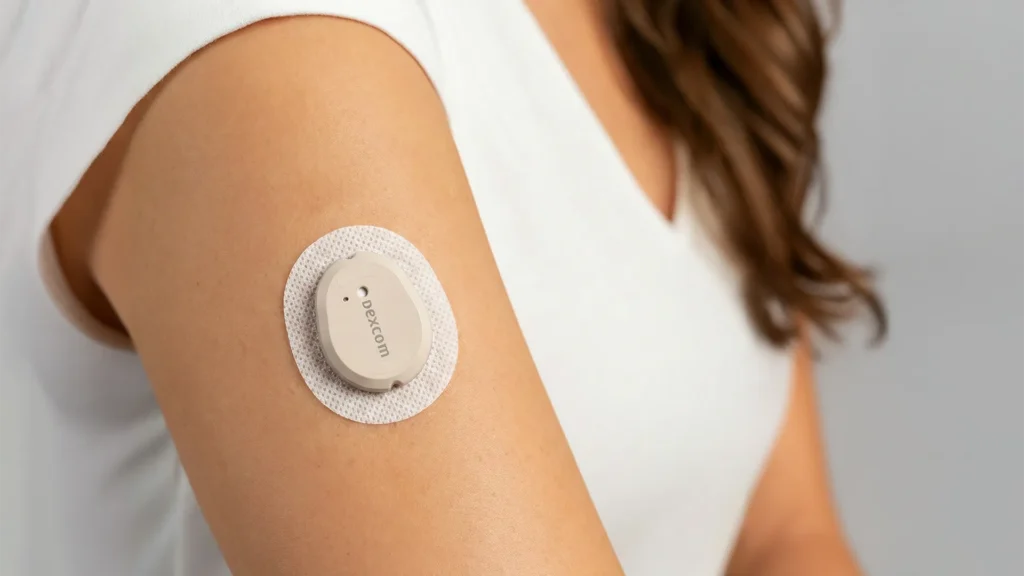
For more than a decade, Triple Ring has partnered with continuous glucose monitoring (CGM) manufacturer Dexcom to support the rapid evolution of product designs in response to customer demands and increasing market competition. Dexcom CGM systems are wearable medical devices that continuously track glucose levels and deliver real-time data to connected devices, enabling improved diabetes management.
Across multiple generations of CGM devices, Triple Ring contributed analytical expertise and design inputs that enabled new features, improved manufacturability, and supported high-volume production. This long-term collaboration helped shorten development timelines and accelerate the release of successive CGM platforms.
As Dexcom’s CGM products evolved, market forces required rapid improvements in usability, reliability, and manufacturability while maintaining high performance and production efficiency. The development of next-generation CGM devices required resolving complex design behaviors, managing manufacturing variability, and supporting large-scale production.
Dexcom engaged Triple Ring at critical points in development to address these technical challenges while maintaining aggressive timelines for new product releases.
For more than a decade, Triple Ring has partnered with continuous glucose monitoring (CGM) manufacturer Dexcom to support the rapid evolution of product designs in response to customer demands and increasing market competition. Dexcom CGM systems are wearable medical devices that continuously track glucose levels and deliver real-time data to connected devices, enabling improved diabetes management.
Across multiple generations of CGM devices, Triple Ring contributed analytical expertise and design inputs that enabled new features, improved manufacturability, and supported high-volume production. This long-term collaboration helped shorten development timelines and accelerate the release of successive CGM platforms.
As Dexcom’s CGM products evolved, market forces required rapid improvements in usability, reliability, and manufacturability while maintaining high performance and production efficiency. The development of next-generation CGM devices required resolving complex design behaviors, managing manufacturing variability, and supporting large-scale production.
Dexcom engaged Triple Ring at critical points in development to address these technical challenges while maintaining aggressive timelines for new product releases.
Client
Dexcom
Practice Areas
Core Disciplines
Triple Ring applied deep expertise in device development, mechanism analysis, finite-element simulation, and empirical testing to support the design and optimization of Dexcom’s CGM platforms.
By leveraging system-level modeling and complex empirical characterization, Triple Ring enabled Dexcom to model the effects of manufacturing variability across hundreds of thousands of virtual devices. This approach allowed the identification of unforeseen design sensitivities early in development, when design changes were less costly and more effective.
Development efforts included:
Dexcom, together with Triple Ring, developed and optimized a fully automated one-touch deployment mechanism for the award-winning G6 platform. Five years later, the G7 successor introduced a completely redesigned applicator that combined deployment of the wearable and sensor into a single step, reflecting continued advances in device integration and usability.
Triple Ring’s analytical and empirical strategies resolved undesirable device behaviors, improved model accuracy, and ensured robust product performance. These efforts significantly reduced time to market while enabling reliable, high-volume manufacturing.
The collaboration established Triple Ring as a long-term trusted partner supporting Dexcom’s continued innovation in diabetes management and improving quality of life for millions of patients.
Triple Ring Talent
At Triple Ring, we draw on a deep bench of expertise across diverse disciplines matched to each innovation challenge. For this project, our team combined mechanism analysis, finite-element simulation, system-level modeling, and empirical testing to help Dexcom design and optimize CGM platforms across multiple device generations — shortening timelines and enabling reliable, high-volume manufacturing.
Gabe and Thu collaborated with many talented colleagues across Triple Ring and Dexcom on this project.
Materials Characterization & Development
Dr. Gabe Chow specializes in materials characterization and mechanical system development across macro to nanoscale environments. His work supports the design, testing, and reliability of advanced materials and mechanical systems, helping translate innovative concepts into durable, real-world solutions.
Mechanical Systems & Device Development
Dr. Thu Nguyen specializes in human-centered mechanical systems, with expertise in exoskeleton control and movement optimization. Her work focuses on understanding how mechanical design interacts with human performance, helping teams develop solutions that improve function, reliability, and real-world usability.
Client
HeartBeam
Practice Areas
Core Disciplines
HeartBeam collaborated with Triple Ring to develop an innovative telehealth solution designed to transform the detection and monitoring of cardiac conditions. The goal was to create a compact, portable cardiac monitoring device capable of collecting ECG signals in three dimensions and synthesizing them into a clinically meaningful 12-lead ECG.
The resulting platform supports remote cardiac monitoring by enabling physicians to access real-time data outside traditional clinical settings, expanding access to cardiac diagnostics and improving patient care workflows.
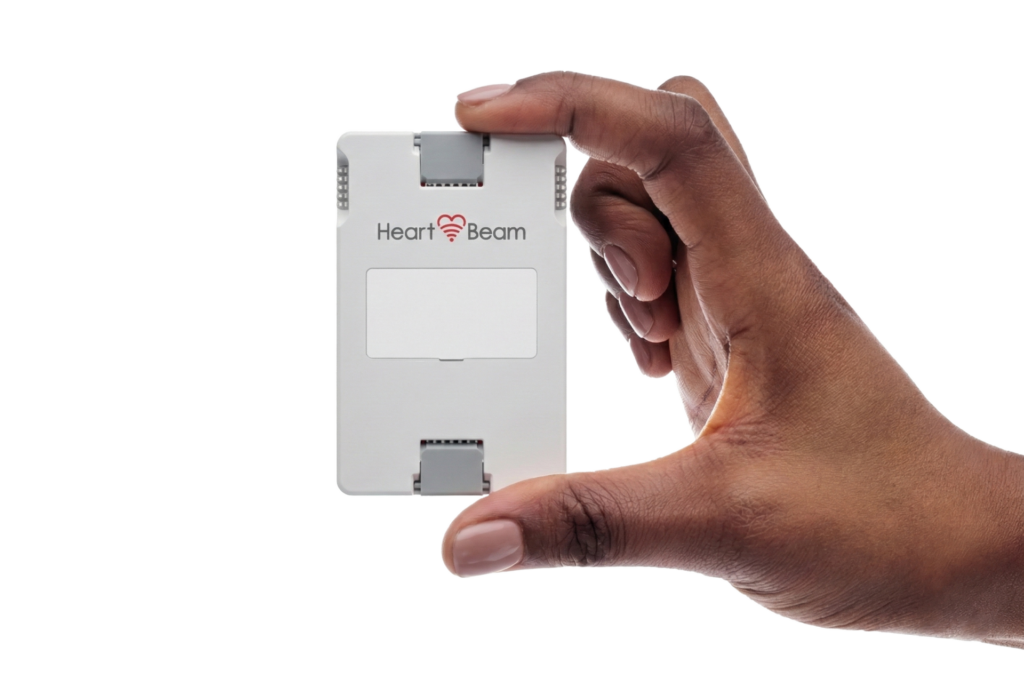
HeartBeam sought to develop a personal, cable-free, and easy-to-use cardiac monitoring solution for both in-clinic and at-home use. The objective was to create a credit card-sized ECG recording device that leverages vectorcardiography (VECG) and integrates with cloud-based software to deliver critical patient data to physicians in real time.
Achieving this required coordinating multidisciplinary device development while meeting regulatory requirements and supporting rapid product development timelines.
HeartBeam partnered with Triple Ring to execute a comprehensive, five-phase expedited device development program spanning early R&D, industrial design, product development, manufacturing readiness, and regulatory preparation.
Triple Ring applied expertise in wearable medical device design and system integration to develop the cable-free ECG device and supporting ecosystem. The program included device builds for design verification and validation, packaging development, and manufacturing technology transfer to support scalable production.
Key development activities included:
HeartBeam collaborated with Triple Ring to develop an innovative telehealth solution designed to transform the detection and monitoring of cardiac conditions. The goal was to create a compact, portable cardiac monitoring device capable of collecting ECG signals in three dimensions and synthesizing them into a clinically meaningful 12-lead ECG.
The resulting platform supports remote cardiac monitoring by enabling physicians to access real-time data outside traditional clinical settings, expanding access to cardiac diagnostics and improving patient care workflows.
HeartBeam sought to develop a personal, cable-free, and easy-to-use cardiac monitoring solution for both in-clinic and at-home use. The objective was to create a credit card-sized ECG recording device that leverages vectorcardiography (VECG) and integrates with cloud-based software to deliver critical patient data to physicians in real time.
Achieving this required coordinating multidisciplinary device development while meeting regulatory requirements and supporting rapid product development timelines.
HeartBeam partnered with Triple Ring to execute a comprehensive, five-phase expedited device development program spanning early R&D, industrial design, product development, manufacturing readiness, and regulatory preparation.
Triple Ring applied expertise in wearable medical device design and system integration to develop the cable-free ECG device and supporting ecosystem. The program included device builds for design verification and validation, packaging development, and manufacturing technology transfer to support scalable production.
Key development activities included:
Client
HeartBeam
Practice Areas
Core Disciplines
The HeartBeam–Triple Ring collaboration produced a personal, cable-free synthesized 12-lead ECG solution that enables patients to record cardiac data at home. The device integrates with a smartphone application that communicates with the HeartBeam Cloud, where synthesized ECG data is compared with baseline records and made available to physicians remotely.
This multidisciplinary and fast-paced program resulted in a successful 510(k) submission to the U.S. Food and Drug Administration (FDA) and regulatory clearance in 2024 for the hardware that leverages vectorcardiography and collects 3D ECG data. The synthesized 12-lead ECG algorithm remains pending FDA clearance.
The completed system enables physicians to remotely monitor cardiac conditions and guide patient care outside traditional healthcare facilities, supporting new models of telehealth-enabled cardiac diagnostics.
Triple Ring Talent
At Triple Ring, we draw on a deep bench of expertise across diverse disciplines matched to each innovation challenge. For this project, our team applied expertise in wearable medical device design, system integration, and regulatory strategy to deliver a cable-free, credit card-sized ECG device — from early R&D through successful FDA 510(k) clearance in 2024.
Walt and Kevin collaborated with many talented colleagues across Triple Ring and HeartBeam on this project.
Medical Device Design & Translational Medicine
Walt Cecka brings decades of experience translating novel medical technologies into first-to-market products. He works closely with innovators to shape early concepts into structured development programs that advance patient care across a wide range of clinical applications.
Mechanical & Aerospace Engineering
Kevin Dunk brings expertise in mechanical engineering and multidisciplinary product development across the full device lifecycle. His work supports teams from early prototypes through verification and manufacturing, helping ensure systems are reliable, scalable, and ready for real-world use.
Client
AiM Medical Robotics
Practice Areas
Core Disciplines
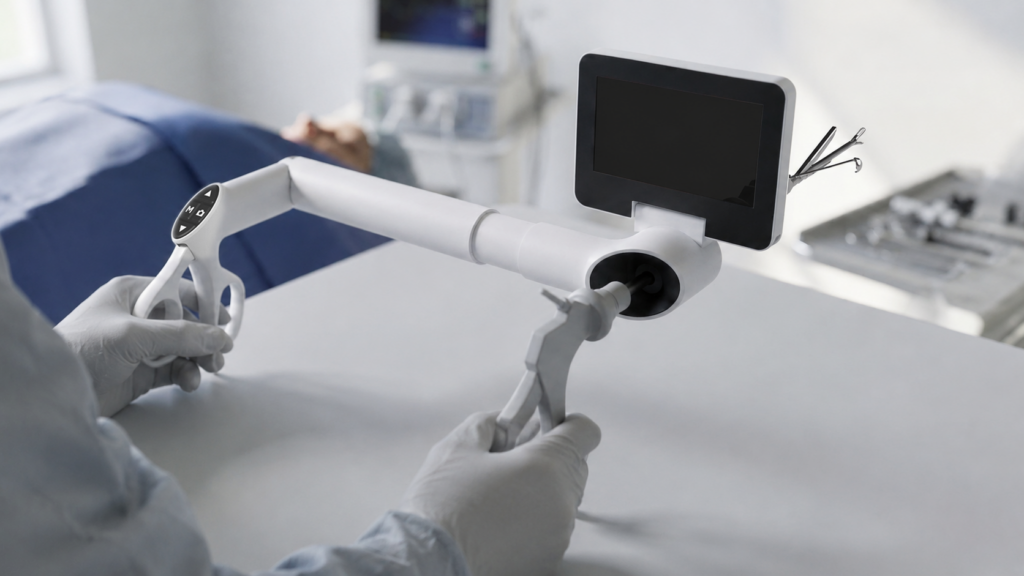
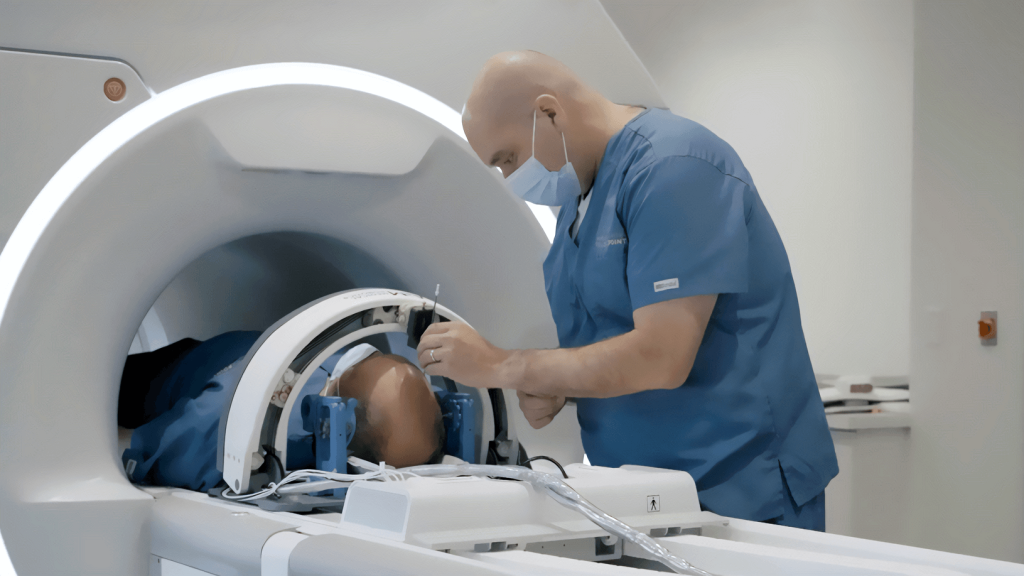
AiM Medical Robotics engaged Triple Ring to develop a portable robotic system capable of performing neurosurgical procedures simultaneously with magnetic resonance imaging (MRI).
The resulting prototype established the technical foundation for an MRI-compatible robotic platform designed to support image-guided neurosurgery.
MRI environments rely on strong magnetic fields that prohibit the use of ferromagnetic materials commonly found in traditional robotic systems. Additionally, the limited physical space inside MRI systems imposed strict form factor constraints.
These requirements demanded innovative design strategies to enable reliable robotic motion and positioning inside the MRI environment.
Triple Ring applied first-principles engineering and multidisciplinary design expertise to create an MRI-compatible robotic system.
Key elements of the solution included:
AiM Medical Robotics engaged Triple Ring to develop a portable robotic system capable of performing neurosurgical procedures simultaneously with magnetic resonance imaging (MRI).
The resulting prototype established the technical foundation for an MRI-compatible robotic platform designed to support image-guided neurosurgery.
MRI environments rely on strong magnetic fields that prohibit the use of ferromagnetic materials commonly found in traditional robotic systems. Additionally, the limited physical space inside MRI systems imposed strict form factor constraints.
These requirements demanded innovative design strategies to enable reliable robotic motion and positioning inside the MRI environment.
Triple Ring applied first-principles engineering and multidisciplinary design expertise to create an MRI-compatible robotic system.
Key elements of the solution included:
Client
AiM Medical Robotics
Practice Areas
Core Disciplines
The collaboration produced a prototype robotic system with four degrees of freedom, establishing the basis for AiM Medical Robotics’ MRI-compatible neurosurgical platform.
The system demonstrated the feasibility of robotic-assisted neurosurgery within MRI environments and enabled further development of image-guided surgical technologies.
Triple Ring Talent
At Triple Ring, we draw on a deep bench of expertise across diverse disciplines matched to each innovation challenge. For this project, our team applied MRI physics, multidisciplinary robotic design, and rapid prototyping to develop a four-axis robotic system capable of performing neurosurgical procedures inside a live MRI environment.
Chris and Chris collaborated with many talented colleagues across Triple Ring and AiM Medical Products on this project.
Bio and Electrical Engineering & Program Management
Dr. Chris Mitchell brings deep experience leading multidisciplinary teams developing complex imaging and medical device systems. His work focuses on guiding technical programs from concept through implementation, helping translate advanced technologies into reliable, real-world solutions.
Mechanical Engineering
Chris Todd focuses on biomedical diagnostics and precision instrumentation, integrating fluidics, optics, and mechanical systems. His work supports the development of regulated medical technologies from early concepts through manufacturing, helping teams deliver reliable diagnostic solutions at scale.
Client
Leo Cancer Care
Practice Areas
Core Disciplines
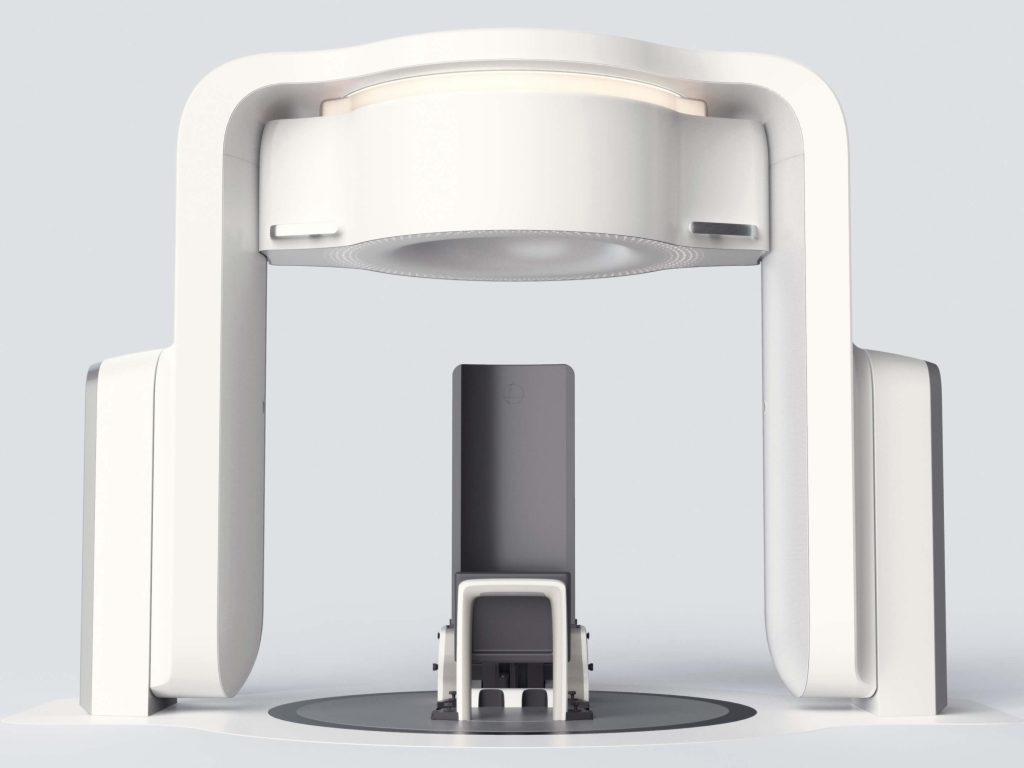
Leo Cancer Care worked with Triple Ring to design a computed tomography (CT) imaging system supporting a novel radiation therapy concept that enables treatment in a natural, upright seated position. The system integrates imaging and patient positioning into a single device, allowing patients to be scanned in both upright and lying positions.
This platform introduces a new approach to radiotherapy delivery by improving patient comfort, positioning accuracy, and overall treatment workflow.
Leo Cancer Care sought to develop a radiation therapy system capable of imaging and positioning patients in an upright configuration while maintaining the precision and safety required for clinical use. The concept required rethinking traditional radiotherapy architectures, including replacing large rotating gantries with a fixed-beam, slow patient rotation strategy.
Achieving this capability required overcoming mechanical, imaging, and system integration challenges while ensuring reliable clinical performance across multiple operating modes.
Leo Cancer Care worked with Triple Ring to design a computed tomography (CT) imaging system supporting a novel radiation therapy concept that enables treatment in a natural, upright seated position. The system integrates imaging and patient positioning into a single device, allowing patients to be scanned in both upright and lying positions.
This platform introduces a new approach to radiotherapy delivery by improving patient comfort, positioning accuracy, and overall treatment workflow.
Leo Cancer Care sought to develop a radiation therapy system capable of imaging and positioning patients in an upright configuration while maintaining the precision and safety required for clinical use. The concept required rethinking traditional radiotherapy architectures, including replacing large rotating gantries with a fixed-beam, slow patient rotation strategy.
Achieving this capability required overcoming mechanical, imaging, and system integration challenges while ensuring reliable clinical performance across multiple operating modes.
Client
Leo Cancer Care
Practice Areas
Core Disciplines
Triple Ring applied expertise in radiotherapy physics, imaging systems, and mechanical engineering to design a gantry architecture supporting upright and traditional patient positioning. Close collaboration enabled integration of multiple subsystems into a unified clinical platform.
Key engineering efforts included:
The collaboration resulted in an innovative gantry design supporting upright radiation therapy workflows and enabling alternative approaches to traditional radiotherapy systems.
The platform advanced the development of upright radiation therapy as a viable treatment approach, supporting improved patient comfort and positioning accuracy.
Triple Ring Talent
At Triple Ring, we draw on a deep bench of expertise across diverse disciplines matched to each innovation challenge. For this project, our team applied radiotherapy physics, large-scale mechanical design, and systems integration expertise to develop a novel gantry architecture enabling patients to receive radiation therapy in a natural, upright seated position.
Tachi and Tobias collaborated with many talented colleagues across Triple Ring and Leo Cancer Care on this project.
Mechanical Engineering
Tachi Callas leads mechanical engineering teams developing complex medical technologies across the full product lifecycle. His work helps transform innovative device concepts into manufacturable systems that support advanced surgical and therapeutic applications.
Experimental Physics & Instrumentation
Dr. Tobias Funk develops advanced instrumentation that applies ionizing radiation to scientific and medical challenges. His work spans imaging, simulation, and system design, helping translate complex physical principles into practical technologies used in real-world environments.
Client
Prisma Imaging
Practice Areas
Core Disciplines
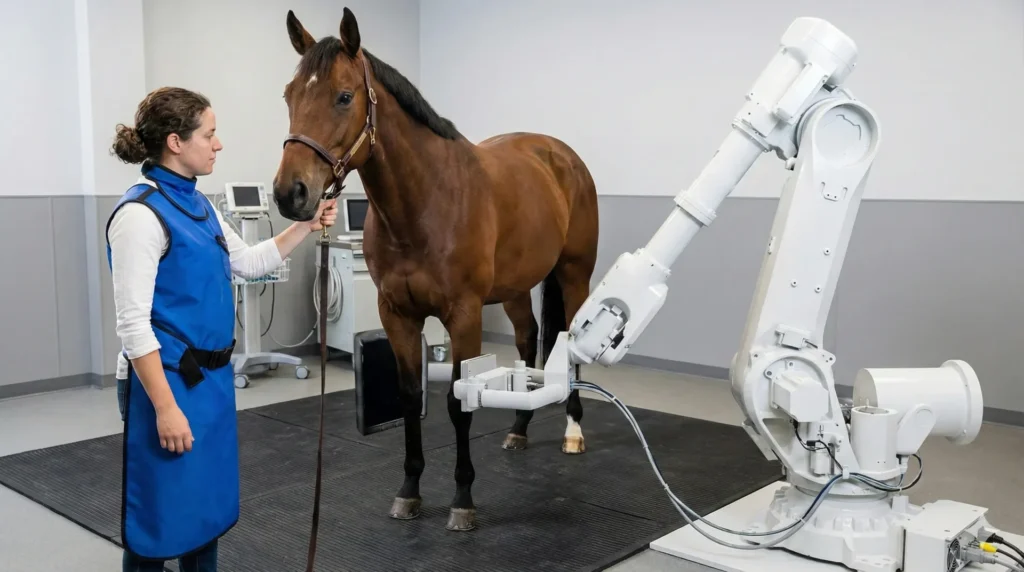
Prisma Imaging collaborated with Triple Ring to design, model, build, and test a functional prototype equine CT scanner for use in veterinary clinic settings. The system was developed to generate high-quality images of live horses while supporting safer workflows compared to traditional imaging methods.
The resulting platform combined robotic motion systems, imaging technology, and motion correction capabilities to enable imaging of large animals without requiring general anesthesia.
Prisma Imaging sought to develop a CT imaging system capable of safely scanning live equine patients. Traditional imaging workflows often require anesthesia, introducing additional risk and logistical complexity.
The project required integrating robotic gantry motion, X-ray imaging, radiation safety, motion capture, and CT reconstruction into a unified system architecture capable of handling natural patient movement.
Prisma Imaging collaborated with Triple Ring to design, model, build, and test a functional prototype equine CT scanner for use in veterinary clinic settings. The system was developed to generate high-quality images of live horses while supporting safer workflows compared to traditional imaging methods.
The resulting platform combined robotic motion systems, imaging technology, and motion correction capabilities to enable imaging of large animals without requiring general anesthesia.
Prisma Imaging sought to develop a CT imaging system capable of safely scanning live equine patients. Traditional imaging workflows often require anesthesia, introducing additional risk and logistical complexity.
The project required integrating robotic gantry motion, X-ray imaging, radiation safety, motion capture, and CT reconstruction into a unified system architecture capable of handling natural patient movement.
Client
Prisma Imaging
Practice Areas
Core Disciplines
Triple Ring applied cross-disciplinary engineering expertise and systems engineering methodologies to design and integrate a complex imaging platform capable of supporting live-animal imaging.
Key elements of the solution included:
Triple Ring delivered a gantry-mounted CT imaging system capable of imaging horses under conscious sedation rather than general anesthesia.
The integrated motion tracking and correction system maintained imaging quality comparable to standard CT systems, enabling full-body imaging across equine anatomy without anesthesia.
Triple Ring Talent
At Triple Ring, we draw on a deep bench of expertise across diverse disciplines matched to each innovation challenge. For this project, our team combined robotic systems design, CT imaging, motion capture and correction, and systems integration expertise to deliver a functional equine CT scanner capable of imaging conscious, sedated horses without general anesthesia.
Meet our team
Experimental Physics & Instrumentation
Dr. Tobias Funk develops advanced instrumentation that applies ionizing radiation to scientific and medical challenges. His work spans imaging, simulation, and system design, helping translate complex physical principles into practical technologies used in real-world environments.
Electrical Technician
Quinn La oversees the build and validation of complex electrical and electro-mechanical systems across development programs. His work supports board bring-up, testing, and manufacturing processes, ensuring systems are assembled, debugged, and prepared for reliable operation.
Client
LUUM
Practice Areas
Core Disciplines
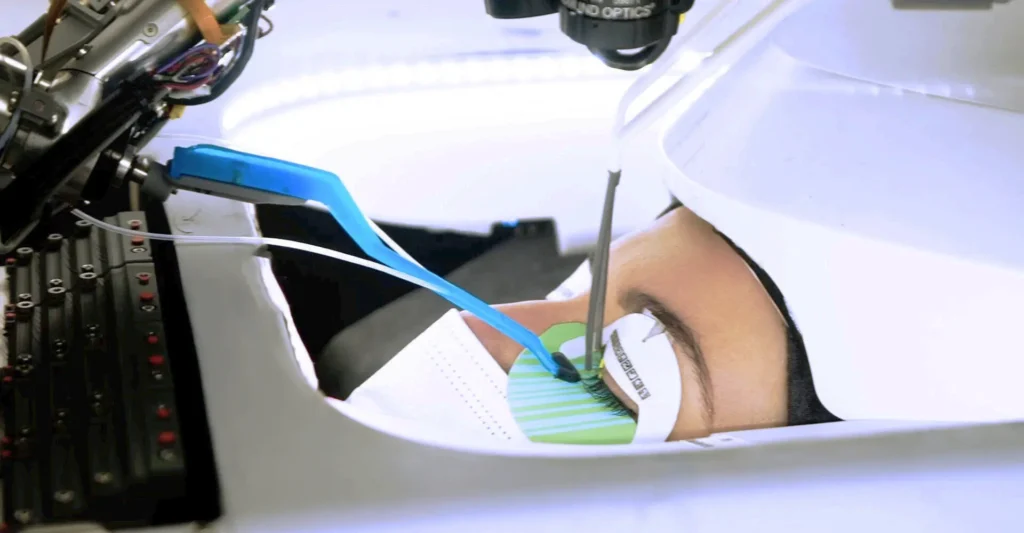
LUUM partnered with Triple Ring to develop a robotic system designed to automate the application of eyelash extensions with high precision, safety, and consistency. The system integrates machine vision and robotics technologies to support accurate positioning and controlled interaction near sensitive human anatomy.
Triple Ring developed the machine vision subsystem and contributed industrial design concepts that supported both technical performance and user comfort.
The system needed to safely perform highly precise procedures near the human eye while maintaining responsiveness to client movement. Low-latency perception and control were required to support real-time adjustments and maintain safe interaction.
The system also needed to support accurate perception across diverse users, including a wide range of skin tones and eyelash characteristics.
LUUM partnered with Triple Ring to develop a robotic system designed to automate the application of eyelash extensions with high precision, safety, and consistency. The system integrates machine vision and robotics technologies to support accurate positioning and controlled interaction near sensitive human anatomy.
Triple Ring developed the machine vision subsystem and contributed industrial design concepts that supported both technical performance and user comfort.
The system needed to safely perform highly precise procedures near the human eye while maintaining responsiveness to client movement. Low-latency perception and control were required to support real-time adjustments and maintain safe interaction.
The system also needed to support accurate perception across diverse users, including a wide range of skin tones and eyelash characteristics.
Client
LUUM
Practice Areas
Core Disciplines
Triple Ring applied expertise in imaging, robotics, and industrial design to develop a machine vision system capable of guiding robotic motion with high precision and responsiveness.
Key development activities included:
Triple Ring delivered a fully integrated machine vision subsystem and industrial design framework supporting LUUM’s robotic eyelash application platform.
The system enabled consistent and efficient placement of eyelash extensions while maintaining high standards of safety and supporting reliable performance across diverse users.
Triple Ring Talent
At Triple Ring, we draw on a deep bench of expertise across diverse disciplines matched to each innovation challenge. For this project, our team applied machine vision, optical engineering, robotic control systems, and industrial design expertise to develop a precision robotic platform capable of safely automating eyelash extension application near sensitive human anatomy.
Todd and Keith collaborated with many talented colleagues across Triple Ring and LUUM on this project.
Physics & Optical Science
Dr. Todd Harris applies expertise in optics and imaging physics to the development of advanced sensing and illumination technologies. His work combines optical modeling with system design, helping teams translate complex physical principles into dependable, high-performance solutions.
Physics & Optical Science
Dr. Keith Nishihara works in computer vision and image-based system development, transforming advanced algorithms into practical hardware and software solutions. His work supports applications ranging from medical imaging to real-time recognition systems, helping teams solve complex visual and spatial challenges.
Client
Hound Labs
Practice Areas
Core Disciplines
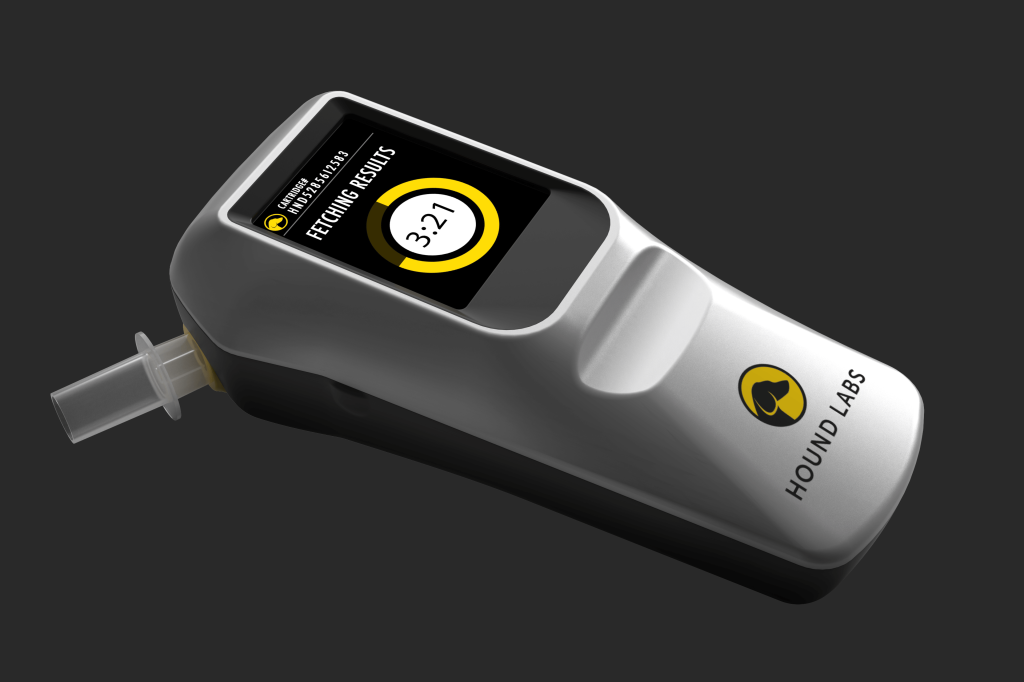
Hound Labs engaged Triple Ring to invent a portable breath analyzer capable of detecting recent marijuana use. The system was developed to support point-of-use testing in law enforcement and workplace environments requiring reliable impairment detection.
Starting from an early concept sketch, Triple Ring collaborated with Hound Labs to develop a high-sensitivity breathalyzer platform combining chemical detection and portable instrumentation technologies.
The system needed to detect Δ-9 THC in exhaled breath with clinical-grade sensitivity while maintaining portability and reliability in field conditions.
In addition to engineering challenges, the project required validation of THC pharmacodynamics in breath, including generation of peer-reviewed scientific evidence supporting detection feasibility.
Hound Labs engaged Triple Ring to invent a portable breath analyzer capable of detecting recent marijuana use. The system was developed to support point-of-use testing in law enforcement and workplace environments requiring reliable impairment detection.
Starting from an early concept sketch, Triple Ring collaborated with Hound Labs to develop a high-sensitivity breathalyzer platform combining chemical detection and portable instrumentation technologies.
The system needed to detect Δ-9 THC in exhaled breath with clinical-grade sensitivity while maintaining portability and reliability in field conditions.
In addition to engineering challenges, the project required validation of THC pharmacodynamics in breath, including generation of peer-reviewed scientific evidence supporting detection feasibility.
Client
Hound Labs
Practice Areas
Core Disciplines
Triple Ring assembled multidisciplinary development teams to design and validate a fully integrated breath analysis platform combining microfluidic sampling and portable device technologies.
Development efforts included:
Triple Ring delivered fully functioning prototype systems consisting of a breath capture device, control station, and microfluidic cartridges.
The system produced clinical-grade data at the point of use, supporting detection of recent marijuana use and enabling development of a first-in-class breath-based detection platform.
Triple Ring Talent
At Triple Ring, we draw on a deep bench of expertise across diverse disciplines matched to each innovation challenge. For this project, our team combined microfluidic engineering, biological sensing, portable instrumentation, and clinical validation expertise to develop a first-in-class breath-based THC detection platform capable of delivering clinical-grade results at the point of use.
David and Kevin collaborated with many talented colleagues across Triple Ring and Hound Labs on this project.
Mechanical Engineering & Applied Sciences
Dr. David Shack directs the development of complex scientific measurement and analysis systems across multidisciplinary teams. His work integrates algorithms, software, fluidics, and optical technologies, helping advance tools that support precision research and clinical applications.
Biomedical & Systems Engineering
Kevin Limtao connects system requirements, architecture, and integration across complex medical and diagnostic technologies. His work helps teams align design, risk, and performance throughout the development lifecycle, ensuring systems function reliably from early concepts through deployment.
Client
BlackLight Surgical
Core Disciplines
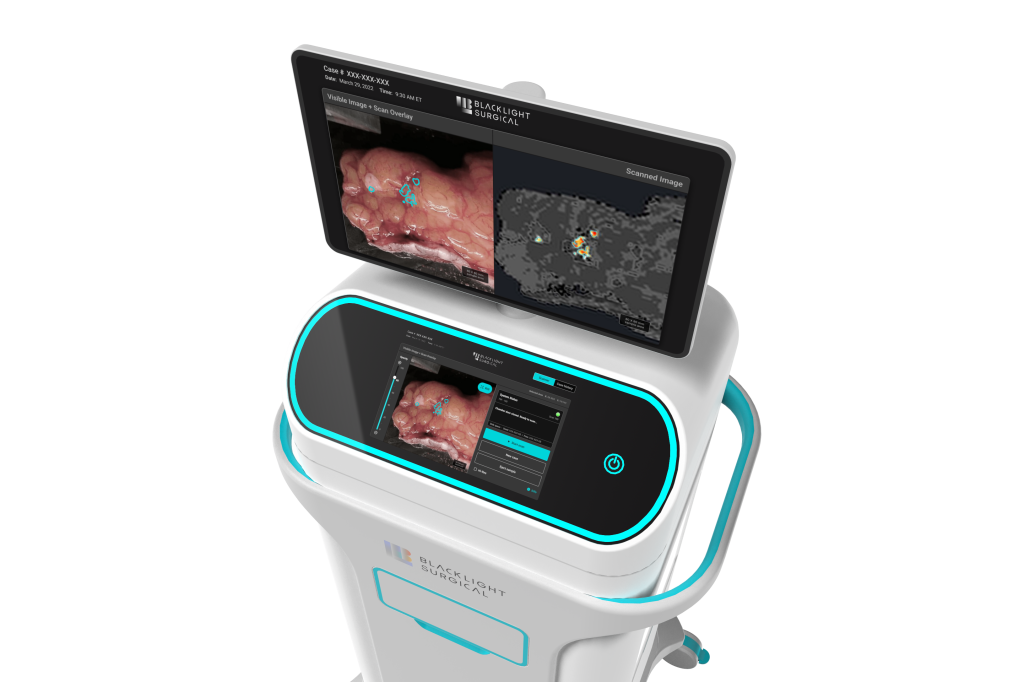
BlackLight Surgical engaged Triple Ring to develop a high-speed biochemical imaging platform designed for intra-operative tissue analysis. The system leveraged picosecond pulsing laser technology and machine learning workflows to enable rapid tissue identification during surgical procedures.
The resulting platform supports real-time clinical decision making by allowing clinicians to distinguish between normal and diseased tissue directly in the operating suite.
The system required integration of advanced optical imaging technology capable of performing rapid biochemical analysis during surgery. Reliable performance was required across demanding clinical environments and complex workflows.
Delivering this capability required precise integration of optical, mechanical, software, and machine learning systems into a clinically deployable architecture.
BlackLight Surgical engaged Triple Ring to develop a high-speed biochemical imaging platform designed for intra-operative tissue analysis. The system leveraged picosecond pulsing laser technology and machine learning workflows to enable rapid tissue identification during surgical procedures.
The resulting platform supports real-time clinical decision making by allowing clinicians to distinguish between normal and diseased tissue directly in the operating suite.
The system required integration of advanced optical imaging technology capable of performing rapid biochemical analysis during surgery. Reliable performance was required across demanding clinical environments and complex workflows.
Delivering this capability required precise integration of optical, mechanical, software, and machine learning systems into a clinically deployable architecture.
Client
BlackLight Surgical
Core Disciplines
Triple Ring assembled multidisciplinary engineering and scientific teams to design and integrate the imaging platform using structured development and validation methodologies.
Technical execution focused on:
Triple Ring delivered a fully integrated intra-operative biochemical imaging platform supporting clinical studies and real-time tissue visualization.
The system was developed to ISO 13485 standards and documented within a Quality Management System transferred to BlackLight Surgical, enabling deployment of advanced intra-operative imaging workflows.
Triple Ring Talent
At Triple Ring, we draw on a deep bench of expertise across diverse disciplines matched to each innovation challenge. For this project, our team combined high-speed laser optical imaging, machine learning, mechanical engineering, and quality systems expertise to develop a fully integrated intra-operative tissue analysis platform capable of distinguishing healthy from diseased tissue in real time.
Todd, Cameran, and Shehadeh collaborated with many talented colleagues across Triple Ring and BlackLight Surgical on this project.
Physics & Optical Science
Dr. Todd Harris applies expertise in optics and imaging physics to the development of advanced sensing and illumination technologies. His work combines optical modeling with system design, helping teams translate complex physical principles into dependable, high-performance solutions.
Bioengineering
Cameran Casale contributes to the development of imaging, microfluidic, and diagnostic technologies across multidisciplinary programs. Her work supports system integration and testing efforts, helping teams refine complex devices for reliable performance in research and clinical environments.
Aerospace & Mechanical Engineering
Shehadeh Dajani supports the development of safety-critical embedded systems used in regulated medical technologies. His work spans software and system integration across feasibility, clinical, and production stages, helping ensure reliable performance throughout the development lifecycle.
Client
MediBeacon
Practice Areas
Core Disciplines
MediBeacon partnered with Triple Ring to develop a photonics-based transdermal detection system designed to measure kidney function using fluorescent tracer technology. The system enables non-invasive monitoring of intravenously injected tracers to generate clinically actionable measurements of glomerular filtration rate (GFR).
The resulting wearable detection platform integrates optical sensing and physiological measurement technologies to support real-time kidney function assessment in clinical environments.
MediBeacon required development of a wearable optical detection system capable of monitoring fluorescent tracer signals through human tissue. The system needed to achieve high sensitivity and accuracy while remaining comfortable and practical for clinical use.
In addition to performance requirements, the device needed to meet strict constraints related to cost, usability, and manufacturability. The development effort required careful balancing of optical performance, ergonomic design, and regulatory compliance within a wearable form factor.
MediBeacon partnered with Triple Ring to develop a photonics-based transdermal detection system designed to measure kidney function using fluorescent tracer technology. The system enables non-invasive monitoring of intravenously injected tracers to generate clinically actionable measurements of glomerular filtration rate (GFR).
The resulting wearable detection platform integrates optical sensing and physiological measurement technologies to support real-time kidney function assessment in clinical environments.
MediBeacon required development of a wearable optical detection system capable of monitoring fluorescent tracer signals through human tissue. The system needed to achieve high sensitivity and accuracy while remaining comfortable and practical for clinical use.
In addition to performance requirements, the device needed to meet strict constraints related to cost, usability, and manufacturability. The development effort required careful balancing of optical performance, ergonomic design, and regulatory compliance within a wearable form factor.
Client
MediBeacon
Practice Areas
Core Disciplines
Triple Ring collaborated closely with MediBeacon to design and deliver a non-invasive wearable detection system capable of supporting accurate GFR measurement. The development effort leveraged expertise in light-based tissue analysis and system-level modeling to optimize detection performance while supporting user comfort and clinical usability.
The team addressed these challenges by:
Fully integrated wearable GFR detection systems were developed under ISO 13485 design controls and delivered to support critical clinical trials. The resulting devices enabled accurate, non-invasive measurement of kidney function through optical detection of fluorescent tracers.
The platform supported the advancement of MediBeacon’s GFR monitoring technology toward clinical validation, enabling real-time physiological measurement while maintaining patient comfort and usability.
Triple Ring Talent
At Triple Ring, we draw on a deep bench of expertise across diverse disciplines matched to each innovation challenge. For this project, our team combined photonics, transdermal optical sensing, wearable device design, and advanced simulation expertise to develop a clinical-grade wearable system capable of measuring kidney function non-invasively through fluorescent tracer detection.
Gus and Ed collaborated with many talented colleagues across Triple Ring and MediBeacon on this project.
Systems Architecture & Electrical Engineering
Augustus “Gus” Lowell defines the architecture of complex software and hardware systems across multidisciplinary programs. His work establishes the frameworks that connect data processing, control, and safety-critical functions, helping ensure technologies operate reliably as integrated systems.
Electrical Engineering & Advanced Technologies
Ed Solomon connects advanced engineering with business strategy to help bring innovative technologies into practical use. His work supports system architecture, partnership development, and technology adoption, helping organizations move complex ideas toward successful deployment.
Client
One Health Group
Practice Areas
Core Disciplines
One Health Group partnered with Triple Ring to develop a non-invasive wearable physiological monitoring system designed to capture biometric data from animals in real time. The system was developed to support continuous health monitoring in veterinary settings while improving patient comfort and enabling early detection of health issues.
The resulting wearable platform integrates physiological sensing and wireless communication technologies to enable long-term monitoring and provide actionable health insights for veterinary care providers.
One Health Group required development of a wearable monitoring device capable of accurately measuring physiological signals in animals while remaining comfortable and suitable for continuous use. The system needed to support long-term data collection and deliver real-time alerts without interfering with normal animal movement.
As a lean startup organization, One Health Group relied on a fully outsourced R&D model. The project required multidisciplinary engineering expertise to design, prototype, and validate a complex sensing platform while rapidly demonstrating feasibility and reducing development risk.
One Health Group partnered with Triple Ring to develop a non-invasive wearable physiological monitoring system designed to capture biometric data from animals in real time. The system was developed to support continuous health monitoring in veterinary settings while improving patient comfort and enabling early detection of health issues.
The resulting wearable platform integrates physiological sensing and wireless communication technologies to enable long-term monitoring and provide actionable health insights for veterinary care providers.
One Health Group required development of a wearable monitoring device capable of accurately measuring physiological signals in animals while remaining comfortable and suitable for continuous use. The system needed to support long-term data collection and deliver real-time alerts without interfering with normal animal movement.
As a lean startup organization, One Health Group relied on a fully outsourced R&D model. The project required multidisciplinary engineering expertise to design, prototype, and validate a complex sensing platform while rapidly demonstrating feasibility and reducing development risk.
Client
One Health Group
Practice Areas
Core Disciplines
Triple Ring led the development of a wearable physiological monitoring platform using a structured feasibility and product development approach. Industrial design, sensing technologies, and system integration were coordinated to ensure reliable performance and comfort across extended wear conditions.
Key contributions included:
Triple Ring delivered robust functional prototypes capable of generating high-quality physiological data suitable for ongoing product development and validation. The system demonstrated the feasibility of continuous biometric monitoring in veterinary applications.
The successful development effort supported One Health Group’s technology roadmap and strengthened its value proposition, enabling expanded partnerships with strategic investors in the veterinary health industry.
Triple Ring Talent
At Triple Ring, we draw on a deep bench of expertise across diverse disciplines matched to each innovation challenge. For this project, our team combined physiological sensing, wireless systems, industrial design, and startup-focused R&D expertise to develop a wearable continuous monitoring platform capable of capturing real-time biometric data from animals in veterinary settings.
Brian and Steve collaborated with many talented colleagues across Triple Ring and One Health Group on this project.
Experimental Physics & Instrumentation
Dr. Brian Wilfley leads the development of complex measurement and instrumentation systems grounded in experimental physics. His work combines theoretical insight with hands-on experimentation to advance technologies used in imaging, inspection, and scientific analysis.
Embedded Systems & Software Engineering
Steve Kuhn develops embedded software and real-time control systems that support complex hardware-driven technologies. His work focuses on software architecture, motion control, and system simulation, enabling reliable operation across integrated device platforms.