Key Innovation
Closed-loop microfluidics cut the cost and complexity of cell therapy manufacturing.
Closed-Loop Cell Therapy Manufacturing
Client
Scaled Cell Solutions
Practice Areas
TechBio & Life Sciences
Core Disciplines
Overview
Scaled Cell Solutions, a venture-backed startup, engaged Triple Ring to rethink cell therapy manufacturing with the aims of reducing cost, shortening time to dose, and expanding patient access. By Integrating a ground-breaking workflow, biophysical analysis, and novel gene delivery technology, our work built a foundation for disrupting cell therapy production.
Challenge
Current cell therapy manufacturing processes rely on technologies that introduce risk at every step as cells are transferred between functional modules within complex, high-cost workflows. These fragmented processes resist automation, increase variability, add contamination risk, and limit patient access to potentially life-saving therapies.
Triple Ring invented a closed-loop approach that reduces complexity, lowers cost, and shortens time to dose while maintaining safety, efficacy, and product quality.
Closed-Loop Cell Therapy Manufacturing
Overview
Scaled Cell Solutions, a venture-backed startup, engaged Triple Ring to rethink cell therapy manufacturing with the aims of reducing cost, shortening time to dose, and expanding patient access. By Integrating a ground-breaking workflow, biophysical analysis, and novel gene delivery technology, our work built a foundation for disrupting cell therapy production.
Challenge
Current cell therapy manufacturing processes rely on technologies that introduce risk at every step as cells are transferred between functional modules within complex, high-cost workflows. These fragmented processes resist automation, increase variability, add contamination risk, and limit patient access to potentially life-saving therapies.
Triple Ring invented a closed-loop approach that reduces complexity, lowers cost, and shortens time to dose while maintaining safety, efficacy, and product quality.
Client
Scaled Cell Solutions
Practice Areas
TechBio & Life Sciences
Core Disciplines
Molecular & Cell Biology
Systems Engineering
Applied Physics
Microfluidics

Solution
Triple Ring developed enabling technologies designed to streamline and modernize cell therapy manufacturing through an integrated closed-loop architecture.
The solution combined several novel technologies:
- A microfluidic-based end-to-end manufacturing platform
- Modular high-throughput cell selection technology
- Advanced non-viral gene transfer technologies
- Modular subsystems capable of operating independently or within an integrated workflow
Outcome
Triple Ring developed innovative technologies that advanced cell therapy manufacturing through a microfluidic-enabled, closed-loop, end-to-end production platform.
The system eliminates cold-chain storage challenges, reduces extensive quality control measures, and shortens patient wait times. The system architecture represents a significant advancement over traditional cell therapy manufacturing approaches, whose complex and costly workflows continue to limit patient access.
Importantly, the modular cell selection and transfection subsystems operate independently or in tandem, providing flexibility for both early research and later clinical applications. The functionality of the system was successfully demonstrated at the prototype level.
Triple Ring Talent
The Story Behind the Collaboration
At Triple Ring, we draw on a deep bench of expertise across diverse disciplines matched to each innovation challenge. For this project, our team combined cell biology, microfluidics, gene delivery, bioprocess engineering, and systems integration expertise to invent a closed-loop manufacturing platform with the potential to transform patient access to cell therapies.
Gene, Roger, and Ryan collaborated with many talented colleagues across Triple Ring and Scaled Cell Solutions on this project.

Gene Napolitano, PhD
Molecular Cell Biology
Dr. Gene Napolitano brings scientific leadership to drug discovery and in vitro diagnostics programs. His work connects expertise in cell and molecular biology with diagnostic and therapeutic development across a broad range of disease areas.

Roger Tang, PhD
Bioinstrumentation and Product Development
Dr. Roger Tang leads the development of complex medical technologies spanning bioengineering, instrumentation, and applied science. His work brings together scientific, engineering, and product development expertise to guide technologies from early concept through commercialization.

Ryan McGuinness
Biotechnology and Product Development
Ryan McGuinness connects innovators, technologies, and strategic partners to accelerate the development of novel healthcare technologies. His work helps organizations build the technical, commercial, and funding foundations needed to move promising ideas toward commercialization.

Key Innovation
Adaptive machine vision enabled precise cosmetic procedures safely near the eye.
Precision Aesthetic Robotics
Client
LUUM
Practice Areas
Imaging, Robotics & Radiotherapy
Core Disciplines
Overview
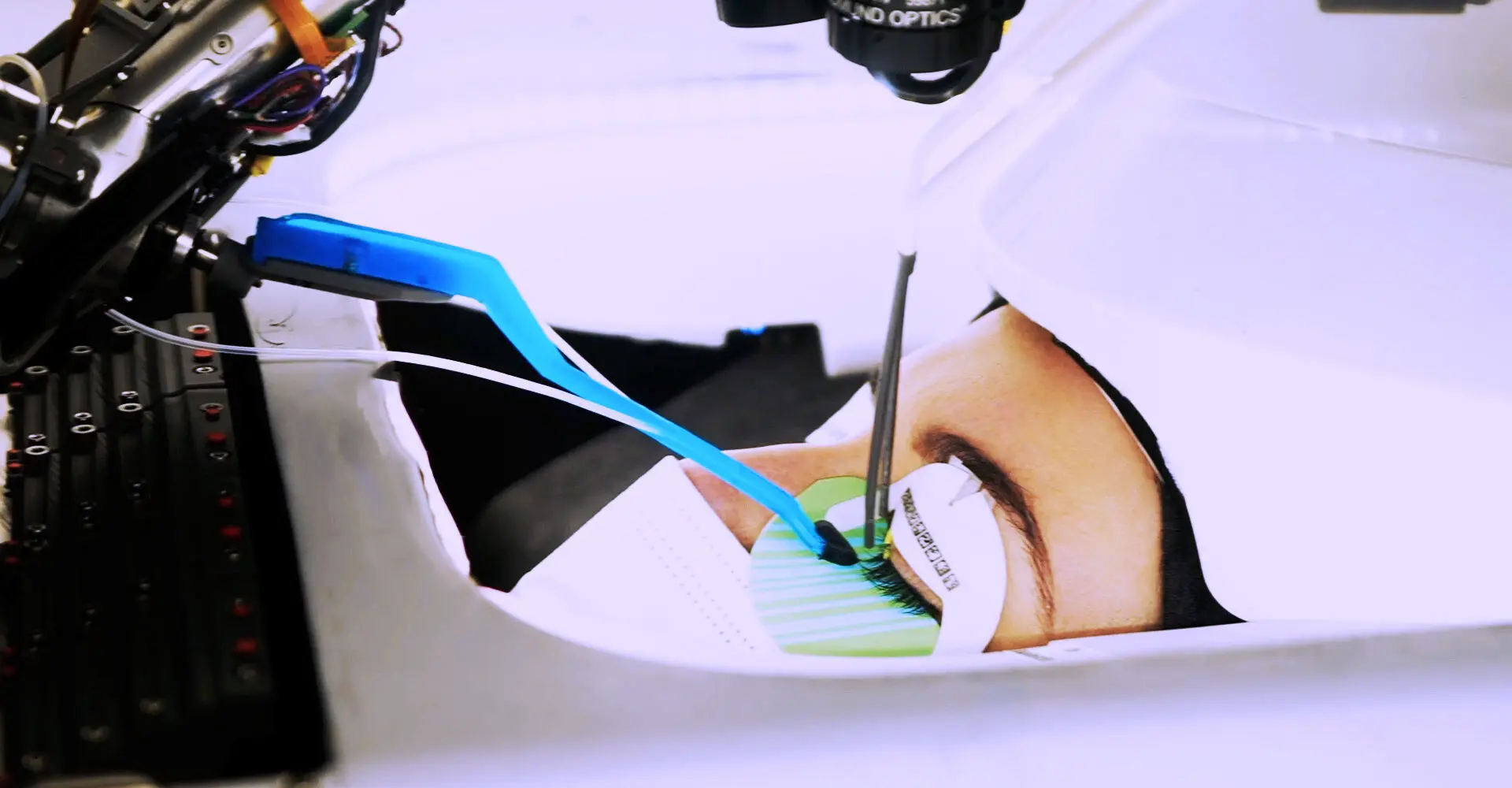
LUUM partnered with Triple Ring to develop a robotic system designed to automate the application of eyelash extensions with high precision, safety, and consistency. The system integrates machine vision and robotics technologies to support accurate positioning and controlled interaction near sensitive human anatomy.
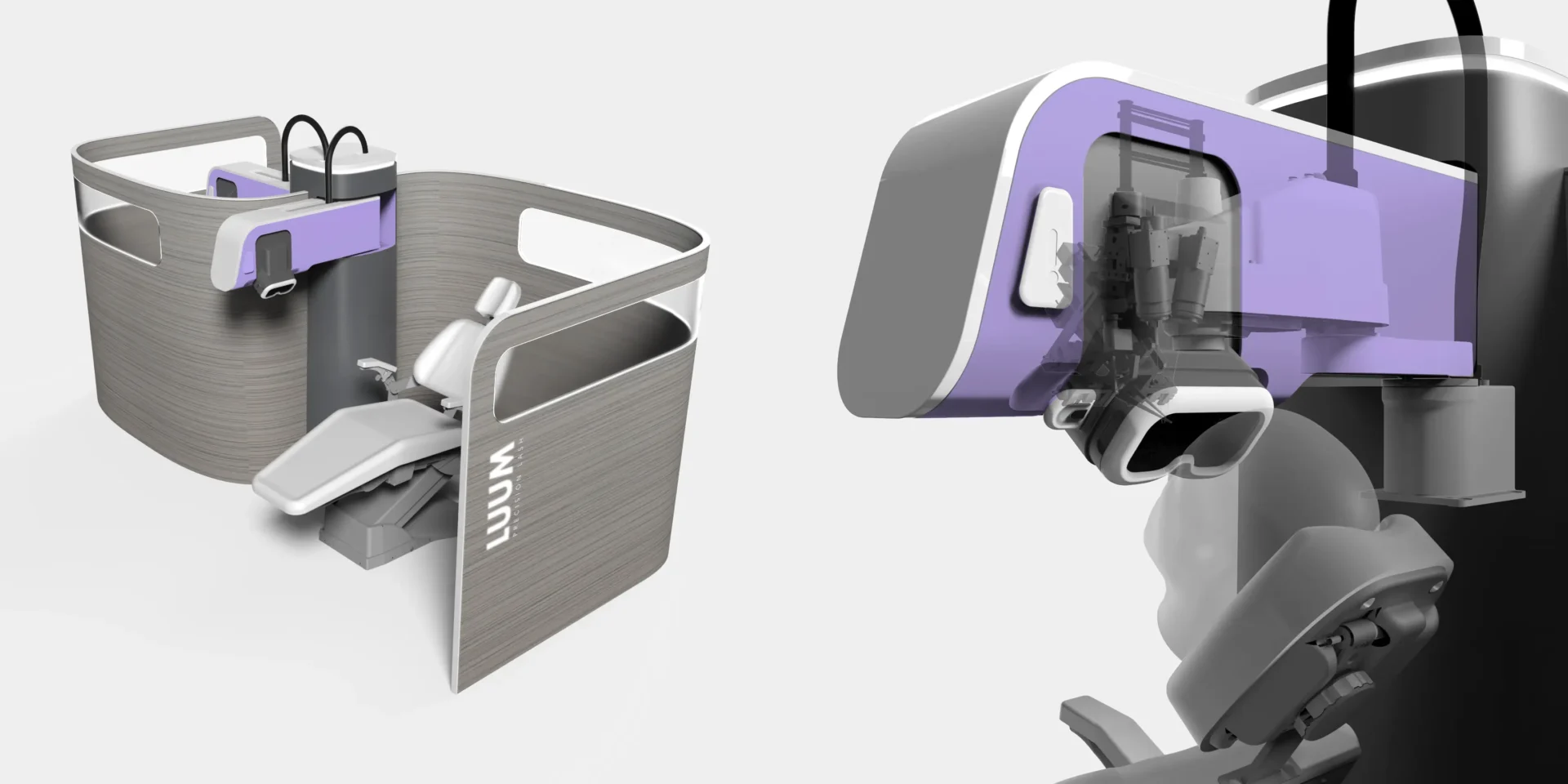
Triple Ring developed the machine vision subsystem and contributed industrial design concepts that supported both technical performance and user comfort.
Challenge
The system needed to safely perform highly precise procedures near the human eye while maintaining responsiveness to client movement. Low-latency perception and control were required to support real-time adjustments and maintain safe interaction.
The system also needed to support accurate perception across diverse users, including a wide range of skin tones and eyelash characteristics.
Precision Aesthetic Robotics
Overview
LUUM partnered with Triple Ring to develop a robotic system designed to automate the application of eyelash extensions with high precision, safety, and consistency. The system integrates machine vision and robotics technologies to support accurate positioning and controlled interaction near sensitive human anatomy.
Triple Ring developed the machine vision subsystem and contributed industrial design concepts that supported both technical performance and user comfort.
Challenge
The system needed to safely perform highly precise procedures near the human eye while maintaining responsiveness to client movement. Low-latency perception and control were required to support real-time adjustments and maintain safe interaction.
The system also needed to support accurate perception across diverse users, including a wide range of skin tones and eyelash characteristics.
Client
LUUM
Practice Areas
Imaging, Robotics & Radiotherapy
Core Disciplines
Mechanical Engineering
Systems Engineering
Photonics & Imaging
Microfluidics
Solution
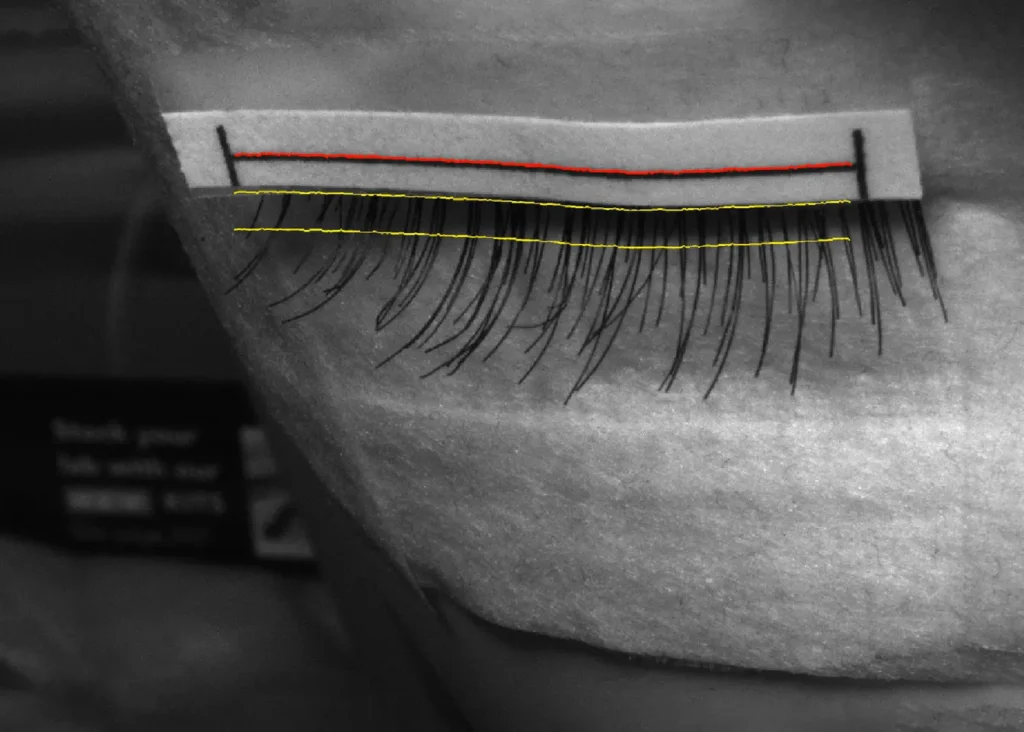
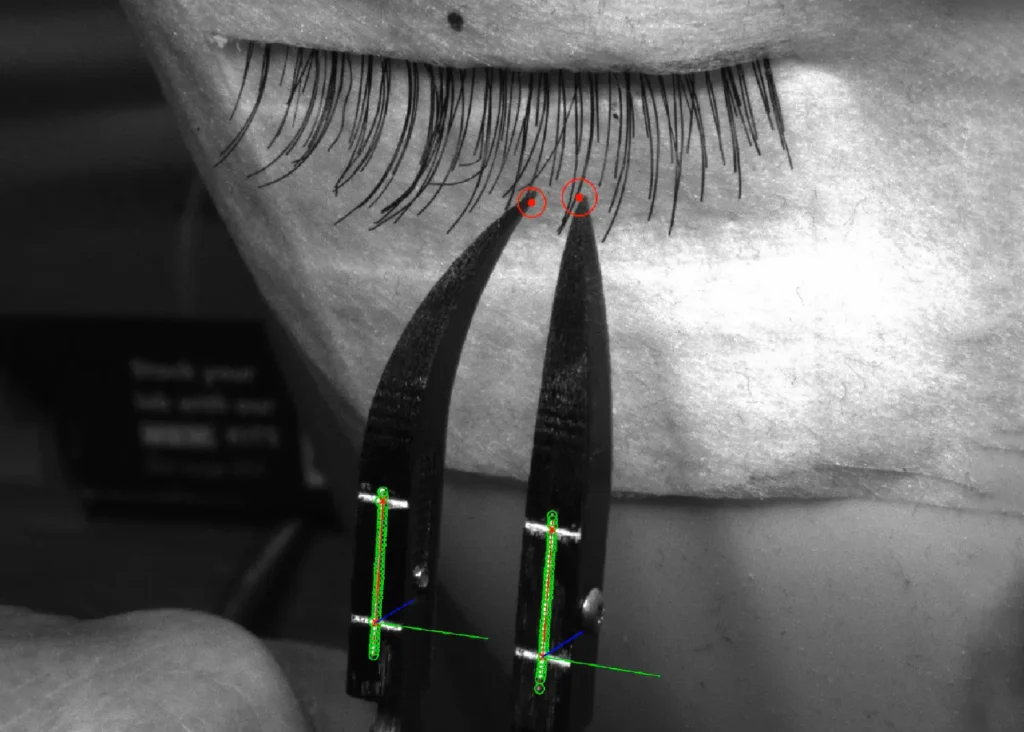
Triple Ring applied expertise in imaging, robotics, and industrial design to develop a machine vision system capable of guiding robotic motion with high precision and responsiveness.
Key development activities included:
- Developing machine vision algorithms capable of tracking fine features in three-dimensional space
- Designing perception systems that responded rapidly to client movement
- Integrating redundant safety features to support safe operation near sensitive anatomy
- Creating industrial design concepts that improved comfort and promoted user confidence
Outcome
Triple Ring delivered a fully integrated machine vision subsystem and industrial design framework supporting LUUM’s robotic eyelash application platform.
The system enabled consistent and efficient placement of eyelash extensions while maintaining high standards of safety and supporting reliable performance across diverse users.
Triple Ring Talent
The Story Behind the Innovation
At Triple Ring, we draw on a deep bench of expertise across diverse disciplines matched to each innovation challenge. For this project, our team applied machine vision, optical engineering, robotic control systems, and industrial design expertise to develop a precision robotic platform capable of safely automating eyelash extension application near sensitive human anatomy.
Todd and Keith collaborated with many talented colleagues across Triple Ring and LUUM on this project.

Todd Harris, PhD
Physics & Optical Science
Dr. Todd Harris applies expertise in optics and imaging physics to the development of advanced sensing and illumination technologies. His work combines optical modeling with system design, helping teams translate complex physical principles into dependable, high-performance solutions.

Keith Nishihara, PhD
Physics & Optical Science
Dr. Keith Nishihara works in computer vision and image-based system development, transforming advanced algorithms into practical hardware and software solutions. His work supports applications ranging from medical imaging to real-time recognition systems, helping teams solve complex visual and spatial challenges.

Key Innovation
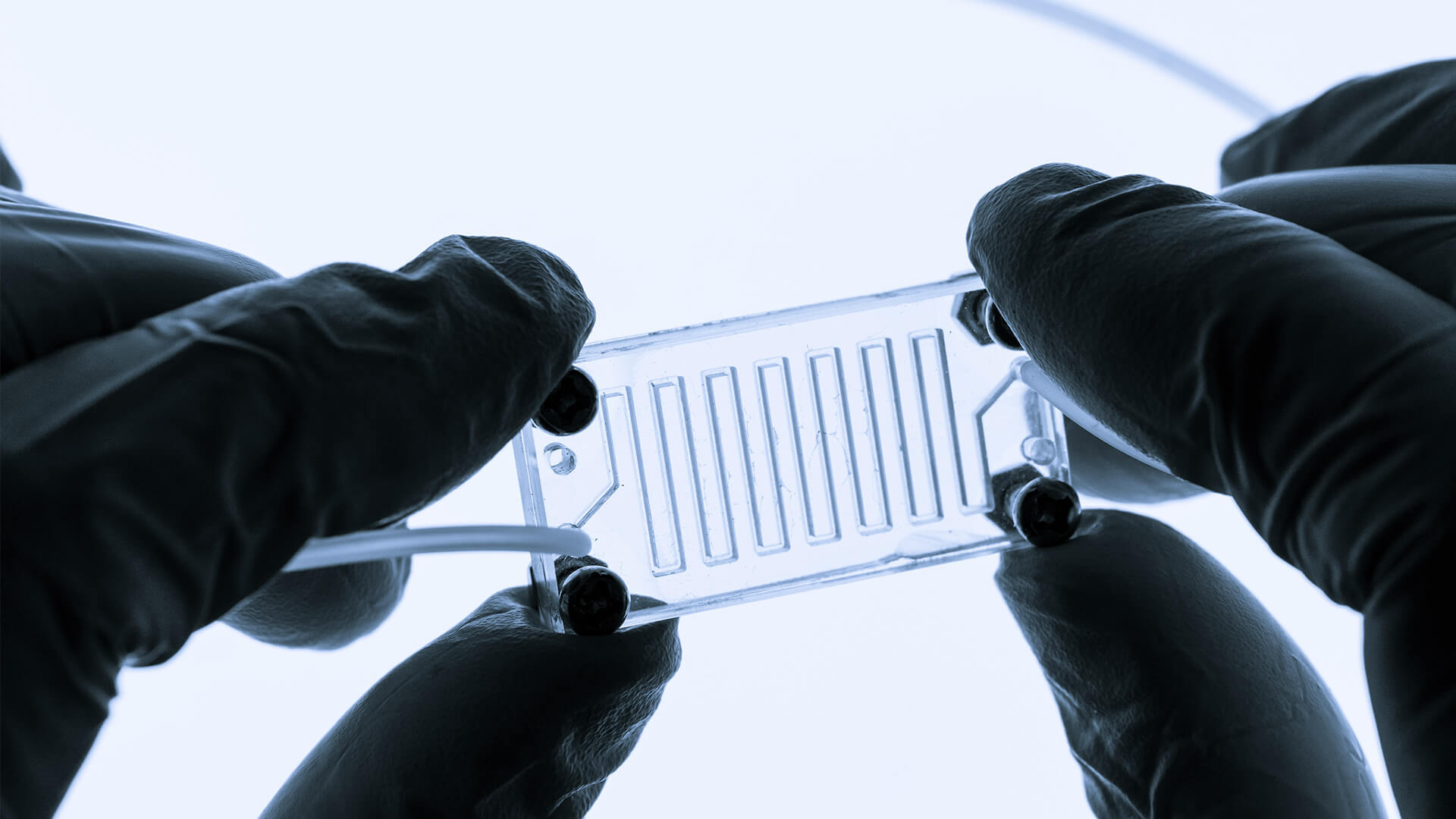
Microfluidic lab-on-a-chip technology brought clinical-grade THC detection out of the lab.
Cannabis Breathalyzer System
Client
Hound Labs
Practice Areas
TechBio & Life Sciences
Core Disciplines
Overview
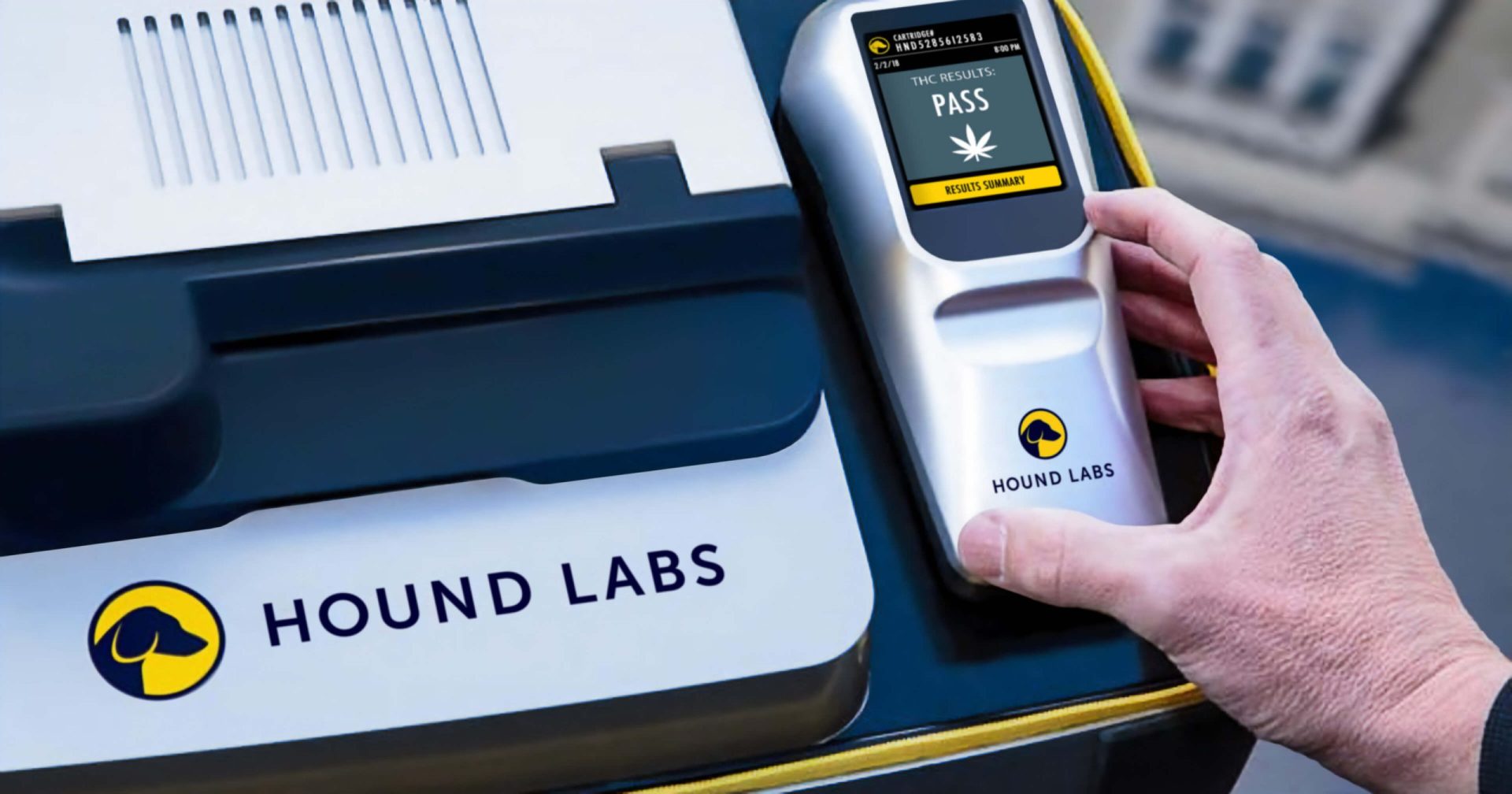
Hound Labs engaged Triple Ring to invent a portable breath analyzer capable of detecting recent marijuana use. The system was developed to support point-of-use testing in law enforcement and workplace environments requiring reliable impairment detection.
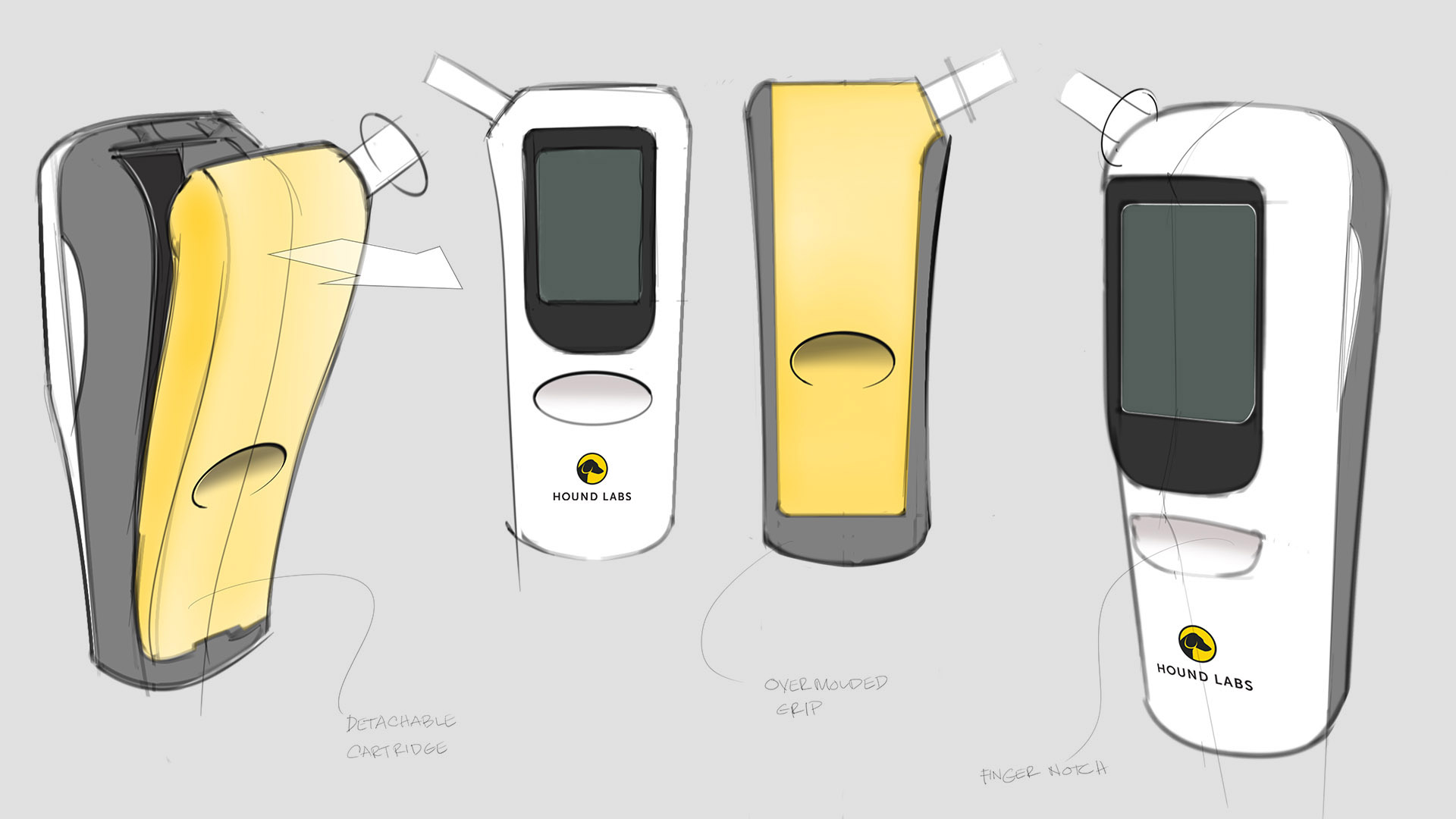
Starting from an early concept sketch, Triple Ring collaborated with Hound Labs to develop a high-sensitivity breathalyzer platform combining chemical detection and portable instrumentation technologies.
Challenge
The system needed to detect Δ-9 THC in exhaled breath with clinical-grade sensitivity while maintaining portability and reliability in field conditions.
In addition to engineering challenges, the project required validation of THC pharmacodynamics in breath, including generation of peer-reviewed scientific evidence supporting detection feasibility.
Cannabis Breathalyzer System
Overview
Hound Labs engaged Triple Ring to invent a portable breath analyzer capable of detecting recent marijuana use. The system was developed to support point-of-use testing in law enforcement and workplace environments requiring reliable impairment detection.
Starting from an early concept sketch, Triple Ring collaborated with Hound Labs to develop a high-sensitivity breathalyzer platform combining chemical detection and portable instrumentation technologies.
Challenge
The system needed to detect Δ-9 THC in exhaled breath with clinical-grade sensitivity while maintaining portability and reliability in field conditions.
In addition to engineering challenges, the project required validation of THC pharmacodynamics in breath, including generation of peer-reviewed scientific evidence supporting detection feasibility.
Client
Hound Labs
Practice Areas
TechBio & Life Sciences
Core Disciplines
Software Engineering
Mechanical Engineering
Systems Engineering
Transfer to Manufacture
Electrical Engineering
Optical Science
Quality System Management
Embedded Systems
Microfluidics
Solution
Triple Ring assembled multidisciplinary development teams to design and validate a fully integrated breath analysis platform combining microfluidic sampling and portable device technologies.
Development efforts included:
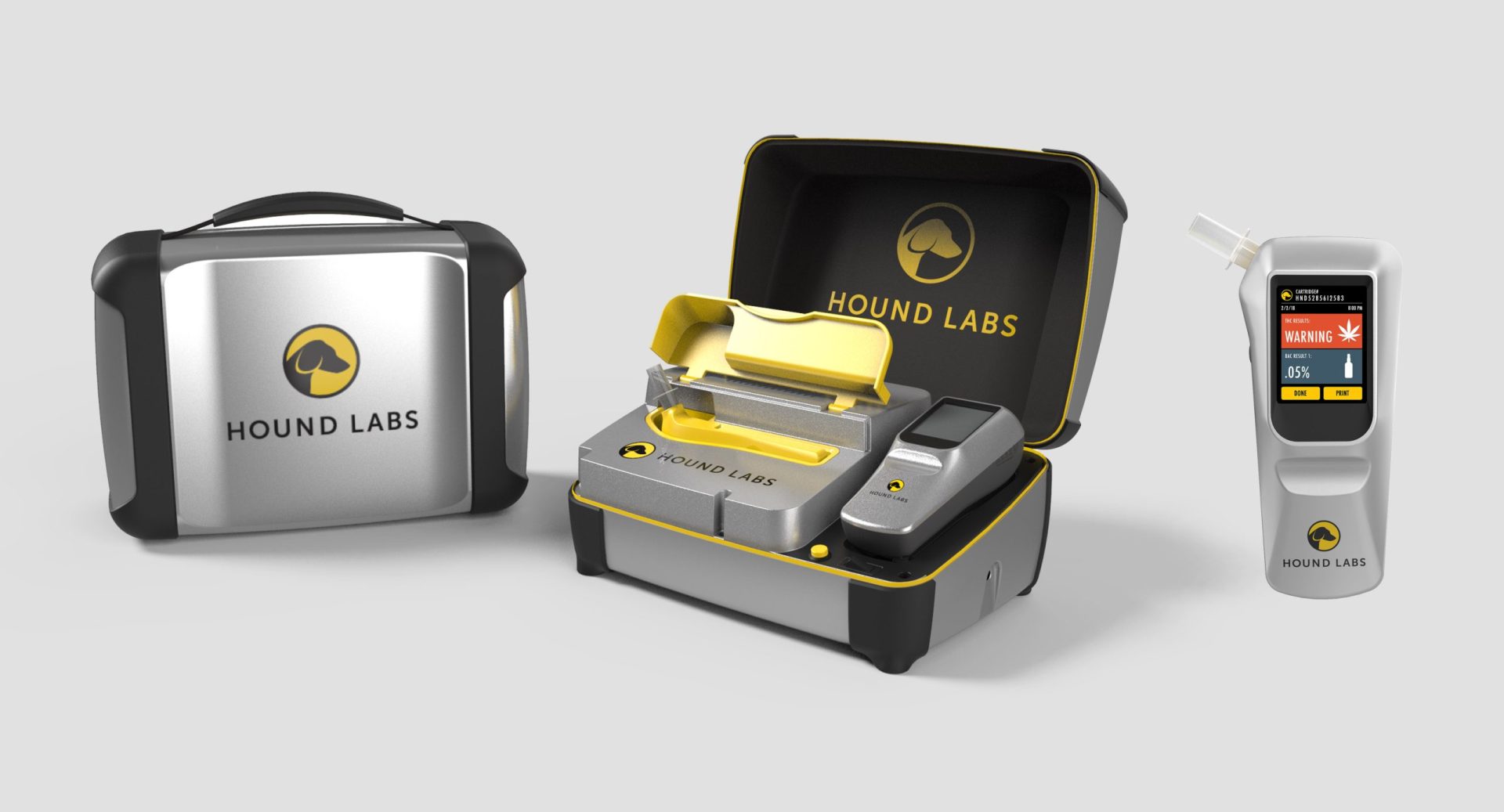
- Designing a portable breath capture device optimized for reliable sample collection
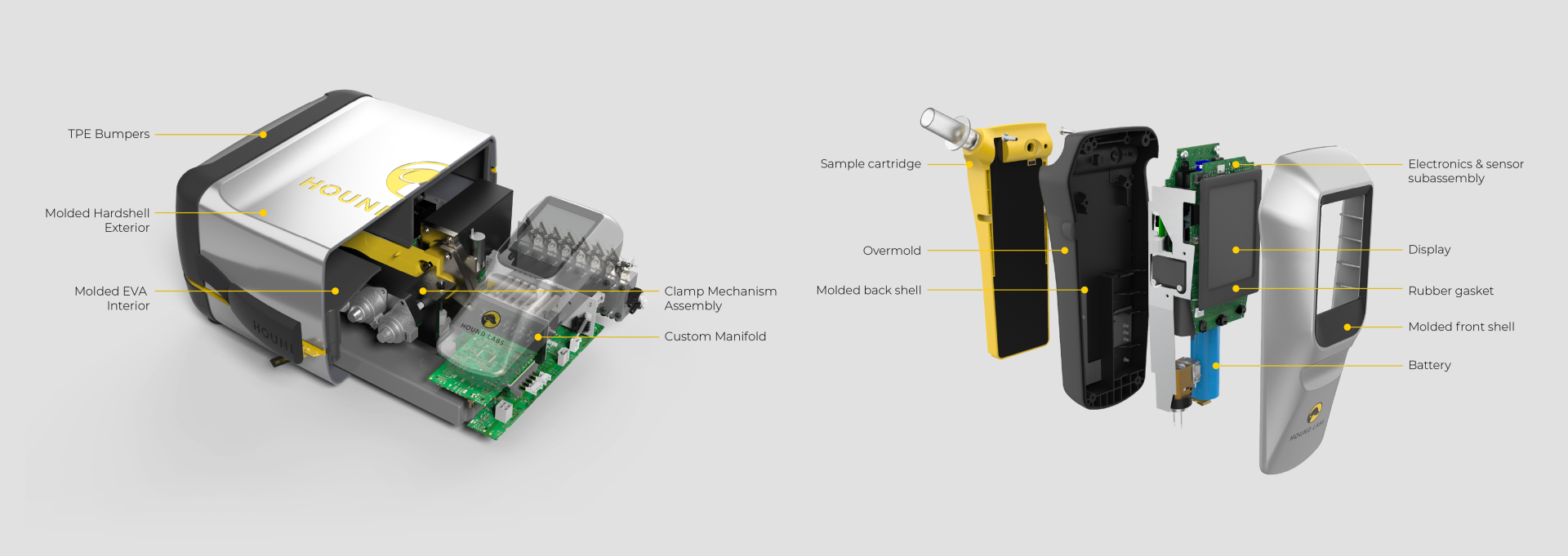
- Engineering microfluidic lab-on-a-chip cartridges supporting sensitive compound detection
- Integrating control station hardware capable of processing and analyzing captured samples
- Supporting validation activities that produced peer-reviewed pharmacodynamic data
- Developing prototype systems suitable for demonstration, testing, and continued product development
Outcome
Triple Ring delivered fully functioning prototype systems consisting of a breath capture device, control station, and microfluidic cartridges.
The system produced clinical-grade data at the point of use, supporting detection of recent marijuana use and enabling development of a first-in-class breath-based detection platform.
Triple Ring Talent
The Story Behind the Innovation
At Triple Ring, we draw on a deep bench of expertise across diverse disciplines matched to each innovation challenge. For this project, our team combined microfluidic engineering, biological sensing, portable instrumentation, and clinical validation expertise to develop a first-in-class breath-based THC detection platform capable of delivering clinical-grade results at the point of use.
David and Kevin collaborated with many talented colleagues across Triple Ring and Hound Labs on this project.

David Shack, PhD
Mechanical Engineering & Applied Sciences
Dr. David Shack directs the development of complex scientific measurement and analysis systems across multidisciplinary teams. His work integrates algorithms, software, fluidics, and optical technologies, helping advance tools that support precision research and clinical applications.

Kevin Limtao
Biomedical & Systems Engineering
Kevin Limtao connects system requirements, architecture, and integration across complex medical and diagnostic technologies. His work helps teams align design, risk, and performance throughout the development lifecycle, ensuring systems function reliably from early concepts through deployment.