Key Innovation
From unmet clinical need to company formation: the path to an at-home diagnostic solution.
At-Home Biomarker Measurements for Women
Client
Two X Labs
Practice Areas
TechBio & Life Sciences
Core Disciplines
Overview
A venture studio engaged Triple Ring to identify commercially viable opportunities within women’s health. Former Stanford Biodesign Innovation fellows at Triple Ring applied the Biodesign process and evaluated unmet clinical needs transforming one of the highest-potential opportunities into an early-stage diagnostic concept.
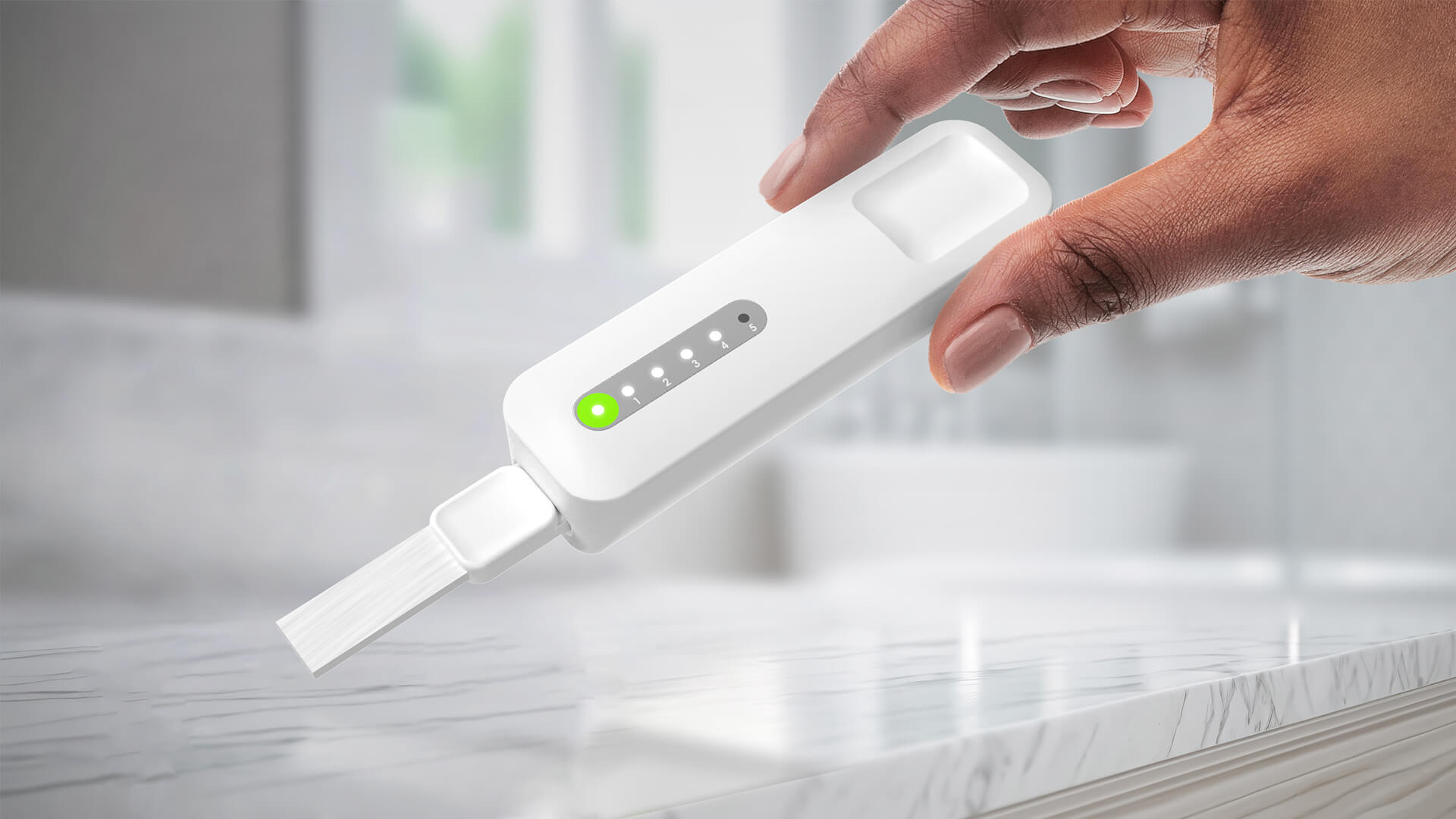
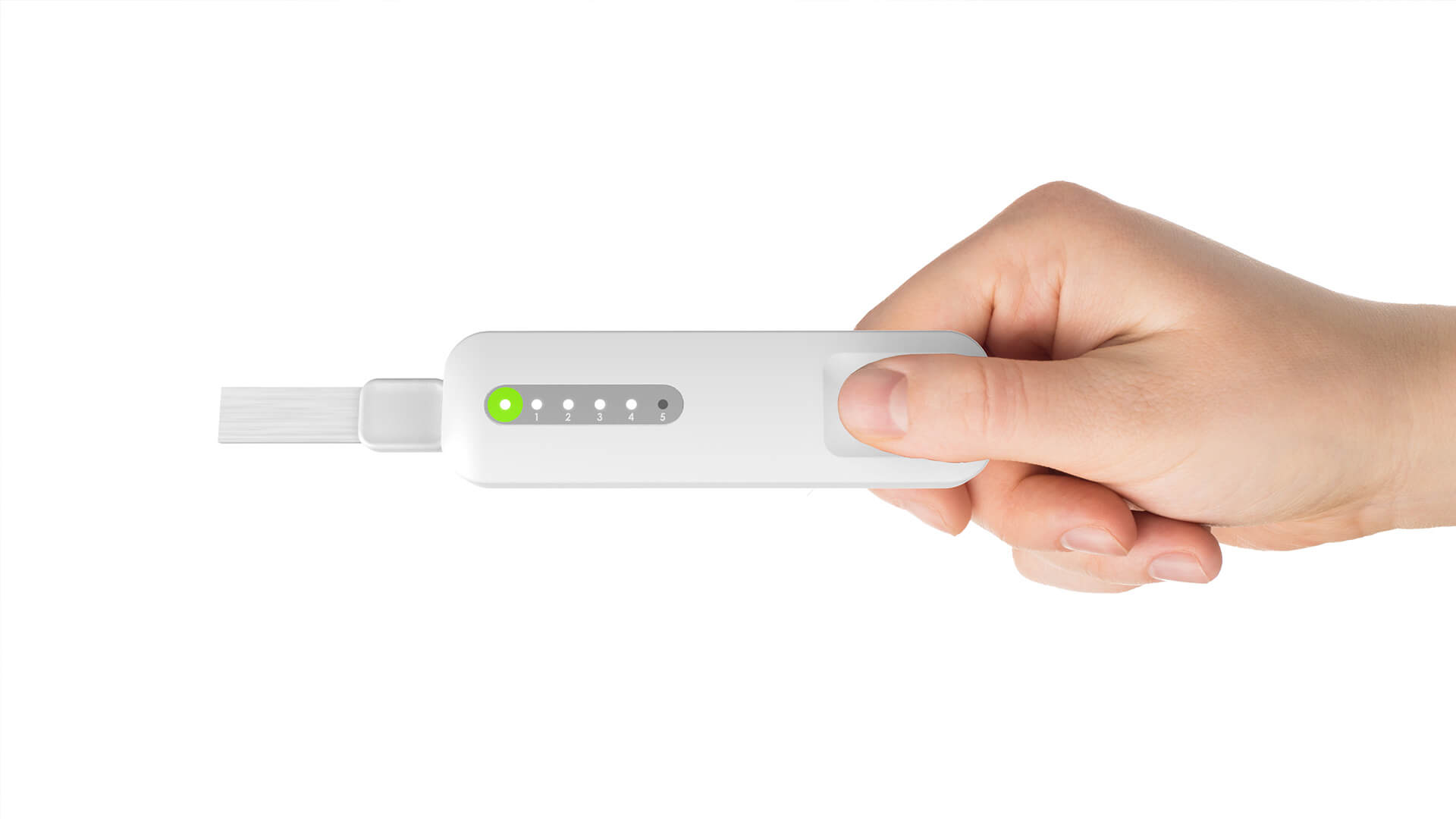
The program combined market discovery, clinical insight, and rapid technical innovation to create an at-home, semi-quantitative biomarker measurement platform designed for low-cost, CLIA-waived testing.
Challenge
The project began with a broad question: where are the greatest unmet opportunities in women’s health? Triple Ring interviewed healthcare providers, key opinion leaders, and other stakeholders while analyzing publicly available data to identify unmet clinical needs with meaningful market potential.
One promising opportunity emerged: a low-cost system capable of performing semi-quantitative biomarker measurements at home. Delivering clinically meaningful performance within the constraints of an affordable, CLIA-waived diagnostic platform presented a significant technical challenge.
At-Home Biomarker Measurements for Women
Overview
A venture studio engaged Triple Ring to identify commercially viable opportunities within women’s health. Former Stanford Biodesign Innovation fellows at Triple Ring applied the Biodesign process and evaluated unmet clinical needs transforming one of the highest-potential opportunities into an early-stage diagnostic concept.
The program combined market discovery, clinical insight, and rapid technical innovation to create an at-home, semi-quantitative biomarker measurement platform designed for low-cost, CLIA-waived testing.
Challenge
The project began with a broad question: where are the greatest unmet opportunities in women’s health? Triple Ring interviewed healthcare providers, key opinion leaders, and other stakeholders while analyzing publicly available data to identify unmet clinical needs with meaningful market potential.
One promising opportunity emerged: a low-cost system capable of performing semi-quantitative biomarker measurements at home. Delivering clinically meaningful performance within the constraints of an affordable, CLIA-waived diagnostic platform presented a significant technical challenge.
Client
Two X Labs
Practice Areas
TechBio & Life Sciences
Core Disciplines
Molecular & Cell Biology
Systems Engineering
Industrial Design
Solution
Triple Ring applied multidisciplinary product development expertise and the Biodesign methodology and to rapidly progress from opportunity identification to proof of concept.
The program combined clinical insight with rapid innovation by:
- Applying the Stanford Biodesign process to identify and prioritize unmet clinical needs
- Evaluating opportunities based on clinical impact, market potential, technical risk, and commercialization potential
- Brainstorming and refining technical concepts through an interdisciplinary team of scientists and engineers
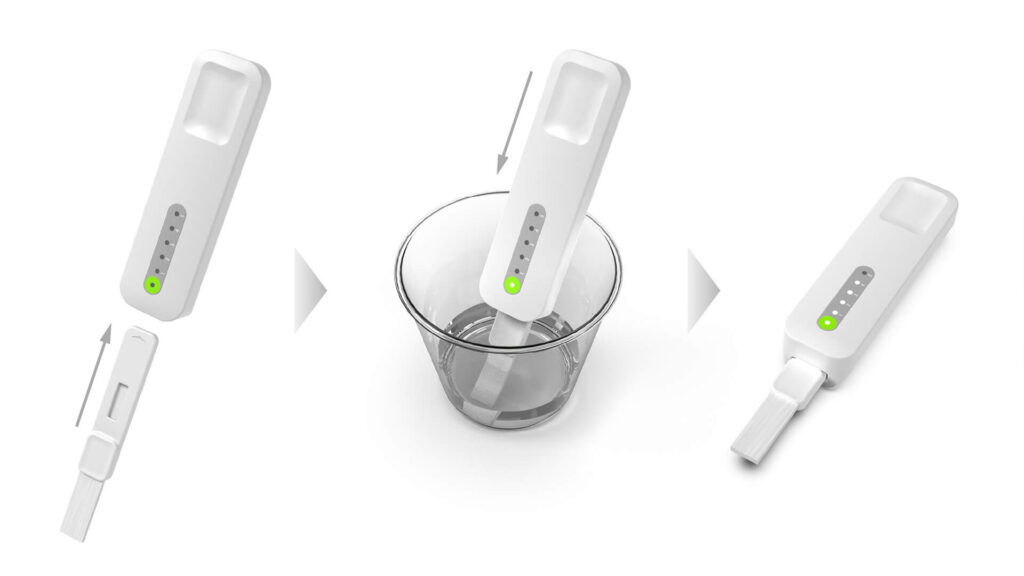
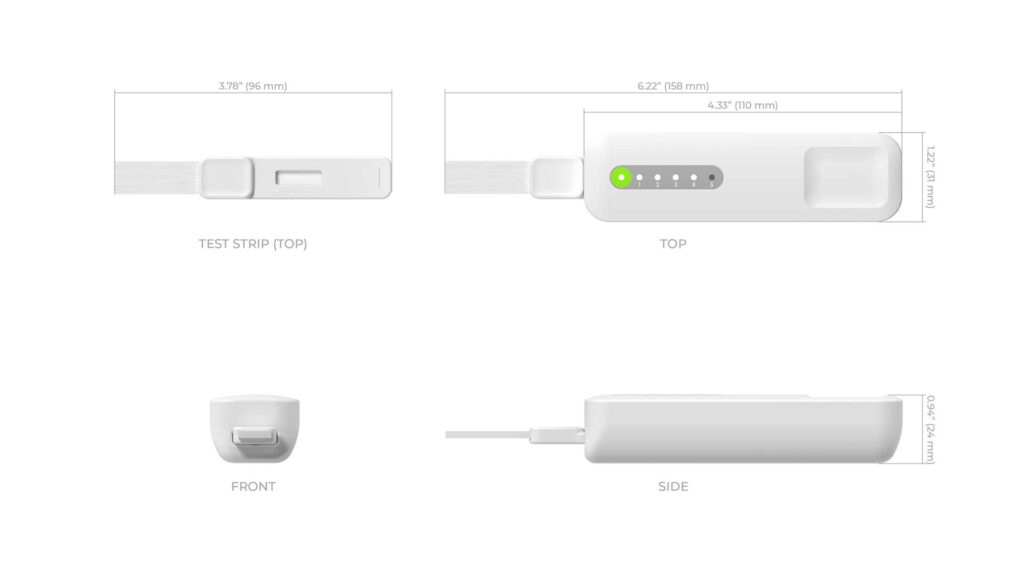
- Developing an initial proof-of-concept prototype for an at-home semi-quantitative biomarker measurement system
- Generating assay data and product visualizations to support company formation, fundraising, and commercialization plans
Outcome
Within weeks, Triple Ring developed an initial proof-of-concept prototype and demonstrated promising system performance.
The resulting intellectual property, and initial data, was used to form a startup company, Two X Labs, and an executive team was recruited to raise outside investment. Triple Ring continues to support commercialization through medical device development expertise and collaborative government proposal development, helping position the company to secure additional non-dilutive funding. The project demonstrates Triple Ring’s ability to identify unmet clinical needs, rapidly de-risk innovative concepts, and help launch new medical technology ventures.
Triple Ring Talent
The Story Behind the Innovation
At Triple Ring, we draw on a deep bench of expertise across diverse disciplines matched to each innovation challenge. For this project, our team combined clinical needs assessment, biodesign methodology, assay development, diagnostic device engineering, and commercialization strategy expertise to identify an unmet opportunity in women’s health and rapidly advance it from concept to fundable startup.
Rachel and Todd collaborated with many talented colleagues across Triple Ring and TwoX Labs on this project.

Rachel Gerver, PhD
Bioengineering and Systems
Dr. Rachel Gerver advances bioengineering and microfluidic technologies from early development into real-world application. Her work spans applied science and systems leadership, bringing complex innovations into practical use.

Todd Harris, PhD
Physics and Optical Science
Dr. Todd Harris applies expertise in physics and optical science to the development of advanced sensing and illumination technologies. His work combines optical modeling with system design, enabling dependable high-performance solutions.
Key Innovation
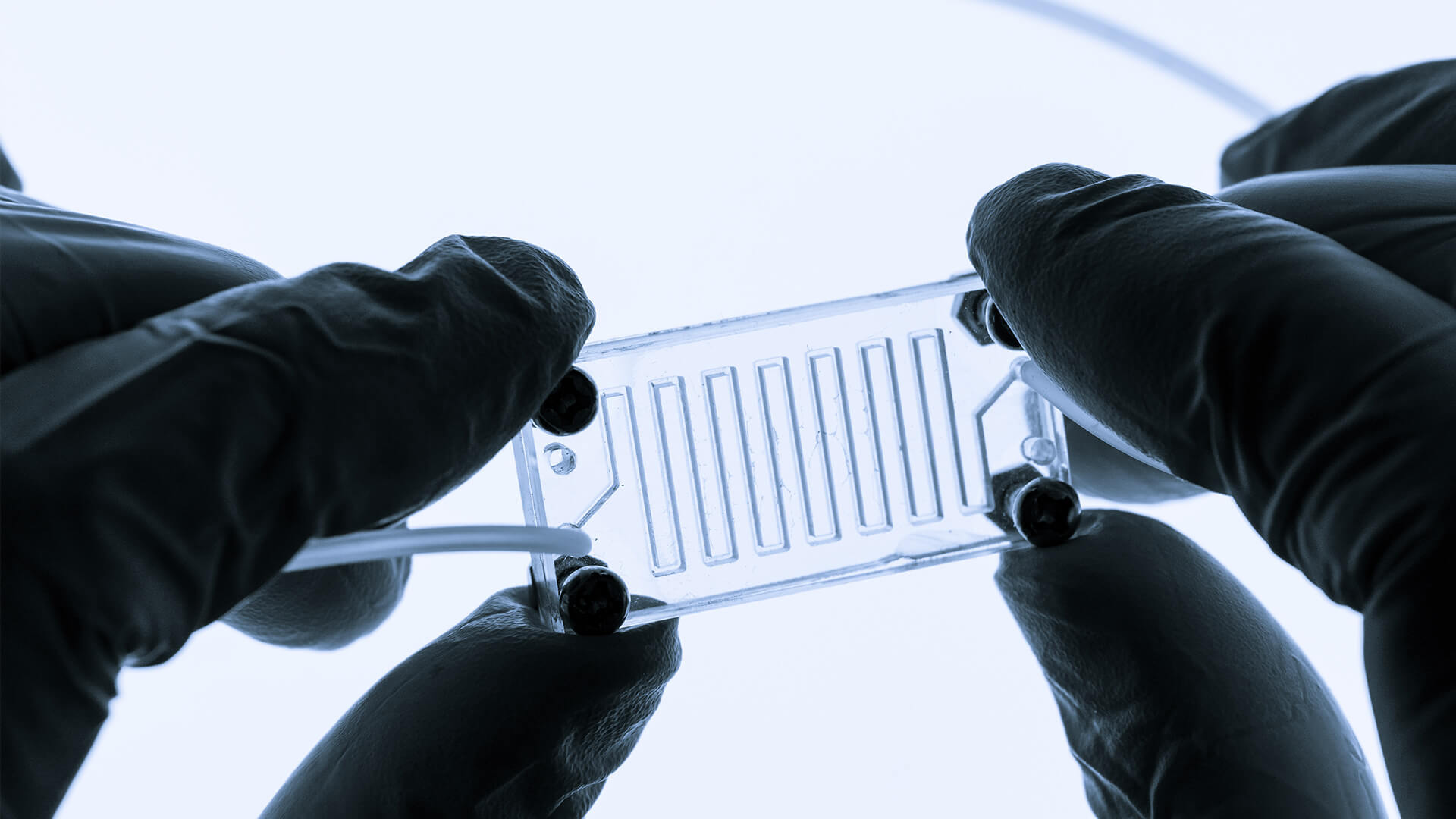
Closed-loop microfluidics cut the cost and complexity of cell therapy manufacturing.
Closed-Loop Cell Therapy Manufacturing
Client
Scaled Cell Solutions
Practice Areas
TechBio & Life Sciences
Core Disciplines
Overview
Scaled Cell Solutions, a venture-backed startup, engaged Triple Ring to rethink cell therapy manufacturing with the aims of reducing cost, shortening time to dose, and expanding patient access. By Integrating a ground-breaking workflow, biophysical analysis, and novel gene delivery technology, our work built a foundation for disrupting cell therapy production.
Challenge
Current cell therapy manufacturing processes rely on technologies that introduce risk at every step as cells are transferred between functional modules within complex, high-cost workflows. These fragmented processes resist automation, increase variability, add contamination risk, and limit patient access to potentially life-saving therapies.
Triple Ring invented a closed-loop approach that reduces complexity, lowers cost, and shortens time to dose while maintaining safety, efficacy, and product quality.
Closed-Loop Cell Therapy Manufacturing
Overview
Scaled Cell Solutions, a venture-backed startup, engaged Triple Ring to rethink cell therapy manufacturing with the aims of reducing cost, shortening time to dose, and expanding patient access. By Integrating a ground-breaking workflow, biophysical analysis, and novel gene delivery technology, our work built a foundation for disrupting cell therapy production.
Challenge
Current cell therapy manufacturing processes rely on technologies that introduce risk at every step as cells are transferred between functional modules within complex, high-cost workflows. These fragmented processes resist automation, increase variability, add contamination risk, and limit patient access to potentially life-saving therapies.
Triple Ring invented a closed-loop approach that reduces complexity, lowers cost, and shortens time to dose while maintaining safety, efficacy, and product quality.
Client
Scaled Cell Solutions
Practice Areas
TechBio & Life Sciences
Core Disciplines
Molecular & Cell Biology
Systems Engineering
Applied Physics
Microfluidics

Solution
Triple Ring developed enabling technologies designed to streamline and modernize cell therapy manufacturing through an integrated closed-loop architecture.
The solution combined several novel technologies:
- A microfluidic-based end-to-end manufacturing platform
- Modular high-throughput cell selection technology
- Advanced non-viral gene transfer technologies
- Modular subsystems capable of operating independently or within an integrated workflow
Outcome
Triple Ring developed innovative technologies that advanced cell therapy manufacturing through a microfluidic-enabled, closed-loop, end-to-end production platform.
The system eliminates cold-chain storage challenges, reduces extensive quality control measures, and shortens patient wait times. The system architecture represents a significant advancement over traditional cell therapy manufacturing approaches, whose complex and costly workflows continue to limit patient access.
Importantly, the modular cell selection and transfection subsystems operate independently or in tandem, providing flexibility for both early research and later clinical applications. The functionality of the system was successfully demonstrated at the prototype level.
Triple Ring Talent
The Story Behind the Collaboration
At Triple Ring, we draw on a deep bench of expertise across diverse disciplines matched to each innovation challenge. For this project, our team combined cell biology, microfluidics, gene delivery, bioprocess engineering, and systems integration expertise to invent a closed-loop manufacturing platform with the potential to transform patient access to cell therapies.
Gene, Roger, and Ryan collaborated with many talented colleagues across Triple Ring and Scaled Cell Solutions on this project.

Gene Napolitano, PhD
Molecular Cell Biology
Dr. Gene Napolitano brings scientific leadership to drug discovery and in vitro diagnostics programs. His work connects expertise in cell and molecular biology with diagnostic and therapeutic development across a broad range of disease areas.

Roger Tang, PhD
Bioinstrumentation and Product Development
Dr. Roger Tang leads the development of complex medical technologies spanning bioengineering, instrumentation, and applied science. His work brings together scientific, engineering, and product development expertise to guide technologies from early concept through commercialization.

Ryan McGuinness
Biotechnology and Product Development
Ryan McGuinness connects innovators, technologies, and strategic partners to accelerate the development of novel healthcare technologies. His work helps organizations build the technical, commercial, and funding foundations needed to move promising ideas toward commercialization.

Key Innovation
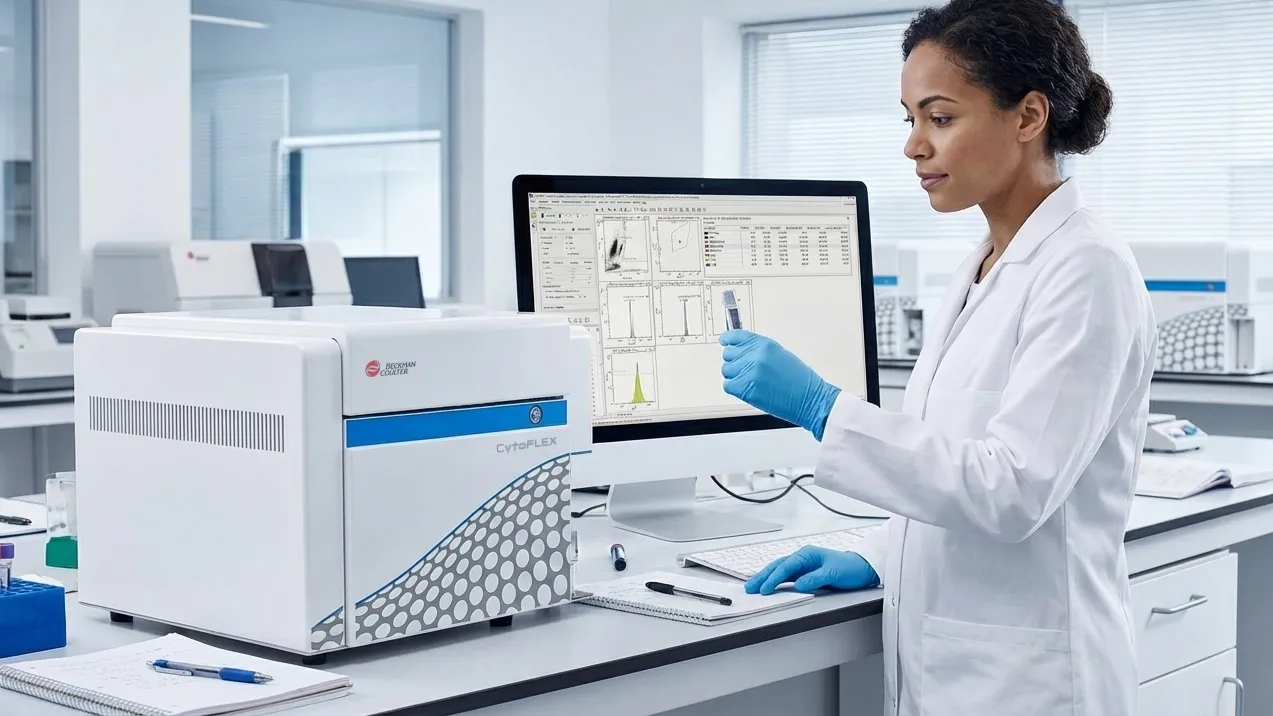
Advanced algorithms multiplied analytical power fivefold — without new hardware.
Flow Cytometer Data Analysis
Client
Beckman Coulter Life Sciences
Practice Areas
Industrial
TechBio & Life Sciences
Core Disciplines
Overview
The CytoFLEX platform from Beckman Coulter Life Sciences is a market-leading flow cytometry platform designed to provide high sensitivity, strong resolution, and flexible configuration options across a wide range of applications. Built to support advanced sample analysis and regulatory workflows, the platform integrates CytExpert acquisition and analysis software and supports features such as multi-color detection and high-throughput processing.
To expand the platform’s analytical capabilities and strengthen its competitive position against third-party software solutions, Beckman Coulter Life Sciences partnered with Triple Ring to develop advanced data analysis algorithms supporting new high-value customer use cases.
Challenge
A key driver of the CytoFLEX platform’s longstanding market success is its sophisticated data analysis software suite, which allows users to predict unknown properties of their test samples. At project initiation, Triple Ring was tasked with designing algorithms to expand the number of high-value customer use cases from two to ten.
Beckman Coulter Life Sciences sought to capture market value held by third-party solutions while maintaining performance, flexibility, and speed of development across multiple technical disciplines.
Solution
Triple Ring applied cross-disciplinary expertise in optics, simulation, and system design to improve performance and manufacturability.
Key technical efforts included:
- Optimizing optical subsystem design to improve signal sensitivity
- Developing analytical models to predict system performance across configurations
- Supporting integration of acquisition and analysis software workflows
- Refining system architecture to improve manufacturability and yield
Flow Cytometer Data Analysis
Overview
The CytoFLEX platform from Beckman Coulter Life Sciences is a market-leading flow cytometry platform designed to provide high sensitivity, strong resolution, and flexible configuration options across a wide range of applications. Built to support advanced sample analysis and regulatory workflows, the platform integrates CytExpert acquisition and analysis software and supports features such as multi-color detection and high-throughput processing.
To expand the platform’s analytical capabilities and strengthen its competitive position against third-party software solutions, Beckman Coulter Life Sciences partnered with Triple Ring to develop advanced data analysis algorithms supporting new high-value customer use cases.
Challenge
A key driver of the CytoFLEX platform’s longstanding market success is its sophisticated data analysis software suite, which allows users to predict unknown properties of their test samples. At project initiation, Triple Ring was tasked with designing algorithms to expand the number of high-value customer use cases from two to ten.
Beckman Coulter Life Sciences sought to capture market value held by third-party solutions while maintaining performance, flexibility, and speed of development across multiple technical disciplines.
Solution
Triple Ring applied cross-disciplinary expertise in optics, simulation, and system design to improve performance and manufacturability.
Key technical efforts included:
- Optimizing optical subsystem design to improve signal sensitivity
- Developing analytical models to predict system performance across configurations
- Supporting integration of acquisition and analysis software workflows
- Refining system architecture to improve manufacturability and yield
Client
Beckman Coulter Life Sciences
Practice Areas
Industrial
TechBio & Life Sciences
Core Disciplines
Software Engineering
AI & Advanced Algorithms
Molecular & Cell Biology
Outcome
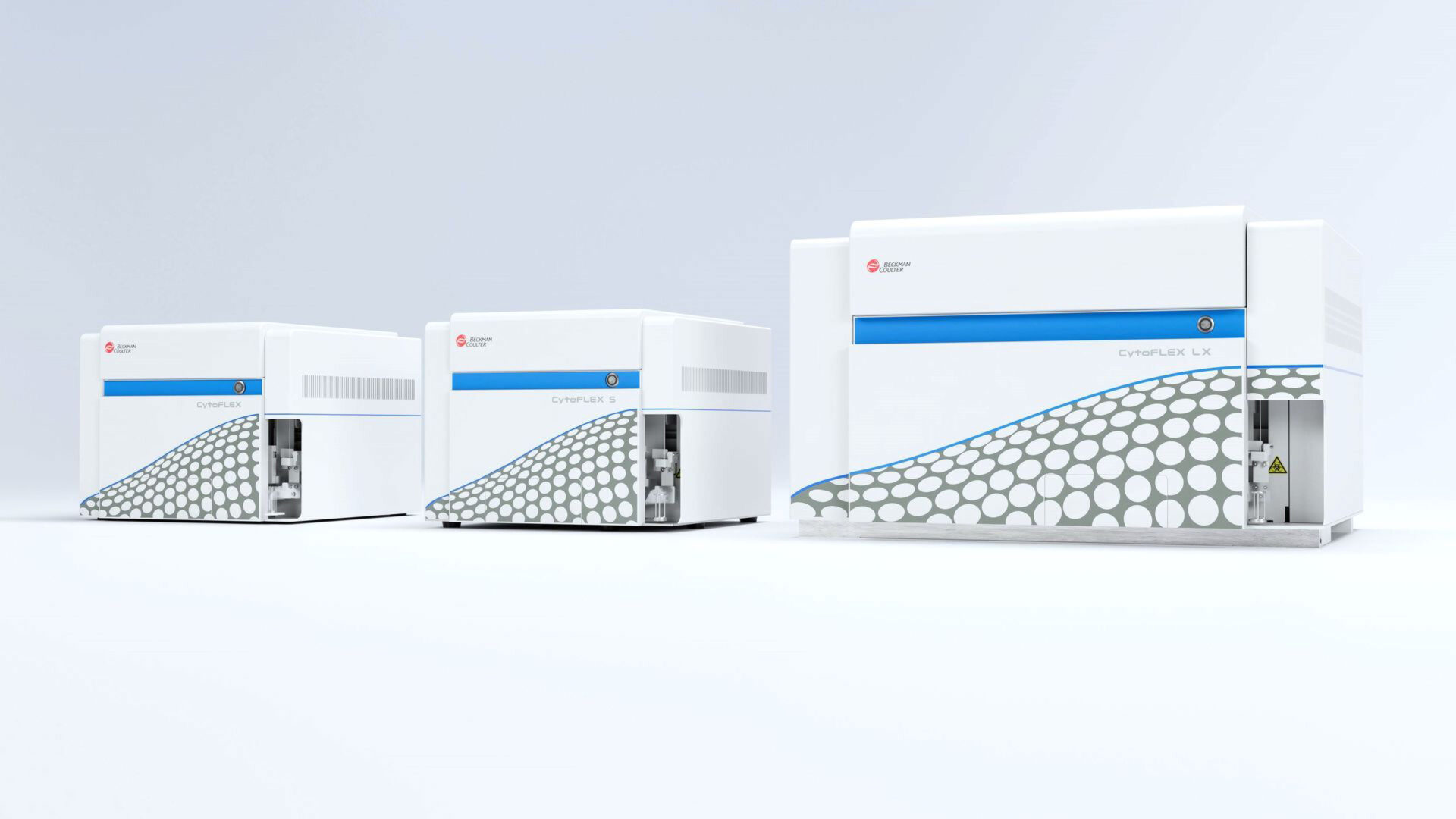
The expanded analytics capabilities enabled Beckman Coulter Life Sciences to flexibly support multiple high-value customer use cases, strengthening the competitive position of the CytoFLEX platform and enabling future growth.
The collaboration produced valuable intellectual property and enhanced software capabilities that positioned the platform to capture market share previously held by third-party solutions.
Triple Ring Talent
The Story Behind the Collaboration
At Triple Ring, we draw on a deep bench of expertise across diverse disciplines matched to each innovation challenge. For this project, our team blended deep optics knowledge with advanced algorithm development, data science, and software engineering — expanding the CytoFLEX platform’s analytical capabilities from two to ten high-value customer use cases and capturing market share previously held by third-party solutions.
Daniel and Hailey collaborated with many talented colleagues across Triple Ring and Beckman Coulter on this project.

Daniel Badali, PhD
Optics & Applied Physics
Dr. Daniel Badali brings deep expertise in advanced algorithms, optics, and radiation physics. His work bridges software and hardware, enabling complex simulation, imaging, and sterilization technologies that help turn sophisticated concepts into reliable medical solutions.

Hailey Gryka
Bioinstrumentation & Data Science
Hailey Gryka brings expertise at the intersection of bioinstrumentation and data science. Her work spans device design, data processing, and system validation, helping teams move seamlessly from early concepts to manufacturable, reliable solutions.
Key Innovation
Reverse engineering lost design history made a Special 510(k) viable.
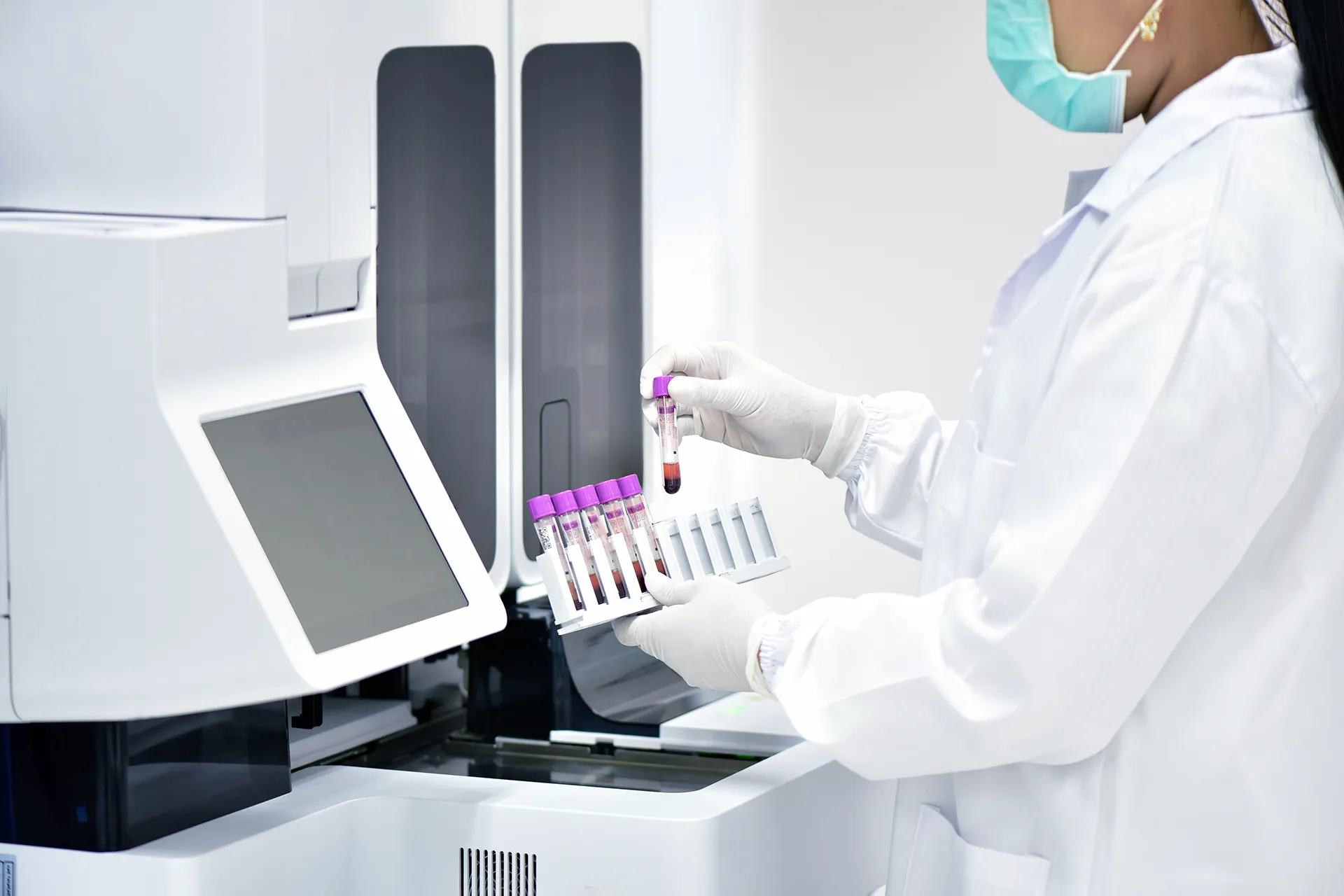
IVD Platform Refresh
Client
Fortune 500 IVD Company
Practice Areas
TechBio & Life Sciences
Core Disciplines
Overview
A Fortune 500 diagnostics manufacturer worked with Triple Ring to modernize a legacy in vitro diagnostic (IVD) platform facing component obsolescence and software limitations. The project focused on refreshing the system architecture while maintaining regulatory equivalency with an existing FDA-cleared product.
The resulting platform replaced obsolete hardware, migrated legacy software, and introduced updated industrial design elements while preserving compatibility with established manufacturing and regulatory pathways.
Challenge
The client faced the obsolescence of critical hardware components, including single-board computers and microcontrollers, within an existing diagnostic platform. Compounding the challenge, original firmware source code was unavailable, and institutional knowledge associated with the system had diminished over time.
In addition to restoring functionality, the refreshed system needed to maintain regulatory equivalence to the original device in order to qualify for a Special 510(k) submission. This requirement demanded careful reverse engineering, system validation, and modernization without introducing unintended performance deviations.
IVD Platform Refresh
Overview
A Fortune 500 diagnostics manufacturer worked with Triple Ring to modernize a legacy in vitro diagnostic (IVD) platform facing component obsolescence and software limitations. The project focused on refreshing the system architecture while maintaining regulatory equivalency with an existing FDA-cleared product.
The resulting platform replaced obsolete hardware, migrated legacy software, and introduced updated industrial design elements while preserving compatibility with established manufacturing and regulatory pathways.
Challenge
The client faced the obsolescence of critical hardware components, including single-board computers and microcontrollers, within an existing diagnostic platform. Compounding the challenge, original firmware source code was unavailable, and institutional knowledge associated with the system had diminished over time.
In addition to restoring functionality, the refreshed system needed to maintain regulatory equivalence to the original device in order to qualify for a Special 510(k) submission. This requirement demanded careful reverse engineering, system validation, and modernization without introducing unintended performance deviations.
Client
Fortune 500 IVD Company
Practice Areas
TechBio & Life Sciences
Core Disciplines
Software Engineering
Molecular & Cell Biology
Mechanical Engineering
Transfer to Manufacture
Electrical Engineering
Embedded Systems

Solution
Triple Ring implemented a structured modernization strategy combining reverse engineering, hardware redesign, and software migration. The development effort focused on preserving functional equivalency while introducing modern components and improving long-term maintainability.
Development efforts included:
- Reverse-engineering legacy hardware and firmware to recover system functionality and requirements
- Migrating existing software to a modern operating system architecture
- Replacing obsolete components while maintaining compatibility with legacy subsystems
- Updating mechanical and electrical subassemblies to support manufacturing continuity
- Preparing validation and documentation packages supporting regulatory equivalence requirements
Outcome
Triple Ring delivered a fully refreshed IVD platform supported by a comprehensive regulatory submission package demonstrating equivalency to the original FDA-cleared device. The updated system maintained functional continuity while addressing long-term hardware and software sustainability.
The refreshed design integrated seamlessly into existing manufacturing workflows, enabling uninterrupted production and maintaining cost targets. The modernization effort positioned the platform for continued market competitiveness while ensuring regulatory compliance and operational reliability.
Triple Ring Talent
The Story Behind the Innovation
At Triple Ring, we draw on a deep bench of expertise across diverse disciplines matched to each innovation challenge. For this project, our team combined reverse engineering, embedded systems, software migration, regulatory strategy, and industrial design expertise to modernize a legacy IVD platform — restoring long-term sustainability while maintaining full regulatory equivalency with the original FDA-cleared device.
Rob and Anne collaborated with many talented colleagues across Triple Ring on this project.

Robert de Saint Phalle
Interdisciplinary Product Design
Robert de Saint Phalle shapes product design strategies that connect engineering, user experience, and emerging technologies. His work helps teams translate complex ideas into thoughtful, functional products that bring new technologies to life.

Anne Preut
Biomedical & Systems Engineering
Anne Preut leads systems engineering efforts that integrate hardware, firmware, assays, and fluidics across complex diagnostic technologies. Her work aligns cross-functional teams throughout the development lifecycle, helping ensure systems perform reliably from early feasibility through production.