
Key Innovation
Tissue compensation algorithms brought real-time StO₂ monitoring into the OR.
Real-Time Tissue Oxygenation Status
Client
ViOptix
Practice Areas
Smart Medical Devices
Core Disciplines
Overview
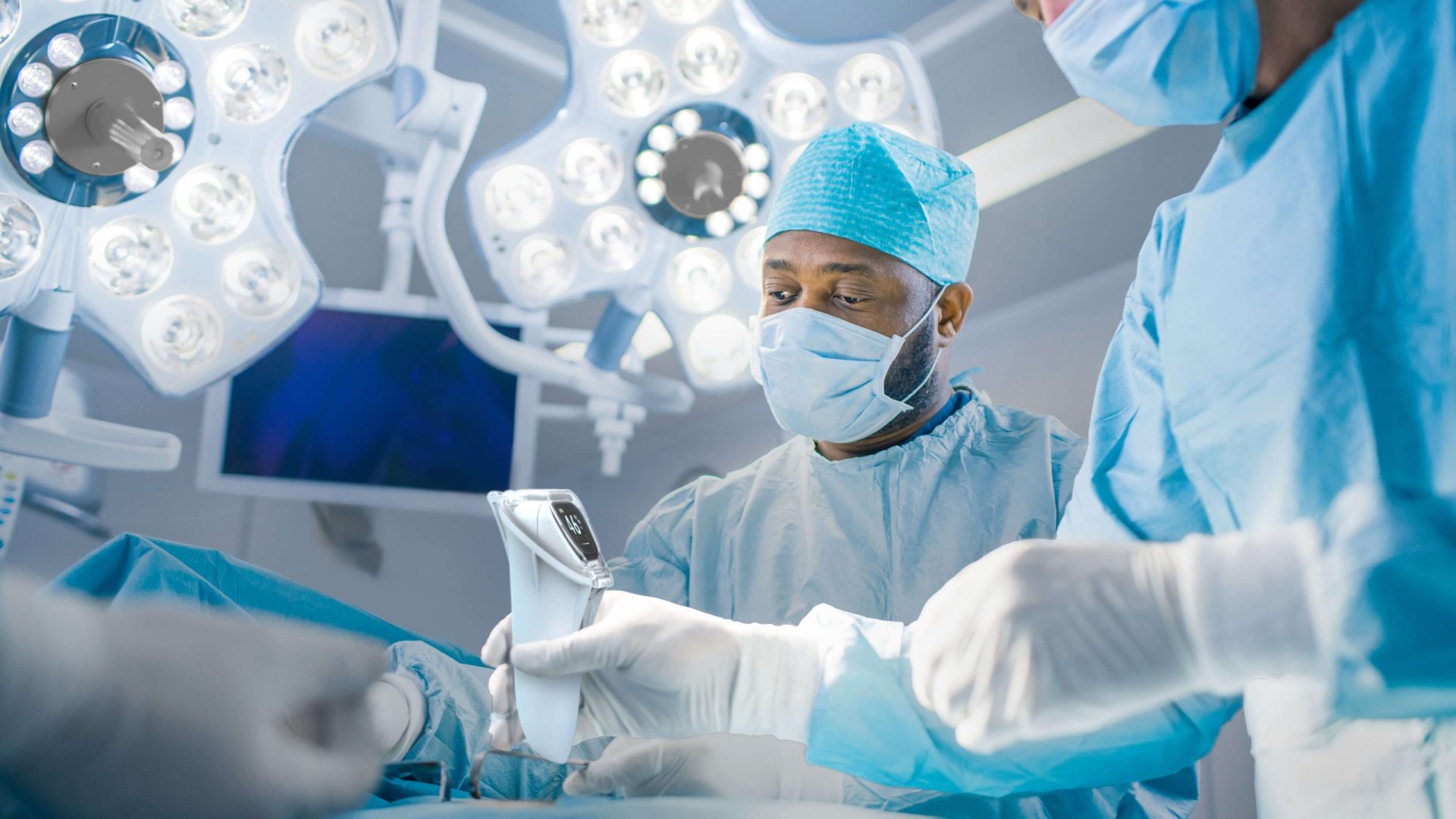
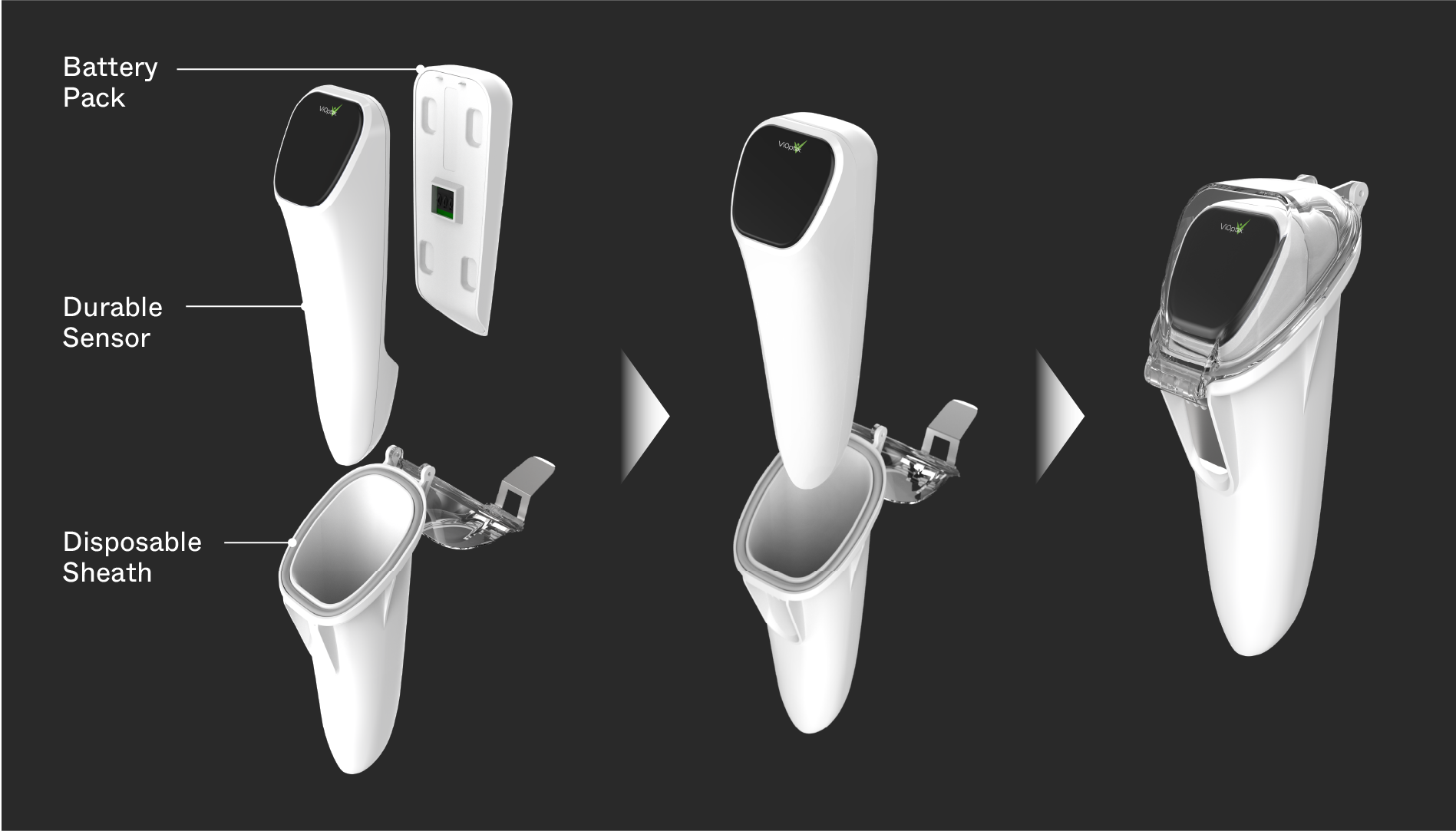
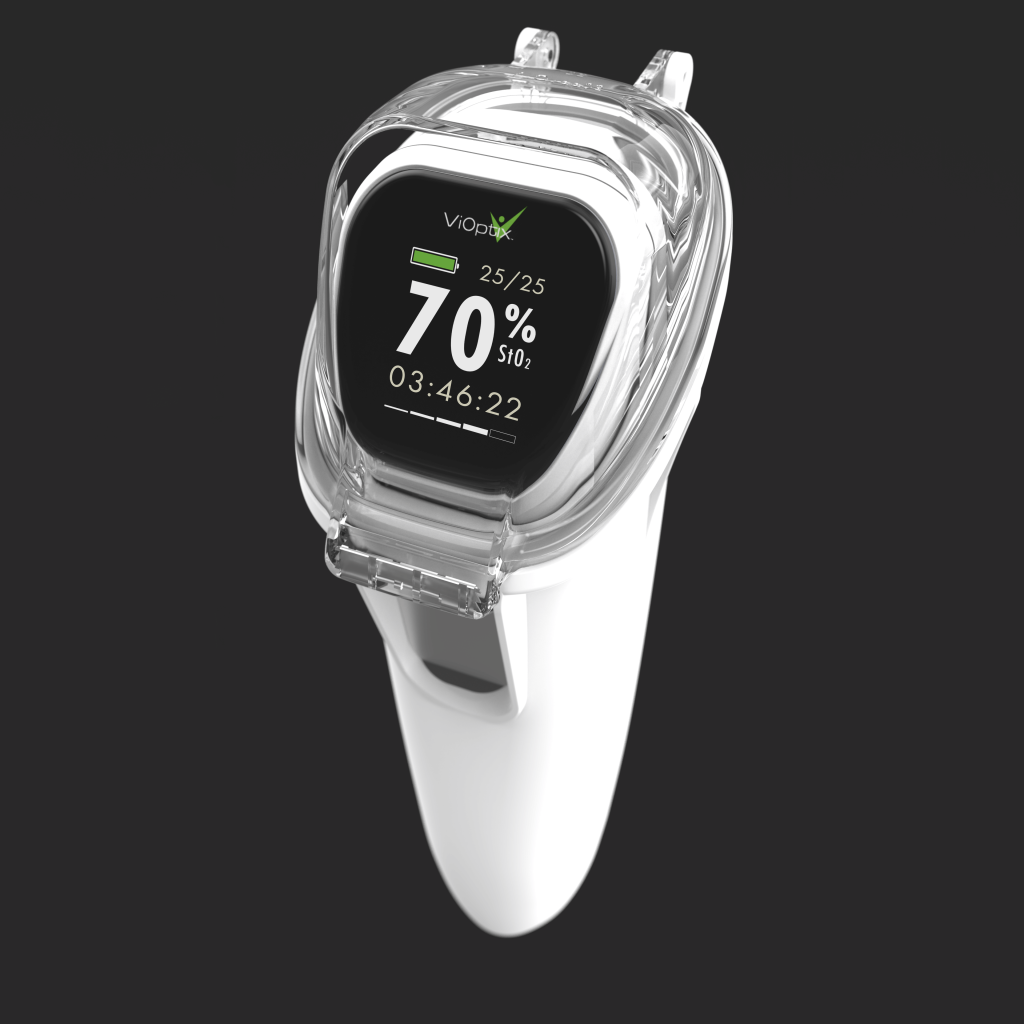
ViOptix collaborated with Triple Ring to design and develop the Intra.Ox™, a non-invasive, handheld tissue oxygenation monitor designed for use inside the surgical theater. The device enables real-time measurement of tissue oxygenation, helping surgeons assess tissue viability and make informed decisions during procedures.
By combining optical sensing technology with advanced algorithms and a portable handheld design, the system supports improved surgical workflows and enhances clinical decision-making during tissue transfer procedures.
Challenge
ViOptix sought to develop a quantitative tissue oxygenation monitor capable of delivering real-time, highly sensitive measurements in a surgical environment. The system needed to be easy to use, reliable, and capable of generating unlimited readings throughout a surgical case.
Key technical challenges included:
- Designing an easy-to-use multi-wavelength tissue oximeter
- Developing smart algorithms to compensate for variable tissue morphologies
- Creating a compact handheld form factor suitable for surgical use
- Supporting reusable packaging and surgical workflows
- Ensuring consistent performance across varying tissue conditions
In addition, the system needed to accurately capture oxygen concentration in resected tissue while minimizing artifacts caused by surrounding tissue components.
Real-Time Tissue Oxygenation Status
Overview
ViOptix collaborated with Triple Ring to design and develop the Intra.Ox™, a non-invasive, handheld tissue oxygenation monitor designed for use inside the surgical theater. The device enables real-time measurement of tissue oxygenation, helping surgeons assess tissue viability and make informed decisions during procedures.
By combining optical sensing technology with advanced algorithms and a portable handheld design, the system supports improved surgical workflows and enhances clinical decision-making during tissue transfer procedures.
Challenge
ViOptix sought to develop a quantitative tissue oxygenation monitor capable of delivering real-time, highly sensitive measurements in a surgical environment. The system needed to be easy to use, reliable, and capable of generating unlimited readings throughout a surgical case.
Key technical challenges included:
- Designing an easy-to-use multi-wavelength tissue oximeter
- Developing smart algorithms to compensate for variable tissue morphologies
- Creating a compact handheld form factor suitable for surgical use
- Supporting reusable packaging and surgical workflows
- Ensuring consistent performance across varying tissue conditions
In addition, the system needed to accurately capture oxygen concentration in resected tissue while minimizing artifacts caused by surrounding tissue components.
Client
ViOptix
Practice Areas
Smart Medical Devices
Core Disciplines
Systems Engineering
Transfer to Manufacture
Electrical Engineering
Optical Science
Photonics & Imaging
Quality System Management
Embedded Systems

Solution
Triple Ring and ViOptix worked side-by-side to invent subsystem- and system-level solutions that enabled reliable real-time tissue oxygenation monitoring. The development effort spanned concept generation through clinical validation, with a strong emphasis on modeling, algorithm design, and usability.
Triple Ring applied deep clinical and technical expertise to accelerate development while supporting the needs of a virtual startup environment. Complex modeling techniques, including Monte Carlo simulations, were used to evaluate optical performance and optimize system behavior early in the design process.
Engineering efforts focused on:
- Designing multi-wavelength optical sensing systems capable of detecting tissue oxygenation levels
- Developing algorithms that compensated for variability in tissue characteristics
- Optimizing handheld system architecture to support surgical usability
- Validating measurement accuracy across simulated clinical environments
Outcome
The ViOptix Intra.Ox technology received FDA clearance after demonstrating its ability to produce accurate, instantaneous estimates of percent saturated oxygen (StO₂) without requiring capital equipment or dye injection.
The device is now used during tissue transfer surgeries to support real-time assessment of tissue viability, enabling earlier intervention and improving both clinical and financial outcomes. The program progressed from concept to clinical validation and FDA 510(k) clearance in approximately 18 months, demonstrating the efficiency of the collaborative development approach.
Triple Ring Talent
The Story Behind the Innovation
At Triple Ring, we draw on a deep bench of expertise across diverse disciplines matched to each innovation challenge. For this project, our team combined advanced optical modeling, Monte Carlo simulation, algorithm development, and user-centered device design to bring a first-of-its-kind handheld tissue oxygenation monitor from concept to FDA clearance in just 18 months.
Jeremy and Nick collaborated with many talented colleagues across Triple Ring and ViOptix on this project.

Nick Hawson
Medical Device Strategy & Program Leadership
With 25 years spanning engineering, program leadership, and innovation consulting, Nick has helped bring groundbreaking medical technologies to market for companies ranging from early-stage startups to global blue-chip firms.

Jeremy Ford, PhD
Biomedical Optics & Physiological Sensing
Dr. Jeremy Ford brings a decade of biomedical optics expertise — from tissue-illumination systems and physiological sensing to optical-thermal simulation and neural inhibition — backed by a Vanderbilt PhD and extensive peer-reviewed research.

Key Innovation
Microfluidic lab-on-a-chip technology brought clinical-grade THC detection out of the lab.
Cannabis Breathalyzer System
Client
Hound Labs
Practice Areas
TechBio & Life Sciences
Core Disciplines
Overview
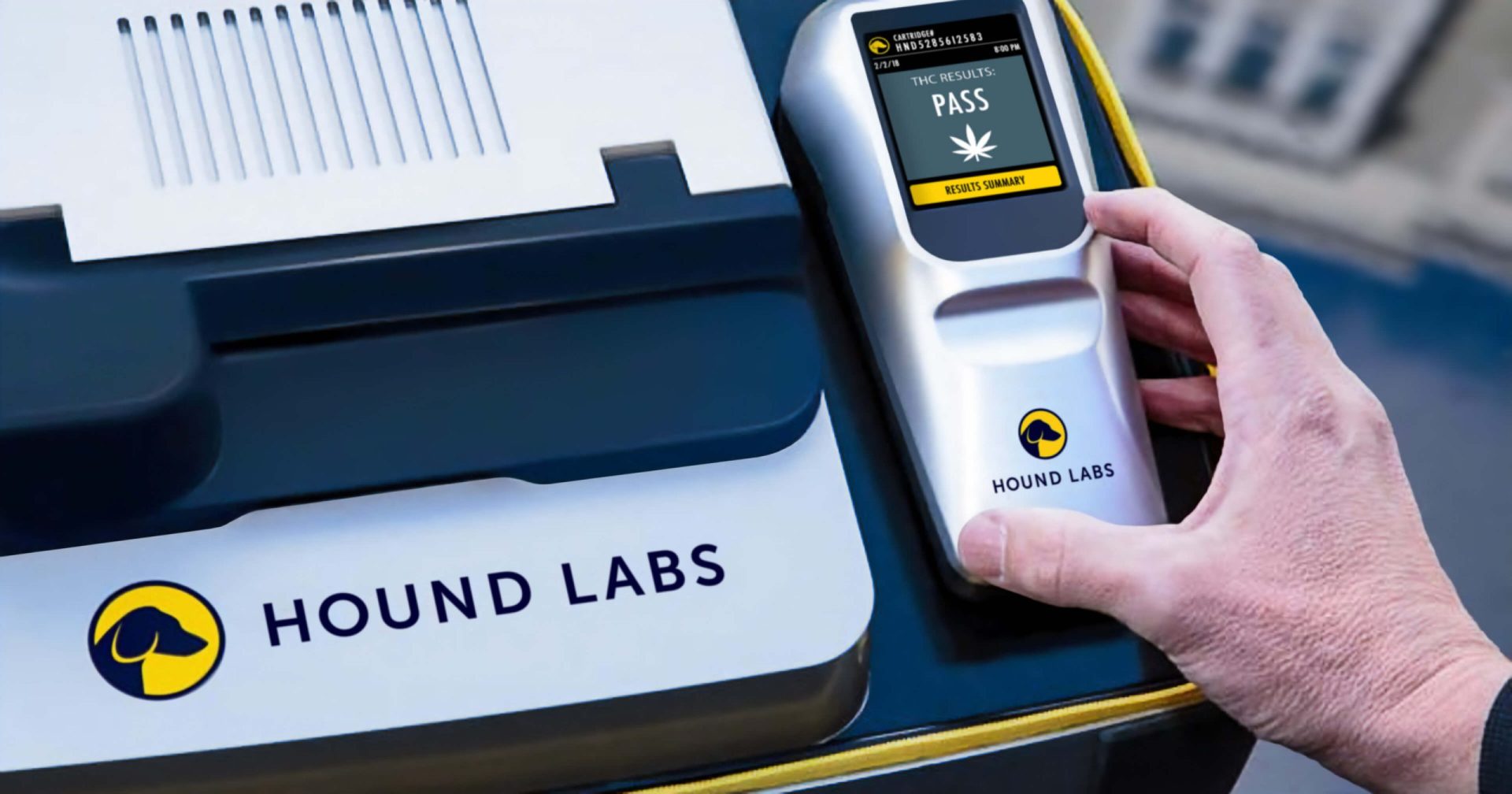
Hound Labs engaged Triple Ring to invent a portable breath analyzer capable of detecting recent marijuana use. The system was developed to support point-of-use testing in law enforcement and workplace environments requiring reliable impairment detection.
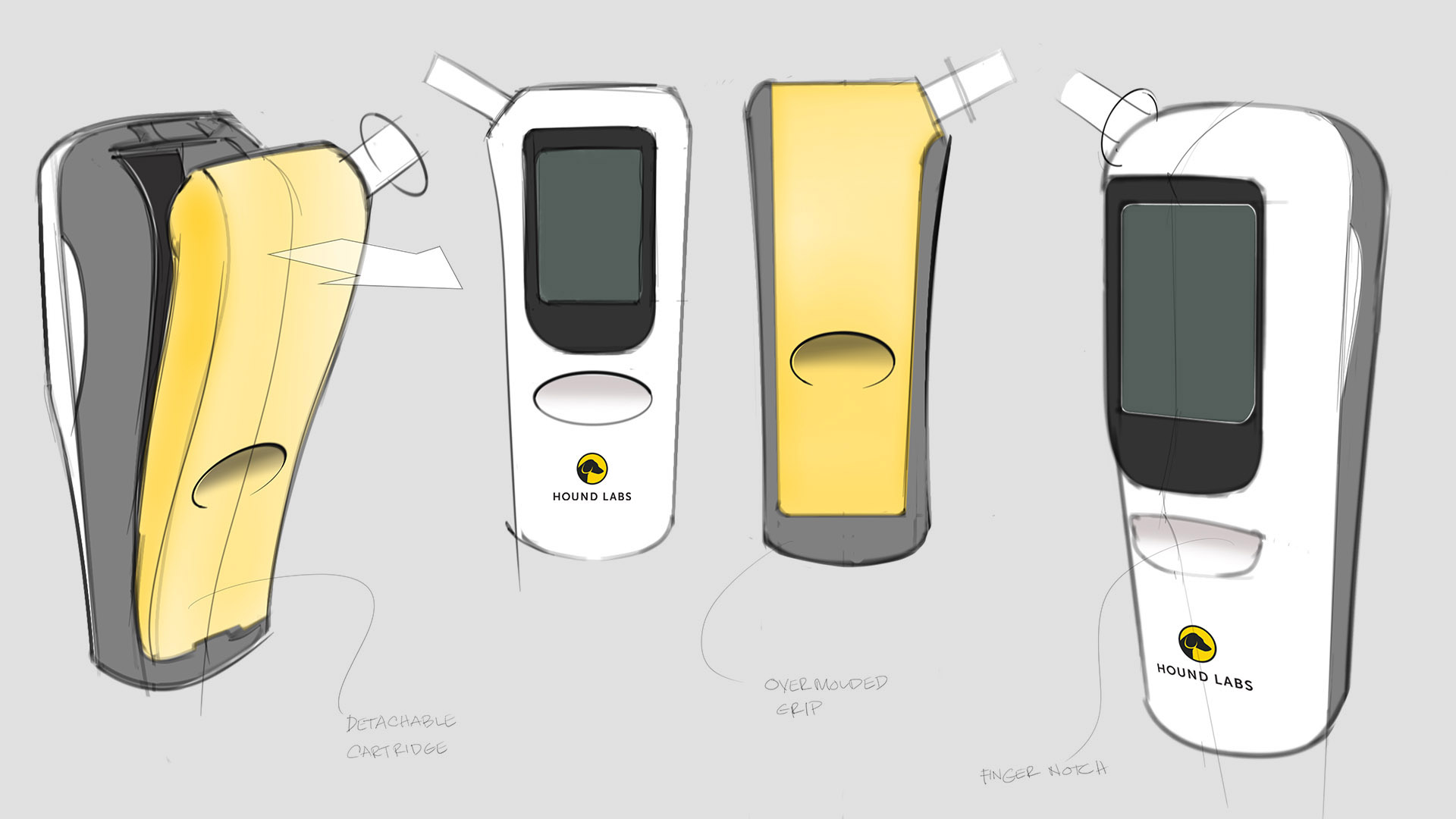
Starting from an early concept sketch, Triple Ring collaborated with Hound Labs to develop a high-sensitivity breathalyzer platform combining chemical detection and portable instrumentation technologies.
Challenge
The system needed to detect Δ-9 THC in exhaled breath with clinical-grade sensitivity while maintaining portability and reliability in field conditions.
In addition to engineering challenges, the project required validation of THC pharmacodynamics in breath, including generation of peer-reviewed scientific evidence supporting detection feasibility.
Cannabis Breathalyzer System
Overview
Hound Labs engaged Triple Ring to invent a portable breath analyzer capable of detecting recent marijuana use. The system was developed to support point-of-use testing in law enforcement and workplace environments requiring reliable impairment detection.
Starting from an early concept sketch, Triple Ring collaborated with Hound Labs to develop a high-sensitivity breathalyzer platform combining chemical detection and portable instrumentation technologies.
Challenge
The system needed to detect Δ-9 THC in exhaled breath with clinical-grade sensitivity while maintaining portability and reliability in field conditions.
In addition to engineering challenges, the project required validation of THC pharmacodynamics in breath, including generation of peer-reviewed scientific evidence supporting detection feasibility.
Client
Hound Labs
Practice Areas
TechBio & Life Sciences
Core Disciplines
Software Engineering
Mechanical Engineering
Systems Engineering
Transfer to Manufacture
Electrical Engineering
Optical Science
Quality System Management
Embedded Systems
Microfluidics
Solution
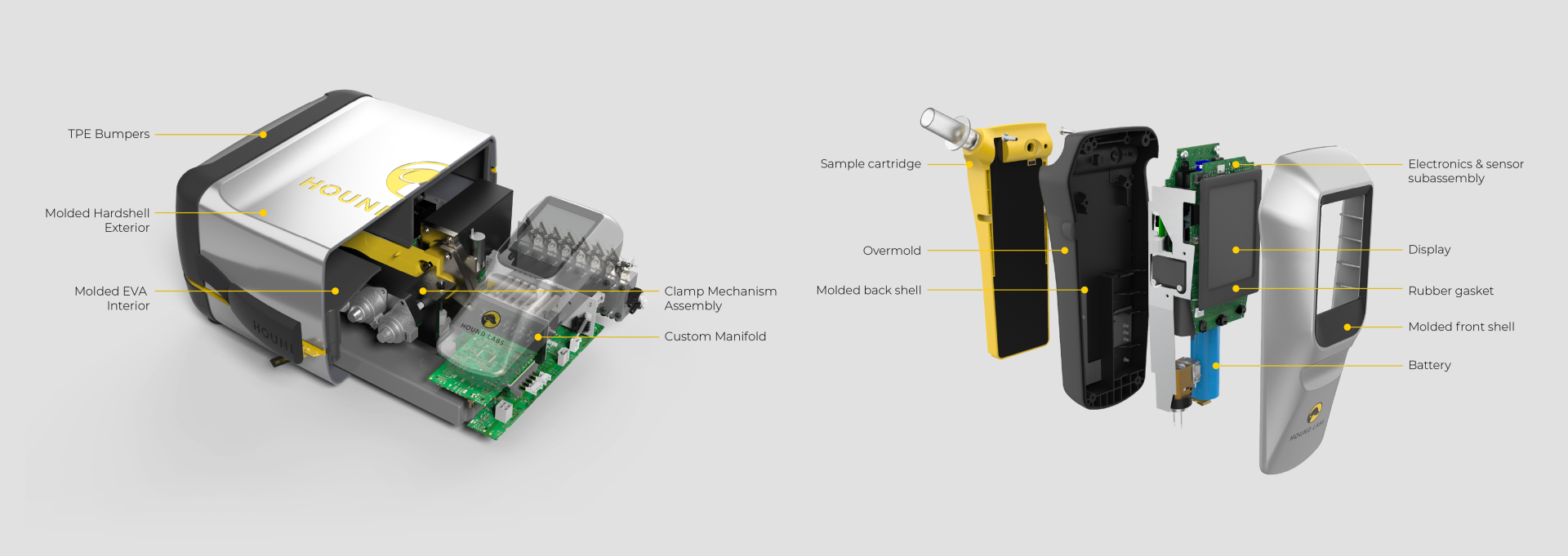
Triple Ring assembled multidisciplinary development teams to design and validate a fully integrated breath analysis platform combining microfluidic sampling and portable device technologies.
Development efforts included:
- Designing a portable breath capture device optimized for reliable sample collection
- Engineering microfluidic lab-on-a-chip cartridges supporting sensitive compound detection
- Integrating control station hardware capable of processing and analyzing captured samples
- Supporting validation activities that produced peer-reviewed pharmacodynamic data
- Developing prototype systems suitable for demonstration, testing, and continued product development
Outcome
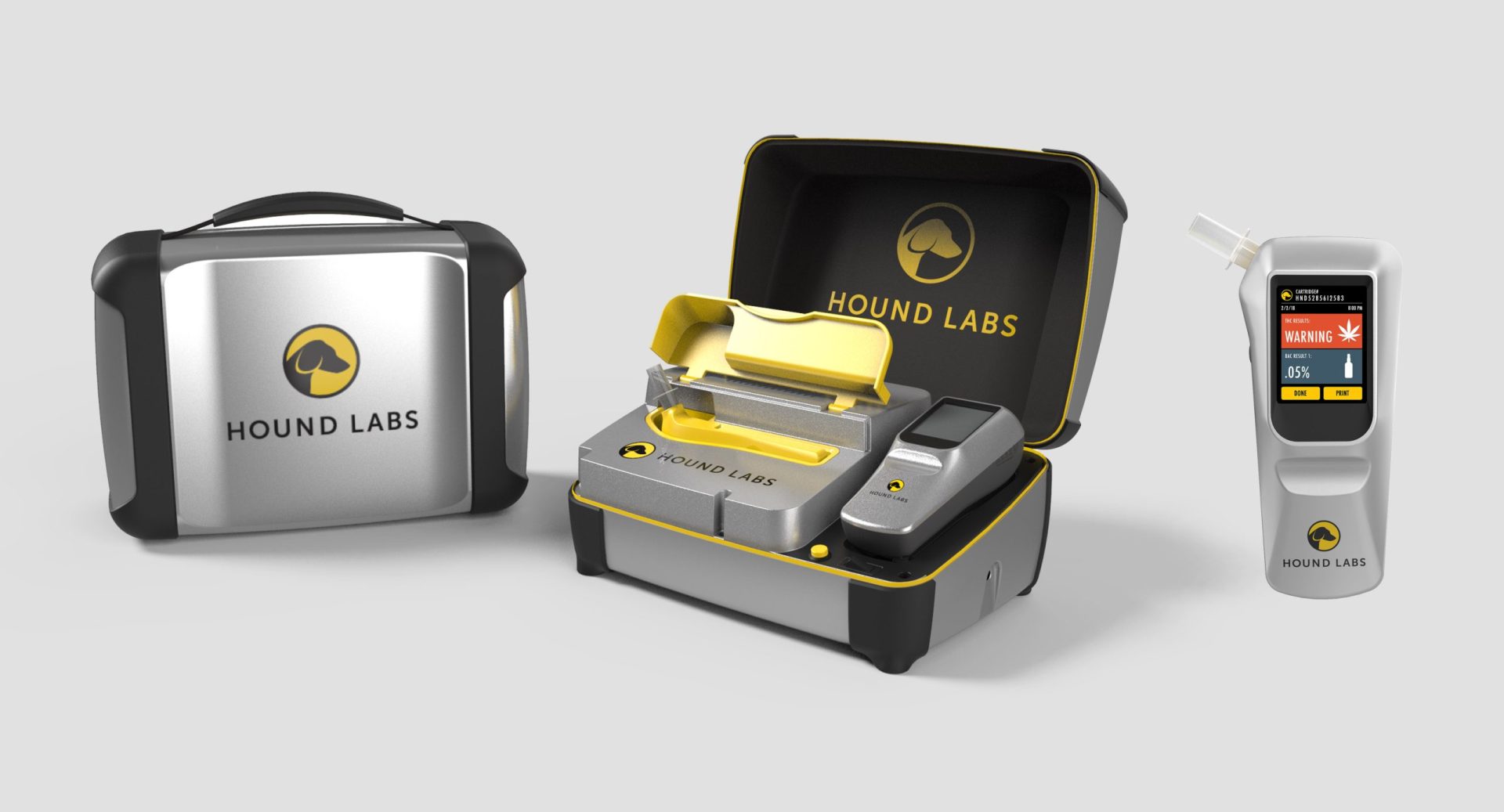
Triple Ring delivered fully functioning prototype systems consisting of a breath capture device, control station, and microfluidic cartridges.
The system produced clinical-grade data at the point of use, supporting detection of recent marijuana use and enabling development of a first-in-class breath-based detection platform.
Triple Ring Talent
The Story Behind the Innovation
At Triple Ring, we draw on a deep bench of expertise across diverse disciplines matched to each innovation challenge. For this project, our team combined microfluidic engineering, biological sensing, portable instrumentation, and clinical validation expertise to develop a first-in-class breath-based THC detection platform capable of delivering clinical-grade results at the point of use.
David and Kevin collaborated with many talented colleagues across Triple Ring and Hound Labs on this project.

David Shack, PhD
Mechanical Engineering & Applied Sciences
Dr. David Shack directs the development of complex scientific measurement and analysis systems across multidisciplinary teams. His work integrates algorithms, software, fluidics, and optical technologies, helping advance tools that support precision research and clinical applications.

Kevin Limtao
Biomedical & Systems Engineering
Kevin Limtao connects system requirements, architecture, and integration across complex medical and diagnostic technologies. His work helps teams align design, risk, and performance throughout the development lifecycle, ensuring systems function reliably from early concepts through deployment.

Key Innovation
Optical imaging and machine learning compressed tissue analysis from days to minutes.
Intra-Operative Tissue Pathology
Client
BlackLight Surgical
Practice Areas
Physics-Based AI
Imaging, Robotics & Radiotherapy
Core Disciplines
Overview
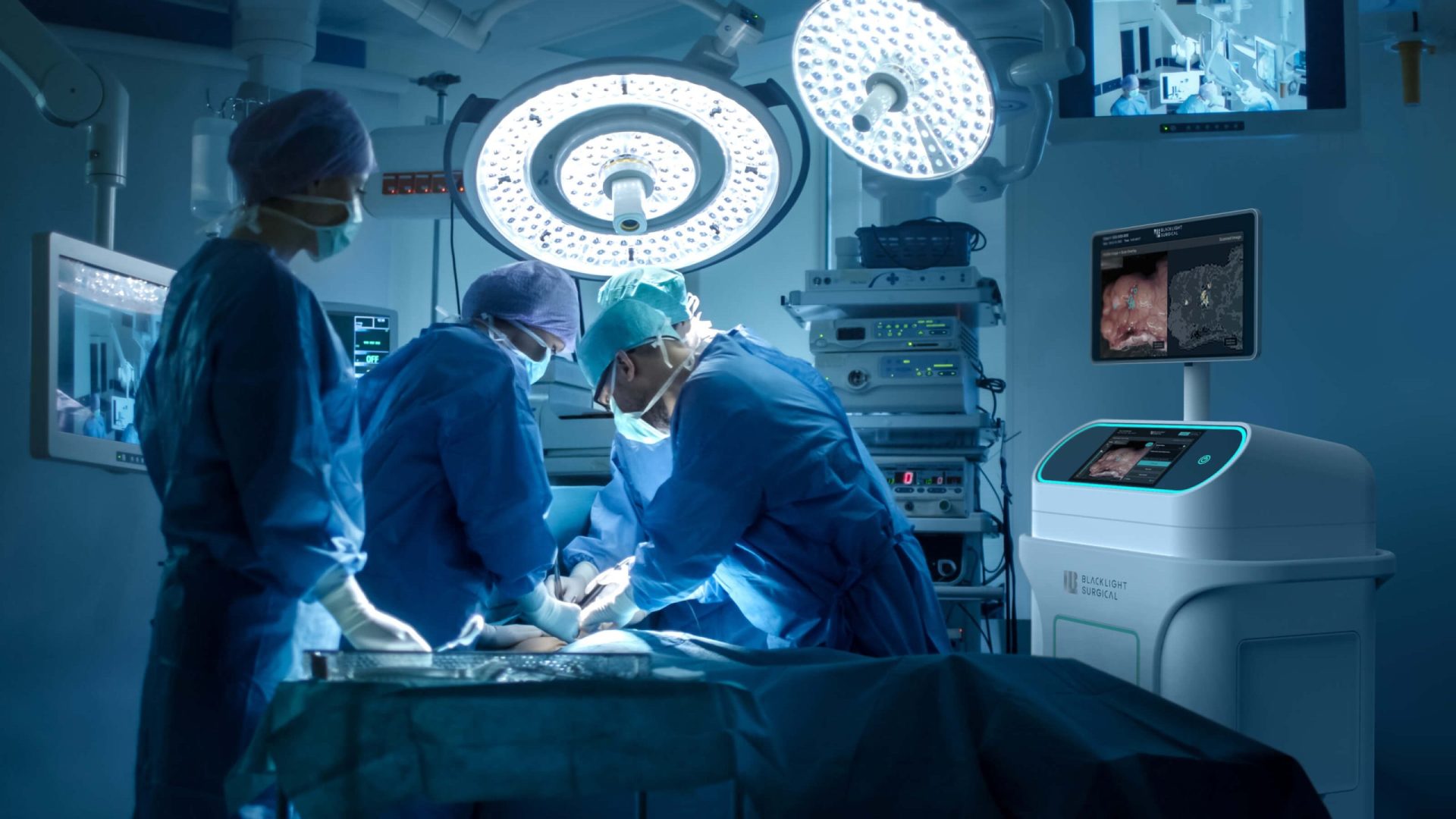
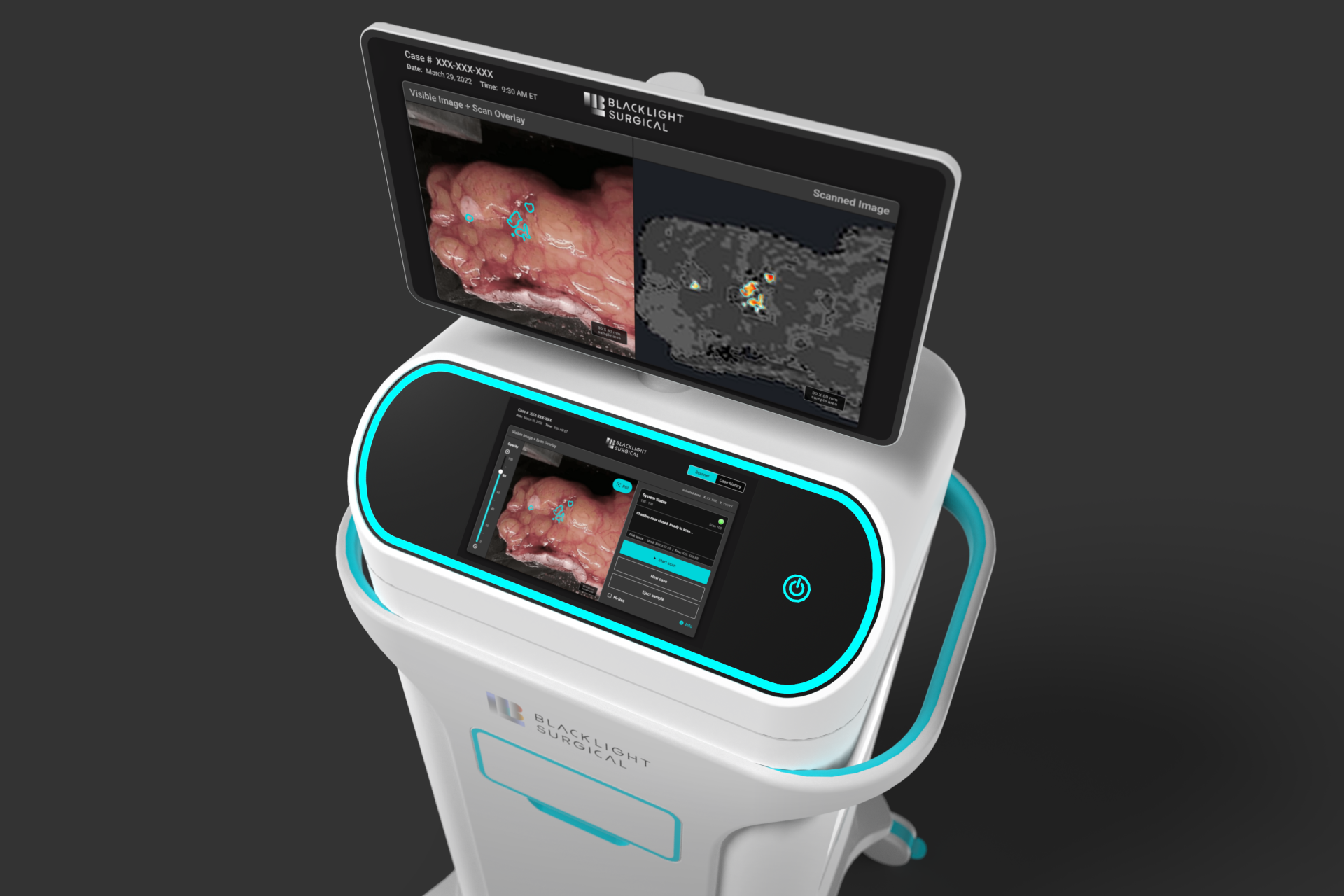
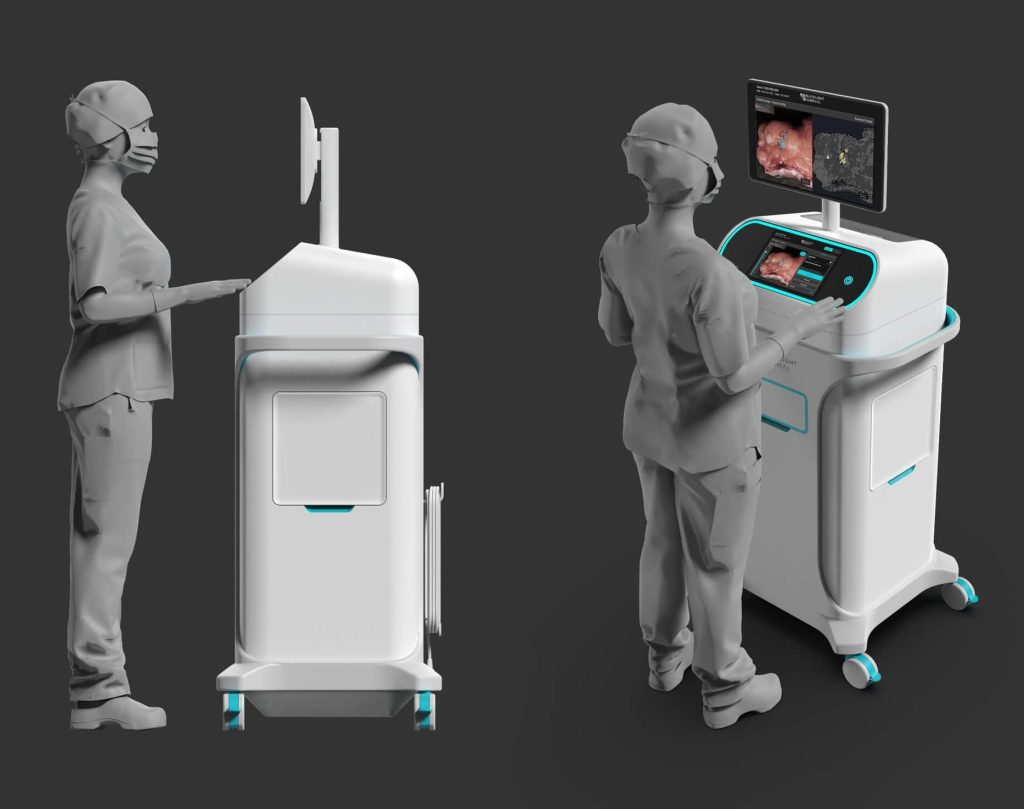
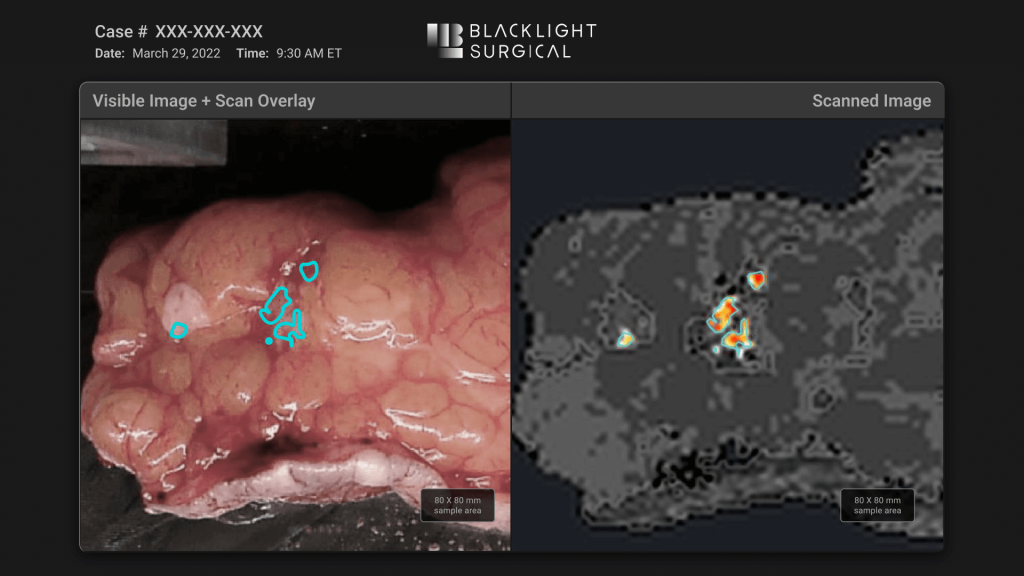
BlackLight Surgical engaged Triple Ring to develop a high-speed biochemical imaging platform designed for intra-operative tissue analysis. The system leveraged picosecond pulsing laser technology and machine learning workflows to enable rapid tissue identification during surgical procedures.
The resulting platform supports real-time clinical decision making by allowing clinicians to distinguish between normal and diseased tissue directly in the operating suite.
Challenge
The system required integration of advanced optical imaging technology capable of performing rapid biochemical analysis during surgery. Reliable performance was required across demanding clinical environments and complex workflows.
Delivering this capability required precise integration of optical, mechanical, software, and machine learning systems into a clinically deployable architecture.
Intra-Operative Tissue Pathology
Overview
BlackLight Surgical engaged Triple Ring to develop a high-speed biochemical imaging platform designed for intra-operative tissue analysis. The system leveraged picosecond pulsing laser technology and machine learning workflows to enable rapid tissue identification during surgical procedures.
The resulting platform supports real-time clinical decision making by allowing clinicians to distinguish between normal and diseased tissue directly in the operating suite.
Challenge
The system required integration of advanced optical imaging technology capable of performing rapid biochemical analysis during surgery. Reliable performance was required across demanding clinical environments and complex workflows.
Delivering this capability required precise integration of optical, mechanical, software, and machine learning systems into a clinically deployable architecture.
Client
BlackLight Surgical
Practice Areas
Physics-Based AI
Imaging, Robotics & Radiotherapy
Core Disciplines
Software Engineering
AI & Advanced Algorithms
Mechanical Engineering
Systems Engineering
Transfer to Manufacture
Electrical Engineering
Industrial Design
Optical Science
Photonics & Imaging
Quality System Management
Embedded Systems
Solution
Triple Ring assembled multidisciplinary engineering and scientific teams to design and integrate the imaging platform using structured development and validation methodologies.
Technical execution focused on:
- Integrating laser-based optical imaging technologies capable of rapid tissue analysis
- Developing machine learning workflows that supported real-time tissue classification
- Using simulation and modeling tools to guide system design and performance optimization
- Establishing ISO 13485-compliant design and documentation processes
Outcome
Triple Ring delivered a fully integrated intra-operative biochemical imaging platform supporting clinical studies and real-time tissue visualization.
The system was developed to ISO 13485 standards and documented within a Quality Management System transferred to BlackLight Surgical, enabling deployment of advanced intra-operative imaging workflows.
Triple Ring Talent
The Story Behind the Innovation
At Triple Ring, we draw on a deep bench of expertise across diverse disciplines matched to each innovation challenge. For this project, our team combined high-speed laser optical imaging, machine learning, mechanical engineering, and quality systems expertise to develop a fully integrated intra-operative tissue analysis platform capable of distinguishing healthy from diseased tissue in real time.
Todd, Cameran, and Shehadeh collaborated with many talented colleagues across Triple Ring and BlackLight Surgical on this project.

Todd Harris, PhD
Physics & Optical Science
Dr. Todd Harris applies expertise in optics and imaging physics to the development of advanced sensing and illumination technologies. His work combines optical modeling with system design, helping teams translate complex physical principles into dependable, high-performance solutions.

Cameran Casale
Bioengineering
Cameran Casale contributes to the development of imaging, microfluidic, and diagnostic technologies across multidisciplinary programs. Her work supports system integration and testing efforts, helping teams refine complex devices for reliable performance in research and clinical environments.

Shehadeh Dajani
Aerospace & Mechanical Engineering
Shehadeh Dajani supports the development of safety-critical embedded systems used in regulated medical technologies. His work spans software and system integration across feasibility, clinical, and production stages, helping ensure reliable performance throughout the development lifecycle.
Key Innovation
Quantitative optics in a lateral flow assay brought multiplexed diagnostics into the home.
At-Home Quantitative Diagnostics
Client
BARDA
Practice Areas
TechBio & Life Sciences
Core Disciplines
Overview
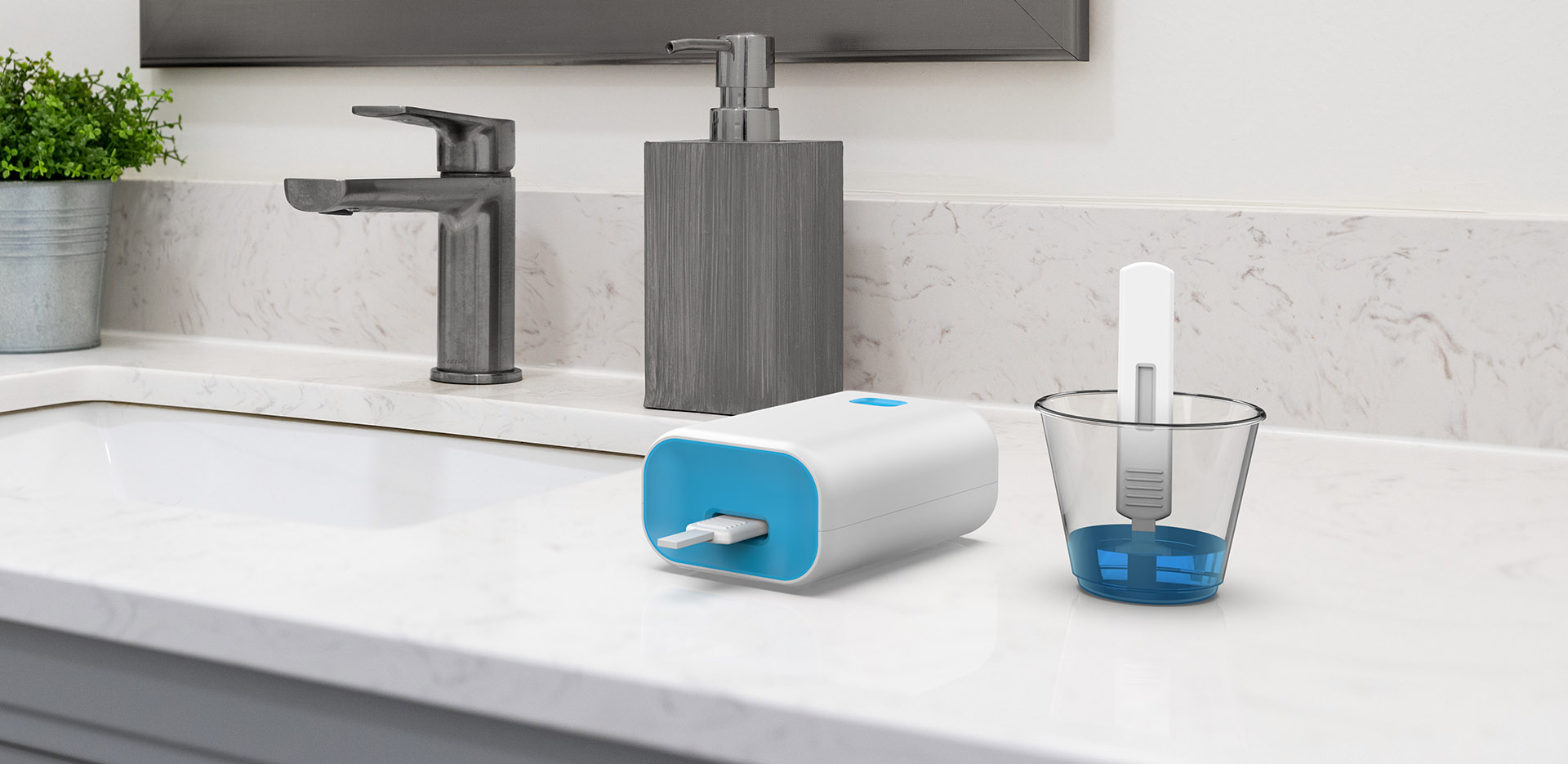
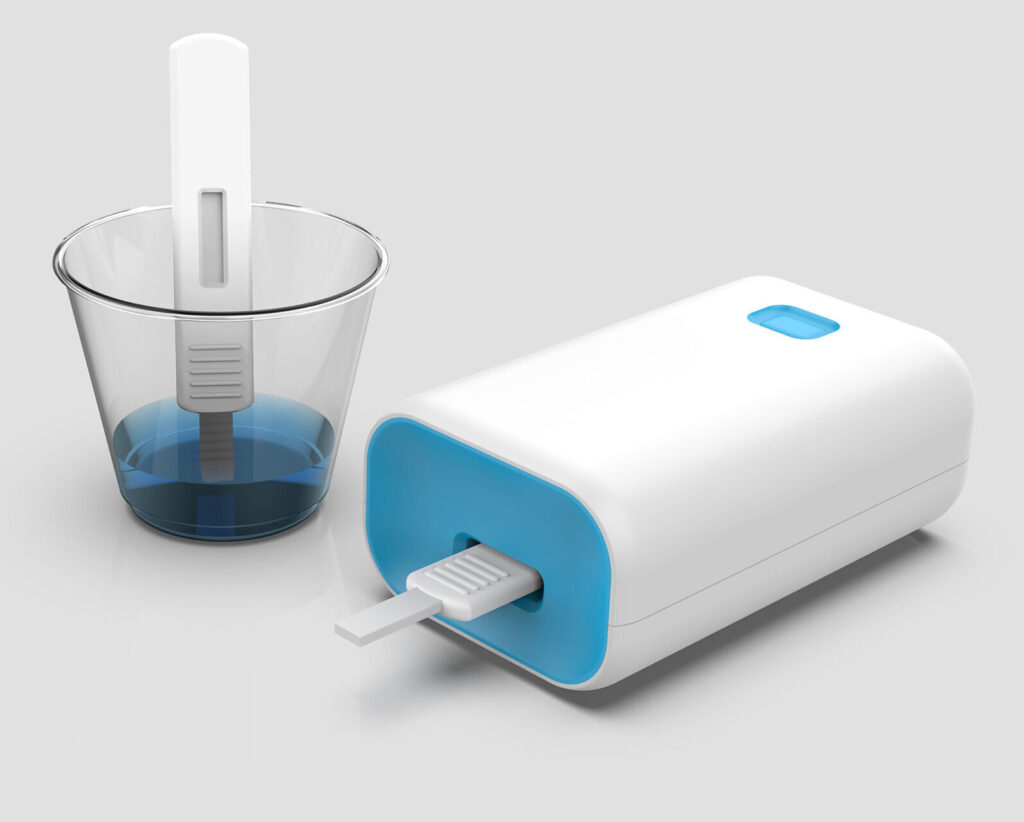
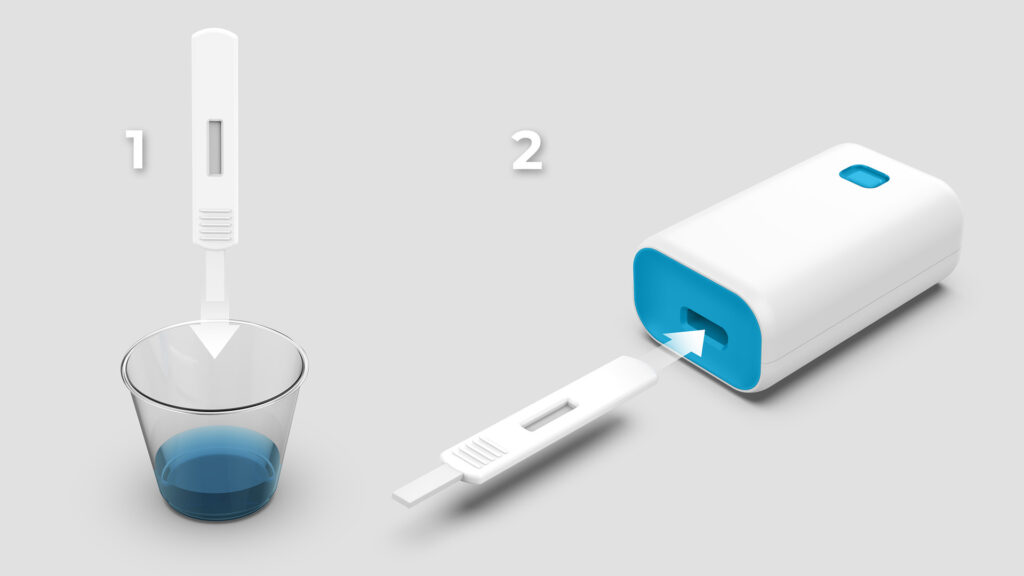
The Biomedical Advanced Research and Development Authority (BARDA) selected Triple Ring to design, build, and test a low-cost quantitative biomarker detection platform intended for at-home and low-resource healthcare settings. The system was developed to support multiplexed biomarker analysis using compact, user-friendly instrumentation.
The resulting platform integrates biological sensing, embedded electronics, and optical detection technologies into a portable diagnostic system designed to support lab-at-home, point-of-care, and direct-to-consumer workflows.
Challenge
BARDA identified the need for a low-cost diagnostic platform capable of delivering quantitative biomarker measurements outside traditional laboratory environments. The system needed to support multiplexed testing while remaining accessible for use in resource-limited settings and CLIA-waived environments.
Achieving this capability required integration of complex biological, optical, and electronic subsystems into a compact and manufacturable design. The platform also needed to extend the measurable range of lateral flow immunoassays while maintaining usability and cost targets suitable for broad deployment.
At-Home Quantitative Diagnostics
Overview
The Biomedical Advanced Research and Development Authority (BARDA) selected Triple Ring to design, build, and test a low-cost quantitative biomarker detection platform intended for at-home and low-resource healthcare settings. The system was developed to support multiplexed biomarker analysis using compact, user-friendly instrumentation.
The resulting platform integrates biological sensing, embedded electronics, and optical detection technologies into a portable diagnostic system designed to support lab-at-home, point-of-care, and direct-to-consumer workflows.
Challenge
BARDA identified the need for a low-cost diagnostic platform capable of delivering quantitative biomarker measurements outside traditional laboratory environments. The system needed to support multiplexed testing while remaining accessible for use in resource-limited settings and CLIA-waived environments.
Achieving this capability required integration of complex biological, optical, and electronic subsystems into a compact and manufacturable design. The platform also needed to extend the measurable range of lateral flow immunoassays while maintaining usability and cost targets suitable for broad deployment.
Client
BARDA
Practice Areas
TechBio & Life Sciences
Core Disciplines
Software Engineering
Mechanical Engineering
Systems Engineering
Electrical Engineering
Industrial Design
Optical Science
Embedded Systems
Solution
Triple Ring applied multidisciplinary expertise across biological sciences, engineering, and embedded systems to develop a scalable diagnostic platform capable of delivering quantitative results from multiplexed lateral flow assays.
Development efforts focused on:
- Designing multiplexed lateral flow assay (LFA) detection systems capable of quantifying biomarker concentrations
- Integrating biological, electrical, mechanical, optical, and embedded software subsystems into a unified platform
- Developing workflows suitable for CLIA-waived, point-of-care, and at-home diagnostic environments
- Extending the quantitative measurement range beyond that of conventional lateral flow assay readers
- Conducting system-level integration and verification to support development of a handheld diagnostic platform
Outcome
Triple Ring delivered a functional multiplexed diagnostic platform capable of quantifying biomarker concentrations across multiple test channels. The system demonstrated improved quantitative measurement range compared to conventional lateral flow assay readers.
The platform supported deployment across diverse clinical environments, including at-home and point-of-care settings. Ongoing development efforts include system integration and testing of a handheld version designed to further expand accessibility and usability in remote and low-resource healthcare environments.
Triple Ring Talent
The Story Behind the Innovation
At Triple Ring, we draw on a deep bench of expertise across diverse disciplines matched to each innovation challenge. For this project, our team combined biological sciences, optical detection, embedded electronics, and diagnostic platform engineering to develop a low-cost multiplexed biomarker detection system capable of delivering quantitative lab-grade results in at-home and resource-limited healthcare settings.
Rachel and Chris collaborated with many talented colleagues across Triple Ring and BARDA on this project.

Rachel Gerver, PhD
Bioengineering & Applied Science and Systems
Dr. Rachel Gerver advances microfluidic and point-of-care technologies from early development into real-world application. Her work spans technical leadership and systems development, helping teams bring complex innovations to market where they can deliver meaningful impact.

Chris Todd
Mechanical Engineering
Chris Todd focuses on biomedical diagnostics and precision instrumentation, integrating fluidics, optics, and mechanical systems. His work supports the development of regulated medical technologies from early concepts through manufacturing, helping teams deliver reliable diagnostic solutions at scale.


Key Innovation
Three unified optical technologies exceeded navigation targets on a consumer timeline.
Kuri, the Nimble Companion Robot
Client
Mayfield Robotics
Practice Areas
Industrial
Core Disciplines
Overview
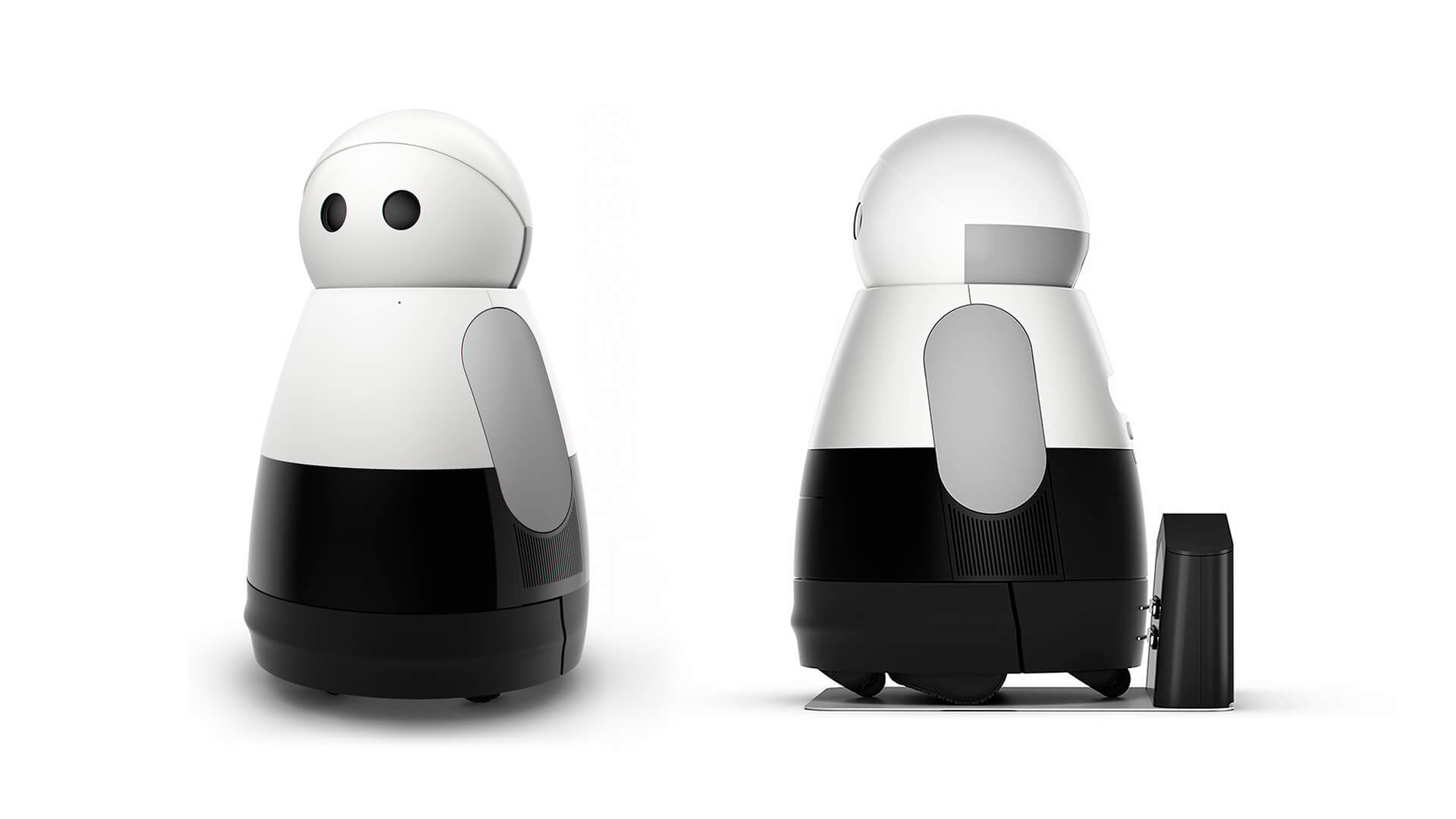
Mayfield Robotics collaborated with Triple Ring to design and develop an optical guidance system for Kuri, a home companion robot designed to safely navigate and interact within household environments. The system required advanced sensing capabilities to support navigation, hazard detection, and environmental awareness.
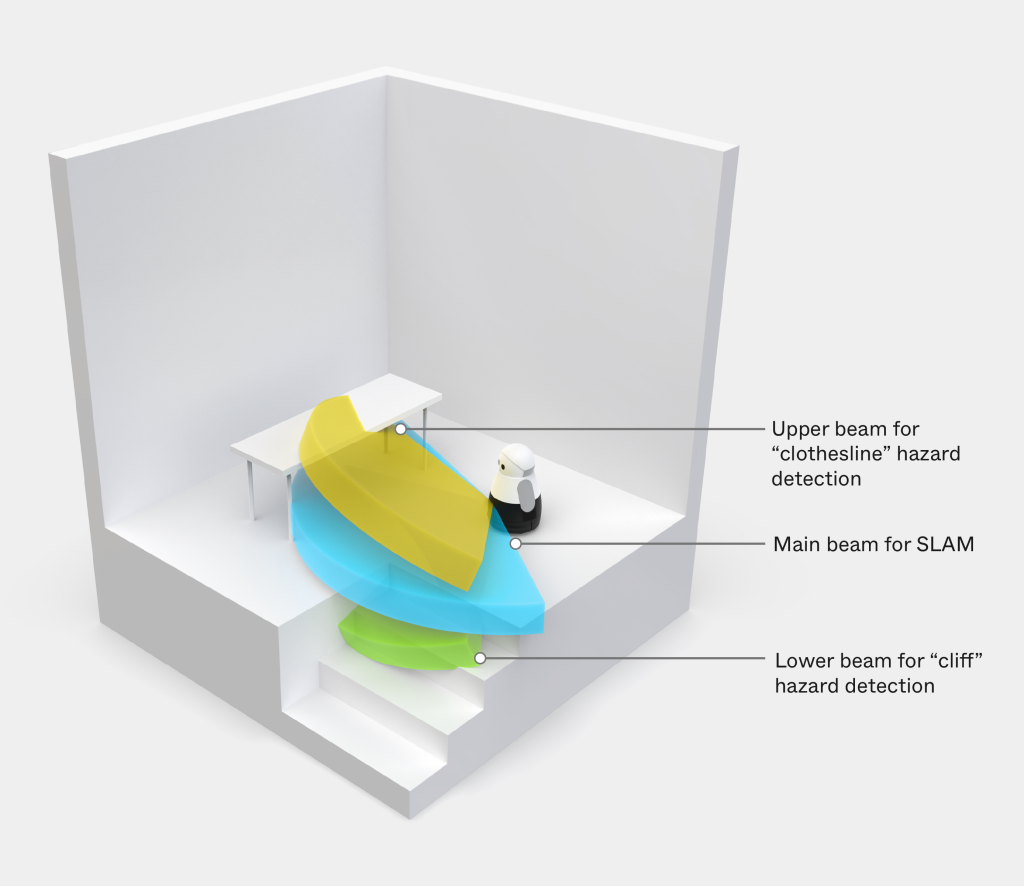
The resulting optical platform integrated multiple sensing technologies into a compact architecture capable of supporting simultaneous localization and mapping (SLAM) while meeting strict safety and cost requirements for consumer deployment.
Challenge
Kuri required a sophisticated optical system capable of performing multiple functions, including hazard detection, navigation, and real-time environmental mapping. The system needed to maintain high performance in dynamic home environments while remaining safe for use around humans and pets.
Additionally, the integrated optics needed to meet strict eye-safety certification requirements and support reliable operation under consumer use conditions. Designing this system required combining complex optical components within a compact and manufacturable architecture while meeting aggressive launch timelines.
Kuri, the Nimble Companion Robot
Overview
Mayfield Robotics collaborated with Triple Ring to design and develop an optical guidance system for Kuri, a home companion robot designed to safely navigate and interact within household environments. The system required advanced sensing capabilities to support navigation, hazard detection, and environmental awareness.
The resulting optical platform integrated multiple sensing technologies into a compact architecture capable of supporting simultaneous localization and mapping (SLAM) while meeting strict safety and cost requirements for consumer deployment.
Challenge
Kuri required a sophisticated optical system capable of performing multiple functions, including hazard detection, navigation, and real-time environmental mapping. The system needed to maintain high performance in dynamic home environments while remaining safe for use around humans and pets.
Additionally, the integrated optics needed to meet strict eye-safety certification requirements and support reliable operation under consumer use conditions. Designing this system required combining complex optical components within a compact and manufacturable architecture while meeting aggressive launch timelines.
Client
Mayfield Robotics
Practice Areas
Industrial
Core Disciplines
AI & Advanced Algorithms
Mechanical Engineering
Transfer to Manufacture
Optical Science
Photonics & Imaging
Solution
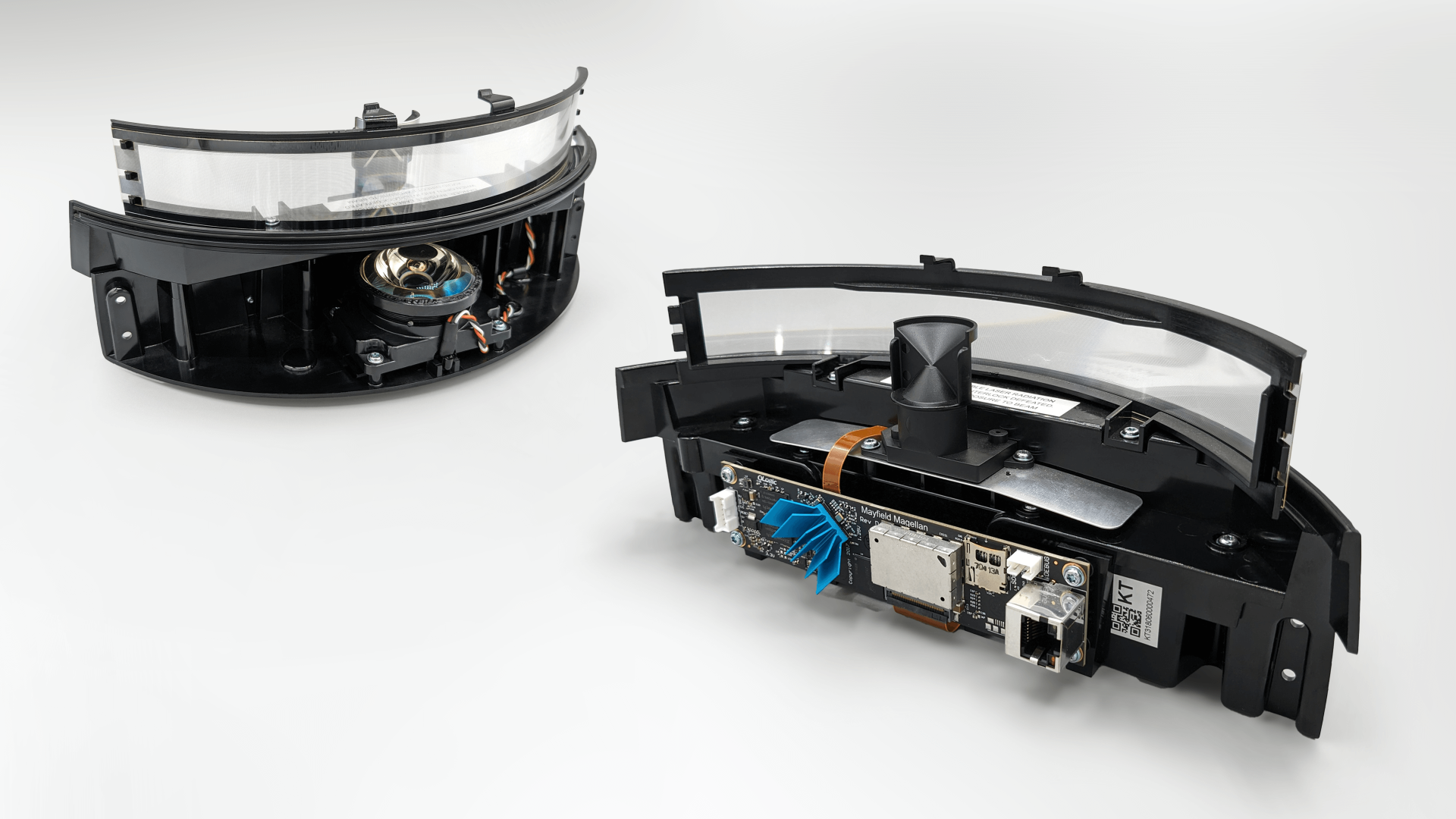
Triple Ring applied deep expertise in optical system design and robotics integration to develop a navigation system capable of supporting safe and reliable robot operation. The development effort focused on integrating advanced sensing technologies into a scalable and cost-effective architecture.
Engineering efforts included:
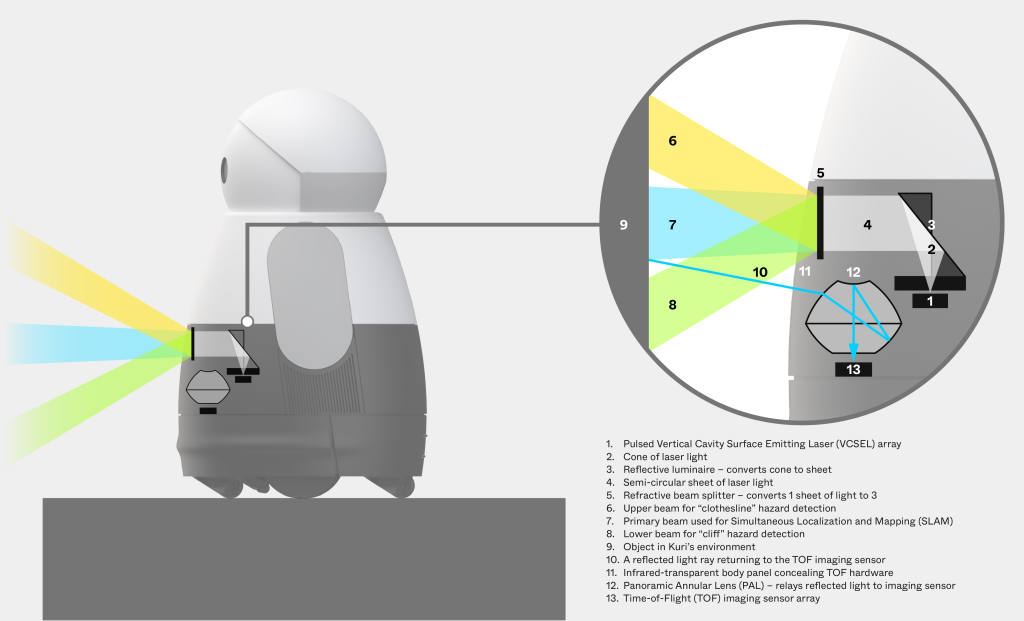
- Designing pulsed vertical cavity surface emitting laser (VCSEL) array systems supporting depth sensing
- Developing panoramic annular lens configurations enabling wide-area environmental awareness
- Integrating time-of-flight imaging sensor arrays for real-time distance measurement
- Engineering optical subsystems compliant with stringent eye-safety requirements
- Supporting system-level integration and validation to meet cost, performance, and production goals
Outcome
Triple Ring delivered an optical navigation system that exceeded cost and performance requirements while achieving certification for eye safety and compliance with UL 3300 standards. The system enabled reliable navigation and safe operation within home environments.
The completed optical system supported the successful commercial launch of Kuri, with hundreds of units delivered to customers. The design generated multiple patent filings and contributed to Kuri being named Best in Show at CES 2017 by leading technology publications.
Triple Ring Talent
The Story Behind the Innovation
At Triple Ring, we draw on a deep bench of expertise across diverse disciplines matched to each innovation challenge. For this project, our team combined optical system design, VCSEL and time-of-flight sensing, robotics integration, and consumer safety certification expertise to develop a compact, eye-safe optical navigation system capable of supporting simultaneous localization, mapping, and hazard detection in dynamic home environments.
Todd collaborated with many talented colleagues across Triple Ring and Mayfield Robotics on this project.
Todd Harris, PhD
Physics & Optical Science
Dr. Todd Harris applies expertise in optics and imaging physics to the development of advanced sensing and illumination technologies. His work combines optical modeling with system design, helping teams translate complex physical principles into dependable, high-performance solutions.