

Key Innovation
Optical imaging and machine learning compressed tissue analysis from days to minutes.
Intra-Operative Tissue Pathology
Client
BlackLight Surgical
Practice Areas
Physics-Based AI
Imaging, Robotics & Radiotherapy
Core Disciplines
Overview
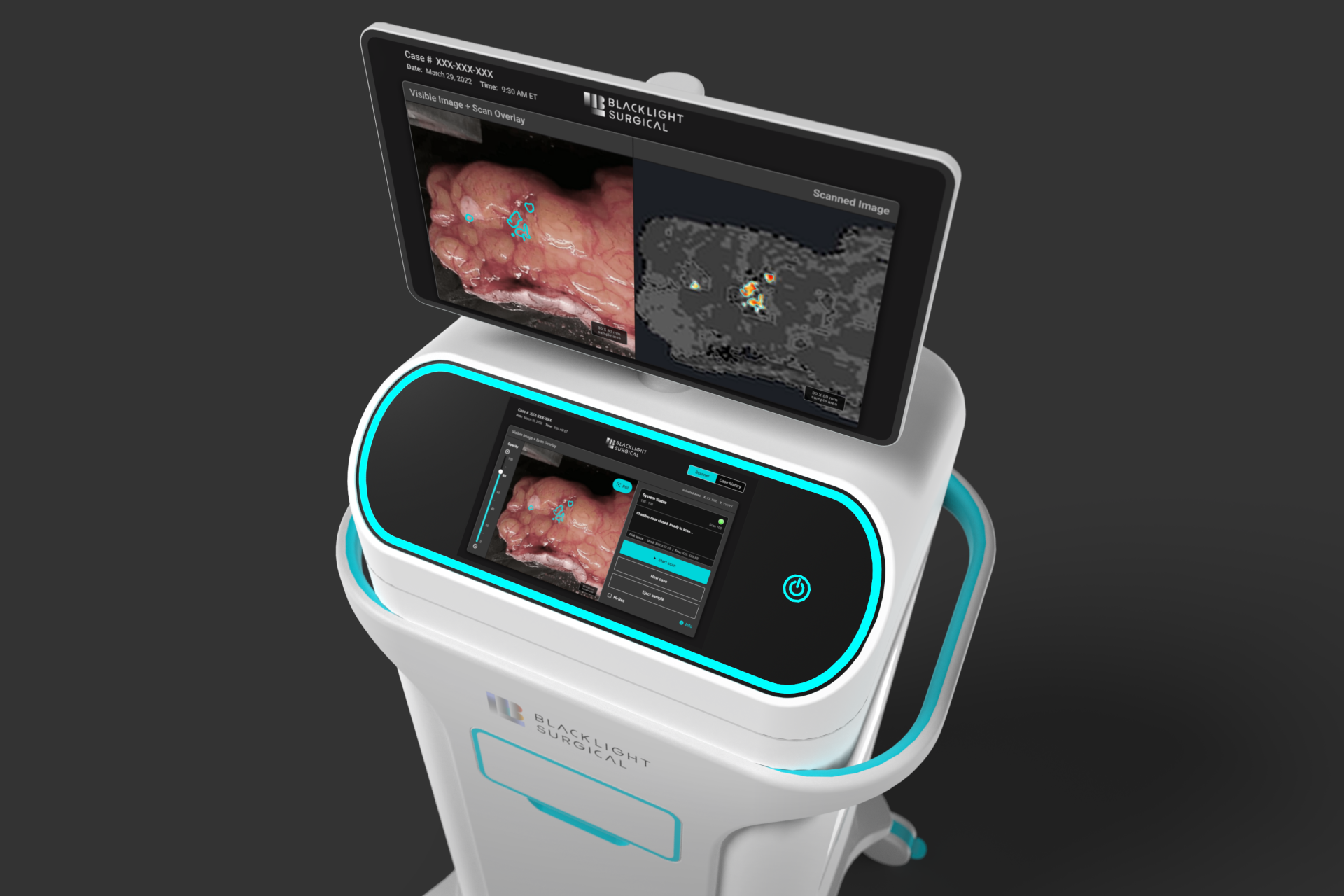
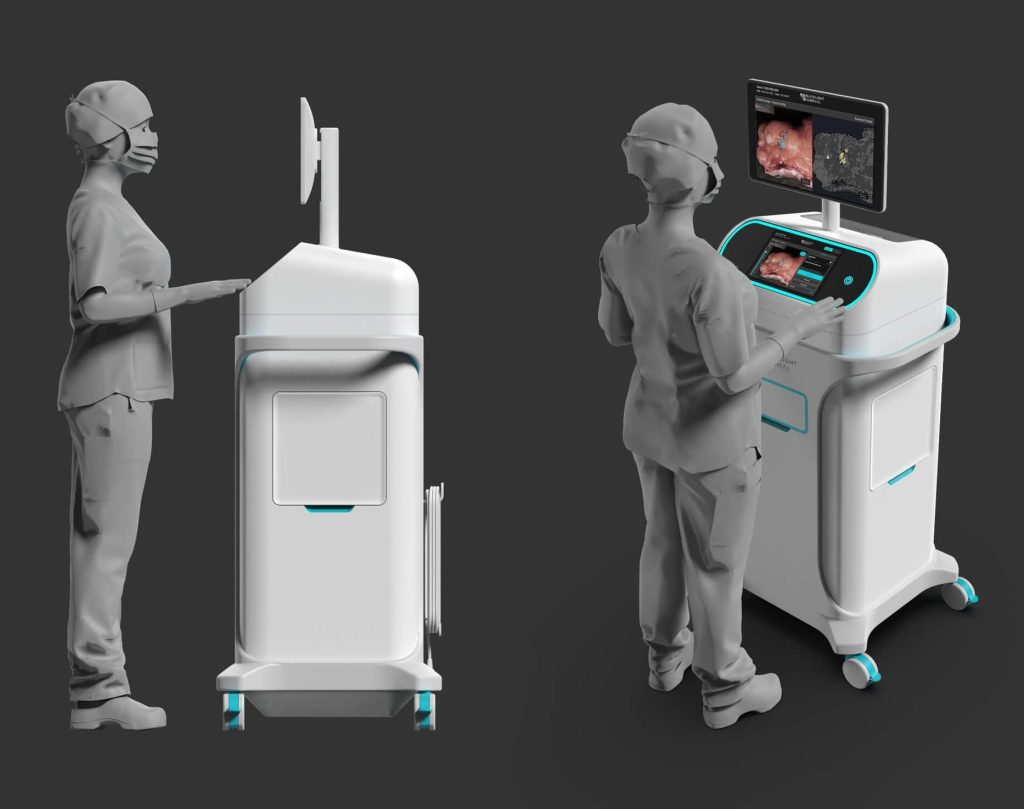
BlackLight Surgical engaged Triple Ring to develop a high-speed biochemical imaging platform designed for intra-operative tissue analysis. The system leveraged picosecond pulsing laser technology and machine learning workflows to enable rapid tissue identification during surgical procedures.
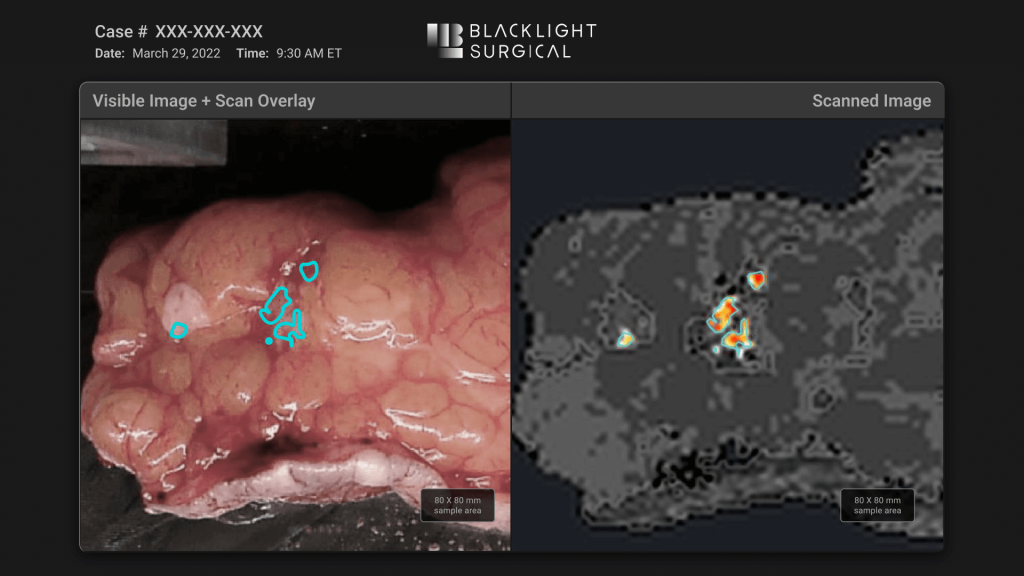
The resulting platform supports real-time clinical decision making by allowing clinicians to distinguish between normal and diseased tissue directly in the operating suite.
Challenge
The system required integration of advanced optical imaging technology capable of performing rapid biochemical analysis during surgery. Reliable performance was required across demanding clinical environments and complex workflows.
Delivering this capability required precise integration of optical, mechanical, software, and machine learning systems into a clinically deployable architecture.
Intra-Operative Tissue Pathology
Overview
BlackLight Surgical engaged Triple Ring to develop a high-speed biochemical imaging platform designed for intra-operative tissue analysis. The system leveraged picosecond pulsing laser technology and machine learning workflows to enable rapid tissue identification during surgical procedures.
The resulting platform supports real-time clinical decision making by allowing clinicians to distinguish between normal and diseased tissue directly in the operating suite.
Challenge
The system required integration of advanced optical imaging technology capable of performing rapid biochemical analysis during surgery. Reliable performance was required across demanding clinical environments and complex workflows.
Delivering this capability required precise integration of optical, mechanical, software, and machine learning systems into a clinically deployable architecture.
Client
BlackLight Surgical
Practice Areas
Physics-Based AI
Imaging, Robotics & Radiotherapy
Core Disciplines
Software Engineering
AI & Advanced Algorithms
Mechanical Engineering
Systems Engineering
Transfer to Manufacture
Electrical Engineering
Industrial Design
Optical Science
Photonics & Imaging
Quality System Management
Embedded Systems
Solution
Triple Ring assembled multidisciplinary engineering and scientific teams to design and integrate the imaging platform using structured development and validation methodologies.
Technical execution focused on:
- Integrating laser-based optical imaging technologies capable of rapid tissue analysis
- Developing machine learning workflows that supported real-time tissue classification
- Using simulation and modeling tools to guide system design and performance optimization
- Establishing ISO 13485-compliant design and documentation processes
Outcome
Triple Ring delivered a fully integrated intra-operative biochemical imaging platform supporting clinical studies and real-time tissue visualization.
The system was developed to ISO 13485 standards and documented within a Quality Management System transferred to BlackLight Surgical, enabling deployment of advanced intra-operative imaging workflows.
Triple Ring Talent
The Story Behind the Innovation
At Triple Ring, we draw on a deep bench of expertise across diverse disciplines matched to each innovation challenge. For this project, our team combined high-speed laser optical imaging, machine learning, mechanical engineering, and quality systems expertise to develop a fully integrated intra-operative tissue analysis platform capable of distinguishing healthy from diseased tissue in real time.
Todd, Cameran, and Shehadeh collaborated with many talented colleagues across Triple Ring and BlackLight Surgical on this project.

Todd Harris, PhD
Physics & Optical Science
Dr. Todd Harris applies expertise in optics and imaging physics to the development of advanced sensing and illumination technologies. His work combines optical modeling with system design, helping teams translate complex physical principles into dependable, high-performance solutions.

Cameran Casale
Bioengineering
Cameran Casale contributes to the development of imaging, microfluidic, and diagnostic technologies across multidisciplinary programs. Her work supports system integration and testing efforts, helping teams refine complex devices for reliable performance in research and clinical environments.

Shehadeh Dajani
Aerospace & Mechanical Engineering
Shehadeh Dajani supports the development of safety-critical embedded systems used in regulated medical technologies. His work spans software and system integration across feasibility, clinical, and production stages, helping ensure reliable performance throughout the development lifecycle.


Key Innovation
Wearable optics and injectable dyes enabled continuous kidney monitoring without blood draws.
Transdermal GFR Measurement
Client
MediBeacon
Practice Areas
Smart Medical Devices
Core Disciplines
Overview
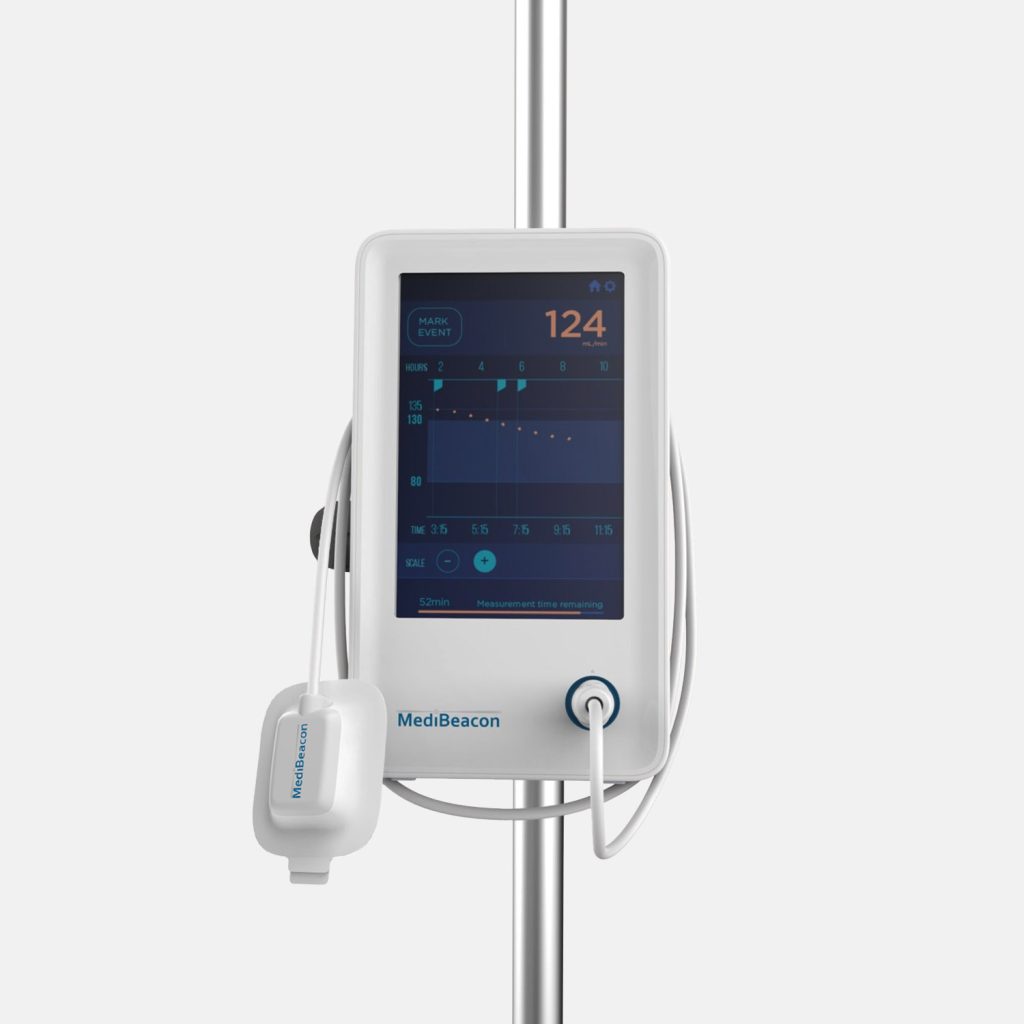
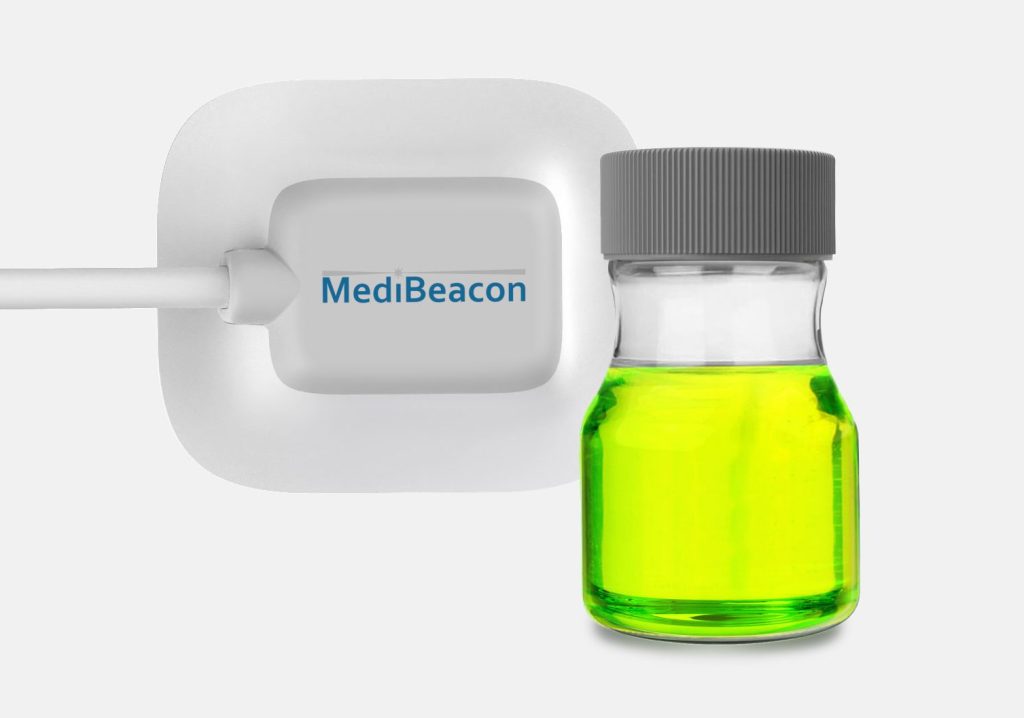
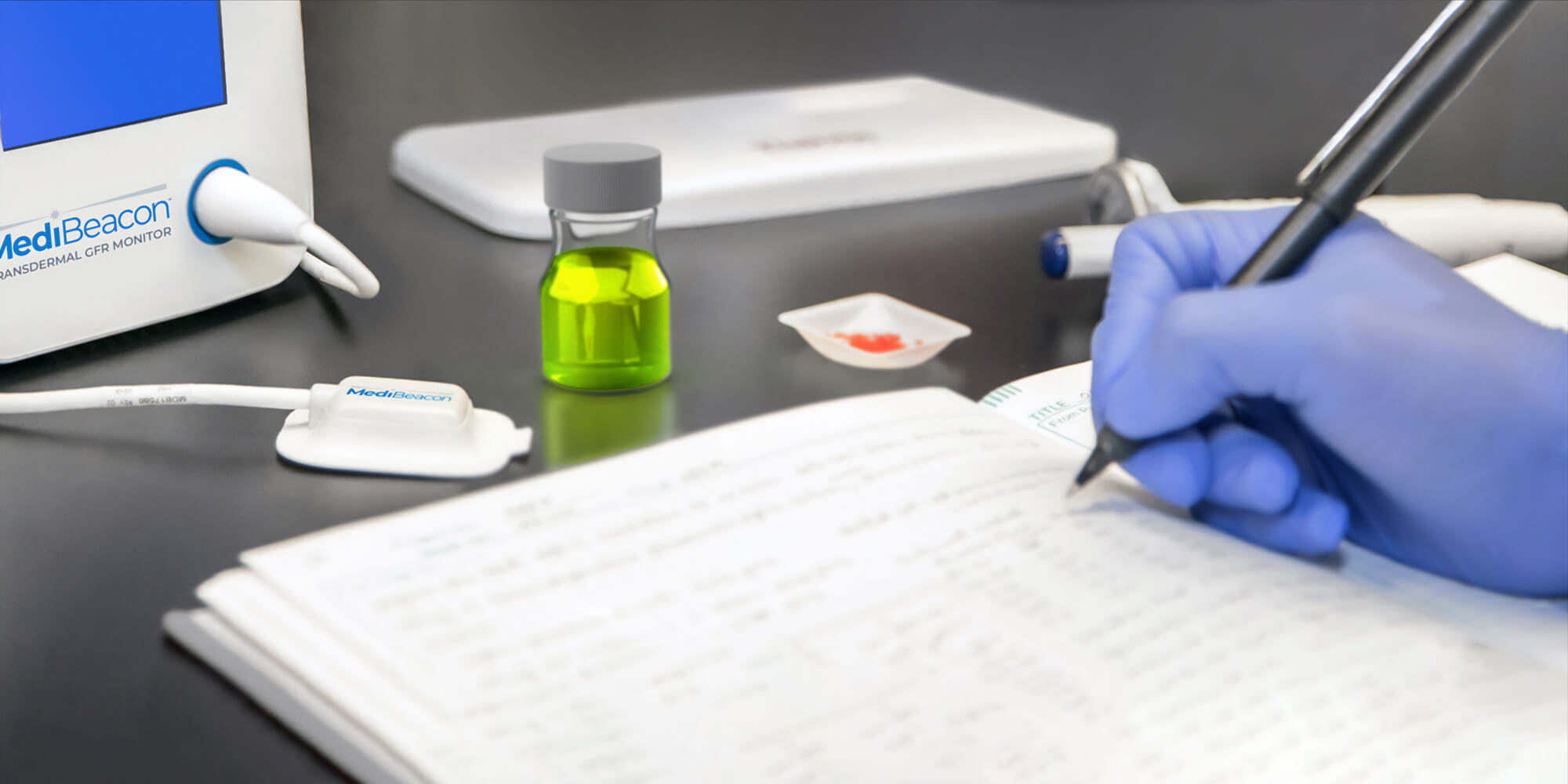
MediBeacon partnered with Triple Ring to develop a photonics-based transdermal detection system designed to measure kidney function using fluorescent tracer technology. The system enables non-invasive monitoring of intravenously injected tracers to generate clinically actionable measurements of glomerular filtration rate (GFR).
The resulting wearable detection platform integrates optical sensing and physiological measurement technologies to support real-time kidney function assessment in clinical environments.
Challenge
MediBeacon required development of a wearable optical detection system capable of monitoring fluorescent tracer signals through human tissue. The system needed to achieve high sensitivity and accuracy while remaining comfortable and practical for clinical use.
In addition to performance requirements, the device needed to meet strict constraints related to cost, usability, and manufacturability. The development effort required careful balancing of optical performance, ergonomic design, and regulatory compliance within a wearable form factor.
Transdermal GFR Measurement
Overview
MediBeacon partnered with Triple Ring to develop a photonics-based transdermal detection system designed to measure kidney function using fluorescent tracer technology. The system enables non-invasive monitoring of intravenously injected tracers to generate clinically actionable measurements of glomerular filtration rate (GFR).
The resulting wearable detection platform integrates optical sensing and physiological measurement technologies to support real-time kidney function assessment in clinical environments.
Challenge
MediBeacon required development of a wearable optical detection system capable of monitoring fluorescent tracer signals through human tissue. The system needed to achieve high sensitivity and accuracy while remaining comfortable and practical for clinical use.
In addition to performance requirements, the device needed to meet strict constraints related to cost, usability, and manufacturability. The development effort required careful balancing of optical performance, ergonomic design, and regulatory compliance within a wearable form factor.
Client
MediBeacon
Practice Areas
Smart Medical Devices
Core Disciplines
AI & Advanced Algorithms
Mechanical Engineering
Systems Engineering
Electrical Engineering
Industrial Design
Quality System Management
Embedded Systems
Solution
Triple Ring collaborated closely with MediBeacon to design and deliver a non-invasive wearable detection system capable of supporting accurate GFR measurement. The development effort leveraged expertise in light-based tissue analysis and system-level modeling to optimize detection performance while supporting user comfort and clinical usability.
The team addressed these challenges by:
- Applying advanced photonics expertise to optimize signal detection through tissue
- Using modeling and simulation tools to refine optical system performance
- Designing wearable hardware that supported patient comfort during extended use
- Aligning development processes with clinical validation and regulatory expectations
Outcome
Fully integrated wearable GFR detection systems were developed under ISO 13485 design controls and delivered to support critical clinical trials. The resulting devices enabled accurate, non-invasive measurement of kidney function through optical detection of fluorescent tracers.
The platform supported the advancement of MediBeacon’s GFR monitoring technology toward clinical validation, enabling real-time physiological measurement while maintaining patient comfort and usability.
Triple Ring Talent
The Story Behind the Innovation
At Triple Ring, we draw on a deep bench of expertise across diverse disciplines matched to each innovation challenge. For this project, our team combined photonics, transdermal optical sensing, wearable device design, and advanced simulation expertise to develop a clinical-grade wearable system capable of measuring kidney function non-invasively through fluorescent tracer detection.
Gus and Ed collaborated with many talented colleagues across Triple Ring and MediBeacon on this project.

Gus Lowell
Systems Architecture & Electrical Engineering
Augustus “Gus” Lowell defines the architecture of complex software and hardware systems across multidisciplinary programs. His work establishes the frameworks that connect data processing, control, and safety-critical functions, helping ensure technologies operate reliably as integrated systems.

Ed Solomon
Electrical Engineering & Advanced Technologies
Ed Solomon connects advanced engineering with business strategy to help bring innovative technologies into practical use. His work supports system architecture, partnership development, and technology adoption, helping organizations move complex ideas toward successful deployment.


Key Innovation
Biometric sensing redesigned for animal physiology set a new veterinary care standard.
Veterinary Vital Sign Monitor
Client
One Health Group
Practice Areas
Smart Medical Devices
Core Disciplines
Overview
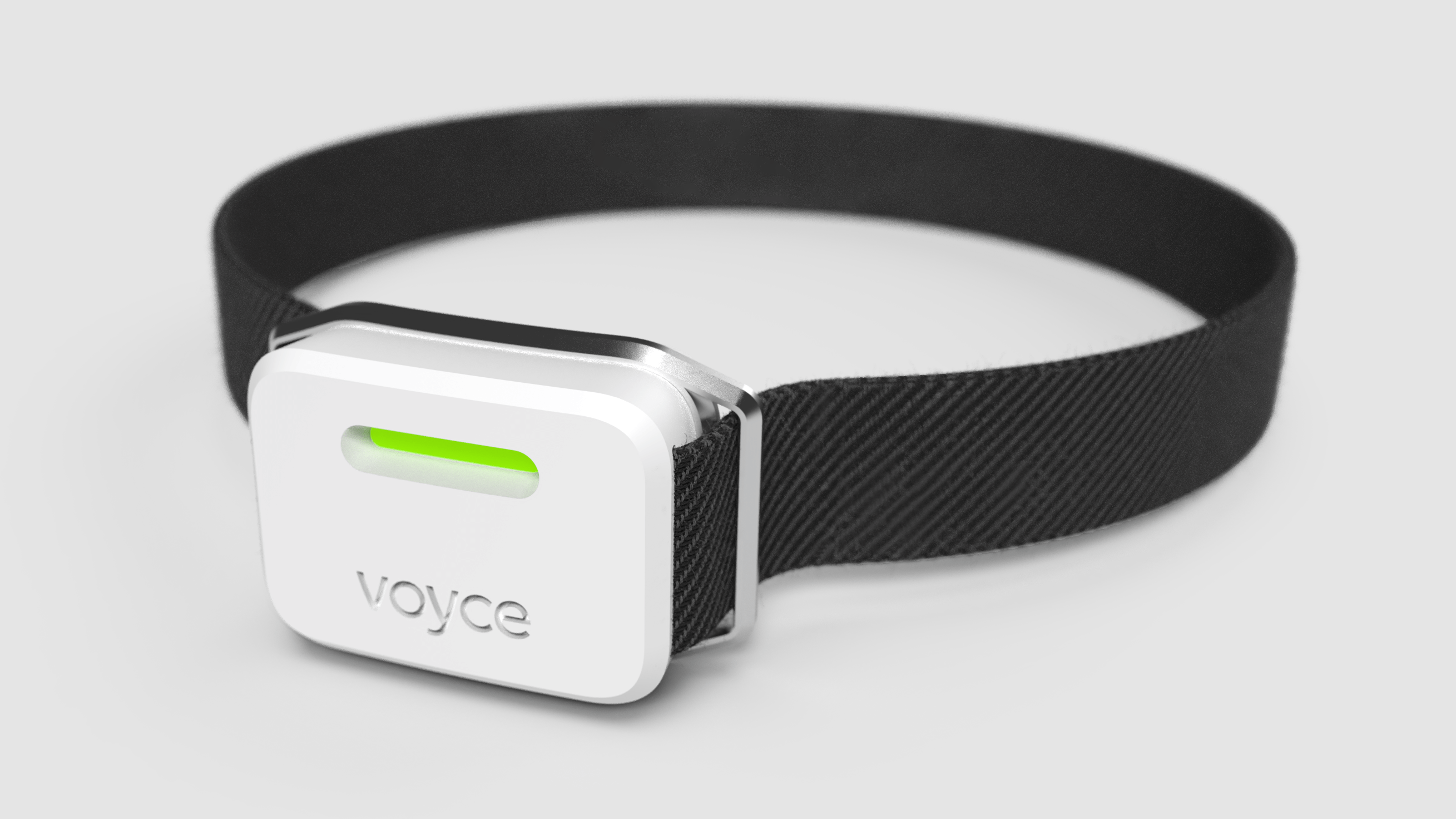
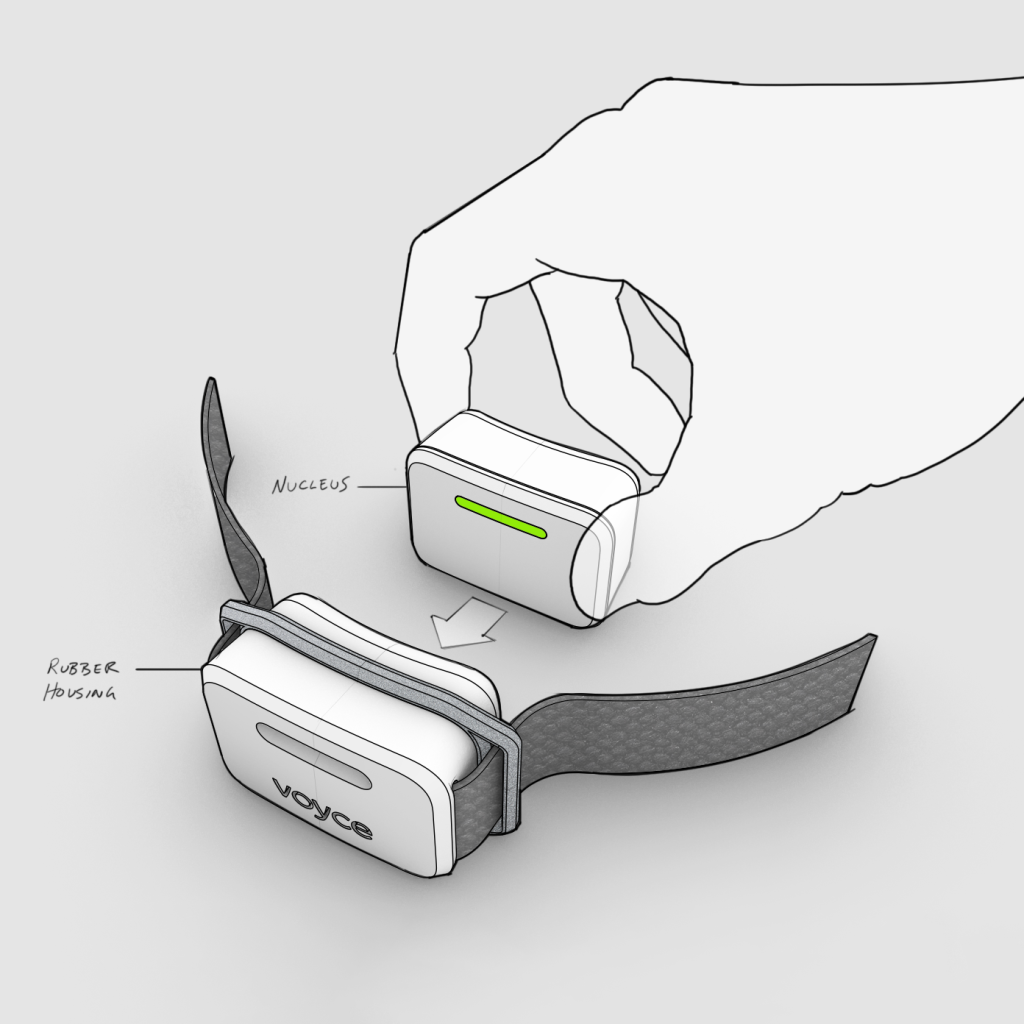
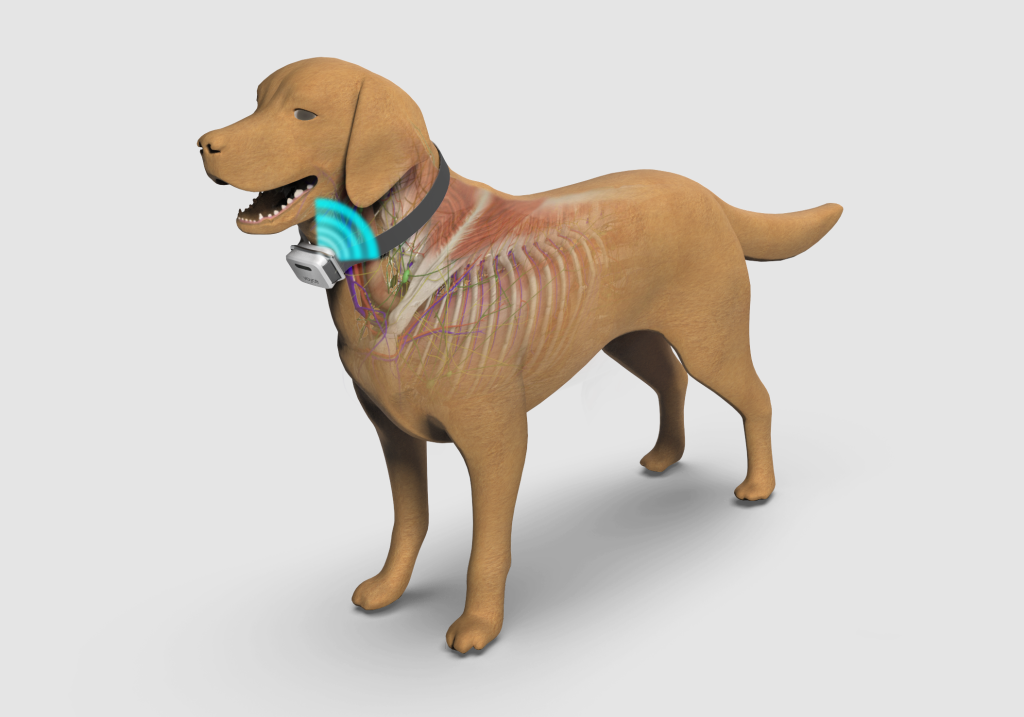
One Health Group partnered with Triple Ring to develop a non-invasive wearable physiological monitoring system designed to capture biometric data from animals in real time. The system was developed to support continuous health monitoring in veterinary settings while improving patient comfort and enabling early detection of health issues.
The resulting wearable platform integrates physiological sensing and wireless communication technologies to enable long-term monitoring and provide actionable health insights for veterinary care providers.
Challenge
One Health Group required development of a wearable monitoring device capable of accurately measuring physiological signals in animals while remaining comfortable and suitable for continuous use. The system needed to support long-term data collection and deliver real-time alerts without interfering with normal animal movement.
As a lean startup organization, One Health Group relied on a fully outsourced R&D model. The project required multidisciplinary engineering expertise to design, prototype, and validate a complex sensing platform while rapidly demonstrating feasibility and reducing development risk.
Veterinary Vital Sign Monitor
Overview
One Health Group partnered with Triple Ring to develop a non-invasive wearable physiological monitoring system designed to capture biometric data from animals in real time. The system was developed to support continuous health monitoring in veterinary settings while improving patient comfort and enabling early detection of health issues.
The resulting wearable platform integrates physiological sensing and wireless communication technologies to enable long-term monitoring and provide actionable health insights for veterinary care providers.
Challenge
One Health Group required development of a wearable monitoring device capable of accurately measuring physiological signals in animals while remaining comfortable and suitable for continuous use. The system needed to support long-term data collection and deliver real-time alerts without interfering with normal animal movement.
As a lean startup organization, One Health Group relied on a fully outsourced R&D model. The project required multidisciplinary engineering expertise to design, prototype, and validate a complex sensing platform while rapidly demonstrating feasibility and reducing development risk.
Client
One Health Group
Practice Areas
Smart Medical Devices
Core Disciplines
Software Engineering
AI & Advanced Algorithms
Mechanical Engineering
Systems Engineering
Transfer to Manufacture
Electrical Engineering
Industrial Design
Embedded Systems
Applied Physics
Solution
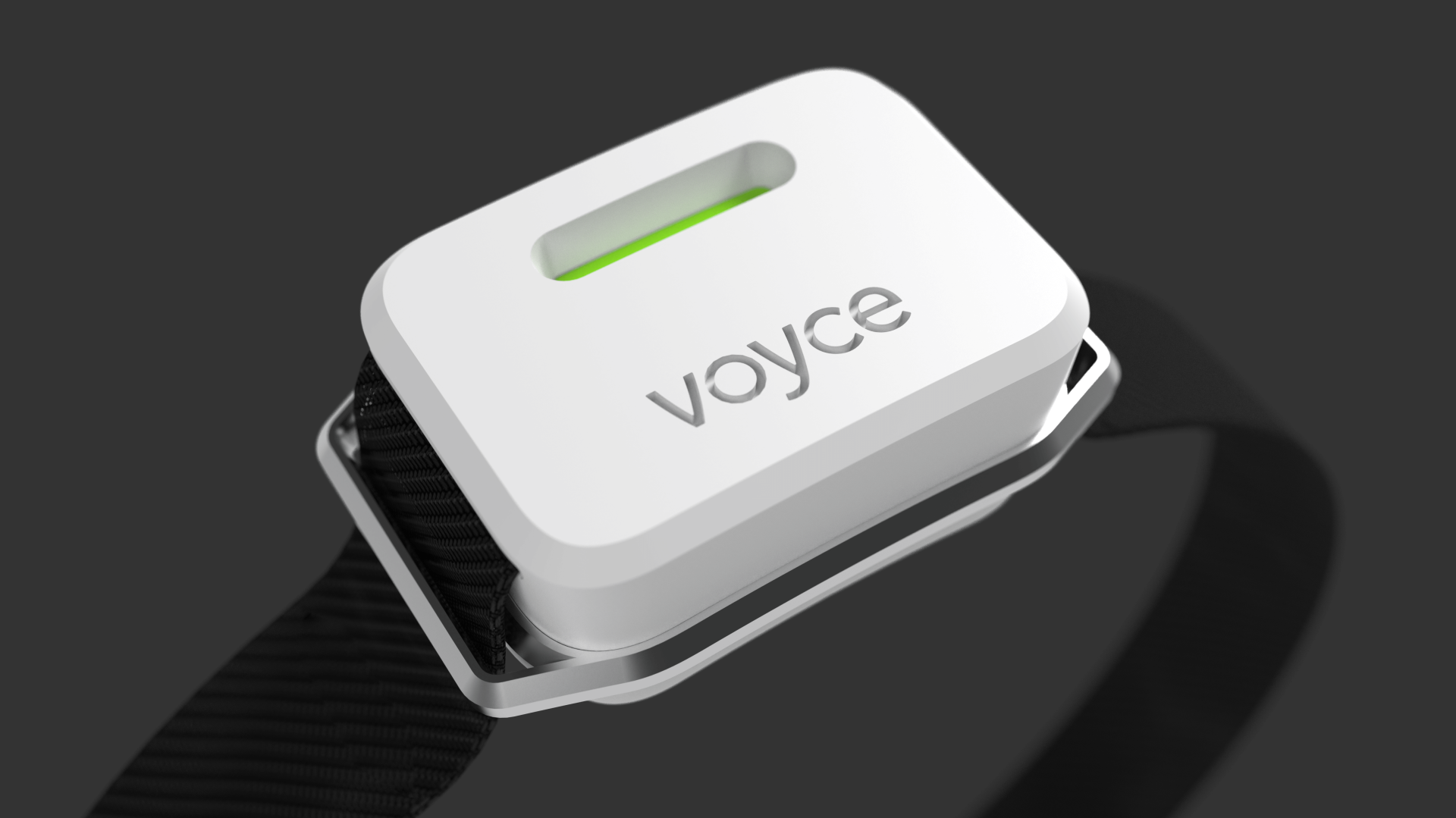
Triple Ring led the development of a wearable physiological monitoring platform using a structured feasibility and product development approach. Industrial design, sensing technologies, and system integration were coordinated to ensure reliable performance and comfort across extended wear conditions.
Key contributions included:
- Designing wearable hardware capable of supporting continuous physiological monitoring
- Conducting rapid feasibility testing to validate sensing and alert functionality
- Refining industrial design to improve comfort, usability, and durability
Outcome
Triple Ring delivered robust functional prototypes capable of generating high-quality physiological data suitable for ongoing product development and validation. The system demonstrated the feasibility of continuous biometric monitoring in veterinary applications.
The successful development effort supported One Health Group’s technology roadmap and strengthened its value proposition, enabling expanded partnerships with strategic investors in the veterinary health industry.
Triple Ring Talent
The Story Behind the Innovation
At Triple Ring, we draw on a deep bench of expertise across diverse disciplines matched to each innovation challenge. For this project, our team combined physiological sensing, wireless systems, industrial design, and startup-focused R&D expertise to develop a wearable continuous monitoring platform capable of capturing real-time biometric data from animals in veterinary settings.
Brian and Steve collaborated with many talented colleagues across Triple Ring and One Health Group on this project.

Brian Wilfley, PhD
Experimental Physics & Instrumentation
Dr. Brian Wilfley leads the development of complex measurement and instrumentation systems grounded in experimental physics. His work combines theoretical insight with hands-on experimentation to advance technologies used in imaging, inspection, and scientific analysis.

Steve Kuhn
Embedded Systems & Software Engineering
Steve Kuhn develops embedded software and real-time control systems that support complex hardware-driven technologies. His work focuses on software architecture, motion control, and system simulation, enabling reliable operation across integrated device platforms.

Key Innovation
Solving for real-world interferents produced a monitor that outperforms lab instruments.
Ocean Microplastics Monitor
Client
Various
Practice Areas
Smart Medical Devices
Core Disciplines
Overview
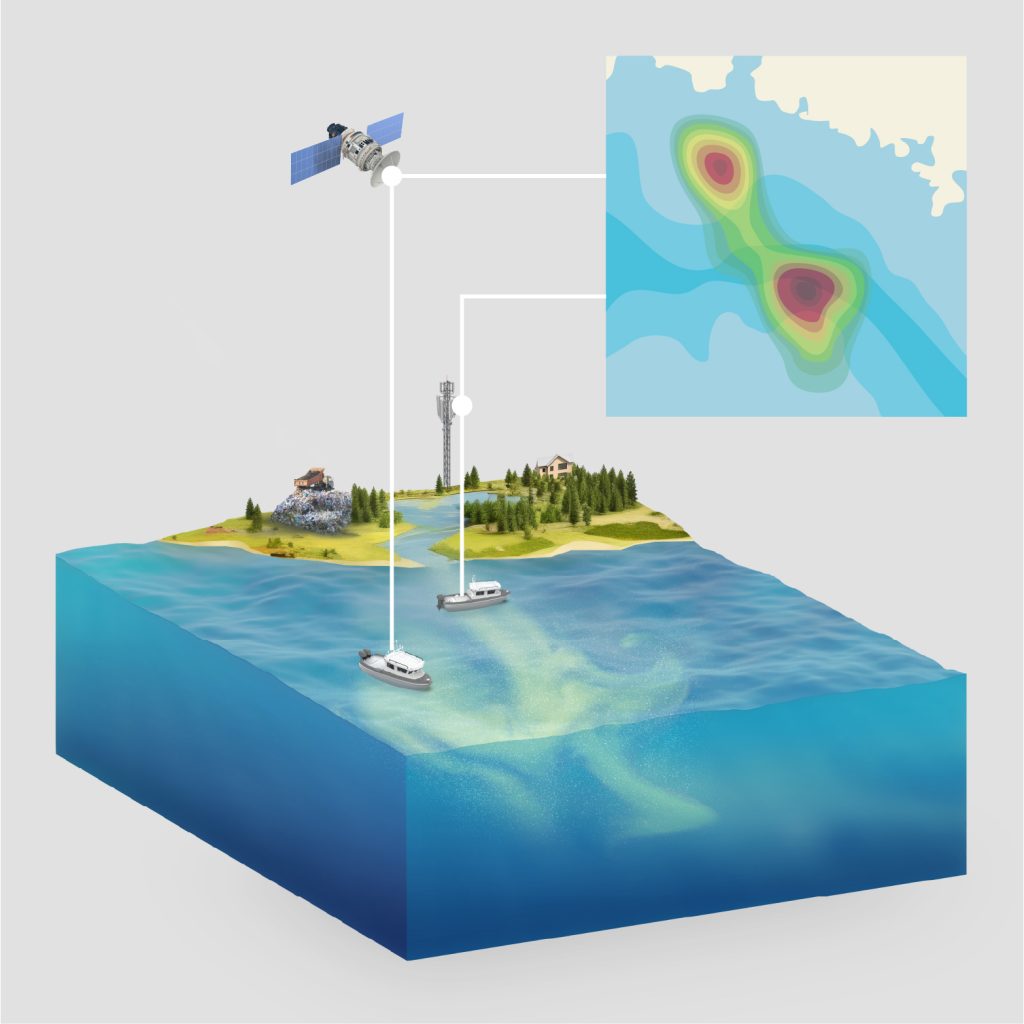
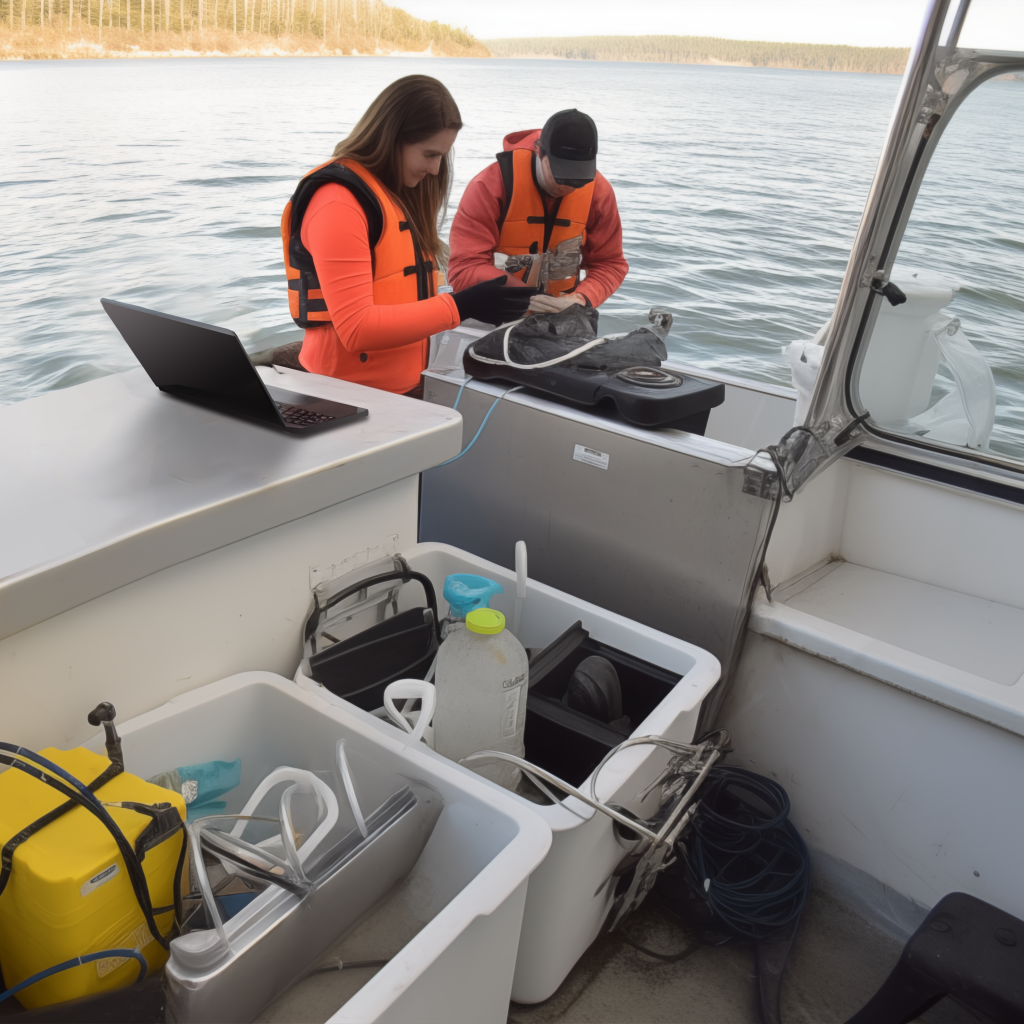
Triple Ring supported the development of a portable microplastics monitoring system designed to measure plastic particle concentrations in aqueous environmental samples. The system was developed to enable field-based quantification of microplastics and support environmental research initiatives.
The resulting platform integrates particle detection and separation technologies into a miniaturized unit capable of replacing larger laboratory-based instrumentation while maintaining measurement accuracy under real-world conditions.
Challenge
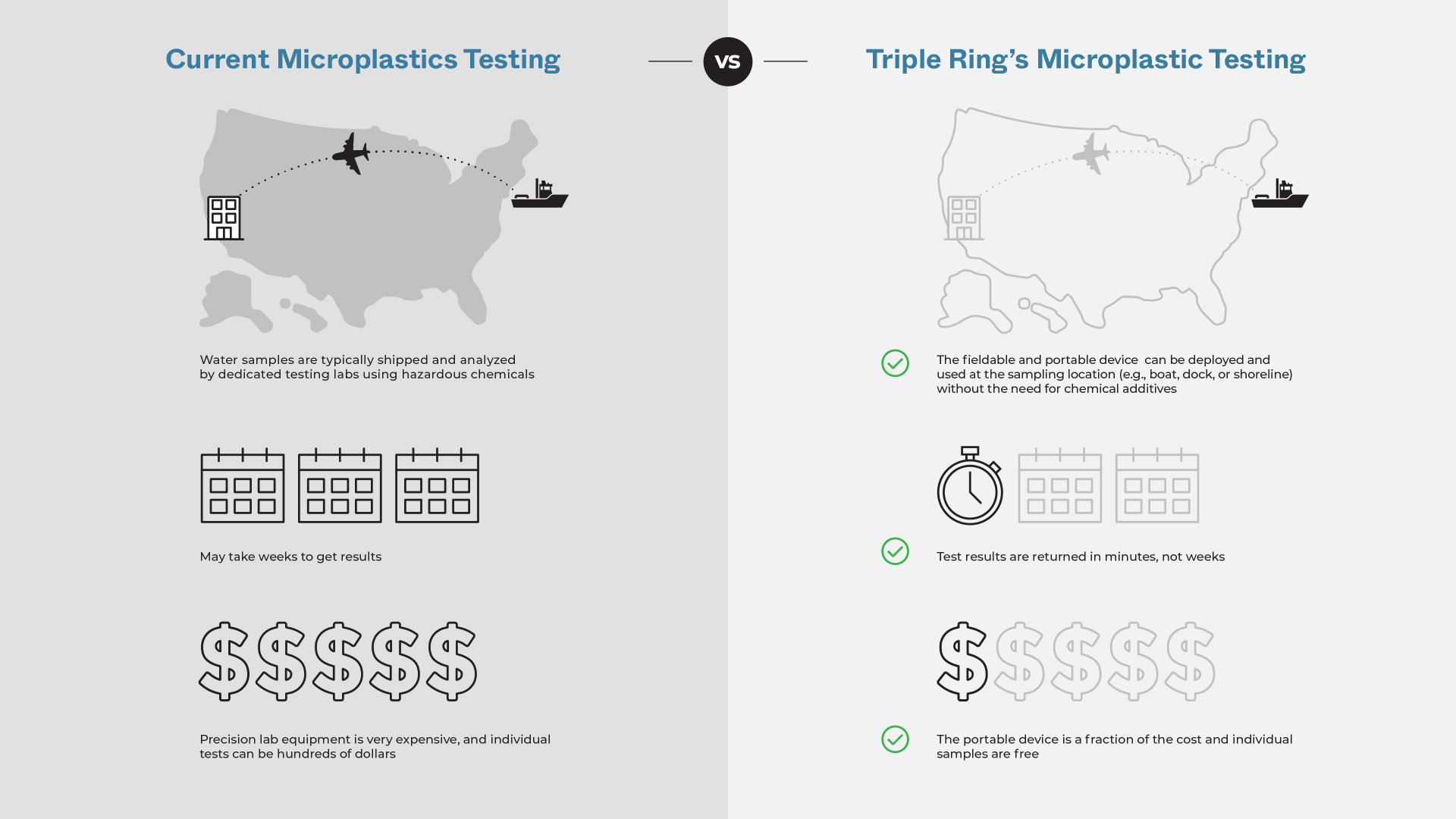
Environmental researchers required a field-deployable system capable of accurately detecting and quantifying microplastics in complex environmental samples. Traditional benchtop instruments were not suitable for field use due to size, cost, and sensitivity to environmental conditions.
The system needed to function reliably in the presence of common interferents such as air bubbles, biological materials, sand, and other particulate matter. Achieving consistent performance under these variable conditions required robust system integration and miniaturization.
Ocean Microplastics Monitor
Overview
Triple Ring supported the development of a portable microplastics monitoring system designed to measure plastic particle concentrations in aqueous environmental samples. The system was developed to enable field-based quantification of microplastics and support environmental research initiatives.
The resulting platform integrates particle detection and separation technologies into a miniaturized unit capable of replacing larger laboratory-based instrumentation while maintaining measurement accuracy under real-world conditions.
Challenge
Environmental researchers required a field-deployable system capable of accurately detecting and quantifying microplastics in complex environmental samples. Traditional benchtop instruments were not suitable for field use due to size, cost, and sensitivity to environmental conditions.
The system needed to function reliably in the presence of common interferents such as air bubbles, biological materials, sand, and other particulate matter. Achieving consistent performance under these variable conditions required robust system integration and miniaturization.
Client
Various
Practice Areas
Smart Medical Devices
Core Disciplines
Software Engineering
Mechanical Engineering
Systems Engineering
Photonics & Imaging
Embedded Systems
Solution
Triple Ring collaborated with research partners to integrate sensing technologies into a compact and ruggedized platform capable of supporting field-based environmental monitoring. Engineering efforts focused on miniaturizing complex instrumentation while maintaining detection accuracy across diverse environmental samples.
Technical work included:
- Designing miniaturized detection systems that replaced benchtop instrumentation
- Developing algorithms to distinguish plastics from environmental interferents
- Integrating sampling and analysis components into a portable architecture
- Validating system performance under field-relevant conditions
Outcome
Triple Ring delivered a portable microplastics monitoring system capable of operating outside traditional laboratory environments. The system successfully demonstrated reliable particle detection and measurement in real-world environmental conditions.
The field-ready platform enabled successful demonstrations to research partners and funding organizations, supporting ongoing efforts to advance environmental monitoring technologies and improve understanding of microplastic pollution.
Triple Ring Talent
The Story Behind the Innovation
At Triple Ring, we draw on a deep bench of expertise across diverse disciplines matched to each innovation challenge. For this project, our team combined miniaturized sensing system design, particle detection and separation technologies, and ruggedized hardware engineering to develop a portable microplastics monitor capable of replacing laboratory instrumentation in real-world field environments.
Erick and Sheila collaborated with many talented colleagues across Triple Ring on this project.

Erick Blankenberg
Electro-Mechanical Systems Engineering
Erick Blankenberg contributes to the development of electro-mechanical systems with a focus on controls and optimization. His work supports software and hardware integration for imaging and instrumentation technologies, helping teams refine system performance through coordinated design and testing.

Sheila Hemami, PhD
Electrical Engineering & Enviromental Sciences
Dr. Sheila Hemami brings interdisciplinary teams together to develop technologies that address complex environmental and healthcare challenges. Her work focuses on early-stage innovation and cross-sector collaboration, helping transform emerging ideas into solutions that are practical, deployable, and sustainable.

Key Innovation
Simulation-driven development took a custom IORT system from concept to FDA clearance.
Robotic Radiation Therapy
Client
Empyrean Medical Systems
Practice Areas
Imaging, Robotics & Radiotherapy
Core Disciplines
Overview
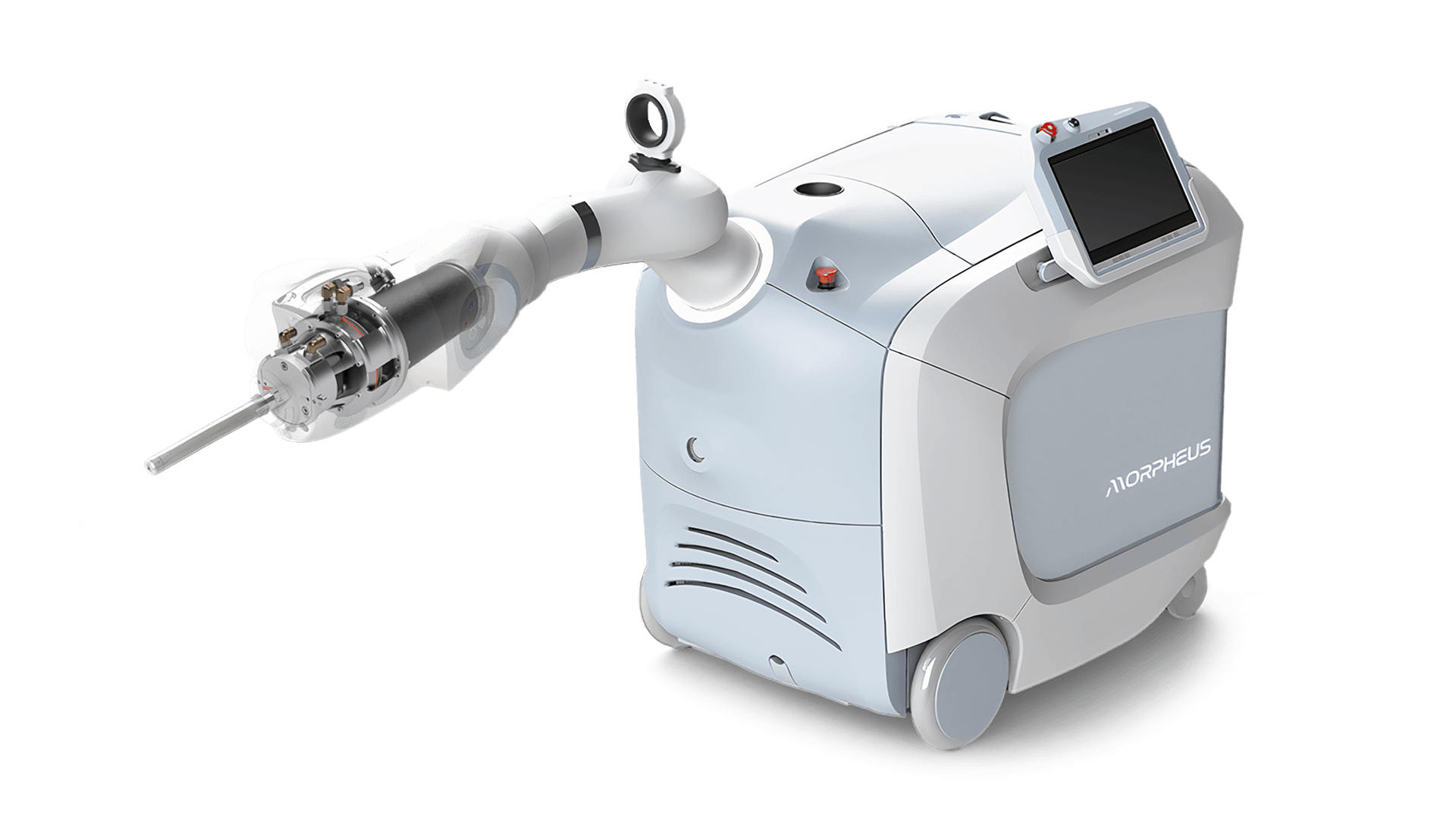
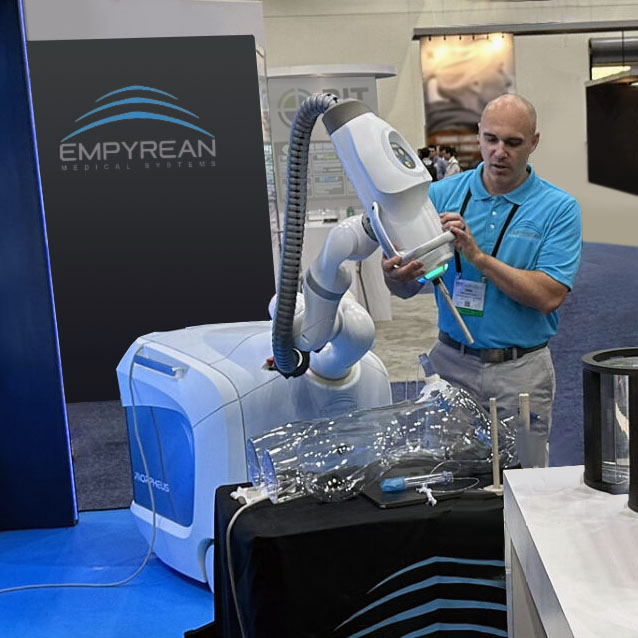
Empyrean Medical Systems worked with Triple Ring to design and develop a compact, robotically guided intra-operative radiation therapy device. The system was engineered to deliver targeted radiation therapy within surgical environments while maintaining a strong focus on usability and patient-centered design.
The resulting platform combined robotic guidance, precision radiation delivery, and mobile system architecture to support flexible clinical workflows and improve intra-operative treatment capabilities.
Challenge
Empyrean required development of a compact, mobile radiation therapy system capable of delivering low-energy radiation with precise beam directionality during surgical procedures. The system needed to maintain high performance standards while remaining easy to operate within the constraints of clinical environments.
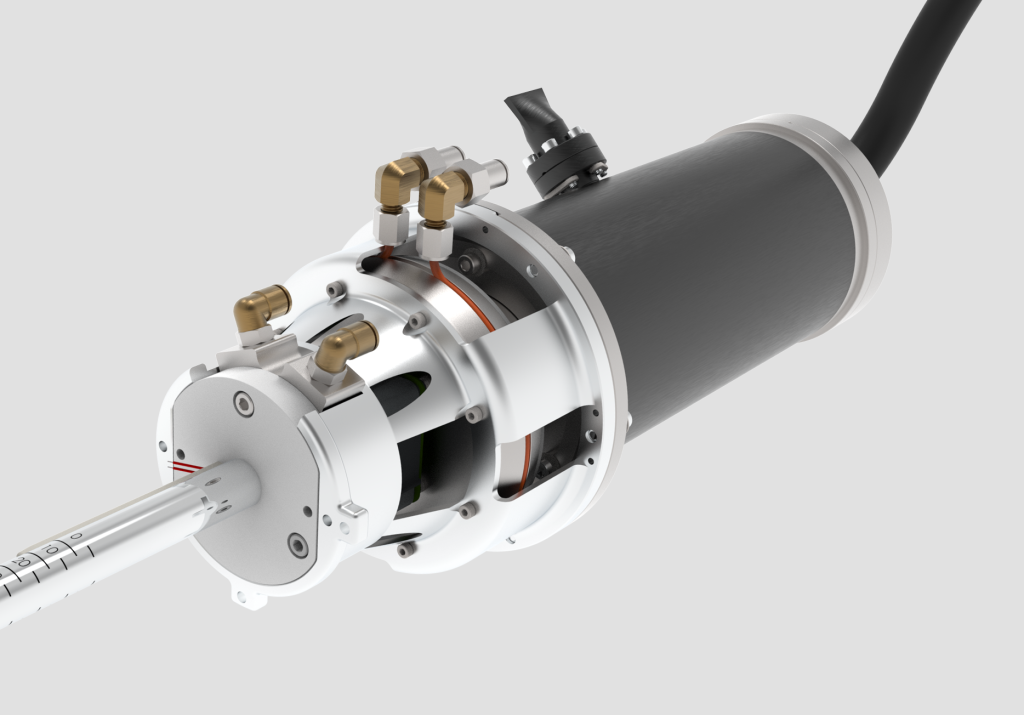
In addition to performance requirements, the platform required integration of multiple complex subsystems, including custom x-ray sources, beam steering electronics, and robotic positioning components. The development effort also required preparation of a complete design package supporting regulatory submission.
Robotic Radiation Therapy
Overview
Empyrean Medical Systems worked with Triple Ring to design and develop a compact, robotically guided intra-operative radiation therapy device. The system was engineered to deliver targeted radiation therapy within surgical environments while maintaining a strong focus on usability and patient-centered design.
The resulting platform combined robotic guidance, precision radiation delivery, and mobile system architecture to support flexible clinical workflows and improve intra-operative treatment capabilities.
Challenge
Empyrean required development of a compact, mobile radiation therapy system capable of delivering low-energy radiation with precise beam directionality during surgical procedures. The system needed to maintain high performance standards while remaining easy to operate within the constraints of clinical environments.
In addition to performance requirements, the platform required integration of multiple complex subsystems, including custom x-ray sources, beam steering electronics, and robotic positioning components. The development effort also required preparation of a complete design package supporting regulatory submission.
Client
Empyrean Medical Systems
Practice Areas
Imaging, Robotics & Radiotherapy
Core Disciplines
Mechanical Engineering
Systems Engineering
Industrial Design
Photonics & Imaging
Quality System Management
Applied Physics
Solution
Triple Ring collaborated with Empyrean throughout the full product development lifecycle, from concept generation through system integration and clinical validation. The engineering effort focused on delivering precise radiation delivery capabilities while maintaining usability and manufacturability.
Development priorities included:
- Designing custom x-ray source technologies supporting 3D beam directionality
- Applying Monte Carlo simulations to validate radiation delivery performance
- Integrating robotic motion systems supporting accurate positioning
- Preparing documentation supporting FDA regulatory submission
Outcome
Triple Ring delivered a fully integrated radiation therapy system that was verified, clinically validated, and submitted to the U.S. Food and Drug Administration (FDA) for 510(k) clearance. The resulting platform supported regulatory approval and demonstrated reliable clinical performance.
Following regulatory submission, the system design was successfully transferred to manufacturing and launched into the market. The completed platform enabled advancement of intra-operative radiation therapy capabilities and supported commercialization of the robotic radiation delivery system.
Triple Ring Talent
The Story Behind the Innovation
At Triple Ring, we draw on a deep bench of expertise across diverse disciplines matched to each innovation challenge. For this project, our team combined radiation physics, custom x-ray source development, robotic systems integration, and regulatory engineering expertise to deliver a fully verified, FDA-submitted intra-operative radiation therapy platform from concept through market launch.
Chris and Barry collaborated with many talented colleagues across Triple Ring and Empyrean Medical Systems on this project.

Chris Mitchell, PhD
Bio and Electrical Engineering & Program Management
Dr. Chris Mitchell brings deep experience leading multidisciplinary teams developing complex imaging and medical device systems. His work focuses on guiding technical programs from concept through implementation, helping translate advanced technologies into reliable, real-world solutions.

Barry Wood
Biomedical & Mechanical Engineering
Barry Wood develops mechanical and biomedical systems with a focus on design and performance analysis. His work supports the creation of robust solutions for complex applications, contributing to dependable system function from concept through implementation.
Key Innovation
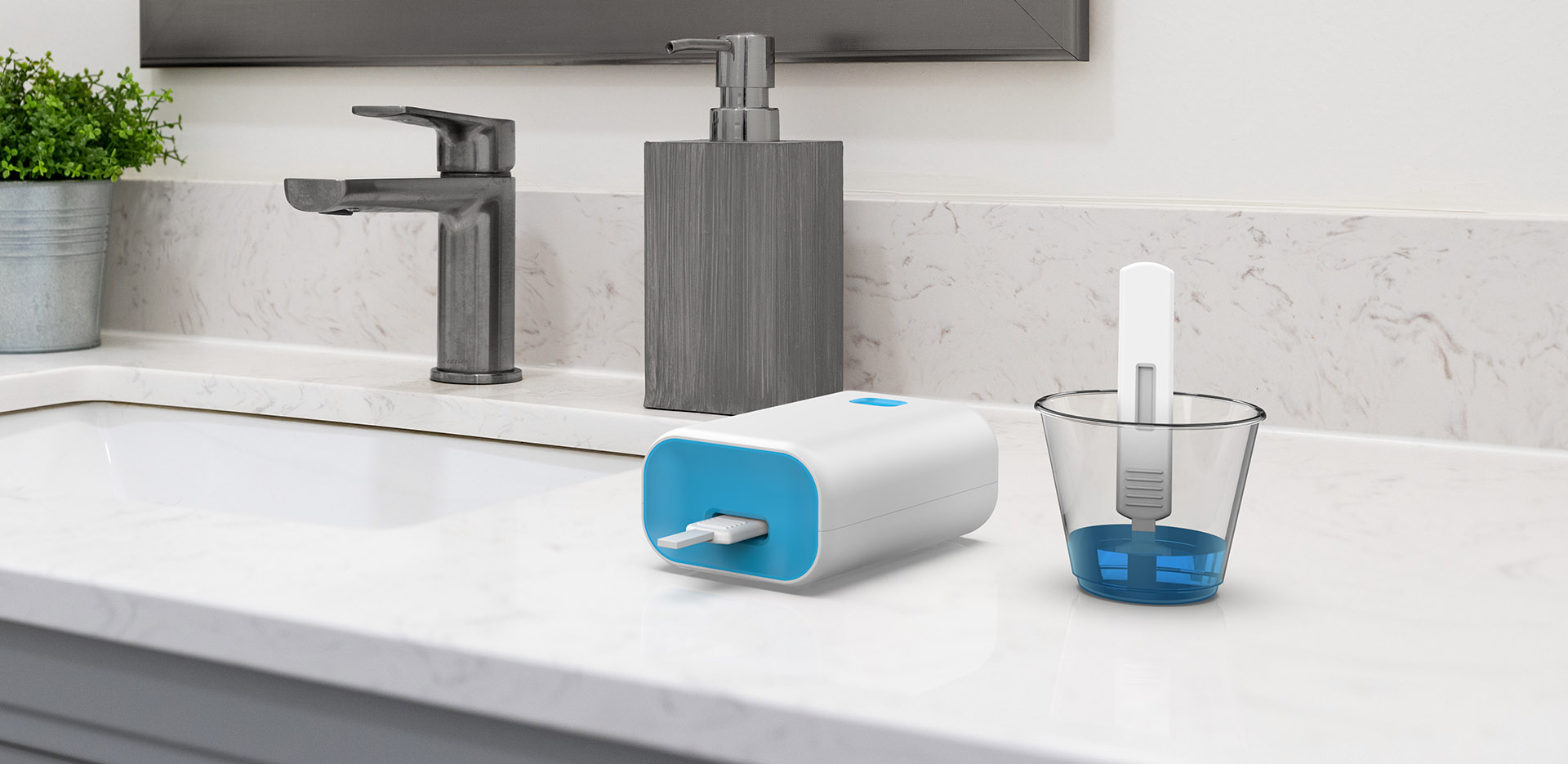
Quantitative optics in a lateral flow assay brought multiplexed diagnostics into the home.
At-Home Quantitative Diagnostics
Client
BARDA
Practice Areas
TechBio & Life Sciences
Core Disciplines
Overview
The Biomedical Advanced Research and Development Authority (BARDA) selected Triple Ring to design, build, and test a low-cost quantitative biomarker detection platform intended for at-home and low-resource healthcare settings. The system was developed to support multiplexed biomarker analysis using compact, user-friendly instrumentation.
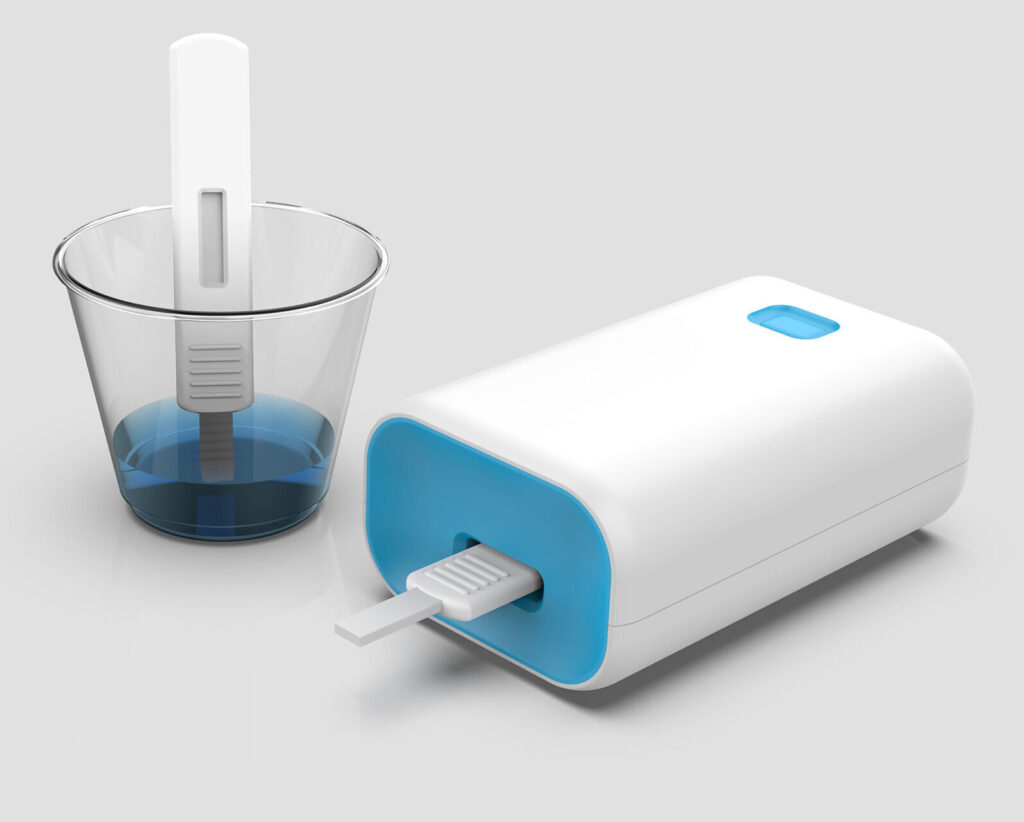
The resulting platform integrates biological sensing, embedded electronics, and optical detection technologies into a portable diagnostic system designed to support lab-at-home, point-of-care, and direct-to-consumer workflows.
Challenge
BARDA identified the need for a low-cost diagnostic platform capable of delivering quantitative biomarker measurements outside traditional laboratory environments. The system needed to support multiplexed testing while remaining accessible for use in resource-limited settings and CLIA-waived environments.
Achieving this capability required integration of complex biological, optical, and electronic subsystems into a compact and manufacturable design. The platform also needed to extend the measurable range of lateral flow immunoassays while maintaining usability and cost targets suitable for broad deployment.
At-Home Quantitative Diagnostics
Overview
The Biomedical Advanced Research and Development Authority (BARDA) selected Triple Ring to design, build, and test a low-cost quantitative biomarker detection platform intended for at-home and low-resource healthcare settings. The system was developed to support multiplexed biomarker analysis using compact, user-friendly instrumentation.
The resulting platform integrates biological sensing, embedded electronics, and optical detection technologies into a portable diagnostic system designed to support lab-at-home, point-of-care, and direct-to-consumer workflows.
Challenge
BARDA identified the need for a low-cost diagnostic platform capable of delivering quantitative biomarker measurements outside traditional laboratory environments. The system needed to support multiplexed testing while remaining accessible for use in resource-limited settings and CLIA-waived environments.
Achieving this capability required integration of complex biological, optical, and electronic subsystems into a compact and manufacturable design. The platform also needed to extend the measurable range of lateral flow immunoassays while maintaining usability and cost targets suitable for broad deployment.
Client
BARDA
Practice Areas
TechBio & Life Sciences
Core Disciplines
Software Engineering
Mechanical Engineering
Systems Engineering
Electrical Engineering
Industrial Design
Optical Science
Embedded Systems
Solution
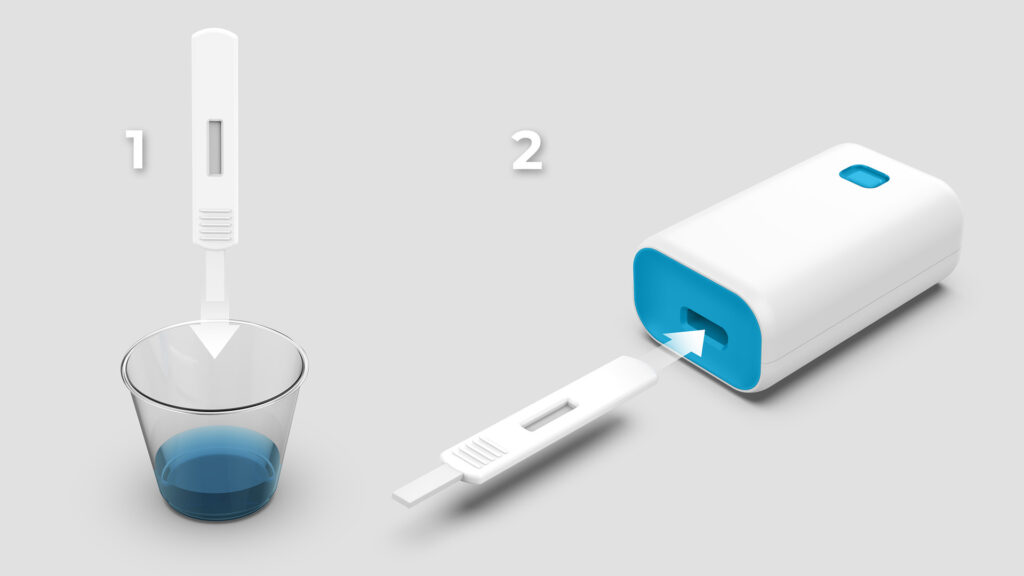
Triple Ring applied multidisciplinary expertise across biological sciences, engineering, and embedded systems to develop a scalable diagnostic platform capable of delivering quantitative results from multiplexed lateral flow assays.
Development efforts focused on:
- Designing multiplexed lateral flow assay (LFA) detection systems capable of quantifying biomarker concentrations
- Integrating biological, electrical, mechanical, optical, and embedded software subsystems into a unified platform
- Developing workflows suitable for CLIA-waived, point-of-care, and at-home diagnostic environments
- Extending the quantitative measurement range beyond that of conventional lateral flow assay readers
- Conducting system-level integration and verification to support development of a handheld diagnostic platform
Outcome
Triple Ring delivered a functional multiplexed diagnostic platform capable of quantifying biomarker concentrations across multiple test channels. The system demonstrated improved quantitative measurement range compared to conventional lateral flow assay readers.
The platform supported deployment across diverse clinical environments, including at-home and point-of-care settings. Ongoing development efforts include system integration and testing of a handheld version designed to further expand accessibility and usability in remote and low-resource healthcare environments.
Triple Ring Talent
The Story Behind the Innovation
At Triple Ring, we draw on a deep bench of expertise across diverse disciplines matched to each innovation challenge. For this project, our team combined biological sciences, optical detection, embedded electronics, and diagnostic platform engineering to develop a low-cost multiplexed biomarker detection system capable of delivering quantitative lab-grade results in at-home and resource-limited healthcare settings.
Rachel and Chris collaborated with many talented colleagues across Triple Ring and BARDA on this project.

Rachel Gerver, PhD
Bioengineering & Applied Science and Systems
Dr. Rachel Gerver advances microfluidic and point-of-care technologies from early development into real-world application. Her work spans technical leadership and systems development, helping teams bring complex innovations to market where they can deliver meaningful impact.

Chris Todd
Mechanical Engineering
Chris Todd focuses on biomedical diagnostics and precision instrumentation, integrating fluidics, optics, and mechanical systems. His work supports the development of regulated medical technologies from early concepts through manufacturing, helping teams deliver reliable diagnostic solutions at scale.

Key Innovation
Precision pressure engineering across skin types put daily self-dosing in patients' hands.
Microneedle Patch Applicator
Client
Confidential
Practice Areas
Combination Products
TechBio & Life Sciences
Core Disciplines
Overview
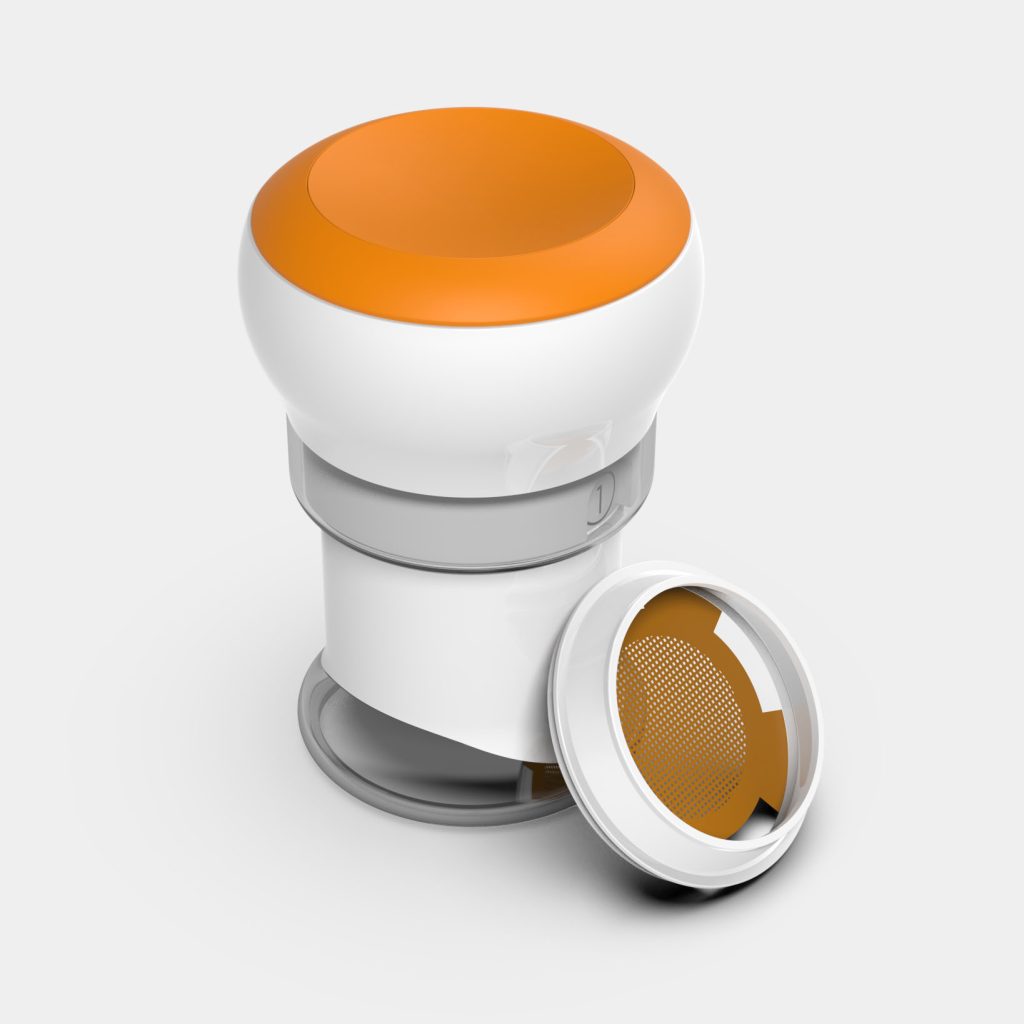
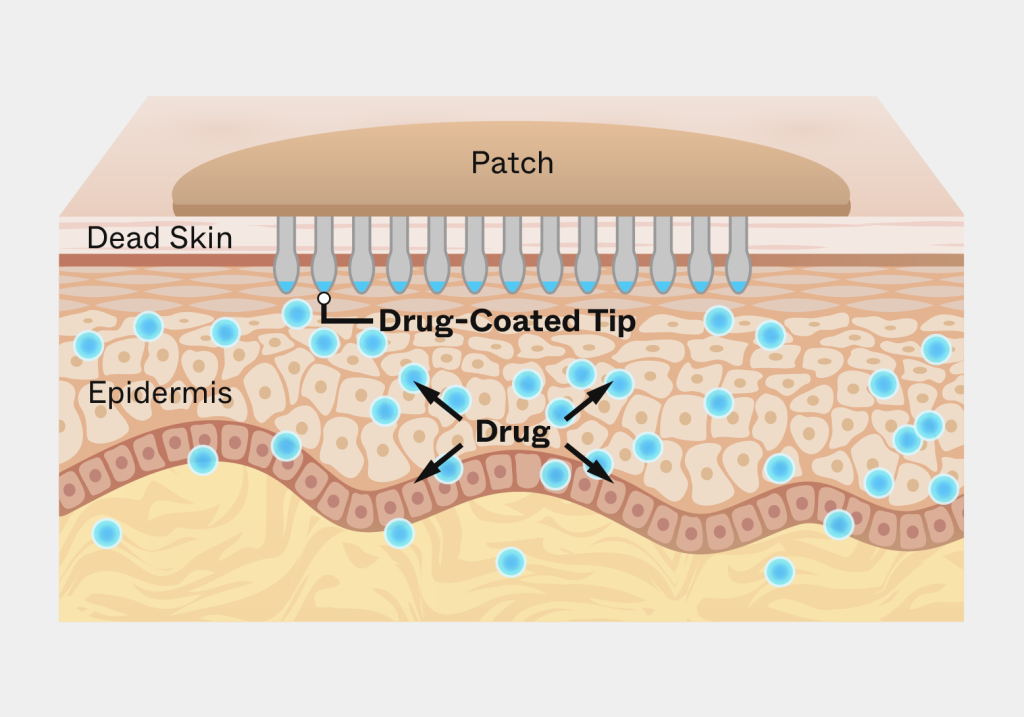
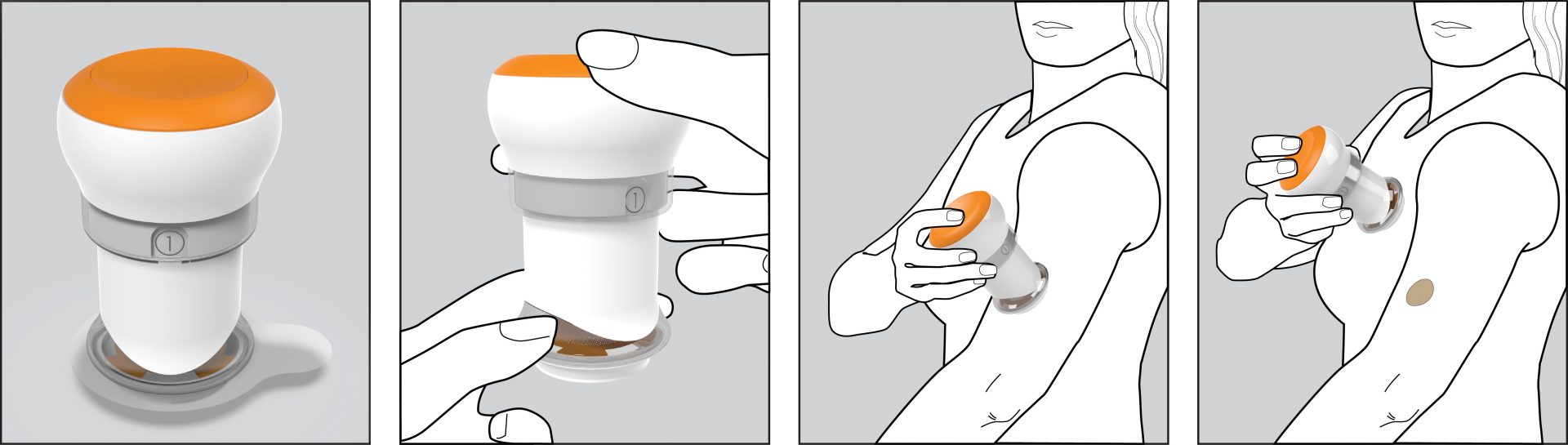
The client selected Triple Ring to design a reusable applicator supporting the delivery of a novel micro-needle patch for transdermal drug administration. The system was intended for patient-administered use in home settings and required consistent mechanical performance to ensure reliable drug delivery.
The resulting combination product integrated a reusable applicator with a micro-needle patch system designed to enable uniform pressure application, supporting consistent adhesion and controlled dosing across diverse patient populations.
Challenge
The client developed a microneedle-based transdermal patch that required significantly greater uniformity of application pressure compared to traditional adhesive patches. Achieving reliable drug delivery required development of a reusable applicator capable of delivering consistent mechanical force during use.
The applicator needed to function effectively across a wide range of skin types, including variations in thickness, age, moisture content, and anatomical placement. In addition to performance requirements, the design needed to meet durability expectations for repeated home use while maintaining low production cost.
Microneedle Patch Applicator
Overview
The client selected Triple Ring to design a reusable applicator supporting the delivery of a novel micro-needle patch for transdermal drug administration. The system was intended for patient-administered use in home settings and required consistent mechanical performance to ensure reliable drug delivery.
The resulting combination product integrated a reusable applicator with a micro-needle patch system designed to enable uniform pressure application, supporting consistent adhesion and controlled dosing across diverse patient populations.
Challenge
The client developed a microneedle-based transdermal patch that required significantly greater uniformity of application pressure compared to traditional adhesive patches. Achieving reliable drug delivery required development of a reusable applicator capable of delivering consistent mechanical force during use.
The applicator needed to function effectively across a wide range of skin types, including variations in thickness, age, moisture content, and anatomical placement. In addition to performance requirements, the design needed to meet durability expectations for repeated home use while maintaining low production cost.
Client
Confidential
Practice Areas
Combination Products
TechBio & Life Sciences
Core Disciplines
Mechanical Engineering
Systems Engineering
Transfer to Manufacture
Industrial Design
Quality System Management
Solution
Triple Ring applied interdisciplinary expertise across materials science, mechanical engineering, and life sciences to design an applicator capable of delivering controlled pressure during patch placement. The development effort focused on optimizing performance across diverse user conditions while maintaining manufacturability and reliability.
Key development efforts included:
- Designing precision mechanical systems capable of delivering uniform pressure during patch application
- Selecting materials optimized for durability, manufacturability, and patient-safe use
- Engineering applicator geometry to accommodate variation in skin thickness, moisture, and elasticity
- Validating device performance across simulated patient-use conditions
Outcome
Triple Ring delivered a reusable applicator integrated with a micro-needle array patch, forming a single-entity combination product designed for intracutaneous drug delivery. The system enabled rapid drug absorption while supporting consistent dosing performance.
The completed applicator enabled the client to advance into clinical trials and demonstrate the effectiveness of the technology to healthcare stakeholders. The underlying technology was ultimately acquired by a vaccine manufacturer, supporting continued development and commercialization.
Triple Ring Talent
The Story Behind the Innovation
At Triple Ring, we draw on a deep bench of expertise across diverse disciplines matched to each innovation challenge. For this project, our team combined mechanical engineering, materials science, and life sciences expertise to design a reusable applicator capable of delivering consistent, uniform pressure across diverse patient skin types — enabling reliable transdermal drug delivery in home settings.
Walt and Gabe collaborated with many talented colleagues across Triple Ring on this project.

Walt Cecka
Medical Device Design & Translational Medicine
Walt Cecka brings decades of experience translating novel medical technologies into first-to-market products. He works closely with innovators to shape early concepts into structured development programs that advance patient care across a wide range of clinical applications.

Gabriel Chow, PhD
Materials Characterization & Development
Dr. Gabe Chow specializes in materials characterization and mechanical system development across macro to nanoscale environments. His work supports the design, testing, and reliability of advanced materials and mechanical systems, helping translate innovative concepts into durable, real-world solutions.

Key Innovation
Integrating AI capabilities, cybersecurity upgrades, and refreshed industrial design into a structured lifecycle management strategy extends product viability while protecting the manufacturing continuity and IP that organizations depend on.
Maximize Legacy Product Value
Client
Large Corporations
Practice Areas
Combination Products
Smart Medical Devices
Core Disciplines
Overview
Triple Ring Technologies supports organizations in modernizing and sustaining legacy products to maintain competitiveness and profitability over extended product lifecycles. Rather than limiting efforts to maintenance, the approach focuses on transforming legacy platforms to meet evolving technical, regulatory, and market demands.
These modernization efforts integrate performance upgrades, artificial intelligence capabilities, cybersecurity improvements, and industrial design updates to extend product lifespan while protecting core intellectual property and manufacturing continuity.
Challenge
Legacy products often face increasing pressure from evolving regulatory requirements, component obsolescence, cybersecurity risks, and changing customer expectations. Over time, knowledge gaps can emerge as original development teams transition away, making it difficult for organizations to sustain or modernize existing platforms effectively.
Companies must balance the need for modernization with the requirement to maintain reliability, regulatory compliance, and production continuity. Achieving this balance requires deep technical expertise across hardware, software, regulatory strategy, and supply chain management.
Maximize Legacy Product Value
Overview
Triple Ring Technologies supports organizations in modernizing and sustaining legacy products to maintain competitiveness and profitability over extended product lifecycles. Rather than limiting efforts to maintenance, the approach focuses on transforming legacy platforms to meet evolving technical, regulatory, and market demands.
These modernization efforts integrate performance upgrades, artificial intelligence capabilities, cybersecurity improvements, and industrial design updates to extend product lifespan while protecting core intellectual property and manufacturing continuity.
Challenge
Legacy products often face increasing pressure from evolving regulatory requirements, component obsolescence, cybersecurity risks, and changing customer expectations. Over time, knowledge gaps can emerge as original development teams transition away, making it difficult for organizations to sustain or modernize existing platforms effectively.
Companies must balance the need for modernization with the requirement to maintain reliability, regulatory compliance, and production continuity. Achieving this balance requires deep technical expertise across hardware, software, regulatory strategy, and supply chain management.
Client
Large Corporations
Practice Areas
Combination Products
Smart Medical Devices
Core Disciplines
Software Engineering
AI & Advanced Algorithms
Mechanical Engineering
Systems Engineering
Electrical Engineering
Quality System Management
Embedded Systems

Solution
Triple Ring applies a strategic sustaining engineering approach that integrates system modernization, performance optimization, and lifecycle management. The development process focuses on enhancing existing platforms while minimizing disruption to manufacturing and regulatory workflows.
Modernization initiatives included:
- Integrating AI-driven algorithms to improve system performance, accuracy, and predictive maintenance
- Updating cybersecurity frameworks and software infrastructure to address evolving regulatory risks
- Enhancing product functionality through targeted performance upgrades and feature additions
- Refreshing industrial design to improve usability, aesthetics, and user experience
- Optimizing supply chain strategies to reduce obsolescence risk and improve manufacturing reliability
Outcome
Triple Ring enabled organizations to extend the lifespan and value of legacy products through targeted modernization strategies that improved performance, reliability, and regulatory readiness. These efforts supported long-term product viability while minimizing the cost and disruption associated with complete system redesign.
By combining engineering modernization with supply chain optimization and AI integration, organizations were able to sustain competitive product offerings and maximize return on investment across extended product lifecycles.
Triple Ring Talent
The Story Behind the Innovation
At Triple Ring, we draw on a deep bench of expertise across diverse disciplines matched to each innovation challenge. For these engagements, our team combined systems engineering, embedded software, cybersecurity, AI integration, regulatory strategy, and supply chain expertise to help large organizations transform legacy platforms into modernized, competitive products — without disrupting manufacturing continuity or regulatory standing.
Meet our team