
Key Innovation
A digital twin turned an unpredictable X-ray source into a reliable analytical platform.
Handheld XRF Elemental Analysis
Client
Tribogenics
Practice Areas
Imaging, Robotics & Radiotherapy
Core Disciplines
Overview
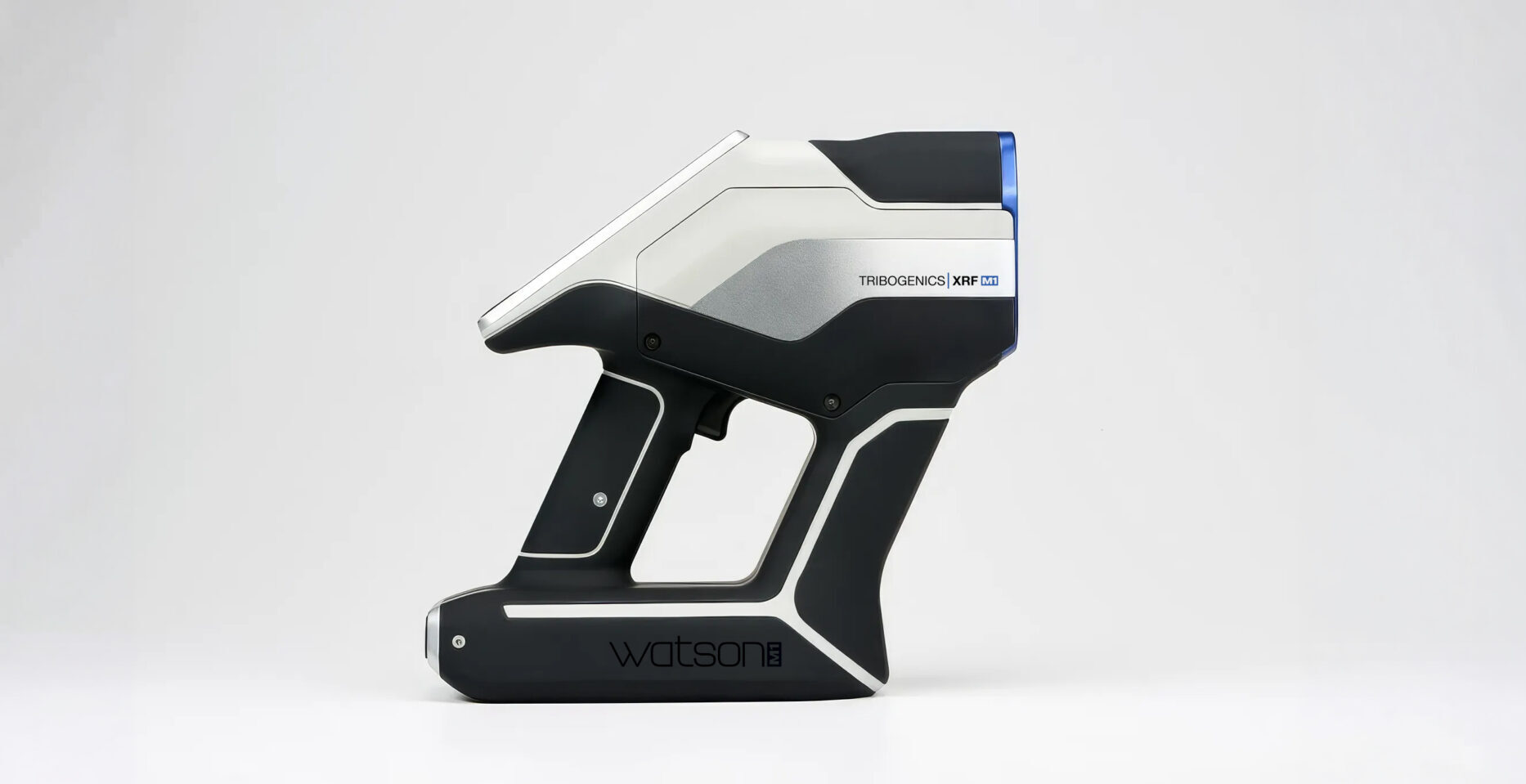
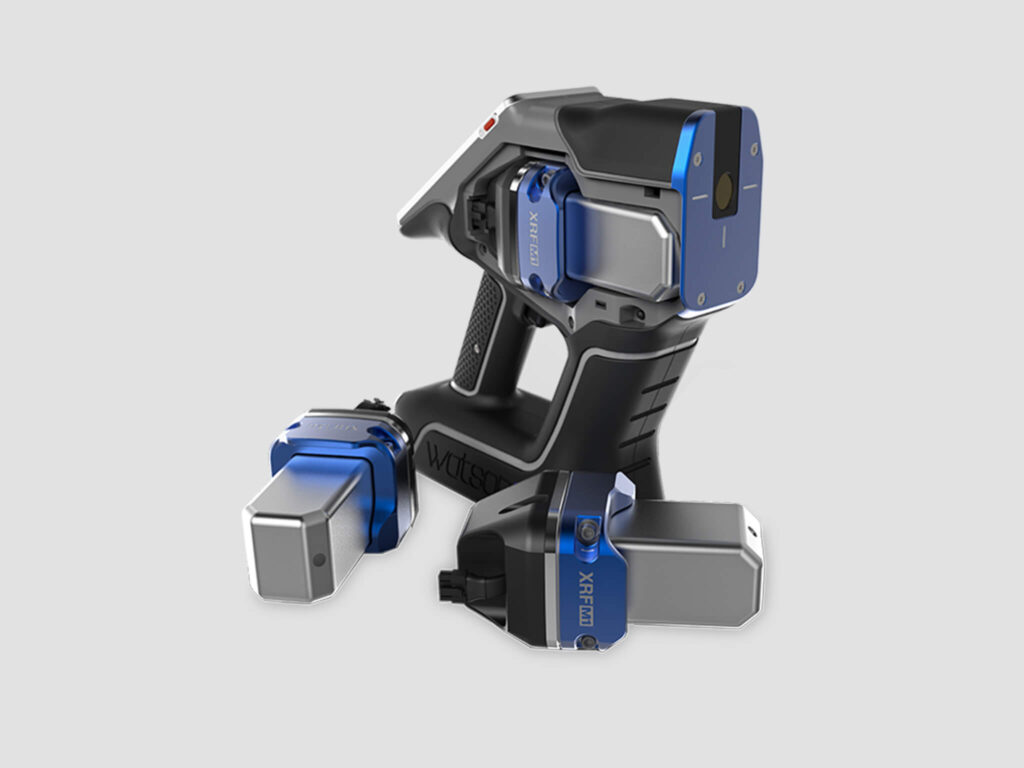
Tribogenics engaged Triple Ring to advance a next-generation handheld X-ray fluorescence (XRF) analyzer built around a novel triboelectric X-ray source developed in collaboration with DARPA and UCLA. Unlike conventional XRF systems that rely on high-voltage power supplies, the Tribogenics architecture offered the potential for a lower-cost, more compact instrument.
The program focused on overcoming analytical challenges associated with the unconventional X-ray source, enabling more accurate and repeatable elemental analysis for portable Positive Material Identification (PMI).
Challenge
While Tribogenics’ novel X-ray source created significant opportunities for compact, low-cost XRF instrumentation, it also introduced a fundamental measurement challenge. The emitted X-ray spectrum varied from shot to shot, throughout the lifetime of the source, and between individual sources, reducing the accuracy and repeatability of elemental concentration measurements.
With first-generation instruments achieving only mid-80% PMI accuracy on a limited alloy set, Tribogenics challenged Triple Ring to develop the physics-based algorithms and analytical framework needed to improve measurement robustness and support development of a more competitive next-generation instrument.
Handheld XRF Elemental Analysis
Overview
Tribogenics engaged Triple Ring to advance a next-generation handheld X-ray fluorescence (XRF) analyzer built around a novel triboelectric X-ray source developed in collaboration with DARPA and UCLA. Unlike conventional XRF systems that rely on high-voltage power supplies, the Tribogenics architecture offered the potential for a lower-cost, more compact instrument.
The program focused on overcoming analytical challenges associated with the unconventional X-ray source, enabling more accurate and repeatable elemental analysis for portable Positive Material Identification (PMI).
Challenge
While Tribogenics’ novel X-ray source created significant opportunities for compact, low-cost XRF instrumentation, it also introduced a fundamental measurement challenge. The emitted X-ray spectrum varied from shot to shot, throughout the lifetime of the source, and between individual sources, reducing the accuracy and repeatability of elemental concentration measurements.
With first-generation instruments achieving only mid-80% PMI accuracy on a limited alloy set, Tribogenics challenged Triple Ring to develop the physics-based algorithms and analytical framework needed to improve measurement robustness and support development of a more competitive next-generation instrument.
Client
Tribogenics
Practice Areas
Imaging, Robotics & Radiotherapy
Core Disciplines
AI & Advanced Algorithms
Systems Engineering
Photonics & Imaging
Applied Physics

Solution
Triple Ring developed a comprehensive modeling and algorithm framework to understand, compensate for, and reduce the effects of spectral variability.
The program centered on:
- Building a high-fidelity Monte Carlo digital twin of the complete XRF measurement system
- Modeling X-ray source behavior, sample interaction physics, detector response, and system geometry
- Developing signal processing and spectral analysis algorithms to improve elemental measurement accuracy
- Designing and validating a real-time spectral compensation approach using a secondary detector
- Using simulation-first methods to isolate error sources, evaluate design tradeoffs, and de-risk future hardware development
Outcome
Triple Ring delivered a validated simulation and algorithm framework that addressed the primary sources of analytical error within the Tribogenics platform.
The resulting digital twin accurately reproduced measured XRF spectra and demonstrated that real-time spectral compensation could reduce elemental concentration variability to near the Poisson noise floor under controlled conditions. These capabilities provided Tribogenics with the analytical foundation needed to advance their next-generation handheld XRF analyzer, helping translate an innovative X-ray source into a more accurate, commercially viable elemental analysis platform.
Triple Ring Talent
The Story Behind the Innovation
At Triple Ring, we draw on a deep bench of expertise across diverse disciplines matched to each innovation challenge. For this project, our team combined X-ray physics, Monte Carlo simulation, signal processing, algorithm development, and analytical instrumentation expertise to transform a novel but variable X-ray source into a foundation for accurate, commercially viable elemental analysis.
Daniel and Tobias collaborated with many talented colleagues across Triple Ring and Tribogenics on this project.

Daniel Badali, PhD
Applied Physics and Algorithms
Dr. Daniel Badali brings deep expertise in advanced algorithms, optics, and radiation physics. His work bridges software and hardware, enabling complex simulation, imaging, and sterilization technologies that help turn sophisticated concepts into reliable medical solutions.

Tobias Funk, PhD
Applied Physics and Instrumentation
Dr. Tobias Funk develops advanced instrumentation that applies ionizing radiation to scientific and medical challenges. His work spans imaging, simulation, and system design, helping translate complex physical principles into practical technologies used in real-world environments.

Key Innovation
Rotating the patient — not the beam — made compact, precise radiotherapy possible.
Upright Radiation Therapy
Client
Leo Cancer Care
Practice Areas
Imaging, Robotics & Radiotherapy
Core Disciplines
Overview
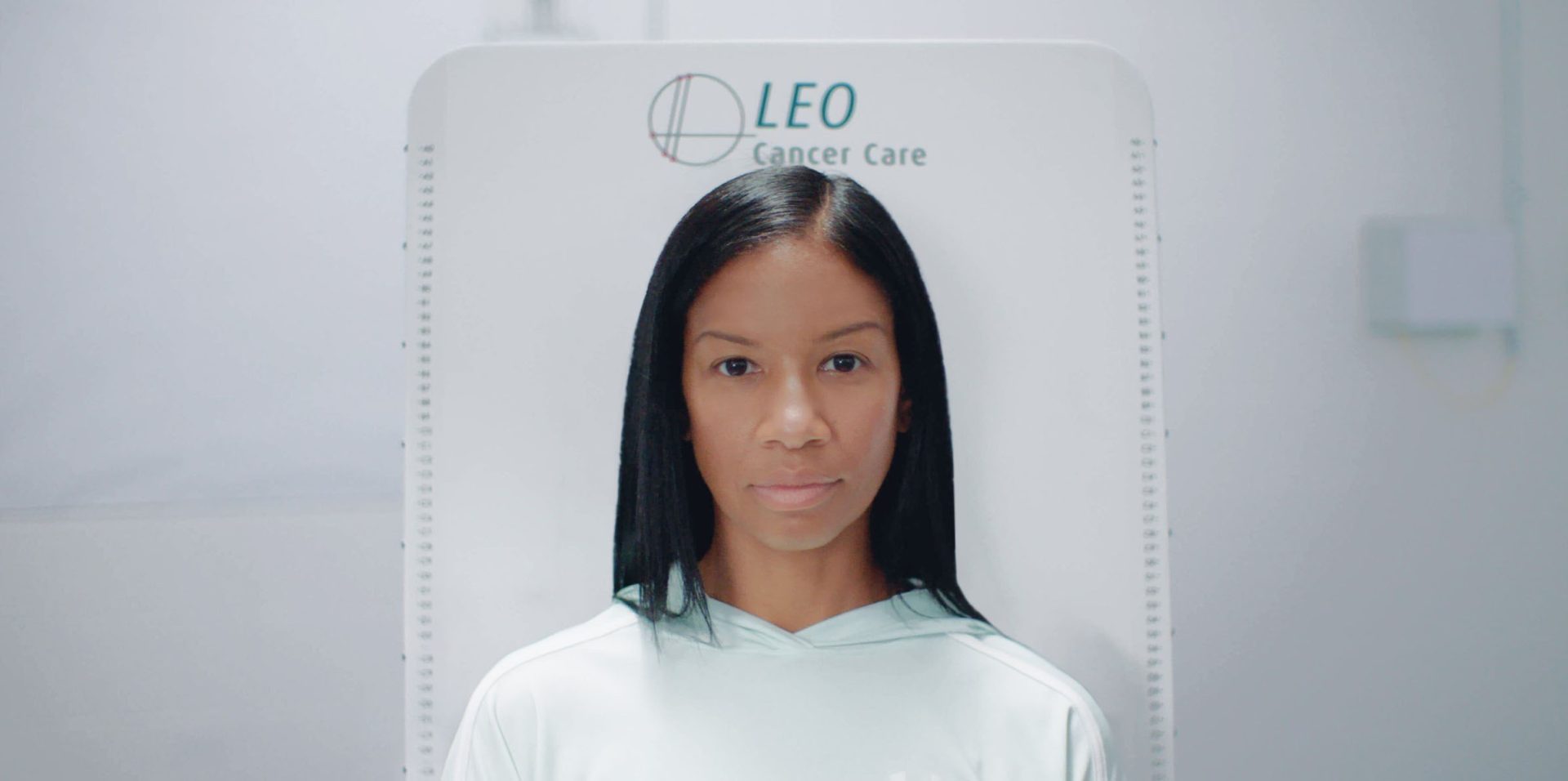
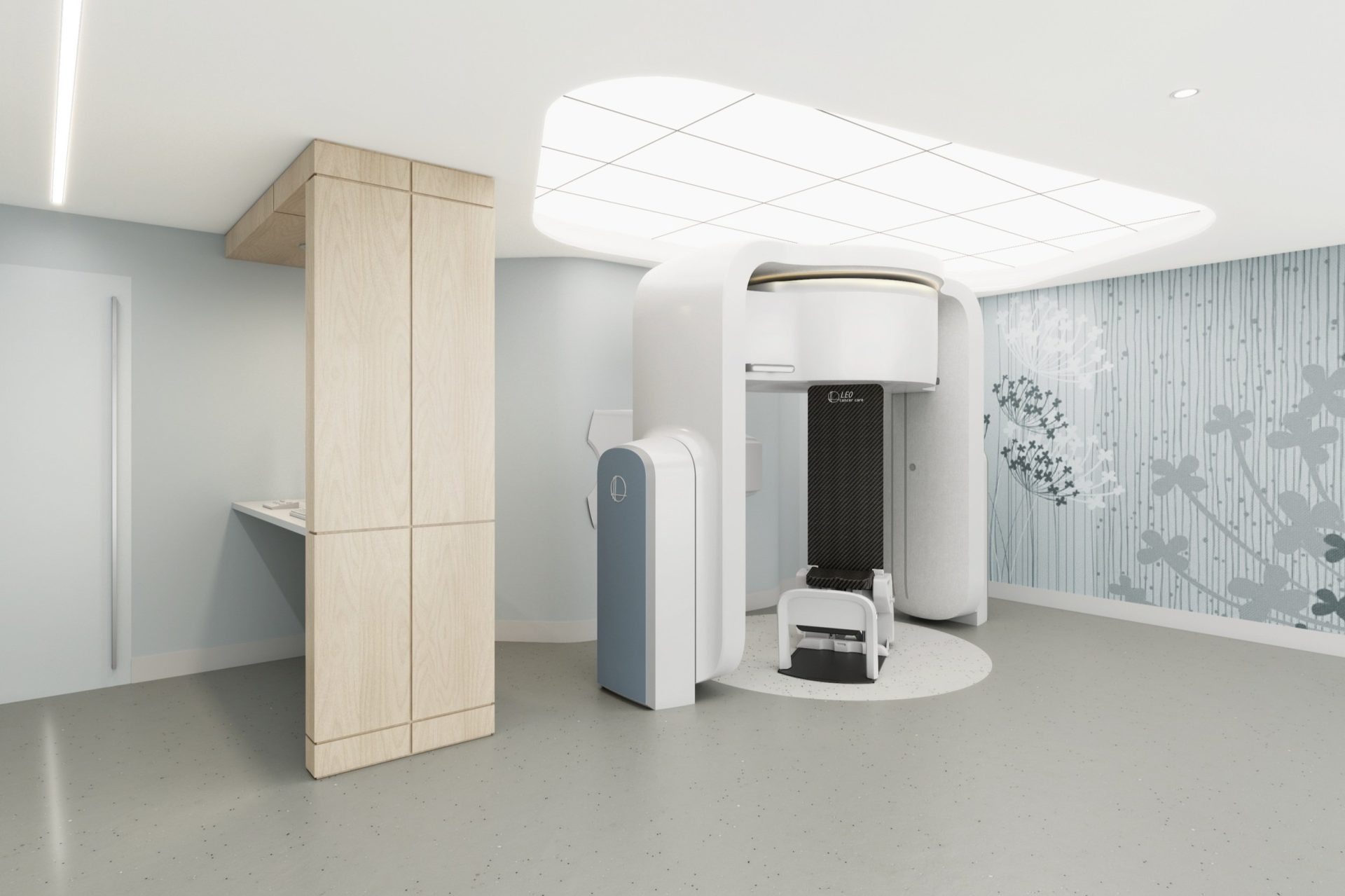
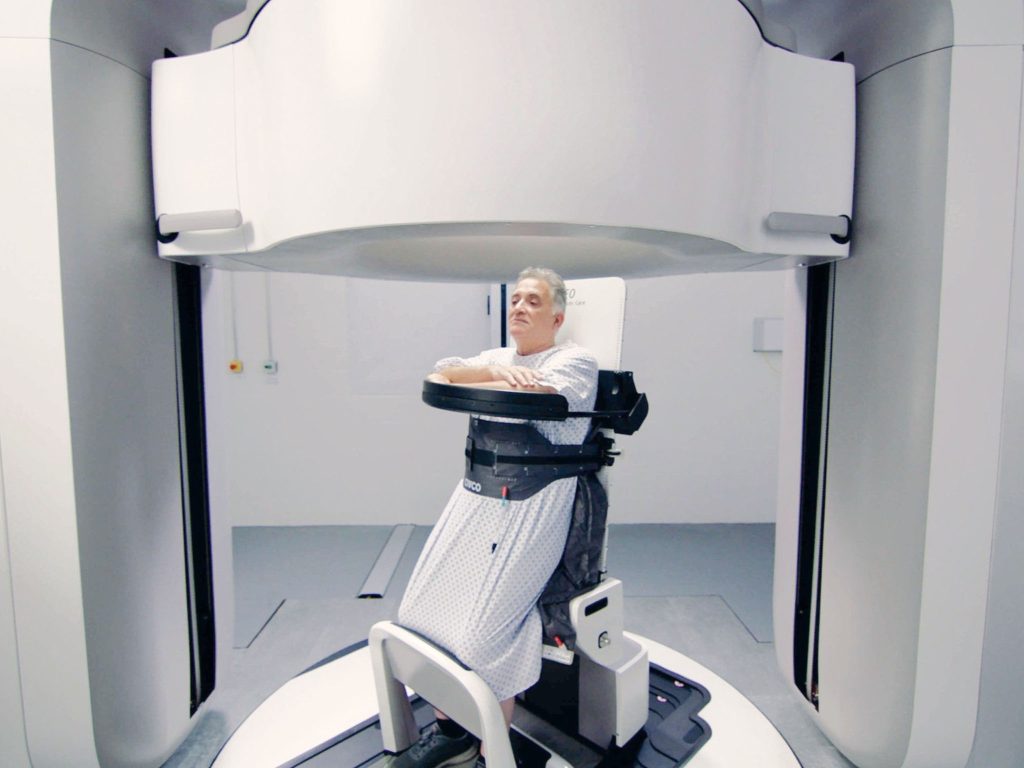
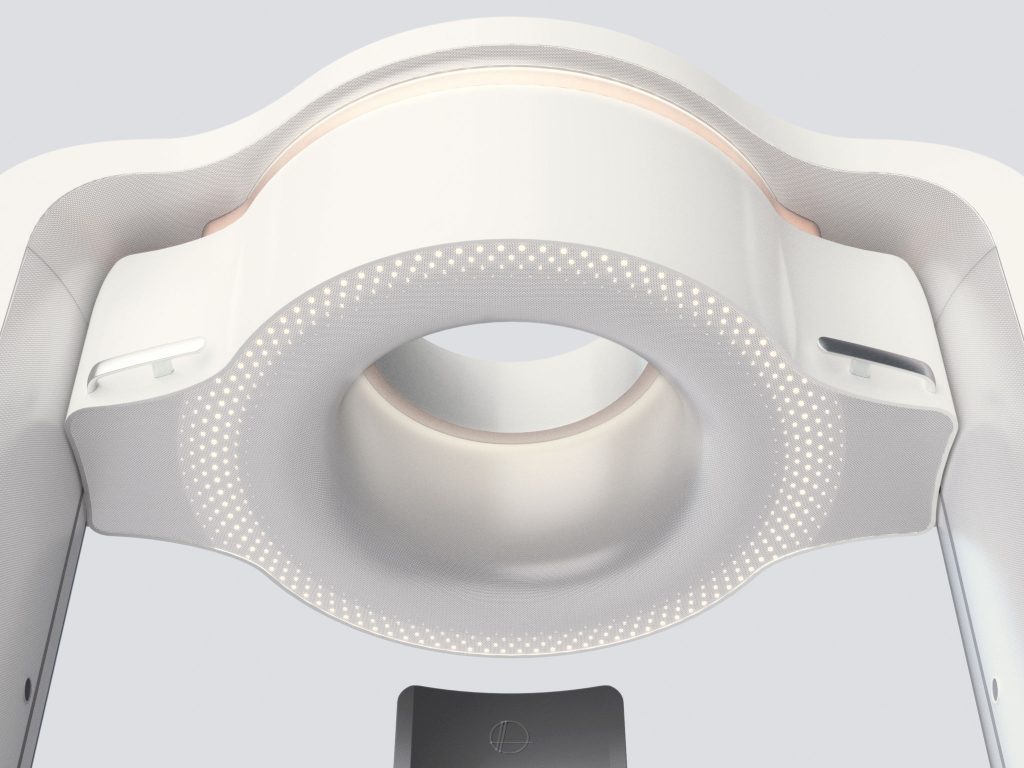
Leo Cancer Care worked with Triple Ring to design a computed tomography (CT) imaging system supporting a novel radiation therapy concept that enables treatment in a natural, upright seated position. The system integrates imaging and patient positioning into a single device, allowing patients to be scanned in both upright and lying positions.
This platform introduces a new approach to radiotherapy delivery by improving patient comfort, positioning accuracy, and overall treatment workflow.
Challenge
Leo Cancer Care sought to develop a radiation therapy system capable of imaging and positioning patients in an upright configuration while maintaining the precision and safety required for clinical use. The concept required rethinking traditional radiotherapy architectures, including replacing large rotating gantries with a fixed-beam, slow patient rotation strategy.
Achieving this capability required overcoming mechanical, imaging, and system integration challenges while ensuring reliable clinical performance across multiple operating modes.
Upright Radiation Therapy
Overview
Leo Cancer Care worked with Triple Ring to design a computed tomography (CT) imaging system supporting a novel radiation therapy concept that enables treatment in a natural, upright seated position. The system integrates imaging and patient positioning into a single device, allowing patients to be scanned in both upright and lying positions.
This platform introduces a new approach to radiotherapy delivery by improving patient comfort, positioning accuracy, and overall treatment workflow.
Challenge
Leo Cancer Care sought to develop a radiation therapy system capable of imaging and positioning patients in an upright configuration while maintaining the precision and safety required for clinical use. The concept required rethinking traditional radiotherapy architectures, including replacing large rotating gantries with a fixed-beam, slow patient rotation strategy.
Achieving this capability required overcoming mechanical, imaging, and system integration challenges while ensuring reliable clinical performance across multiple operating modes.
Client
Leo Cancer Care
Practice Areas
Imaging, Robotics & Radiotherapy
Core Disciplines
Mechanical Engineering
Industrial Design
Quality System Management
Applied Physics
Solution
Triple Ring applied expertise in radiotherapy physics, imaging systems, and mechanical engineering to design a gantry architecture supporting upright and traditional patient positioning. Close collaboration enabled integration of multiple subsystems into a unified clinical platform.
Key engineering efforts included:
- Designing multi-axis motion systems that supported upright and reclined patient positioning
- Applying radiotherapy physics expertise to guide system architecture
- Using advanced modeling and simulation tools to validate mechanical alignment and imaging accuracy
- Integrating imaging and positioning subsystems into a unified platform
Outcome
The collaboration resulted in an innovative gantry design supporting upright radiation therapy workflows and enabling alternative approaches to traditional radiotherapy systems.
The platform advanced the development of upright radiation therapy as a viable treatment approach, supporting improved patient comfort and positioning accuracy.
Triple Ring Talent
The Story Behind the Innovation
At Triple Ring, we draw on a deep bench of expertise across diverse disciplines matched to each innovation challenge. For this project, our team applied radiotherapy physics, large-scale mechanical design, and systems integration expertise to develop a novel gantry architecture enabling patients to receive radiation therapy in a natural, upright seated position.
Tachi and Tobias collaborated with many talented colleagues across Triple Ring and Leo Cancer Care on this project.

Tachi Callas
Mechanical Engineering
Tachi Callas leads mechanical engineering teams developing complex medical technologies across the full product lifecycle. His work helps transform innovative device concepts into manufacturable systems that support advanced surgical and therapeutic applications.
Tobias Funk, PhD
Experimental Physics & Instrumentation
Dr. Tobias Funk develops advanced instrumentation that applies ionizing radiation to scientific and medical challenges. His work spans imaging, simulation, and system design, helping translate complex physical principles into practical technologies used in real-world environments.


Key Innovation
Motion correction built into CT imaging eliminated need for equine general anesthesia.
Next-Generation Equine Imaging
Client
Prisma Imaging
Practice Areas
Imaging, Robotics & Radiotherapy
Core Disciplines
Overview
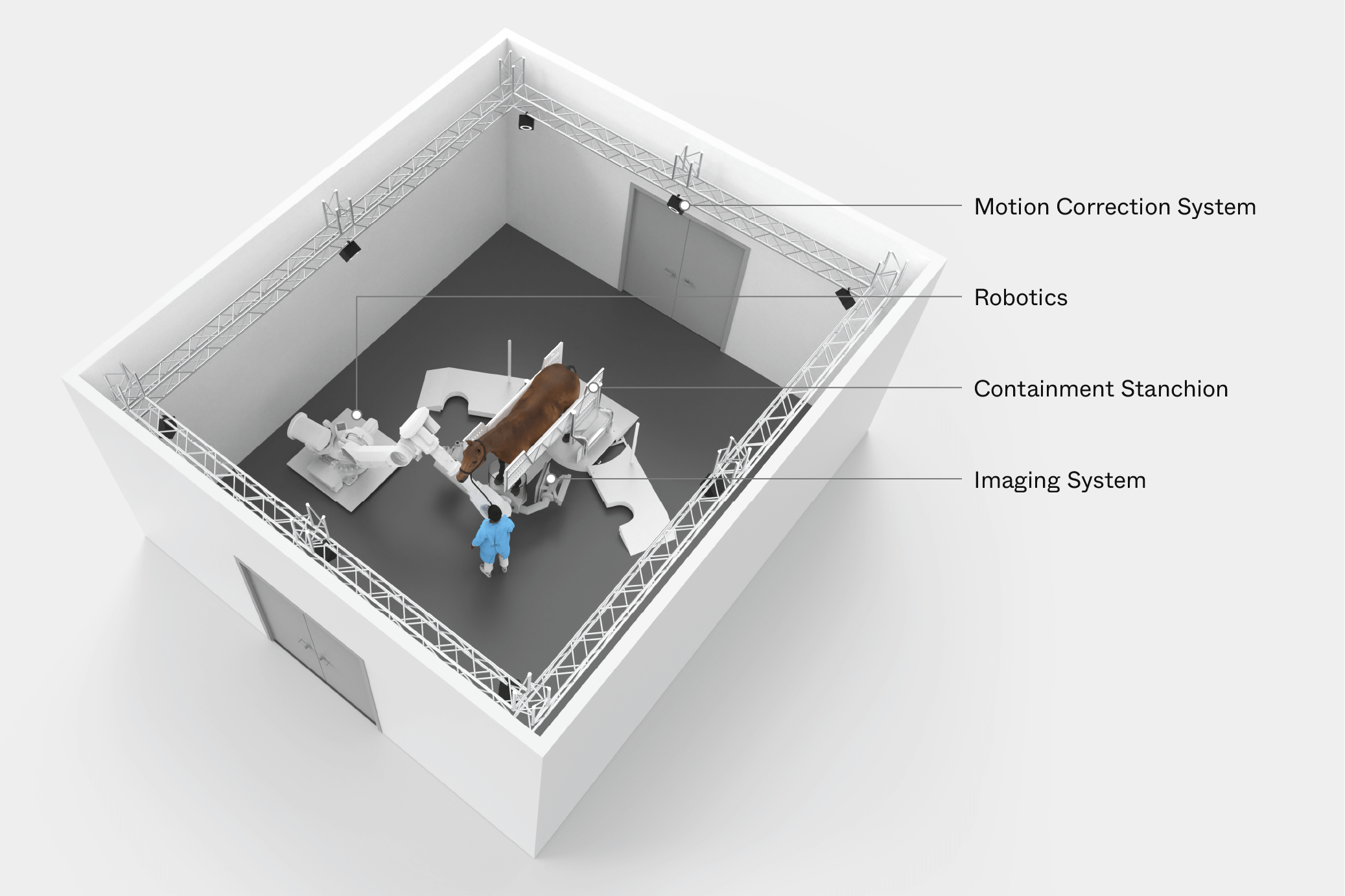
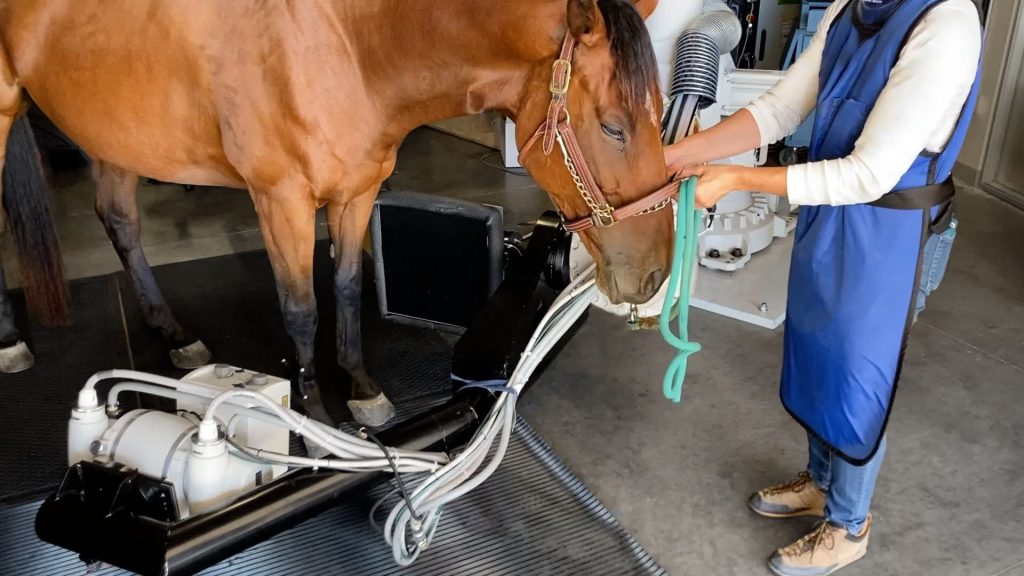
Prisma Imaging collaborated with Triple Ring to design, model, build, and test a functional prototype equine CT scanner for use in veterinary clinic settings. The system was developed to generate high-quality images of live horses while supporting safer workflows compared to traditional imaging methods.
The resulting platform combined robotic motion systems, imaging technology, and motion correction capabilities to enable imaging of large animals without requiring general anesthesia.
Challenge
Prisma Imaging sought to develop a CT imaging system capable of safely scanning live equine patients. Traditional imaging workflows often require anesthesia, introducing additional risk and logistical complexity.
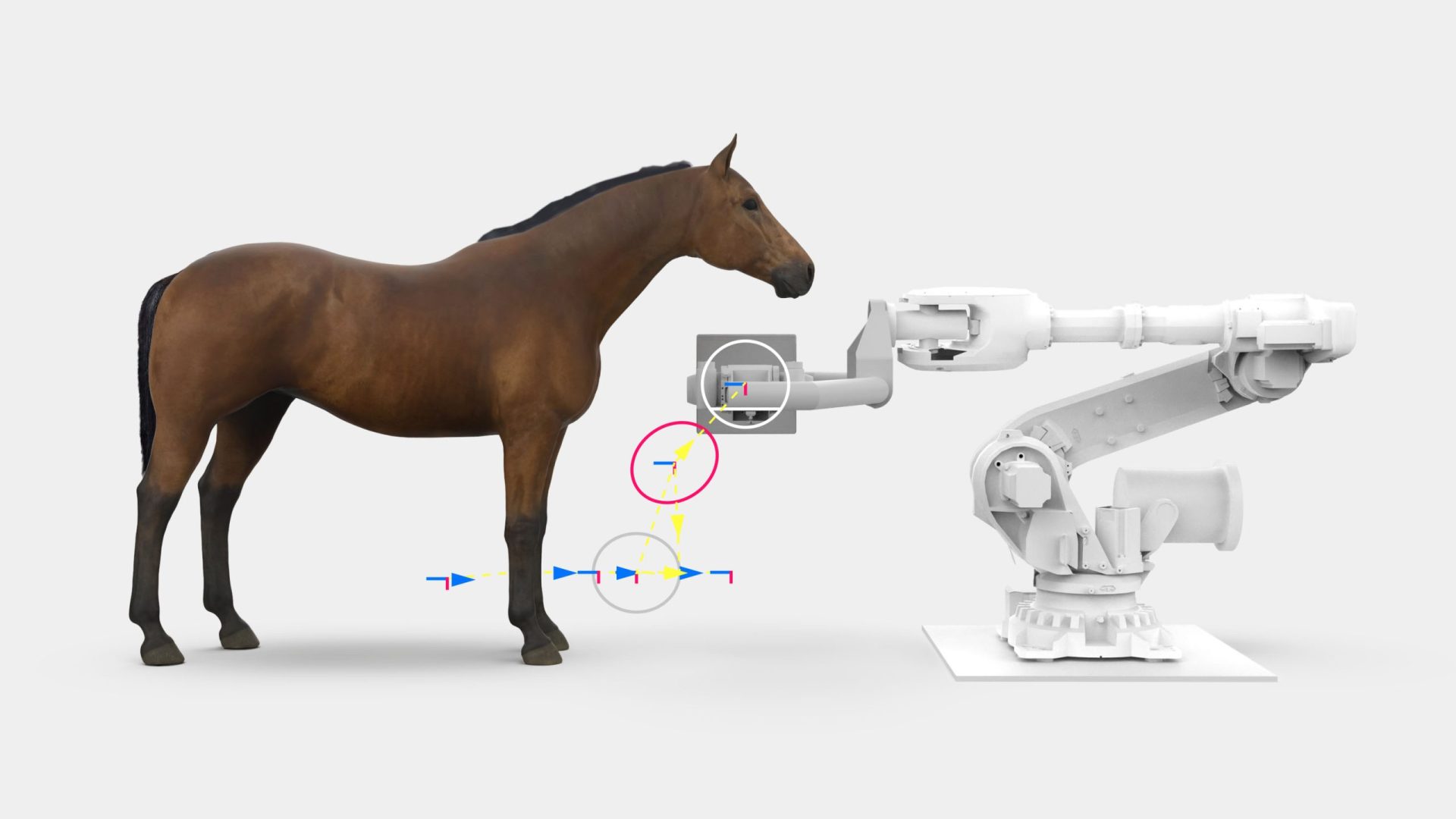
The project required integrating robotic gantry motion, X-ray imaging, radiation safety, motion capture, and CT reconstruction into a unified system architecture capable of handling natural patient movement.
Next-Generation Equine Imaging
Overview
Prisma Imaging collaborated with Triple Ring to design, model, build, and test a functional prototype equine CT scanner for use in veterinary clinic settings. The system was developed to generate high-quality images of live horses while supporting safer workflows compared to traditional imaging methods.
The resulting platform combined robotic motion systems, imaging technology, and motion correction capabilities to enable imaging of large animals without requiring general anesthesia.
Challenge
Prisma Imaging sought to develop a CT imaging system capable of safely scanning live equine patients. Traditional imaging workflows often require anesthesia, introducing additional risk and logistical complexity.
The project required integrating robotic gantry motion, X-ray imaging, radiation safety, motion capture, and CT reconstruction into a unified system architecture capable of handling natural patient movement.
Client
Prisma Imaging
Practice Areas
Imaging, Robotics & Radiotherapy
Core Disciplines
Mechanical Engineering
Industrial Design
Solution
Triple Ring applied cross-disciplinary engineering expertise and systems engineering methodologies to design and integrate a complex imaging platform capable of supporting live-animal imaging.
Key elements of the solution included:
- Designing a robotic gantry capable of supporting controlled positioning of large animal patients
- Developing motion tracking and correction technologies to compensate for natural movement
- Integrating X-ray imaging subsystems capable of producing high-resolution diagnostic images
- Validating system performance through live-animal imaging under controlled conditions
Outcome
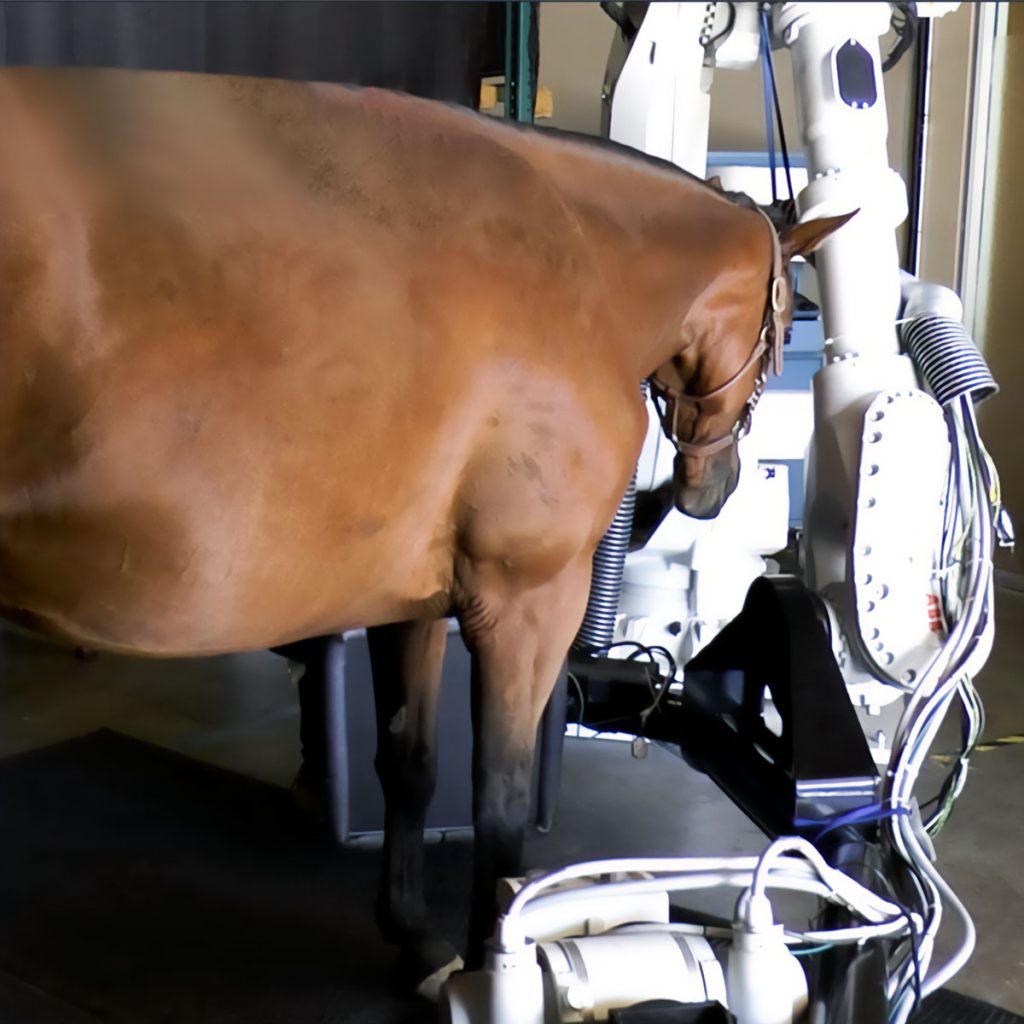
Triple Ring delivered a gantry-mounted CT imaging system capable of imaging horses under conscious sedation rather than general anesthesia.
The integrated motion tracking and correction system maintained imaging quality comparable to standard CT systems, enabling full-body imaging across equine anatomy without anesthesia.
Triple Ring Talent
The Story Behind the Innovation
At Triple Ring, we draw on a deep bench of expertise across diverse disciplines matched to each innovation challenge. For this project, our team combined robotic systems design, CT imaging, motion capture and correction, and systems integration expertise to deliver a functional equine CT scanner capable of imaging conscious, sedated horses without general anesthesia.
Meet our team Tobias Funk, PhD
Experimental Physics & Instrumentation
Dr. Tobias Funk develops advanced instrumentation that applies ionizing radiation to scientific and medical challenges. His work spans imaging, simulation, and system design, helping translate complex physical principles into practical technologies used in real-world environments.

Quinn La
Electrical Technician
Quinn La oversees the build and validation of complex electrical and electro-mechanical systems across development programs. His work supports board bring-up, testing, and manufacturing processes, ensuring systems are assembled, debugged, and prepared for reliable operation.

Key Innovation
Adaptive machine vision enabled precise cosmetic procedures safely near the eye.
Precision Aesthetic Robotics
Client
LUUM
Practice Areas
Imaging, Robotics & Radiotherapy
Core Disciplines
Overview
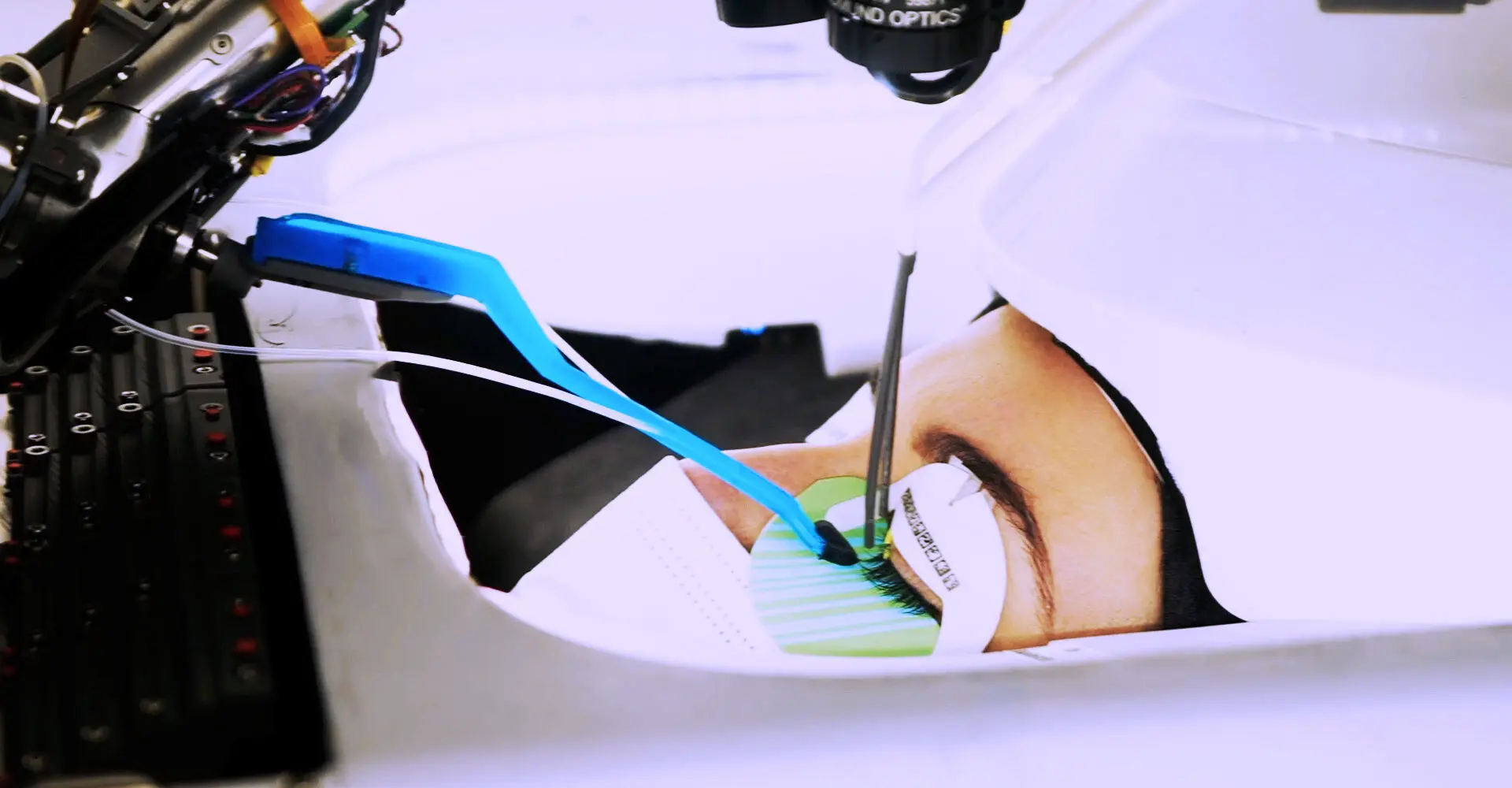
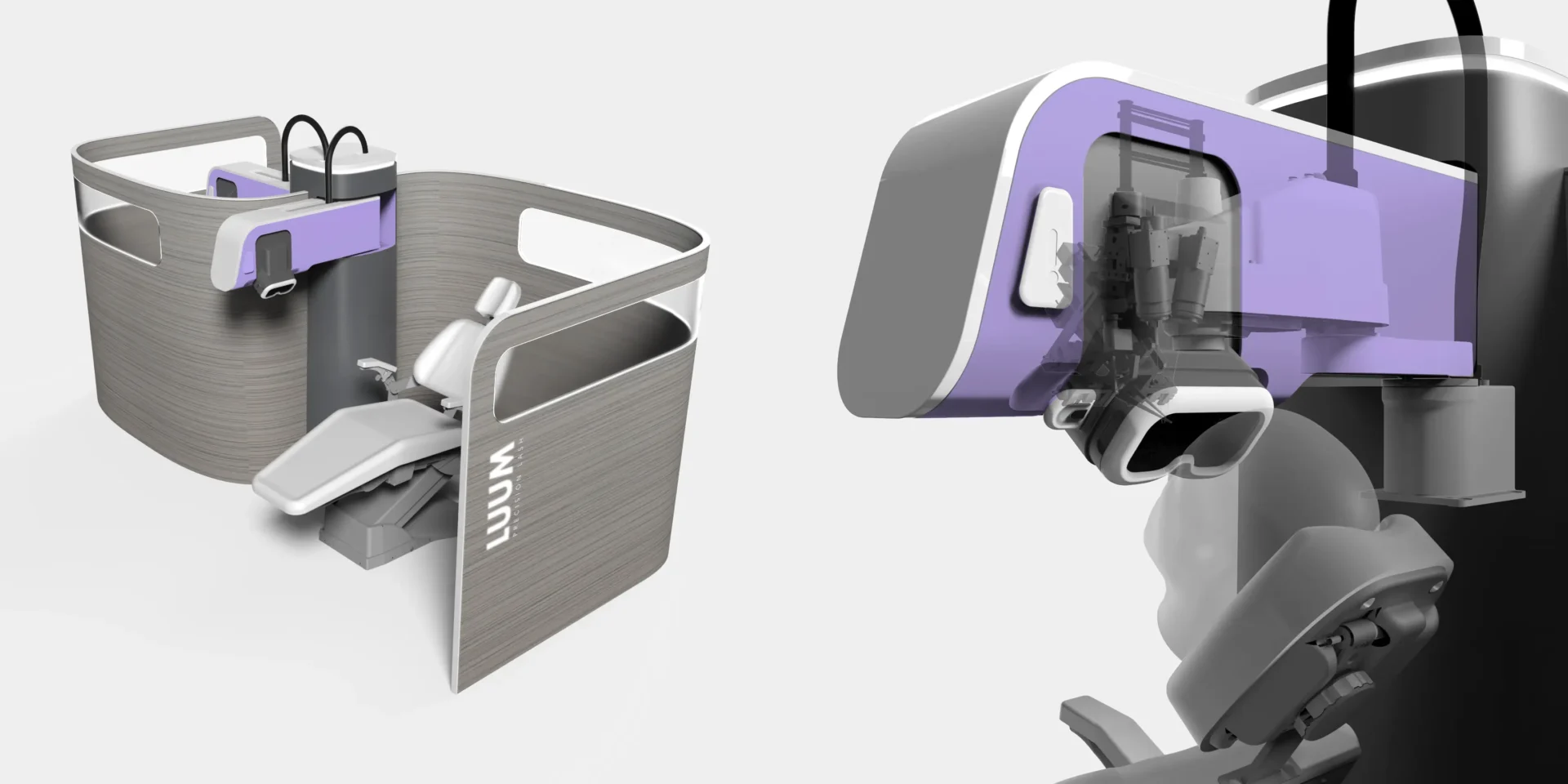
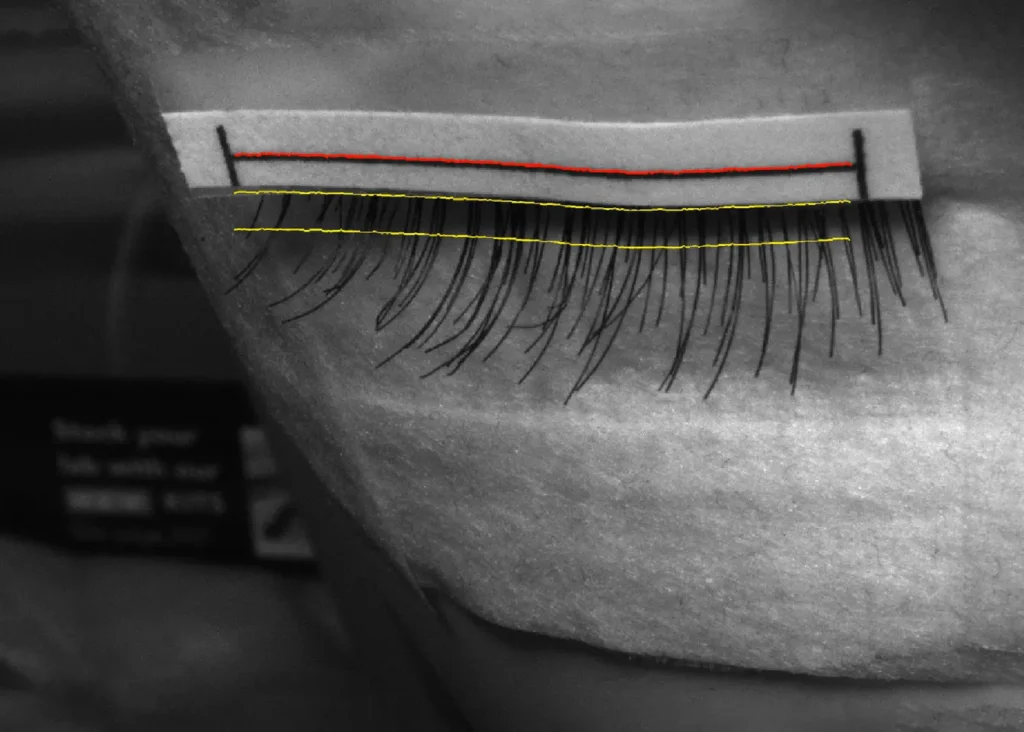
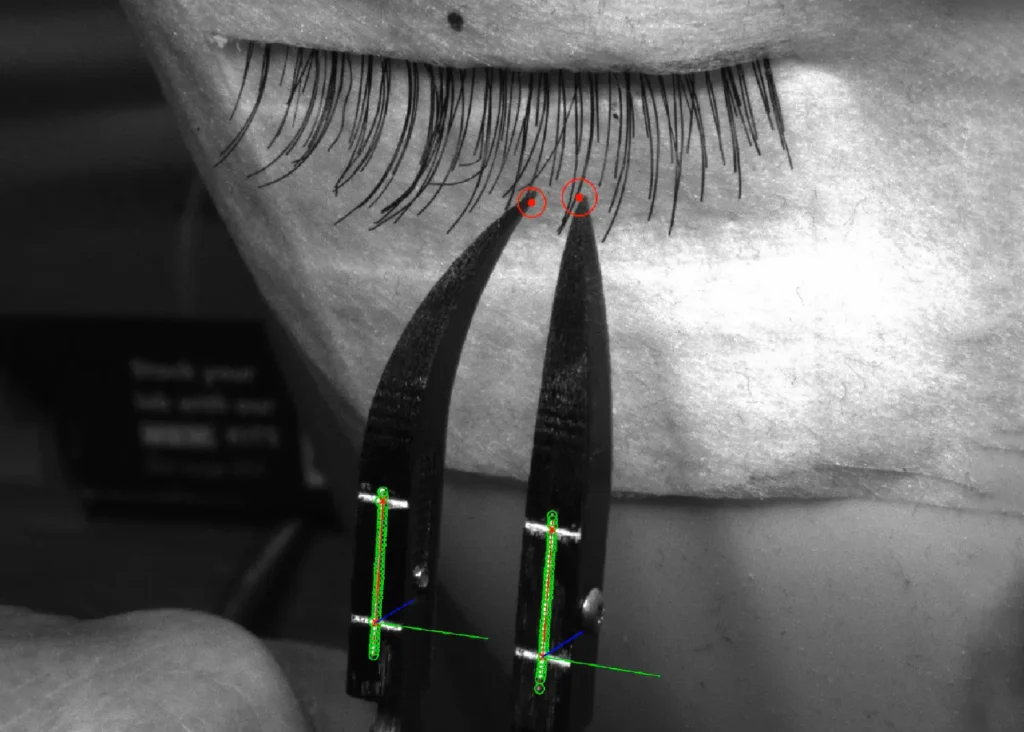
LUUM partnered with Triple Ring to develop a robotic system designed to automate the application of eyelash extensions with high precision, safety, and consistency. The system integrates machine vision and robotics technologies to support accurate positioning and controlled interaction near sensitive human anatomy.
Triple Ring developed the machine vision subsystem and contributed industrial design concepts that supported both technical performance and user comfort.
Challenge
The system needed to safely perform highly precise procedures near the human eye while maintaining responsiveness to client movement. Low-latency perception and control were required to support real-time adjustments and maintain safe interaction.
The system also needed to support accurate perception across diverse users, including a wide range of skin tones and eyelash characteristics.
Precision Aesthetic Robotics
Overview
LUUM partnered with Triple Ring to develop a robotic system designed to automate the application of eyelash extensions with high precision, safety, and consistency. The system integrates machine vision and robotics technologies to support accurate positioning and controlled interaction near sensitive human anatomy.
Triple Ring developed the machine vision subsystem and contributed industrial design concepts that supported both technical performance and user comfort.
Challenge
The system needed to safely perform highly precise procedures near the human eye while maintaining responsiveness to client movement. Low-latency perception and control were required to support real-time adjustments and maintain safe interaction.
The system also needed to support accurate perception across diverse users, including a wide range of skin tones and eyelash characteristics.
Client
LUUM
Practice Areas
Imaging, Robotics & Radiotherapy
Core Disciplines
Mechanical Engineering
Systems Engineering
Photonics & Imaging
Microfluidics
Solution
Triple Ring applied expertise in imaging, robotics, and industrial design to develop a machine vision system capable of guiding robotic motion with high precision and responsiveness.
Key development activities included:
- Developing machine vision algorithms capable of tracking fine features in three-dimensional space
- Designing perception systems that responded rapidly to client movement
- Integrating redundant safety features to support safe operation near sensitive anatomy
- Creating industrial design concepts that improved comfort and promoted user confidence
Outcome
Triple Ring delivered a fully integrated machine vision subsystem and industrial design framework supporting LUUM’s robotic eyelash application platform.
The system enabled consistent and efficient placement of eyelash extensions while maintaining high standards of safety and supporting reliable performance across diverse users.
Triple Ring Talent
The Story Behind the Innovation
At Triple Ring, we draw on a deep bench of expertise across diverse disciplines matched to each innovation challenge. For this project, our team applied machine vision, optical engineering, robotic control systems, and industrial design expertise to develop a precision robotic platform capable of safely automating eyelash extension application near sensitive human anatomy.
Todd and Keith collaborated with many talented colleagues across Triple Ring and LUUM on this project.

Todd Harris, PhD
Physics & Optical Science
Dr. Todd Harris applies expertise in optics and imaging physics to the development of advanced sensing and illumination technologies. His work combines optical modeling with system design, helping teams translate complex physical principles into dependable, high-performance solutions.

Keith Nishihara, PhD
Physics & Optical Science
Dr. Keith Nishihara works in computer vision and image-based system development, transforming advanced algorithms into practical hardware and software solutions. His work supports applications ranging from medical imaging to real-time recognition systems, helping teams solve complex visual and spatial challenges.

Key Innovation
Optical imaging and machine learning compressed tissue analysis from days to minutes.
Intra-Operative Tissue Pathology
Client
BlackLight Surgical
Practice Areas
Physics-Based AI
Imaging, Robotics & Radiotherapy
Core Disciplines
Overview
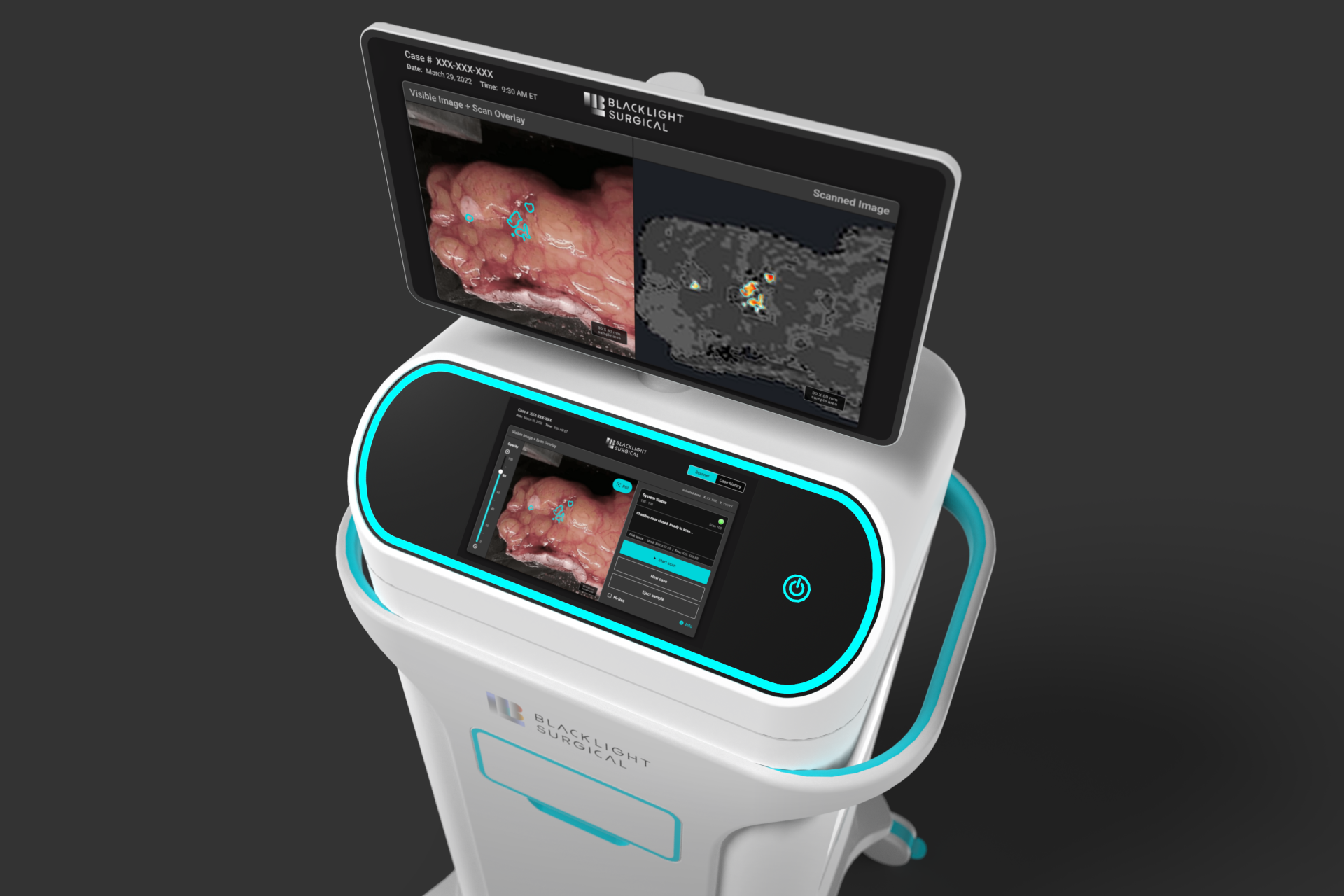
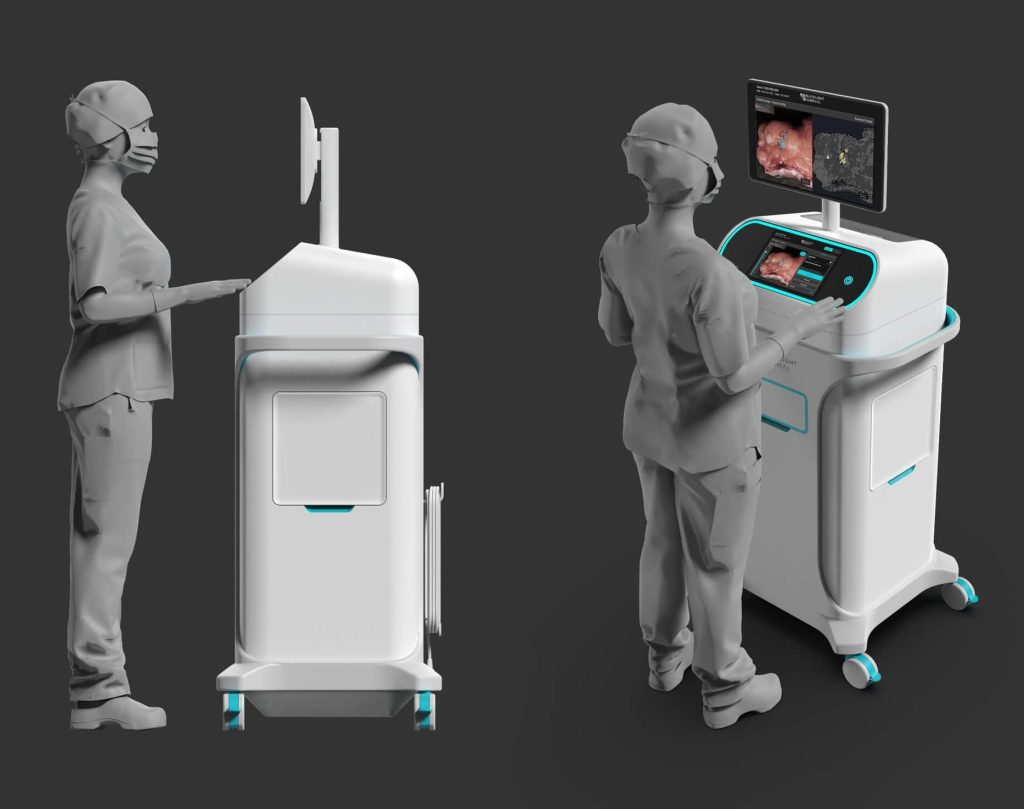
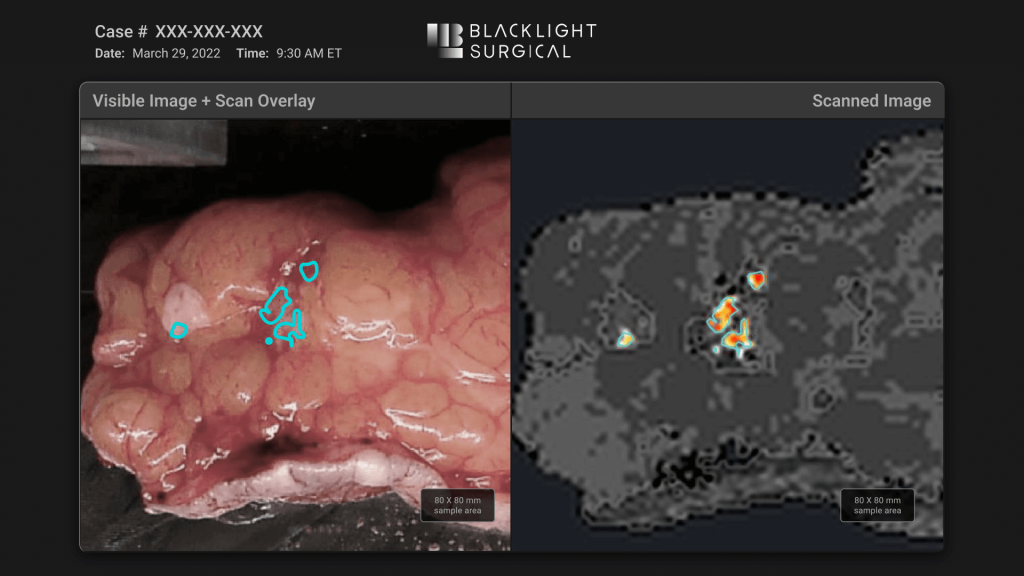
BlackLight Surgical engaged Triple Ring to develop a high-speed biochemical imaging platform designed for intra-operative tissue analysis. The system leveraged picosecond pulsing laser technology and machine learning workflows to enable rapid tissue identification during surgical procedures.
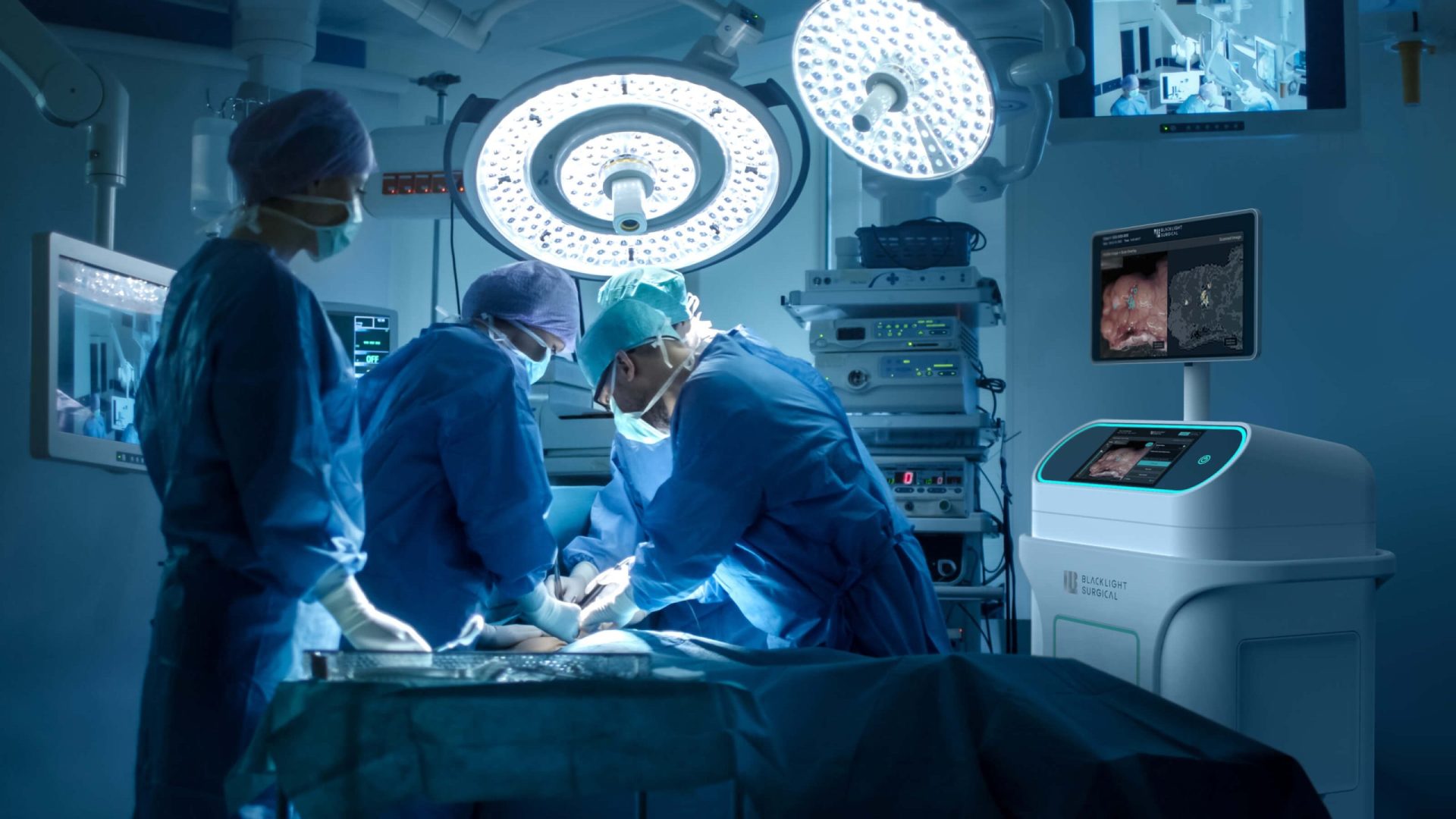
The resulting platform supports real-time clinical decision making by allowing clinicians to distinguish between normal and diseased tissue directly in the operating suite.
Challenge
The system required integration of advanced optical imaging technology capable of performing rapid biochemical analysis during surgery. Reliable performance was required across demanding clinical environments and complex workflows.
Delivering this capability required precise integration of optical, mechanical, software, and machine learning systems into a clinically deployable architecture.
Intra-Operative Tissue Pathology
Overview
BlackLight Surgical engaged Triple Ring to develop a high-speed biochemical imaging platform designed for intra-operative tissue analysis. The system leveraged picosecond pulsing laser technology and machine learning workflows to enable rapid tissue identification during surgical procedures.
The resulting platform supports real-time clinical decision making by allowing clinicians to distinguish between normal and diseased tissue directly in the operating suite.
Challenge
The system required integration of advanced optical imaging technology capable of performing rapid biochemical analysis during surgery. Reliable performance was required across demanding clinical environments and complex workflows.
Delivering this capability required precise integration of optical, mechanical, software, and machine learning systems into a clinically deployable architecture.
Client
BlackLight Surgical
Practice Areas
Physics-Based AI
Imaging, Robotics & Radiotherapy
Core Disciplines
Software Engineering
AI & Advanced Algorithms
Mechanical Engineering
Systems Engineering
Transfer to Manufacture
Electrical Engineering
Industrial Design
Optical Science
Photonics & Imaging
Quality System Management
Embedded Systems
Solution
Triple Ring assembled multidisciplinary engineering and scientific teams to design and integrate the imaging platform using structured development and validation methodologies.
Technical execution focused on:
- Integrating laser-based optical imaging technologies capable of rapid tissue analysis
- Developing machine learning workflows that supported real-time tissue classification
- Using simulation and modeling tools to guide system design and performance optimization
- Establishing ISO 13485-compliant design and documentation processes
Outcome
Triple Ring delivered a fully integrated intra-operative biochemical imaging platform supporting clinical studies and real-time tissue visualization.
The system was developed to ISO 13485 standards and documented within a Quality Management System transferred to BlackLight Surgical, enabling deployment of advanced intra-operative imaging workflows.
Triple Ring Talent
The Story Behind the Innovation
At Triple Ring, we draw on a deep bench of expertise across diverse disciplines matched to each innovation challenge. For this project, our team combined high-speed laser optical imaging, machine learning, mechanical engineering, and quality systems expertise to develop a fully integrated intra-operative tissue analysis platform capable of distinguishing healthy from diseased tissue in real time.
Todd, Cameran, and Shehadeh collaborated with many talented colleagues across Triple Ring and BlackLight Surgical on this project.
Todd Harris, PhD
Physics & Optical Science
Dr. Todd Harris applies expertise in optics and imaging physics to the development of advanced sensing and illumination technologies. His work combines optical modeling with system design, helping teams translate complex physical principles into dependable, high-performance solutions.

Cameran Casale
Bioengineering
Cameran Casale contributes to the development of imaging, microfluidic, and diagnostic technologies across multidisciplinary programs. Her work supports system integration and testing efforts, helping teams refine complex devices for reliable performance in research and clinical environments.

Shehadeh Dajani
Aerospace & Mechanical Engineering
Shehadeh Dajani supports the development of safety-critical embedded systems used in regulated medical technologies. His work spans software and system integration across feasibility, clinical, and production stages, helping ensure reliable performance throughout the development lifecycle.

Key Innovation
Simulation-driven development took a custom IORT system from concept to FDA clearance.
Robotic Radiation Therapy
Client
Empyrean Medical Systems
Practice Areas
Imaging, Robotics & Radiotherapy
Core Disciplines
Overview
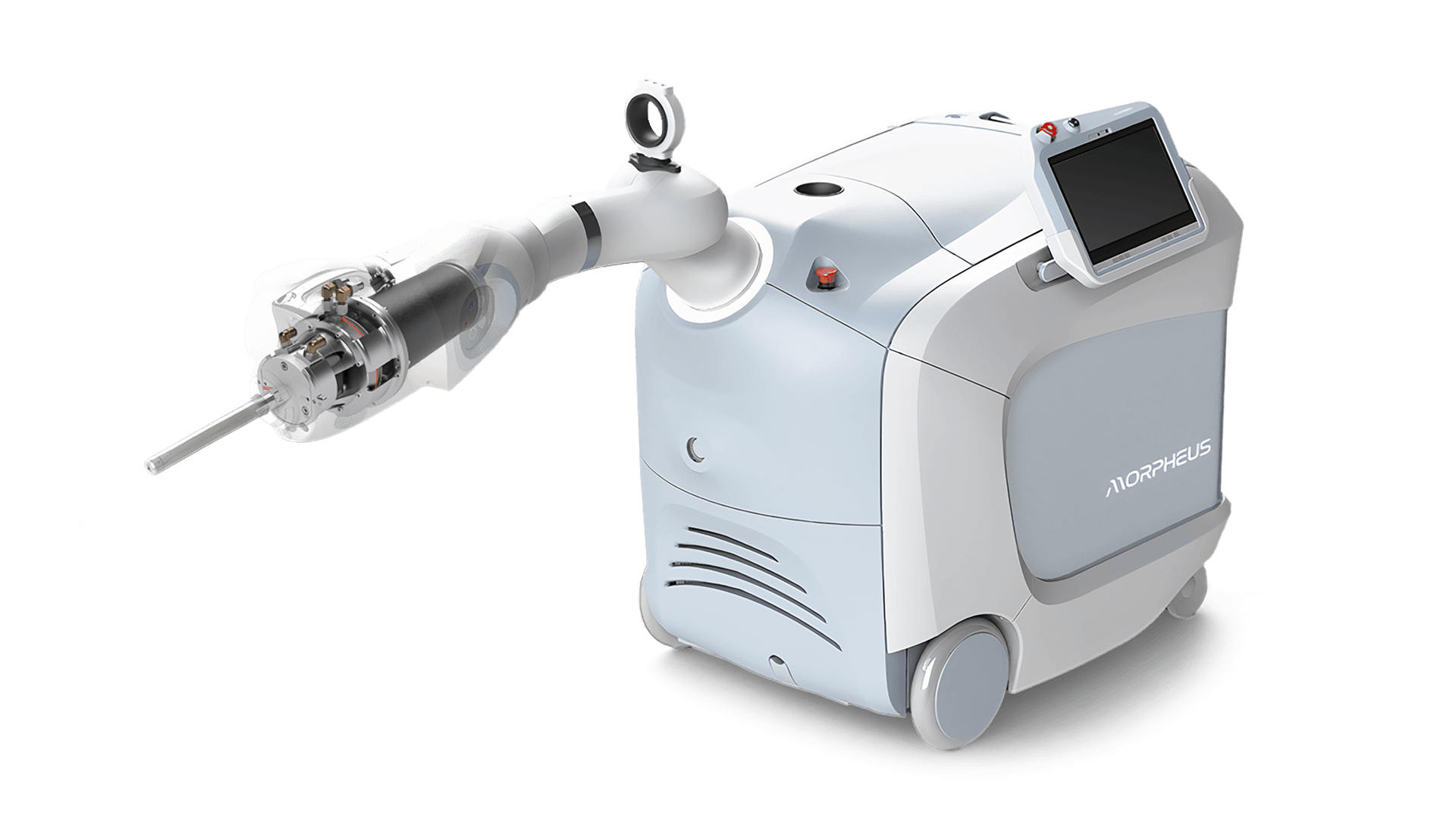
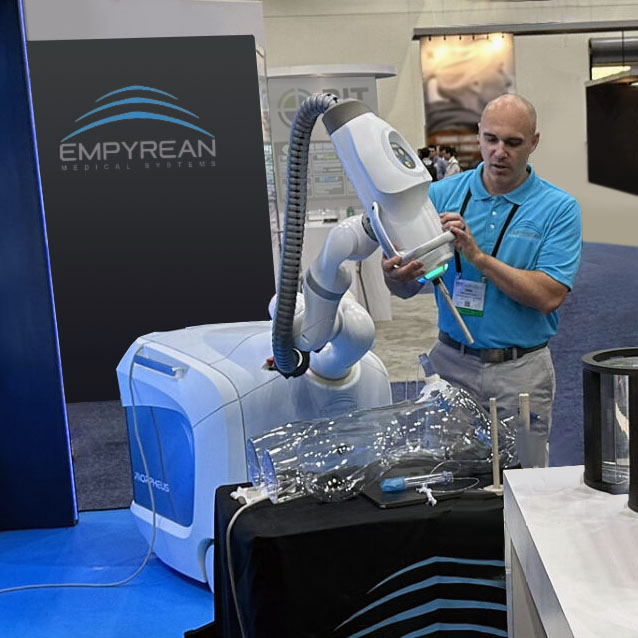
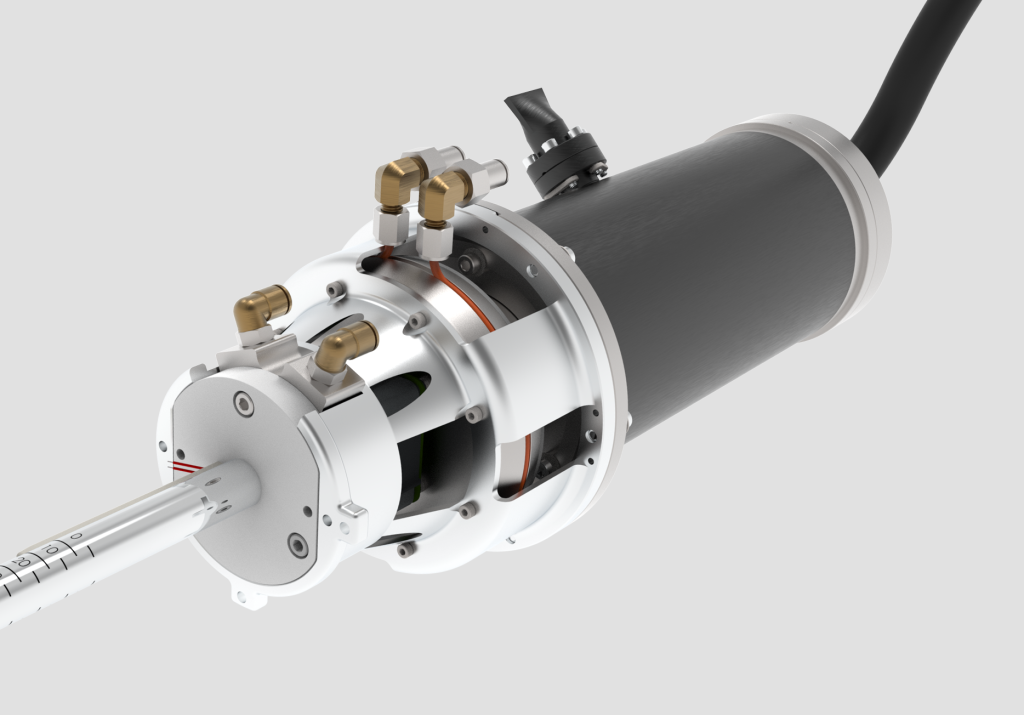
Empyrean Medical Systems worked with Triple Ring to design and develop a compact, robotically guided intra-operative radiation therapy device. The system was engineered to deliver targeted radiation therapy within surgical environments while maintaining a strong focus on usability and patient-centered design.
The resulting platform combined robotic guidance, precision radiation delivery, and mobile system architecture to support flexible clinical workflows and improve intra-operative treatment capabilities.
Challenge
Empyrean required development of a compact, mobile radiation therapy system capable of delivering low-energy radiation with precise beam directionality during surgical procedures. The system needed to maintain high performance standards while remaining easy to operate within the constraints of clinical environments.
In addition to performance requirements, the platform required integration of multiple complex subsystems, including custom x-ray sources, beam steering electronics, and robotic positioning components. The development effort also required preparation of a complete design package supporting regulatory submission.
Robotic Radiation Therapy
Overview
Empyrean Medical Systems worked with Triple Ring to design and develop a compact, robotically guided intra-operative radiation therapy device. The system was engineered to deliver targeted radiation therapy within surgical environments while maintaining a strong focus on usability and patient-centered design.
The resulting platform combined robotic guidance, precision radiation delivery, and mobile system architecture to support flexible clinical workflows and improve intra-operative treatment capabilities.
Challenge
Empyrean required development of a compact, mobile radiation therapy system capable of delivering low-energy radiation with precise beam directionality during surgical procedures. The system needed to maintain high performance standards while remaining easy to operate within the constraints of clinical environments.
In addition to performance requirements, the platform required integration of multiple complex subsystems, including custom x-ray sources, beam steering electronics, and robotic positioning components. The development effort also required preparation of a complete design package supporting regulatory submission.
Client
Empyrean Medical Systems
Practice Areas
Imaging, Robotics & Radiotherapy
Core Disciplines
Mechanical Engineering
Systems Engineering
Industrial Design
Photonics & Imaging
Quality System Management
Applied Physics
Solution
Triple Ring collaborated with Empyrean throughout the full product development lifecycle, from concept generation through system integration and clinical validation. The engineering effort focused on delivering precise radiation delivery capabilities while maintaining usability and manufacturability.
Development priorities included:
- Designing custom x-ray source technologies supporting 3D beam directionality
- Applying Monte Carlo simulations to validate radiation delivery performance
- Integrating robotic motion systems supporting accurate positioning
- Preparing documentation supporting FDA regulatory submission
Outcome
Triple Ring delivered a fully integrated radiation therapy system that was verified, clinically validated, and submitted to the U.S. Food and Drug Administration (FDA) for 510(k) clearance. The resulting platform supported regulatory approval and demonstrated reliable clinical performance.
Following regulatory submission, the system design was successfully transferred to manufacturing and launched into the market. The completed platform enabled advancement of intra-operative radiation therapy capabilities and supported commercialization of the robotic radiation delivery system.
Triple Ring Talent
The Story Behind the Innovation
At Triple Ring, we draw on a deep bench of expertise across diverse disciplines matched to each innovation challenge. For this project, our team combined radiation physics, custom x-ray source development, robotic systems integration, and regulatory engineering expertise to deliver a fully verified, FDA-submitted intra-operative radiation therapy platform from concept through market launch.
Chris and Barry collaborated with many talented colleagues across Triple Ring and Empyrean Medical Systems on this project.

Chris Mitchell, PhD
Bio and Electrical Engineering & Program Management
Dr. Chris Mitchell brings deep experience leading multidisciplinary teams developing complex imaging and medical device systems. His work focuses on guiding technical programs from concept through implementation, helping translate advanced technologies into reliable, real-world solutions.

Barry Wood
Biomedical & Mechanical Engineering
Barry Wood develops mechanical and biomedical systems with a focus on design and performance analysis. His work supports the creation of robust solutions for complex applications, contributing to dependable system function from concept through implementation.

Key Innovation
Decoupling source and detector motion unlocked full 3D breast imaging at ultra-low dose.
User-Centric Breast Imaging
Client
Malcova
Practice Areas
Imaging, Robotics & Radiotherapy
Core Disciplines
Overview
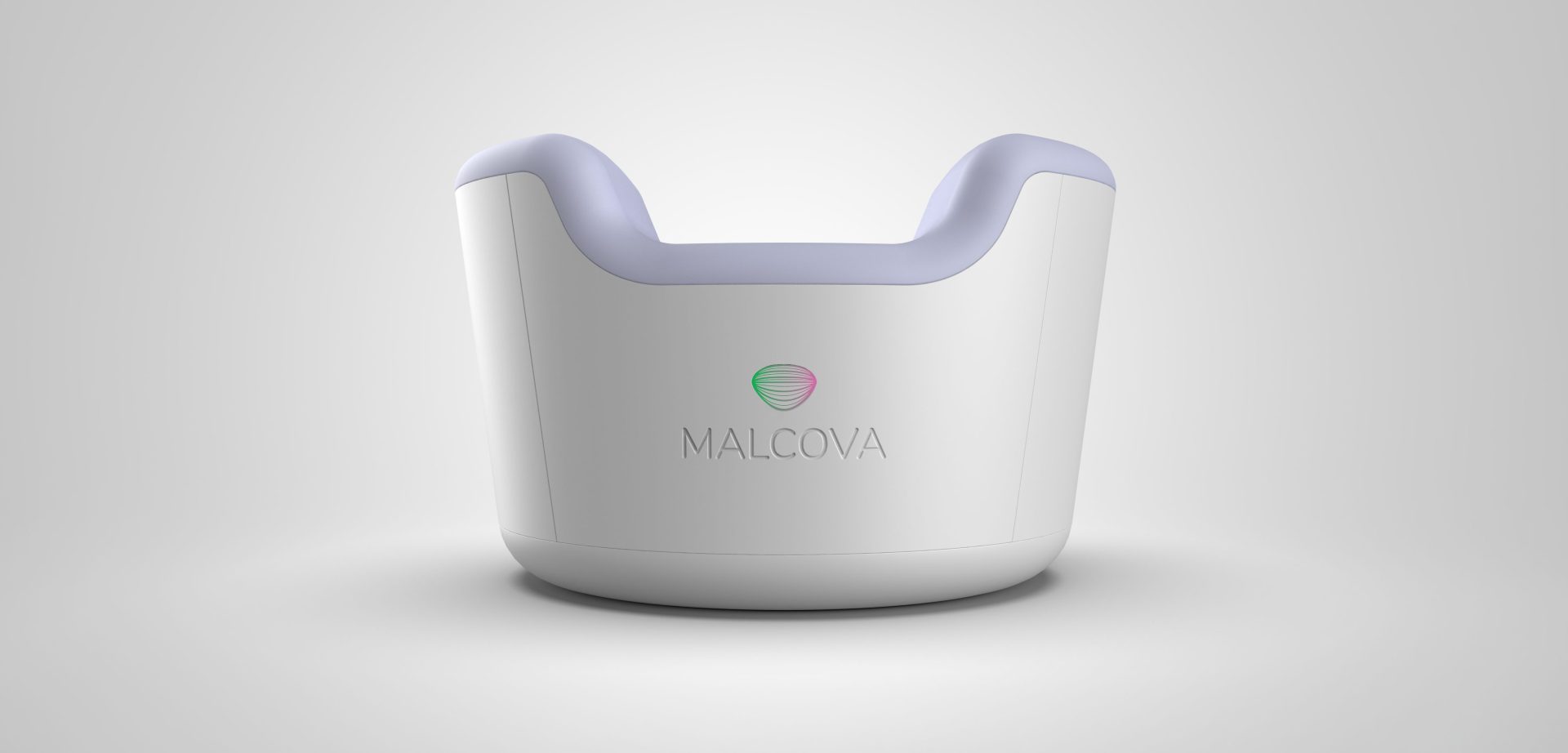
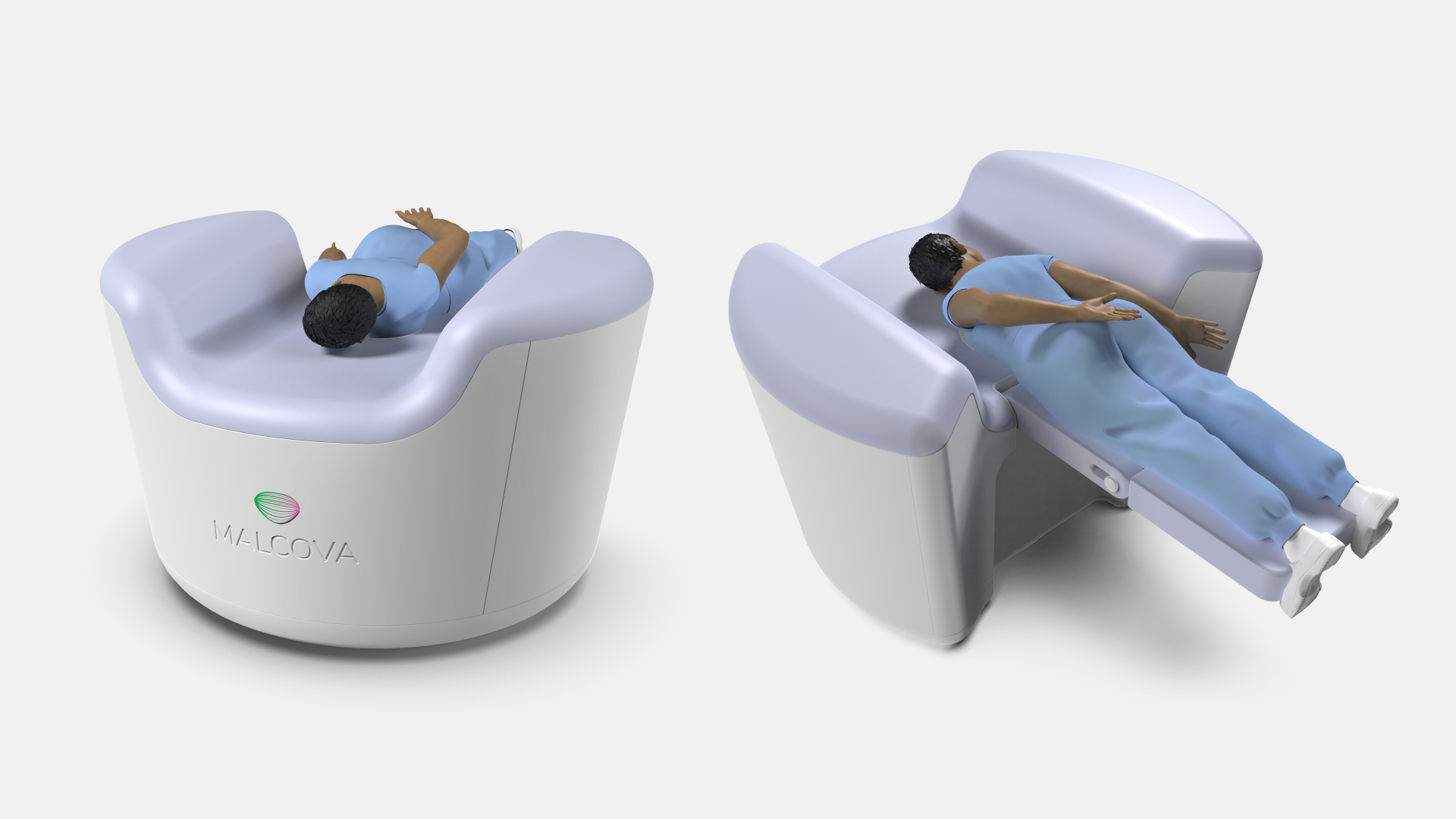
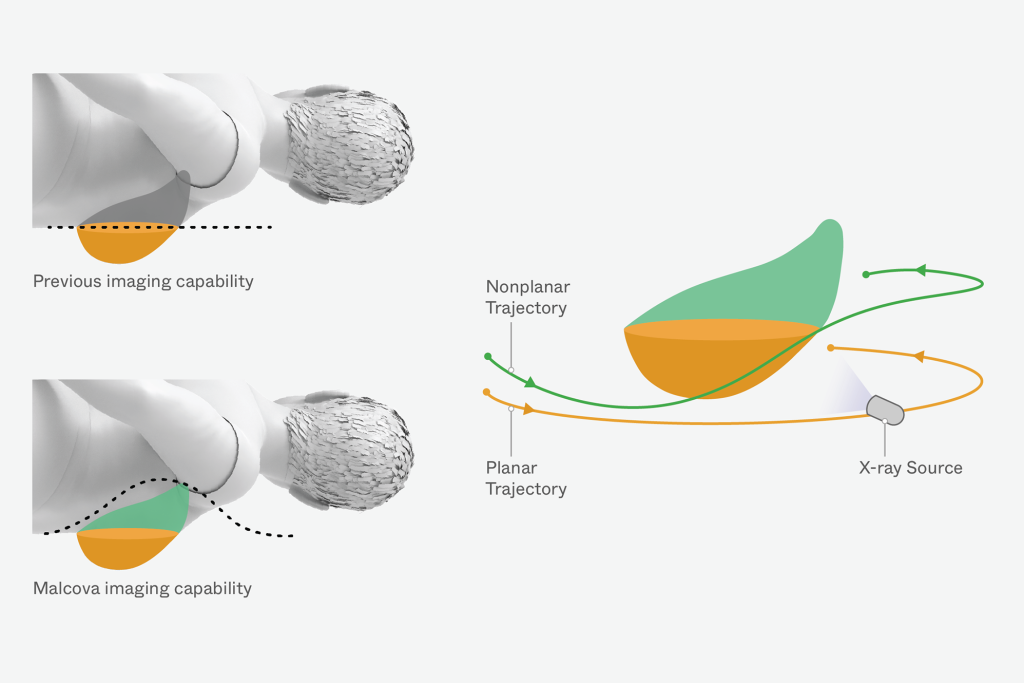
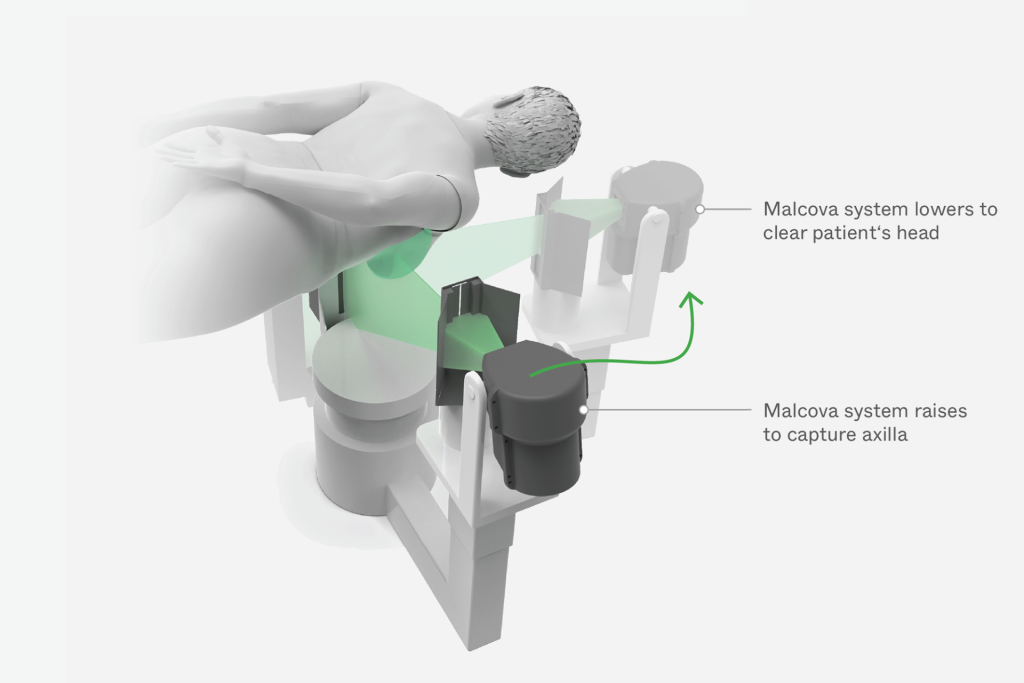
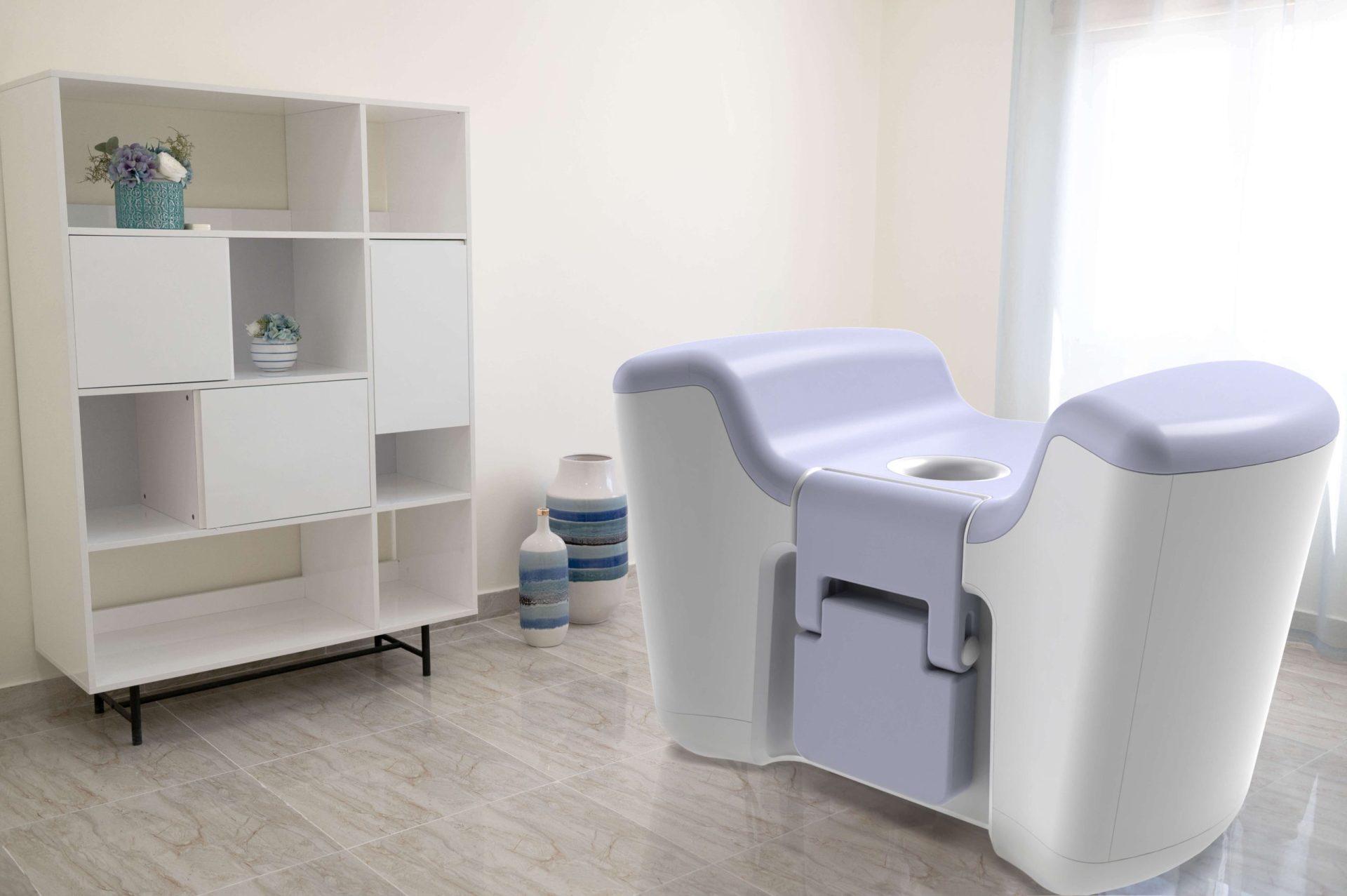
Malcova engaged Triple Ring to redesign and advance a novel breast imaging system capable of delivering full 3D imaging at ultra-low radiation dose while improving patient comfort. The system was designed to expand anatomical coverage beyond what is achievable with standard breast CT technologies.
The resulting platform introduced a gantry-free imaging architecture that enabled flexible source and detector motion, supporting advanced imaging capabilities and improved patient-centered workflows.
Challenge
Malcova developed an early prototype demonstrating the potential for improved breast imaging performance and patient experience. However, the prototype required a comprehensive redesign to support full functionality, human testing, and eventual regulatory submission.
Unlike conventional CT systems that rely on fixed gantry configurations, Malcova’s system required independent movement of the x-ray source and detector to achieve full 3D imaging. This architecture introduced complex synchronization challenges that directly impacted image quality and system reliability. Addressing these challenges required advanced modeling, precise engineering, and deep domain expertise in robotics and x-ray imaging.
User-Centric Breast Imaging
Overview
Malcova engaged Triple Ring to redesign and advance a novel breast imaging system capable of delivering full 3D imaging at ultra-low radiation dose while improving patient comfort. The system was designed to expand anatomical coverage beyond what is achievable with standard breast CT technologies.
The resulting platform introduced a gantry-free imaging architecture that enabled flexible source and detector motion, supporting advanced imaging capabilities and improved patient-centered workflows.
Challenge
Malcova developed an early prototype demonstrating the potential for improved breast imaging performance and patient experience. However, the prototype required a comprehensive redesign to support full functionality, human testing, and eventual regulatory submission.
Unlike conventional CT systems that rely on fixed gantry configurations, Malcova’s system required independent movement of the x-ray source and detector to achieve full 3D imaging. This architecture introduced complex synchronization challenges that directly impacted image quality and system reliability. Addressing these challenges required advanced modeling, precise engineering, and deep domain expertise in robotics and x-ray imaging.
Client
Malcova
Practice Areas
Imaging, Robotics & Radiotherapy
Core Disciplines
Mechanical Engineering
Photonics & Imaging
Applied Physics
Solution
Triple Ring applied expertise in robotics, x-ray imaging, and simulation-driven design to redesign the imaging platform and enable flexible system operation. The development effort focused on resolving synchronization challenges while enabling exploration of the system’s full imaging capability.
Development focused on:
- Designing coordinated motion control systems supporting gantry-free imaging
- Applying simulation tools to resolve synchronization and trajectory challenges
- Integrating robotics technologies enabling precise source-detector alignment
- Developing control strategies that preserved image fidelity during dynamic motion
- Optimizing imaging workflows to improve patient comfort and accessibility
Outcome
Triple Ring delivered a redesigned CT imaging platform capable of supporting flexible motion and advanced imaging workflows. The resulting system enabled comprehensive exploration of the technology’s design space while maintaining reliable imaging performance.
The completed platform positioned Malcova to advance its innovative breast imaging technology toward clinical validation and future regulatory development, supporting improved imaging coverage and enhanced patient experience.
Triple Ring Talent
The Story Behind the Innovation
At Triple Ring, we draw on a deep bench of expertise across diverse disciplines matched to each innovation challenge. For this project, our team combined robotics, x-ray imaging physics, advanced simulation, and motion control expertise to redesign a gantry-free breast imaging platform — resolving complex synchronization challenges and enabling full 3D imaging at ultra-low radiation dose with expanded anatomical coverage.
Tobias collaborated with many talented colleagues across Triple Ring on this project.
Tobias Funk, PhD
Experimental Physics & Instrumentation
Dr. Tobias Funk develops advanced instrumentation that applies ionizing radiation to scientific and medical challenges. His work spans imaging, simulation, and system design, helping translate complex physical principles into practical technologies used in real-world environments.