
Key Innovation
A fully disposable surgical robot eliminated sterilization without sacrificing precision.
Single-Use Surgical Robotics
Client
StaplCam
Practice Areas
Smart Medical Devices
Core Disciplines
Overview
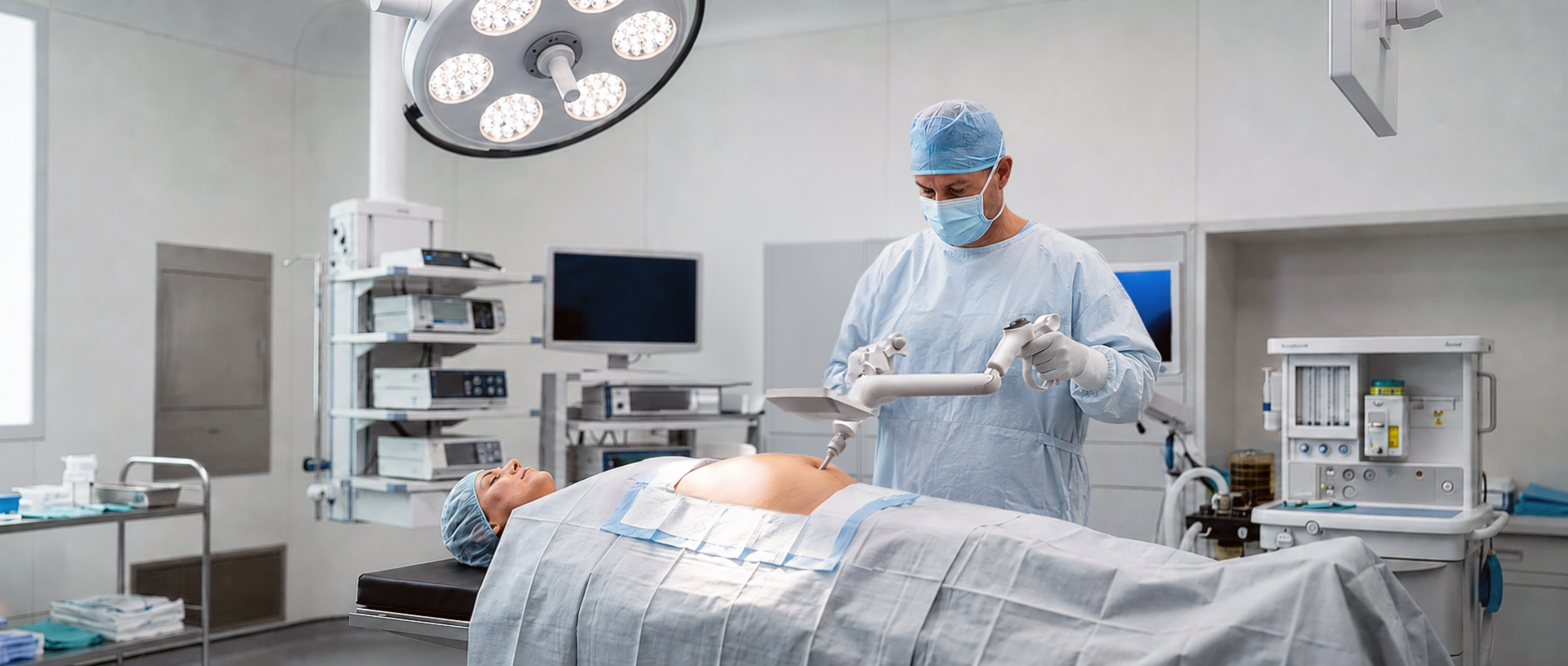
StaplCam set out to transform robotic surgery by developing the world’s first fully disposable surgical operating system. The company engaged Triple Ring to drive R&D and product development, from concept definition through preclinical evaluation.
The program focused on creating a fully disposable robotic platform designed to reduce healthcare costs and simplify surgical workflows through eliminating requirements for cleaning, sterilization, and reprocessing of typical robotic surgery instruments.
Challenge
Developing a fully disposable surgical robot required rethinking conventional robotic surgery platforms while maintaining the performance required for both routine and complex procedures.
The system needed to deliver precision and functionality expected of advanced robotic surgical devices while introducing an entirely new approach to sterility, workflow efficiency, and cost. Achieving that vision leveraged Triple Ring’s expertise spanning user-centered design, systems engineering, mechanical engineering, electrical engineering, software engineering, and rapid prototyping.
Single-Use Surgical Robotics
Overview
StaplCam set out to transform robotic surgery by developing the world’s first fully disposable surgical operating system. The company engaged Triple Ring to drive R&D and product development, from concept definition through preclinical evaluation.
The program focused on creating a fully disposable robotic platform designed to reduce healthcare costs and simplify surgical workflows through eliminating requirements for cleaning, sterilization, and reprocessing of typical robotic surgery instruments.
Challenge
Developing a fully disposable surgical robot required rethinking conventional robotic surgery platforms while maintaining the performance required for both routine and complex procedures.
The system needed to deliver precision and functionality expected of advanced robotic surgical devices while introducing an entirely new approach to sterility, workflow efficiency, and cost. Achieving that vision leveraged Triple Ring’s expertise spanning user-centered design, systems engineering, mechanical engineering, electrical engineering, software engineering, and rapid prototyping.
Client
StaplCam
Practice Areas
Smart Medical Devices
Core Disciplines
Software Engineering
Mechanical Engineering
Systems Engineering
Electrical Engineering
Industrial Design
Solution
Triple Ring partnered closely with StaplCam throughout the product development process, helping transform an ambitious concept into a functional robotic platform.
The development program included:
- Defining user needs and mapping clinical workflows to guide system requirements
- Creating product concepts and visualizations to accelerate design refinement
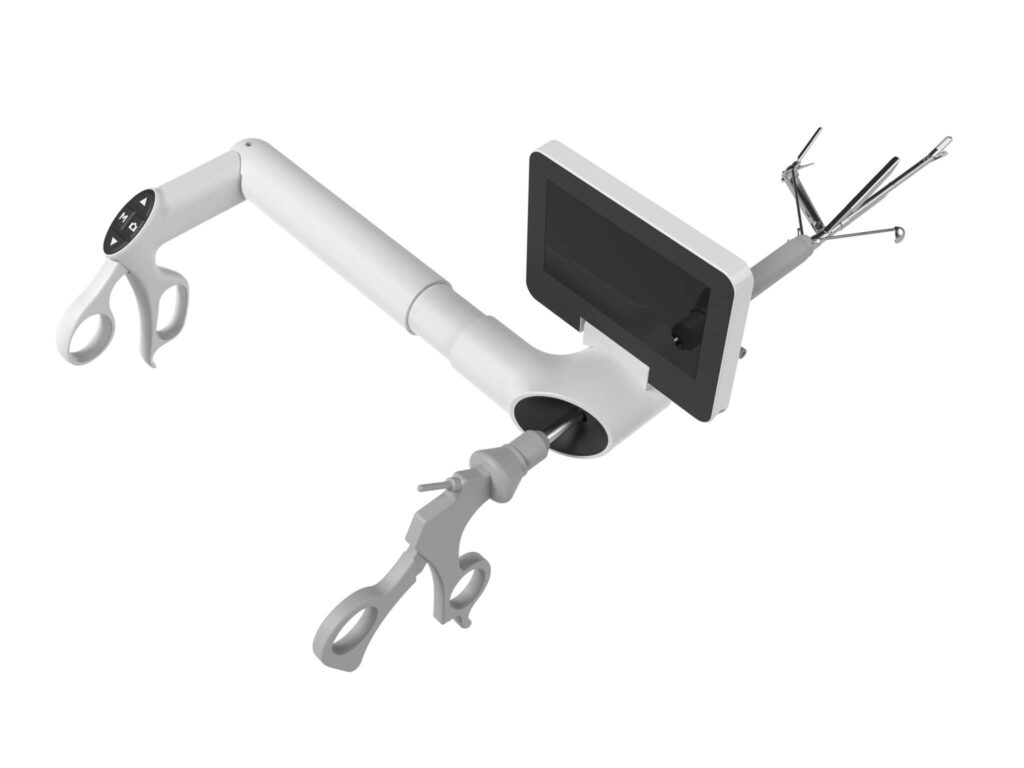
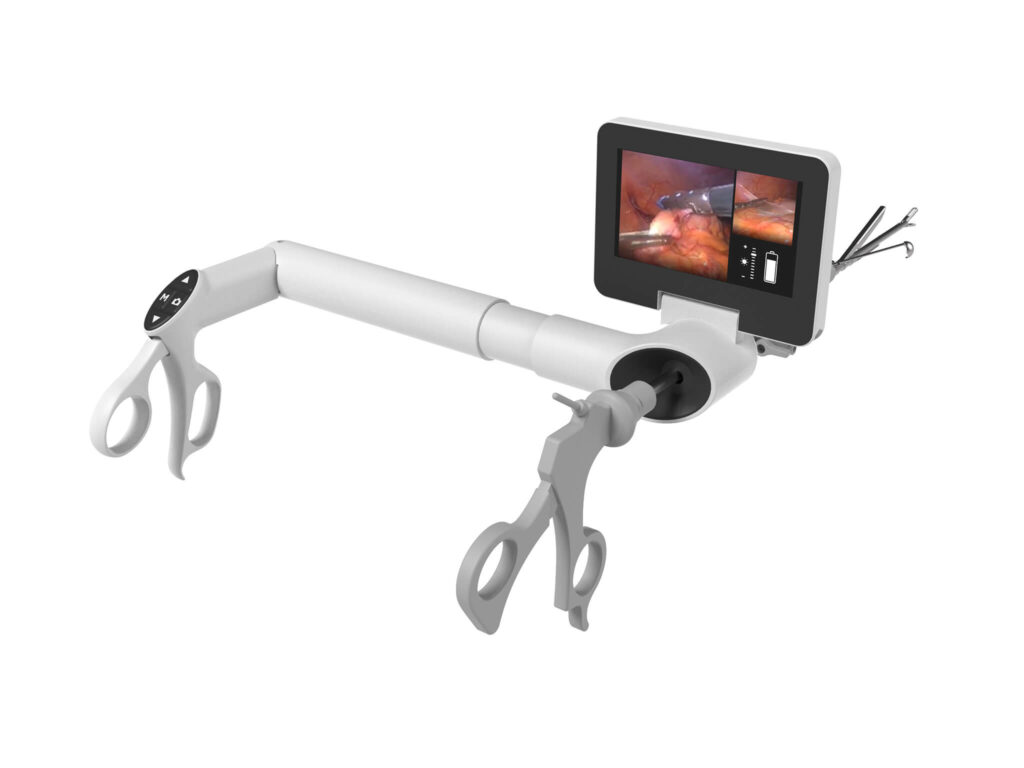
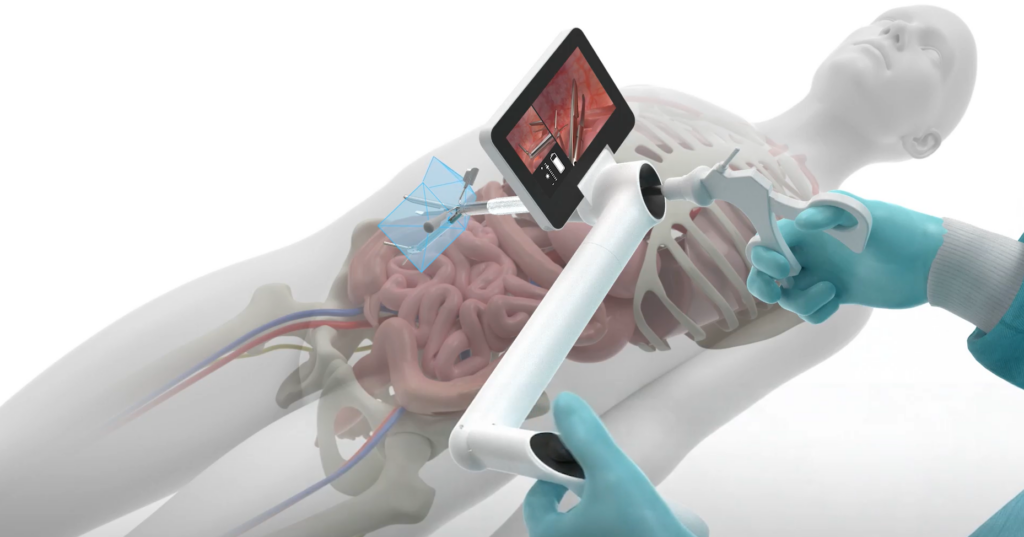
- Developing novel intellectual property supporting the disposable robotic platform including custom HD camera, lighting, and display
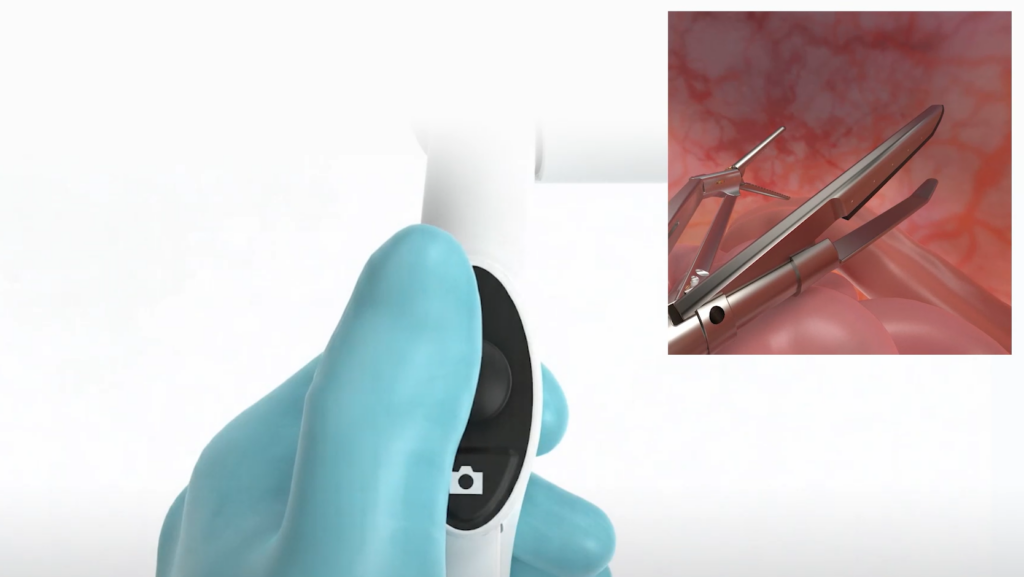
- Designing, engineering, and integrating a complete robotic system that enabled three tools to be managed with two hands using established laparoscopic motions and techniques
- Building proof-of-concept prototypes and conducting iterative engineering cycles
- Supporting preclinical testing to advance the system toward clinical readiness
Outcome
Triple Ring and StaplCam developed a fully disposable surgical robot prototype that challenges conventional expectations for robotic surgery by combining sterility, simplicity, and cost-effectiveness within a single-use platform.
The system successfully demonstrated its capabilities during preclinical testing and is positioned to advance toward human clinical trials. By eliminating the need to clean, sterilize, and reprocess reusable instruments, the platform has the potential to improve surgical workflows, reduce infection risk, lower healthcare cost, and expand access to robotic surgery across a broad range of procedures.
Triple Ring Talent
The Story Behind the Innovation
At Triple Ring, we draw on a deep bench of expertise across diverse disciplines matched to each innovation challenge. For this project, our team combined surgical robotics, systems engineering, mechanical and electrical engineering, software development, and user-centered design expertise to bring the world’s first fully disposable surgical robotic platform from concept to preclinical validation.
Tachi, Chris, and Tim collaborated with many talented colleagues across Triple Ring and StaplCam on this project.

Tachi Callas
Mechanical Engineering
Tachi Callas leads mechanical engineering teams developing complex medical technologies across the full product lifecycle. His work transforms innovative device concepts into manufacturable systems supporting advanced surgical and therapeutic applications.

Chris Mitchell, PhD
Bio and Electrical Engineering & Program Management
Dr. Chris Mitchell brings deep experience leading multidisciplinary teams developing complex imaging and medical device systems. His work focuses on guiding technical programs from concept through implementation, helping translate advanced technologies into reliable, real-world solutions.

Tim Sauder
Tim Sauder brings broad experience spanning biomedical engineering, medical device development, and advanced manufacturing. His work ranges from robotics systems and continuous biomarker monitoring technologies to business development and market assessment, supporting innovation across the medical device lifecycle.

Key Innovation
Long-term GI monitoring and drug delivery with a swallowable robotic capsule technology.
Gastric-Resident Robotics for GI Monitoring and Drug Delivery
Client
Massachusetts Institute of Technology (MIT)
Practice Areas
Smart Medical Devices
Core Disciplines
Overview
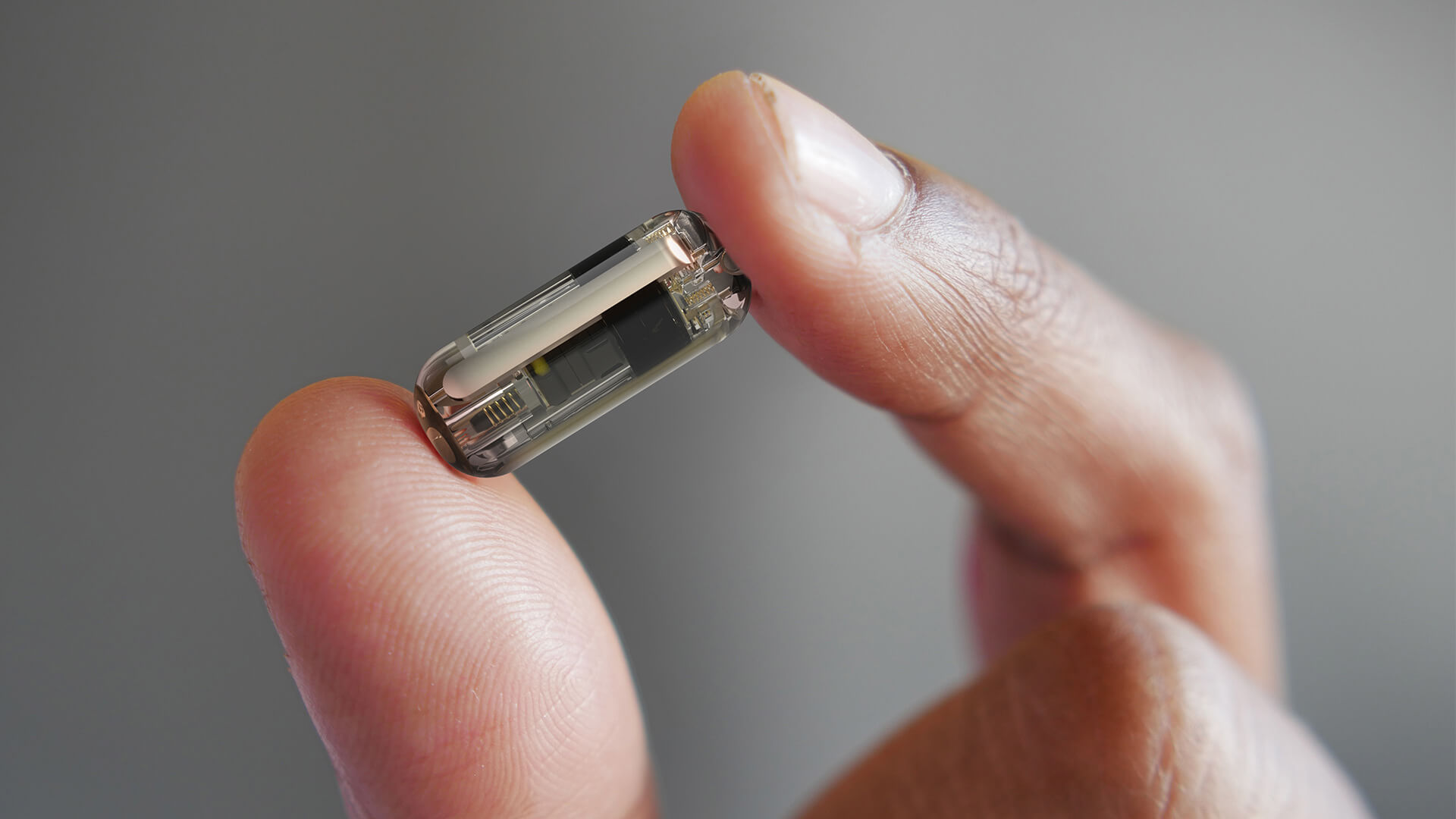
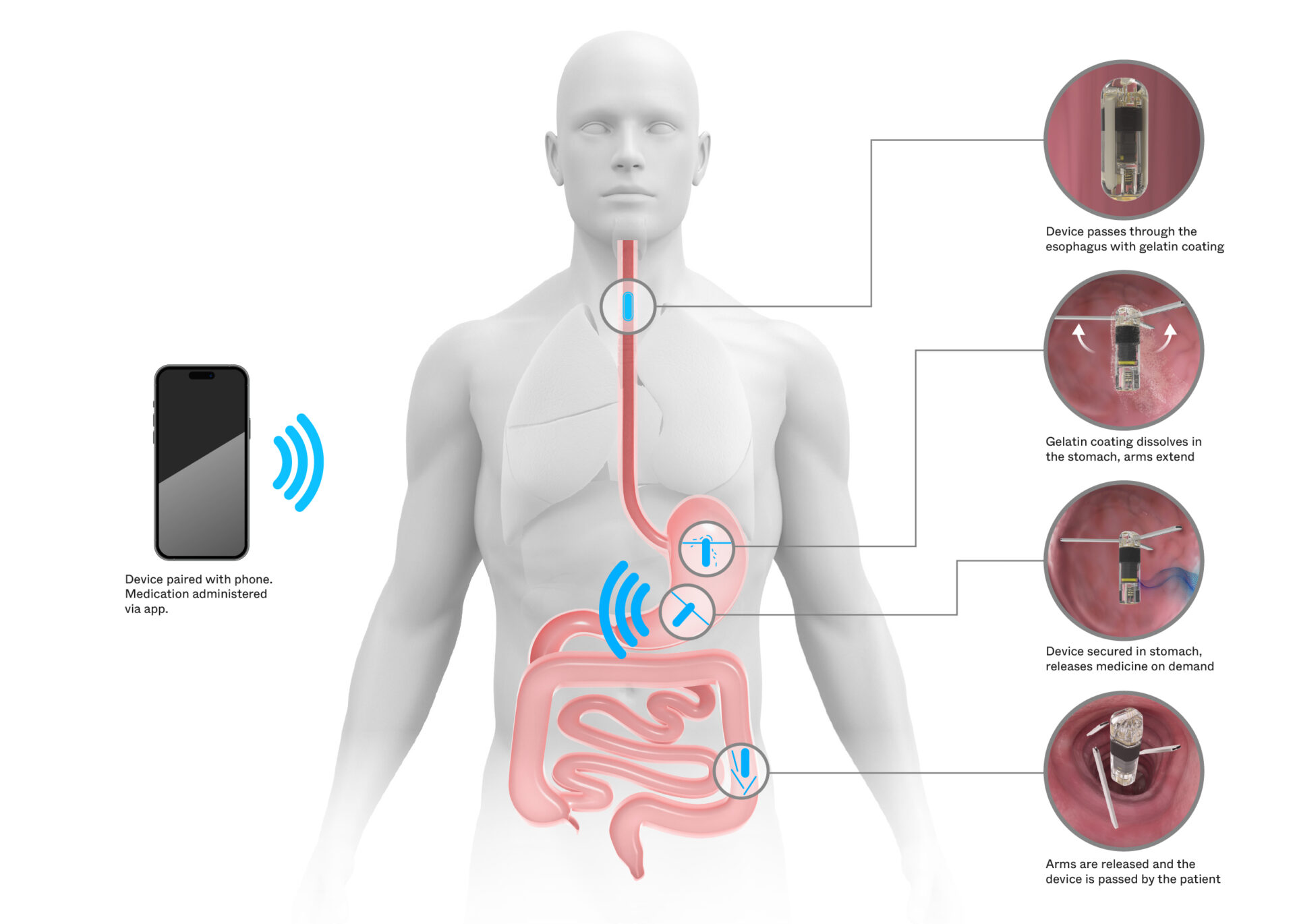
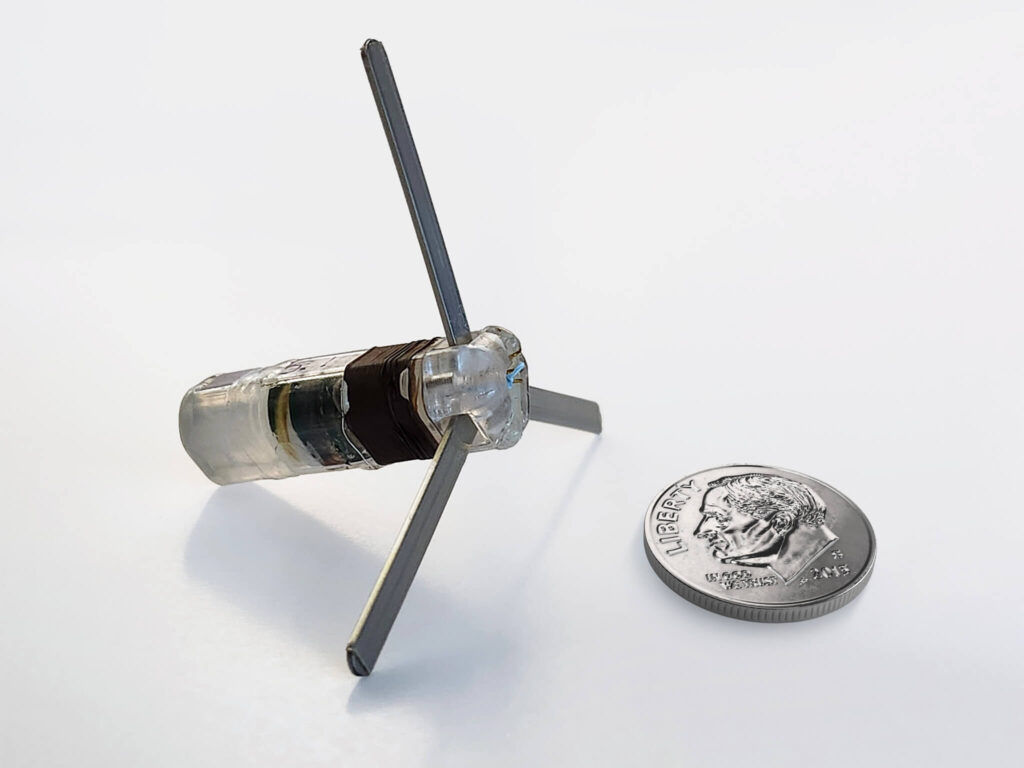
Triple Ring collaborated with MIT under a DARPA-funded program to advance a novel gastric-resident robotic capsule from an early-stage research concept toward clinical readiness. The swallowable capsule was designed to remain in the stomach for weeks to months, wirelessly monitor physiological data, and deliver multiple doses of therapeutics on command.
The program focused on transforming an innovative ingestible technology into a biocompatible, manufacturable medical device capable of supporting animal studies and future clinical evaluation.
Challenge
MIT sought a development partner capable of preparing the gastric-resident capsule for manufacturing and human clinical readiness within an FDA-compliant design control framework. The ultimate objective was to produce a design and functional units suitable for Investigational Device Exemption (IDE) submission.
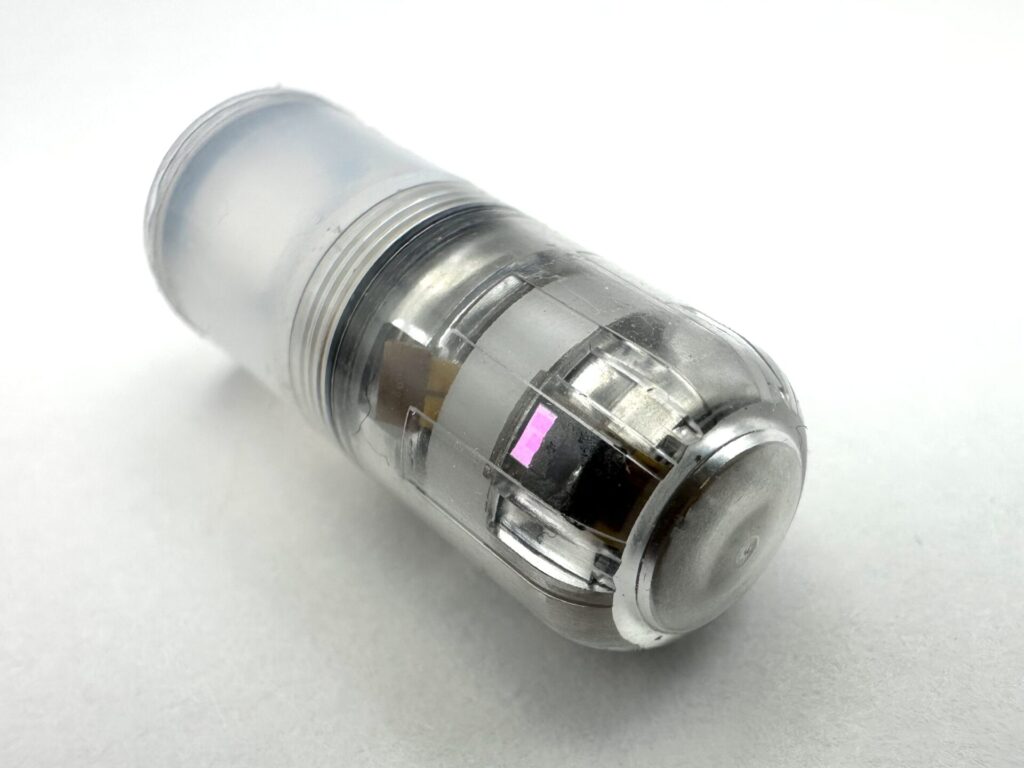
The project required overcoming several significant engineering challenges, including miniaturizing the device into a swallowable form factor, designing for extremely low power consumption, ensuring reliable operation for weeks to months within the harsh gastric environment, and enabling robust wireless communication through highly dissipative body tissue.
Gastric-Resident Robotics for GI Monitoring and Drug Delivery
Overview
Triple Ring collaborated with MIT under a DARPA-funded program to advance a novel gastric-resident robotic capsule from an early-stage research concept toward clinical readiness. The swallowable capsule was designed to remain in the stomach for weeks to months, wirelessly monitor physiological data, and deliver multiple doses of therapeutics on command.
The program focused on transforming an innovative ingestible technology into a biocompatible, manufacturable medical device capable of supporting animal studies and future clinical evaluation.
Challenge
MIT sought a development partner capable of preparing the gastric-resident capsule for manufacturing and human clinical readiness within an FDA-compliant design control framework. The ultimate objective was to produce a design and functional units suitable for Investigational Device Exemption (IDE) submission.
The project required overcoming several significant engineering challenges, including miniaturizing the device into a swallowable form factor, designing for extremely low power consumption, ensuring reliable operation for weeks to months within the harsh gastric environment, and enabling robust wireless communication through highly dissipative body tissue.
Client
Massachusetts Institute of Technology (MIT)
Practice Areas
Smart Medical Devices
Core Disciplines
Software Engineering
Mechanical Engineering
Systems Engineering
Electrical Engineering
Quality System Management
Solution
Triple Ring applied its multidisciplinary engineering and manufacturing expertise to translate the research concept into a manufacturable medical device.
The development program emphasized:
- Refining the device architecture to improve performance, manufacturability, and long-term reliability
- Designing and validating a custom antenna capable of wireless communication through human tissue
- Selecting materials that met demanding requirements for biocompatibility, barrier performance, and bond strength
- Validating a novel electrochemistry for improved manufacturability and performance
- Developing manufacturing processes and fixtures for laser welding, encapsulation, dip coating, bonding, and final assembly
- Establishing product requirements, verification methods, and design documentation within an FDA-compliant quality system
- Supporting prototype builds, verification testing, and animal studies conducted at MIT
Outcome
Triple Ring delivered multiple generations of prototype devices that successfully met pre-release verification criteria and achieved key animal study endpoints.
By combining expertise in medical devices, swallowable robotics, manufacturing engineering, and quality management systems, Triple Ring helped advance a promising DARPA/MIT research program toward clinical readiness, creating a foundation for future commercialization of long-term gastric-resident monitoring and drug delivery systems.
Triple Ring Talent
The Story Behind the Collaboration
At Triple Ring, we draw on a deep bench of expertise across diverse disciplines matched to each innovation challenge. For this project, our team combined swallowable device design, antenna engineering, materials science, manufacturing process development, and FDA-compliant quality systems expertise to advance a novel gastric-resident robotic platform from research concept to clinical readiness.
Vrad, Gus, and Kevin collaborated with many talented colleagues across Triple Ring and MIT on this project.

Vrad Levering, PhD
Biodesign & Systems Engineering
Dr. Vrad Levering guides systems engineering across the medical device development lifecycle, from early concept evaluation through manufacturing readiness. His broad experience across therapeutic areas helps shape development strategies for complex medical technologies.

Gus Lowell
Systems Architecture & Electrical Engineering
Augustus “Gus” Lowell defines the architecture of complex software and hardware systems across multidisciplinary programs. His work connects electrical engineering, data processing, and safety-critical functions into cohesive system frameworks.

Kevin Limtao
Biomedical & Systems Engineering
Kevin Limtao connects system requirements, architecture, and integration across complex medical and diagnostic technologies. His work aligns design, risk, and performance throughout development, ensuring systems function reliably from concept through deployment.

Key Innovation
Virtual simulation caught design flaws before physical builds began.
Continuous Glucose Monitoring
Client
Dexcom
Practice Areas
Smart Medical Devices
Core Disciplines
Overview
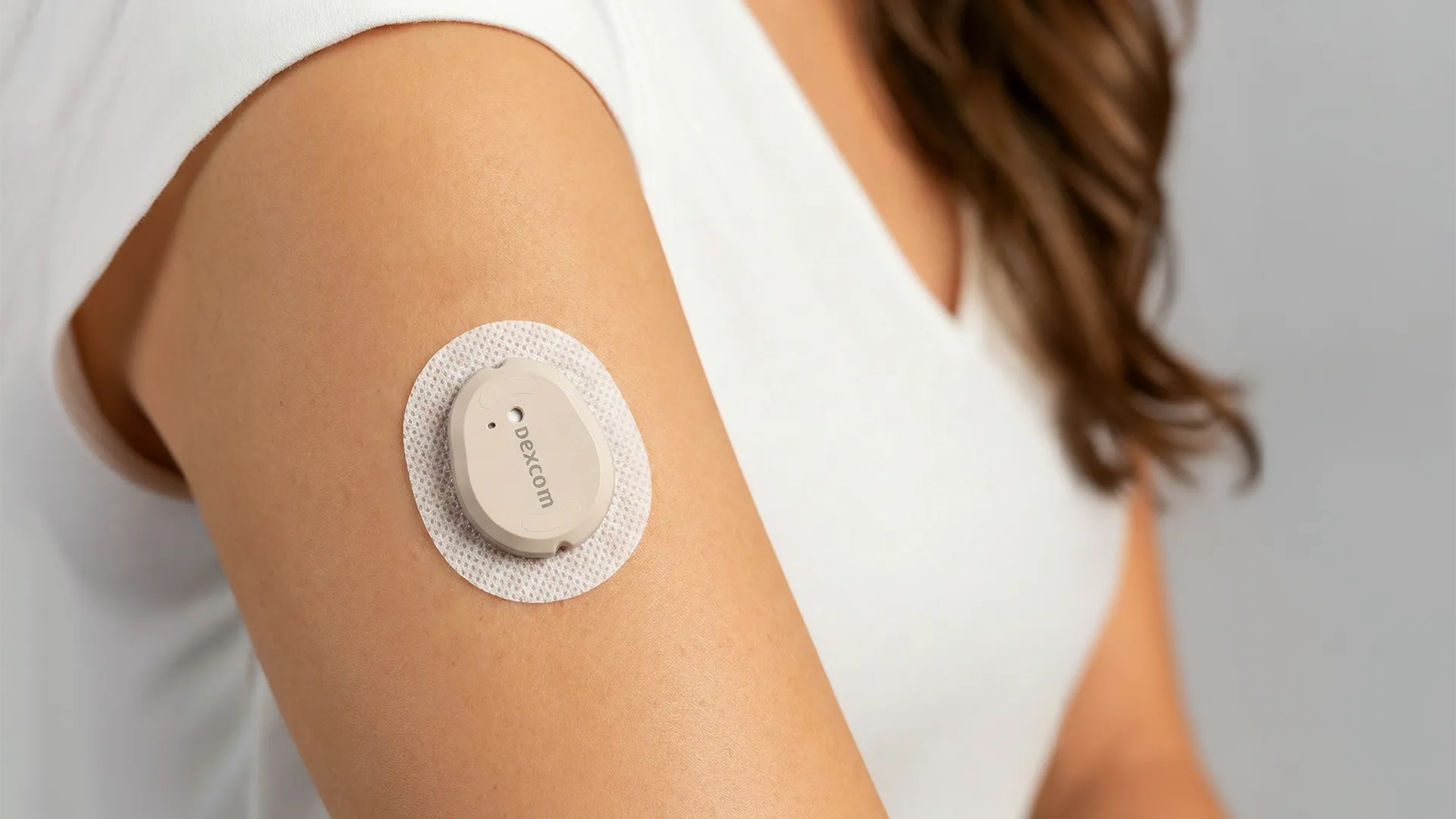
For more than a decade, Triple Ring has partnered with continuous glucose monitoring (CGM) manufacturer Dexcom to support the rapid evolution of product designs in response to customer demands and increasing market competition. Dexcom CGM systems are wearable medical devices that continuously track glucose levels and deliver real-time data to connected devices, enabling improved diabetes management.
Across multiple generations of CGM devices, Triple Ring contributed analytical expertise and design inputs that enabled new features, improved manufacturability, and supported high-volume production. This long-term collaboration helped shorten development timelines and accelerate the release of successive CGM platforms.
Challenge
As Dexcom’s CGM products evolved, market forces required rapid improvements in usability, reliability, and manufacturability while maintaining high performance and production efficiency. The development of next-generation CGM devices required resolving complex design behaviors, managing manufacturing variability, and supporting large-scale production.
Dexcom engaged Triple Ring at critical points in development to address these technical challenges while maintaining aggressive timelines for new product releases.
Continuous Glucose Monitoring
Overview
For more than a decade, Triple Ring has partnered with continuous glucose monitoring (CGM) manufacturer Dexcom to support the rapid evolution of product designs in response to customer demands and increasing market competition. Dexcom CGM systems are wearable medical devices that continuously track glucose levels and deliver real-time data to connected devices, enabling improved diabetes management.
Across multiple generations of CGM devices, Triple Ring contributed analytical expertise and design inputs that enabled new features, improved manufacturability, and supported high-volume production. This long-term collaboration helped shorten development timelines and accelerate the release of successive CGM platforms.
Challenge
As Dexcom’s CGM products evolved, market forces required rapid improvements in usability, reliability, and manufacturability while maintaining high performance and production efficiency. The development of next-generation CGM devices required resolving complex design behaviors, managing manufacturing variability, and supporting large-scale production.
Dexcom engaged Triple Ring at critical points in development to address these technical challenges while maintaining aggressive timelines for new product releases.
Client
Dexcom
Practice Areas
Smart Medical Devices
Core Disciplines
Mechanical Engineering
Systems Engineering
Transfer to Manufacture
Solution
Triple Ring applied deep expertise in device development, mechanism analysis, finite-element simulation, and empirical testing to support the design and optimization of Dexcom’s CGM platforms.
By leveraging system-level modeling and complex empirical characterization, Triple Ring enabled Dexcom to model the effects of manufacturing variability across hundreds of thousands of virtual devices. This approach allowed the identification of unforeseen design sensitivities early in development, when design changes were less costly and more effective.
Development efforts included:
- Designing automated one-touch deployment mechanisms
- Conducting system-level modeling to evaluate design performance
- Developing testing strategies to capture real-world device behavior
- Refining designs to improve manufacturability and yield
Solution
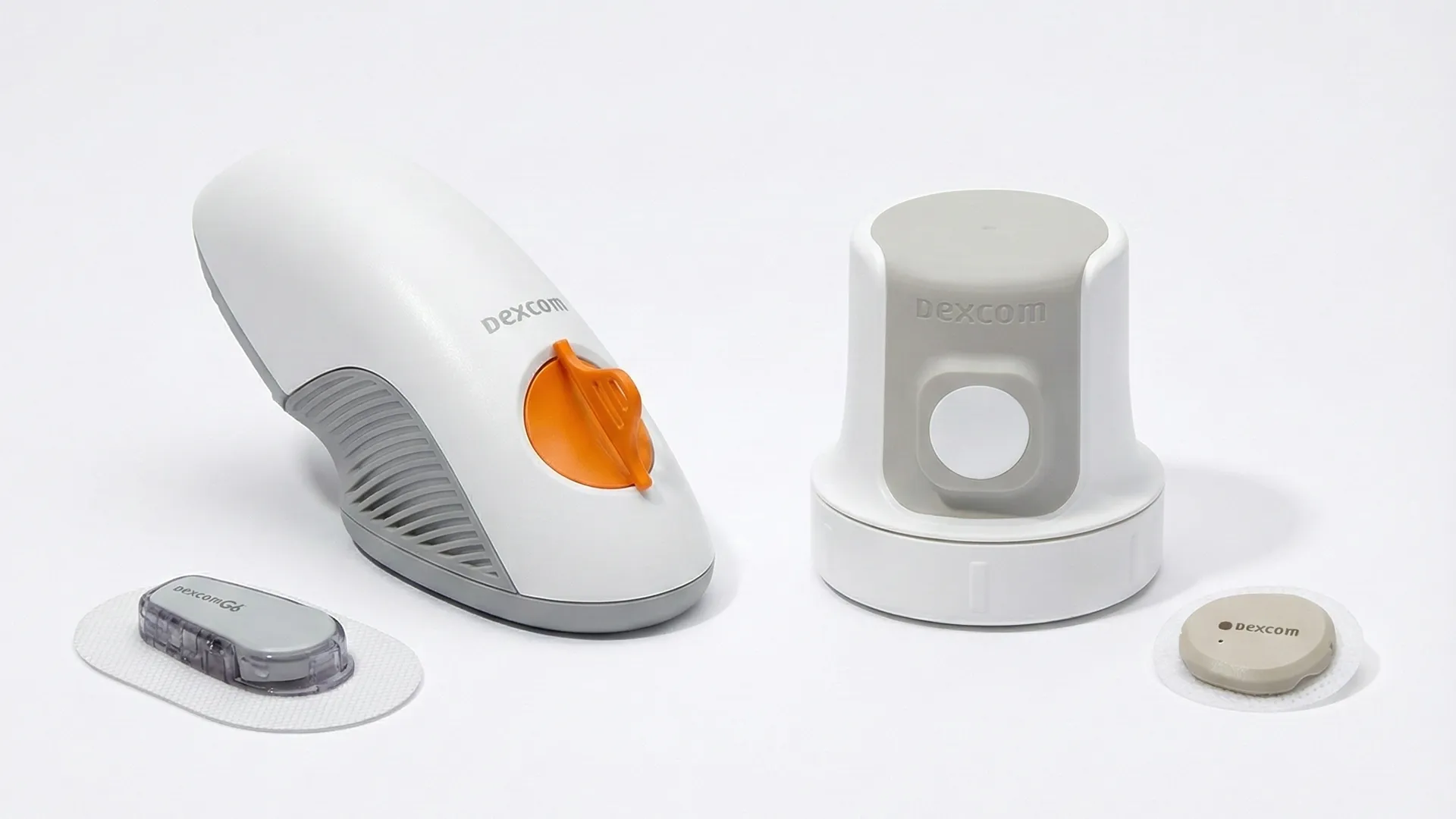
Dexcom, together with Triple Ring, developed and optimized a fully automated one-touch deployment mechanism for the award-winning G6 platform. Five years later, the G7 successor introduced a completely redesigned applicator that combined deployment of the wearable and sensor into a single step, reflecting continued advances in device integration and usability.
Triple Ring’s analytical and empirical strategies resolved undesirable device behaviors, improved model accuracy, and ensured robust product performance. These efforts significantly reduced time to market while enabling reliable, high-volume manufacturing.
The collaboration established Triple Ring as a long-term trusted partner supporting Dexcom’s continued innovation in diabetes management and improving quality of life for millions of patients.
Triple Ring Talent
The Story Behind the Innovation
At Triple Ring, we draw on a deep bench of expertise across diverse disciplines matched to each innovation challenge. For this project, our team combined mechanism analysis, finite-element simulation, system-level modeling, and empirical testing to help Dexcom design and optimize CGM platforms across multiple device generations — shortening timelines and enabling reliable, high-volume manufacturing.
Gabe and Thu collaborated with many talented colleagues across Triple Ring and Dexcom on this project.

Gabriel Chow, PhD
Materials Characterization & Development
Dr. Gabe Chow specializes in materials characterization and mechanical system development across macro to nanoscale environments. His work supports the design, testing, and reliability of advanced materials and mechanical systems, helping translate innovative concepts into durable, real-world solutions.

Thu Nguyen, PhD
Mechanical Systems & Device Development
Dr. Thu Nguyen specializes in human-centered mechanical systems, with expertise in exoskeleton control and movement optimization. Her work focuses on understanding how mechanical design interacts with human performance, helping teams develop solutions that improve function, reliability, and real-world usability.


Key Innovation
A computational leap turned a pocket-sized device into hospital-grade diagnostics.
Cable-Free Synthesized ECG
Client
HeartBeam
Practice Areas
Smart Medical Devices
Core Disciplines
Overview
HeartBeam collaborated with Triple Ring to develop an innovative telehealth solution designed to transform the detection and monitoring of cardiac conditions. The goal was to create a compact, portable cardiac monitoring device capable of collecting ECG signals in three dimensions and synthesizing them into a clinically meaningful 12-lead ECG.
The resulting platform supports remote cardiac monitoring by enabling physicians to access real-time data outside traditional clinical settings, expanding access to cardiac diagnostics and improving patient care workflows.
Challenge
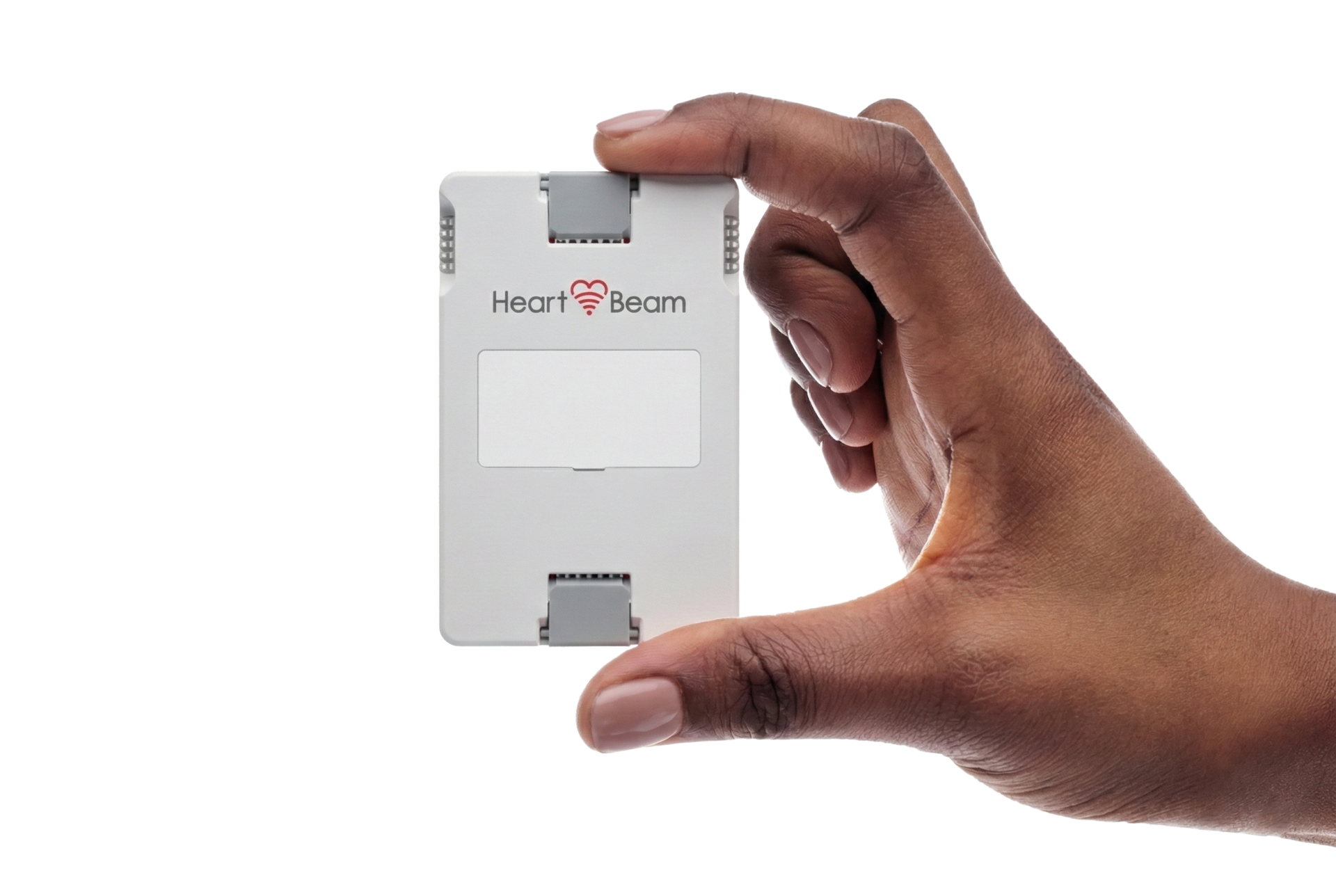
HeartBeam sought to develop a personal, cable-free, and easy-to-use cardiac monitoring solution for both in-clinic and at-home use. The objective was to create a credit card-sized ECG recording device that leverages vectorcardiography (VECG) and integrates with cloud-based software to deliver critical patient data to physicians in real time.
Achieving this required coordinating multidisciplinary device development while meeting regulatory requirements and supporting rapid product development timelines.
Solution
HeartBeam partnered with Triple Ring to execute a comprehensive, five-phase expedited device development program spanning early R&D, industrial design, product development, manufacturing readiness, and regulatory preparation.
Triple Ring applied expertise in wearable medical device design and system integration to develop the cable-free ECG device and supporting ecosystem. The program included device builds for design verification and validation, packaging development, and manufacturing technology transfer to support scalable production.
Key development activities included:
- Designing compact wearable hardware capable of capturing three-dimensional ECG signals
- Integrating smartphone-based communication to transmit data securely
- Developing cloud-connected workflows that enabled remote physician access
- Supporting regulatory preparation for FDA 510(k) submission and validation
Cable-Free Synthesized ECG
Overview
HeartBeam collaborated with Triple Ring to develop an innovative telehealth solution designed to transform the detection and monitoring of cardiac conditions. The goal was to create a compact, portable cardiac monitoring device capable of collecting ECG signals in three dimensions and synthesizing them into a clinically meaningful 12-lead ECG.
The resulting platform supports remote cardiac monitoring by enabling physicians to access real-time data outside traditional clinical settings, expanding access to cardiac diagnostics and improving patient care workflows.
Challenge
HeartBeam sought to develop a personal, cable-free, and easy-to-use cardiac monitoring solution for both in-clinic and at-home use. The objective was to create a credit card-sized ECG recording device that leverages vectorcardiography (VECG) and integrates with cloud-based software to deliver critical patient data to physicians in real time.
Achieving this required coordinating multidisciplinary device development while meeting regulatory requirements and supporting rapid product development timelines.
Solution
HeartBeam partnered with Triple Ring to execute a comprehensive, five-phase expedited device development program spanning early R&D, industrial design, product development, manufacturing readiness, and regulatory preparation.
Triple Ring applied expertise in wearable medical device design and system integration to develop the cable-free ECG device and supporting ecosystem. The program included device builds for design verification and validation, packaging development, and manufacturing technology transfer to support scalable production.
Key development activities included:
- Designing compact wearable hardware capable of capturing three-dimensional ECG signals
- Integrating smartphone-based communication to transmit data securely
- Developing cloud-connected workflows that enabled remote physician access
- Supporting regulatory preparation for FDA 510(k) submission and validation
Client
HeartBeam
Practice Areas
Smart Medical Devices
Core Disciplines
Software Engineering
AI & Advanced Algorithms
Mechanical Engineering
Systems Engineering
Electrical Engineering
Industrial Design
Outcome
The HeartBeam–Triple Ring collaboration produced a personal, cable-free synthesized 12-lead ECG solution that enables patients to record cardiac data at home. The device integrates with a smartphone application that communicates with the HeartBeam Cloud, where synthesized ECG data is compared with baseline records and made available to physicians remotely.
This multidisciplinary and fast-paced program resulted in a successful 510(k) submission to the U.S. Food and Drug Administration (FDA) and regulatory clearance in 2024 for the hardware that leverages vectorcardiography and collects 3D ECG data. The synthesized 12-lead ECG algorithm remains pending FDA clearance.
The completed system enables physicians to remotely monitor cardiac conditions and guide patient care outside traditional healthcare facilities, supporting new models of telehealth-enabled cardiac diagnostics.
Triple Ring Talent
The Story Behind the Innovation
At Triple Ring, we draw on a deep bench of expertise across diverse disciplines matched to each innovation challenge. For this project, our team applied expertise in wearable medical device design, system integration, and regulatory strategy to deliver a cable-free, credit card-sized ECG device — from early R&D through successful FDA 510(k) clearance in 2024.
Walt and Kevin collaborated with many talented colleagues across Triple Ring and HeartBeam on this project.

Walt Cecka
Medical Device Design & Translational Medicine
Walt Cecka brings decades of experience translating novel medical technologies into first-to-market products. He works closely with innovators to shape early concepts into structured development programs that advance patient care across a wide range of clinical applications.

Kevin Dunk
Mechanical & Aerospace Engineering
Kevin Dunk brings expertise in mechanical engineering and multidisciplinary product development across the full device lifecycle. His work supports teams from early prototypes through verification and manufacturing, helping ensure systems are reliable, scalable, and ready for real-world use.


Key Innovation
Tissue compensation algorithms brought real-time StO₂ monitoring into the OR.
Real-Time Tissue Oxygenation Status
Client
ViOptix
Practice Areas
Smart Medical Devices
Core Disciplines
Overview
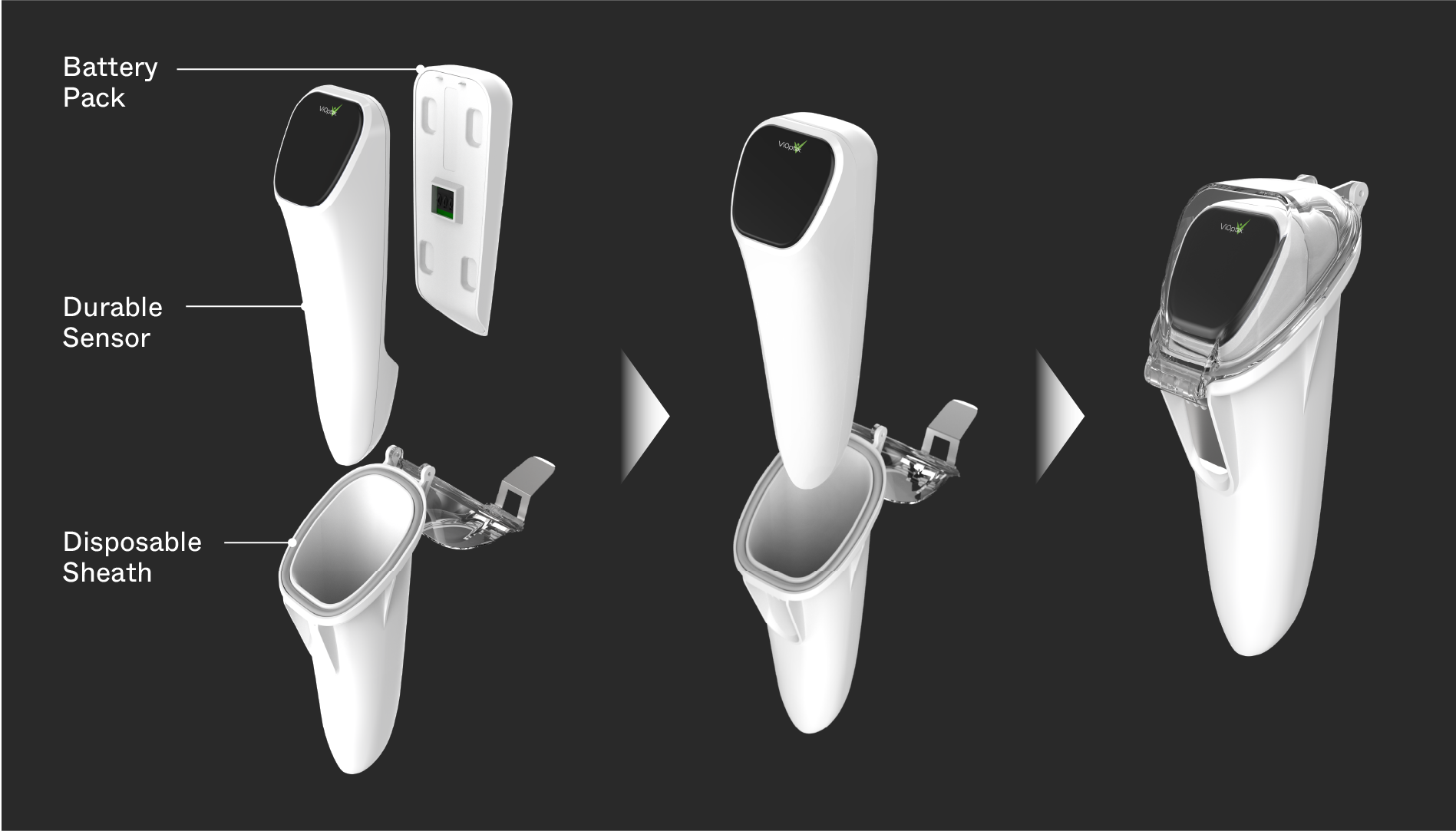
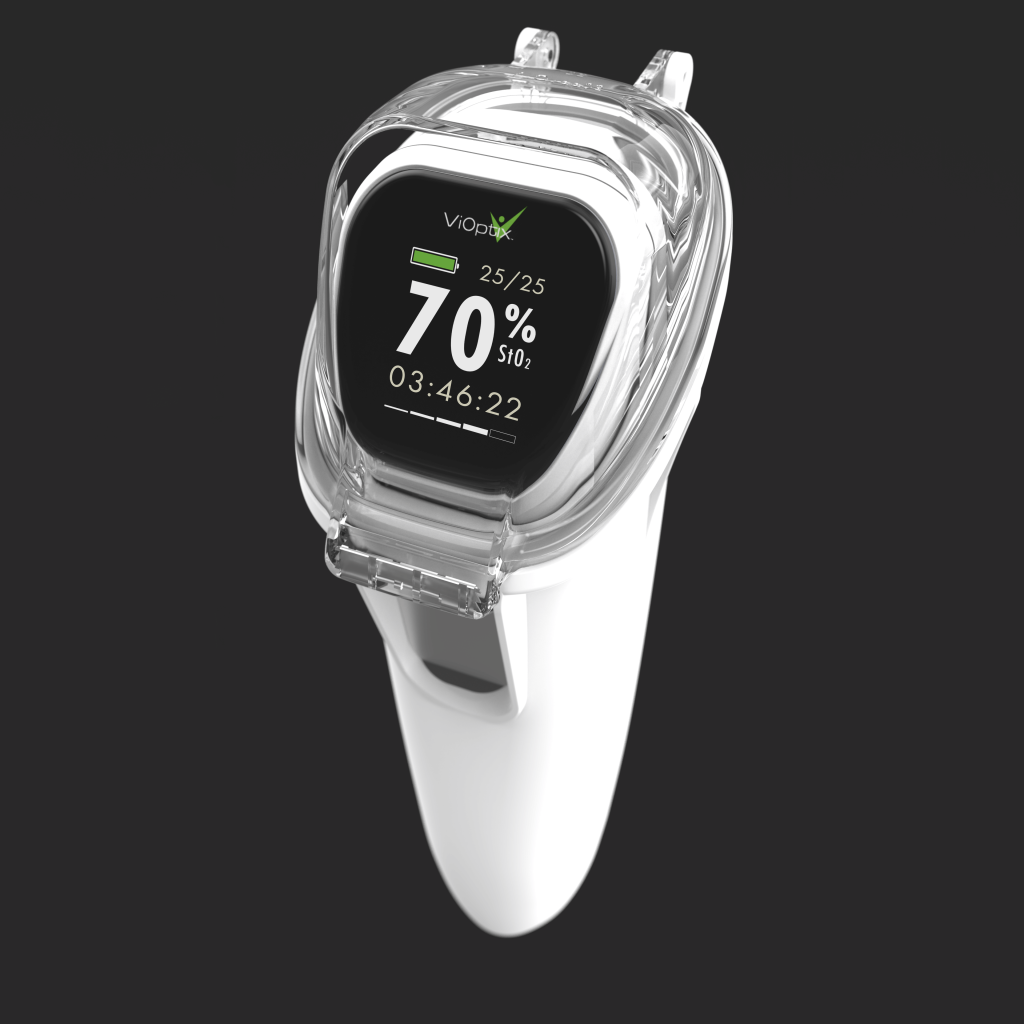
ViOptix collaborated with Triple Ring to design and develop the Intra.Ox™, a non-invasive, handheld tissue oxygenation monitor designed for use inside the surgical theater. The device enables real-time measurement of tissue oxygenation, helping surgeons assess tissue viability and make informed decisions during procedures.
By combining optical sensing technology with advanced algorithms and a portable handheld design, the system supports improved surgical workflows and enhances clinical decision-making during tissue transfer procedures.
Challenge
ViOptix sought to develop a quantitative tissue oxygenation monitor capable of delivering real-time, highly sensitive measurements in a surgical environment. The system needed to be easy to use, reliable, and capable of generating unlimited readings throughout a surgical case.
Key technical challenges included:
- Designing an easy-to-use multi-wavelength tissue oximeter
- Developing smart algorithms to compensate for variable tissue morphologies
- Creating a compact handheld form factor suitable for surgical use
- Supporting reusable packaging and surgical workflows
- Ensuring consistent performance across varying tissue conditions
In addition, the system needed to accurately capture oxygen concentration in resected tissue while minimizing artifacts caused by surrounding tissue components.
Real-Time Tissue Oxygenation Status
Overview
ViOptix collaborated with Triple Ring to design and develop the Intra.Ox™, a non-invasive, handheld tissue oxygenation monitor designed for use inside the surgical theater. The device enables real-time measurement of tissue oxygenation, helping surgeons assess tissue viability and make informed decisions during procedures.
By combining optical sensing technology with advanced algorithms and a portable handheld design, the system supports improved surgical workflows and enhances clinical decision-making during tissue transfer procedures.
Challenge
ViOptix sought to develop a quantitative tissue oxygenation monitor capable of delivering real-time, highly sensitive measurements in a surgical environment. The system needed to be easy to use, reliable, and capable of generating unlimited readings throughout a surgical case.
Key technical challenges included:
- Designing an easy-to-use multi-wavelength tissue oximeter
- Developing smart algorithms to compensate for variable tissue morphologies
- Creating a compact handheld form factor suitable for surgical use
- Supporting reusable packaging and surgical workflows
- Ensuring consistent performance across varying tissue conditions
In addition, the system needed to accurately capture oxygen concentration in resected tissue while minimizing artifacts caused by surrounding tissue components.
Client
ViOptix
Practice Areas
Smart Medical Devices
Core Disciplines
Systems Engineering
Transfer to Manufacture
Electrical Engineering
Optical Science
Photonics & Imaging
Quality System Management
Embedded Systems

Solution
Triple Ring and ViOptix worked side-by-side to invent subsystem- and system-level solutions that enabled reliable real-time tissue oxygenation monitoring. The development effort spanned concept generation through clinical validation, with a strong emphasis on modeling, algorithm design, and usability.
Triple Ring applied deep clinical and technical expertise to accelerate development while supporting the needs of a virtual startup environment. Complex modeling techniques, including Monte Carlo simulations, were used to evaluate optical performance and optimize system behavior early in the design process.
Engineering efforts focused on:
- Designing multi-wavelength optical sensing systems capable of detecting tissue oxygenation levels
- Developing algorithms that compensated for variability in tissue characteristics
- Optimizing handheld system architecture to support surgical usability
- Validating measurement accuracy across simulated clinical environments
Outcome
The ViOptix Intra.Ox technology received FDA clearance after demonstrating its ability to produce accurate, instantaneous estimates of percent saturated oxygen (StO₂) without requiring capital equipment or dye injection.
The device is now used during tissue transfer surgeries to support real-time assessment of tissue viability, enabling earlier intervention and improving both clinical and financial outcomes. The program progressed from concept to clinical validation and FDA 510(k) clearance in approximately 18 months, demonstrating the efficiency of the collaborative development approach.
Triple Ring Talent
The Story Behind the Innovation
At Triple Ring, we draw on a deep bench of expertise across diverse disciplines matched to each innovation challenge. For this project, our team combined advanced optical modeling, Monte Carlo simulation, algorithm development, and user-centered device design to bring a first-of-its-kind handheld tissue oxygenation monitor from concept to FDA clearance in just 18 months.
Jeremy and Nick collaborated with many talented colleagues across Triple Ring and ViOptix on this project.

Nick Hawson
Medical Device Strategy & Program Leadership
With 25 years spanning engineering, program leadership, and innovation consulting, Nick has helped bring groundbreaking medical technologies to market for companies ranging from early-stage startups to global blue-chip firms.

Jeremy Ford, PhD
Biomedical Optics & Physiological Sensing
Dr. Jeremy Ford brings a decade of biomedical optics expertise — from tissue-illumination systems and physiological sensing to optical-thermal simulation and neural inhibition — backed by a Vanderbilt PhD and extensive peer-reviewed research.

Key Innovation
First-principles robotics delivered precise motion control inside an MRI.
MRI-Compatible Robotics
Client
AiM Medical Robotics
Practice Areas
Smart Medical Devices
TechBio & Life Sciences
Core Disciplines
Overview
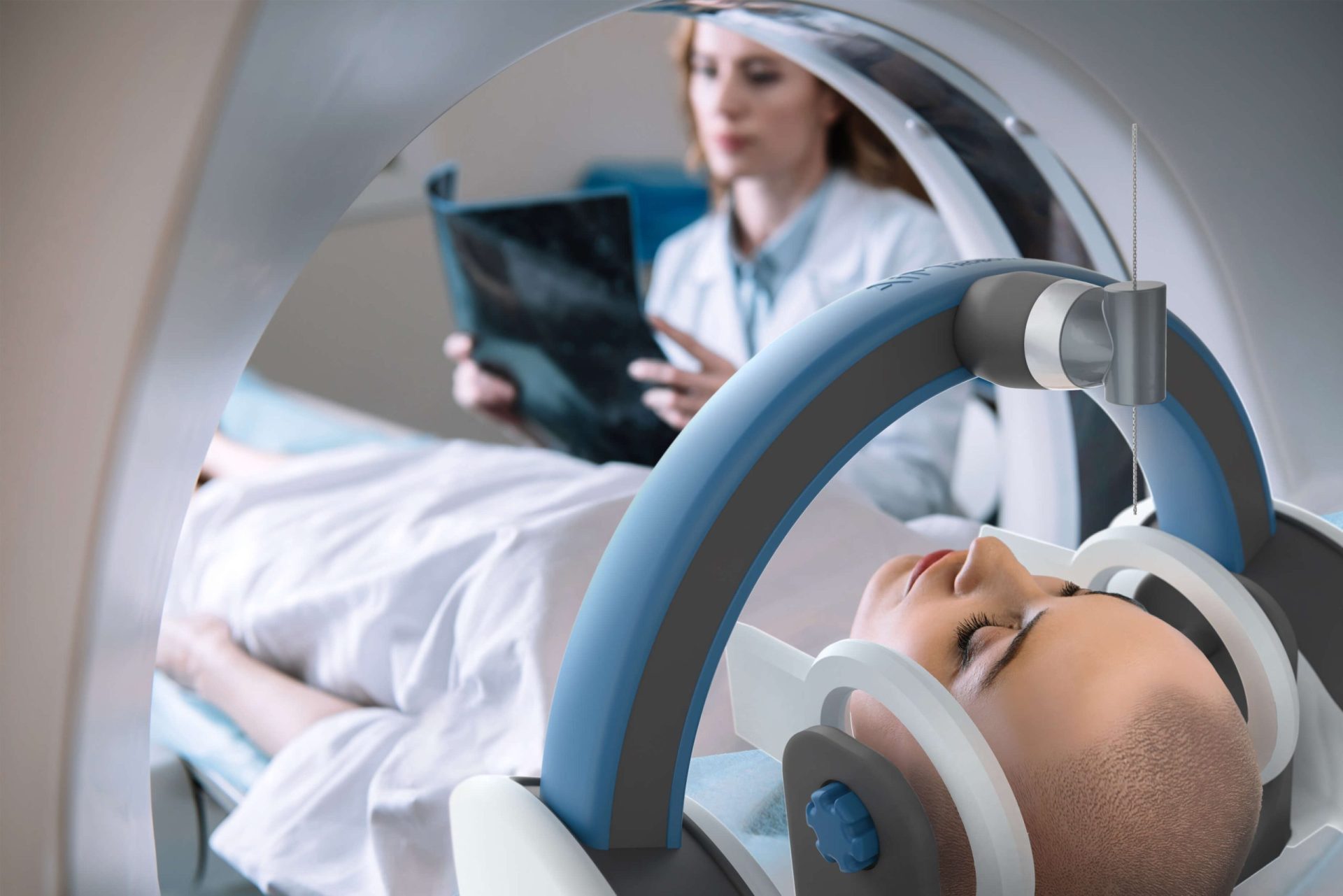
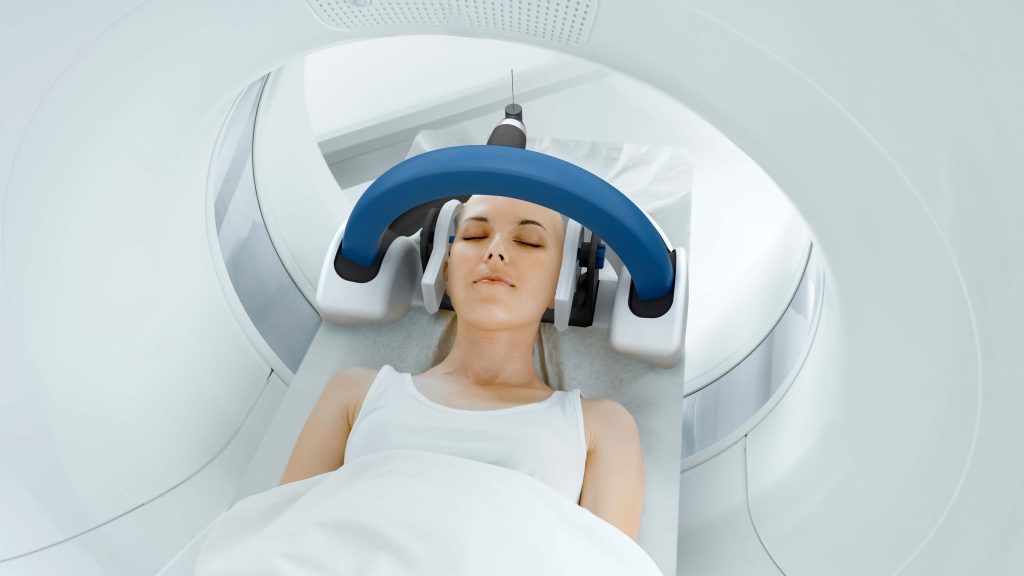
AiM Medical Robotics engaged Triple Ring to develop a portable robotic system capable of performing neurosurgical procedures simultaneously with magnetic resonance imaging (MRI).
The resulting prototype established the technical foundation for an MRI-compatible robotic platform designed to support image-guided neurosurgery.
Challenge
MRI environments rely on strong magnetic fields that prohibit the use of ferromagnetic materials commonly found in traditional robotic systems. Additionally, the limited physical space inside MRI systems imposed strict form factor constraints.
These requirements demanded innovative design strategies to enable reliable robotic motion and positioning inside the MRI environment.
Solution
Triple Ring applied first-principles engineering and multidisciplinary design expertise to create an MRI-compatible robotic system.
Key elements of the solution included:
- Design of multi-axis robotic systems optimized for MRI environments
- Application of MRI physics principles to guide system architecture
- Development of MRI-compatible components and assemblies
- Rapid prototyping and testing to validate system performance
- Engineering solutions addressing constrained spatial and material limitations
MRI-Compatible Robotics
Overview
AiM Medical Robotics engaged Triple Ring to develop a portable robotic system capable of performing neurosurgical procedures simultaneously with magnetic resonance imaging (MRI).
The resulting prototype established the technical foundation for an MRI-compatible robotic platform designed to support image-guided neurosurgery.
Challenge
MRI environments rely on strong magnetic fields that prohibit the use of ferromagnetic materials commonly found in traditional robotic systems. Additionally, the limited physical space inside MRI systems imposed strict form factor constraints.
These requirements demanded innovative design strategies to enable reliable robotic motion and positioning inside the MRI environment.
Solution
Triple Ring applied first-principles engineering and multidisciplinary design expertise to create an MRI-compatible robotic system.
Key elements of the solution included:
- Design of multi-axis robotic systems optimized for MRI environments
- Application of MRI physics principles to guide system architecture
- Development of MRI-compatible components and assemblies
- Rapid prototyping and testing to validate system performance
- Engineering solutions addressing constrained spatial and material limitations
Client
AiM Medical Robotics
Practice Areas
Smart Medical Devices
TechBio & Life Sciences
Core Disciplines
Mechanical Engineering
Quality System Management
Outcome
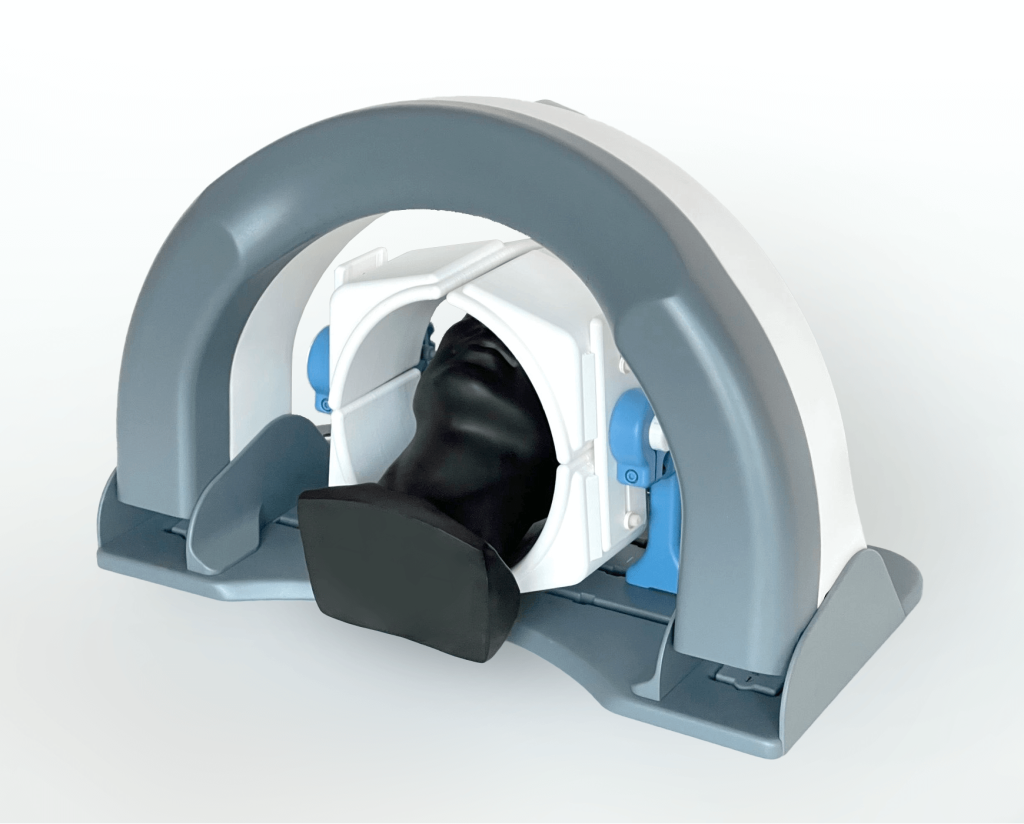
The collaboration produced a prototype robotic system with four degrees of freedom, establishing the basis for AiM Medical Robotics’ MRI-compatible neurosurgical platform.
The system demonstrated the feasibility of robotic-assisted neurosurgery within MRI environments and enabled further development of image-guided surgical technologies.
Triple Ring Talent
The Story Behind the Innovation
At Triple Ring, we draw on a deep bench of expertise across diverse disciplines matched to each innovation challenge. For this project, our team applied MRI physics, multidisciplinary robotic design, and rapid prototyping to develop a four-axis robotic system capable of performing neurosurgical procedures inside a live MRI environment.
Chris and Chris collaborated with many talented colleagues across Triple Ring and AiM Medical Products on this project.
Chris Mitchell, PhD
Bio and Electrical Engineering & Program Management
Dr. Chris Mitchell brings deep experience leading multidisciplinary teams developing complex imaging and medical device systems. His work focuses on guiding technical programs from concept through implementation, helping translate advanced technologies into reliable, real-world solutions.

Chris Todd
Mechanical Engineering
Chris Todd focuses on biomedical diagnostics and precision instrumentation, integrating fluidics, optics, and mechanical systems. His work supports the development of regulated medical technologies from early concepts through manufacturing, helping teams deliver reliable diagnostic solutions at scale.

Key Innovation
Monte Carlo physics in the cloud turned sterilization planning into an early design input.
Design for Sterilization (DFS)
Client
Dose Insight
Practice Areas
Smart Medical Devices
Core Disciplines
Overview
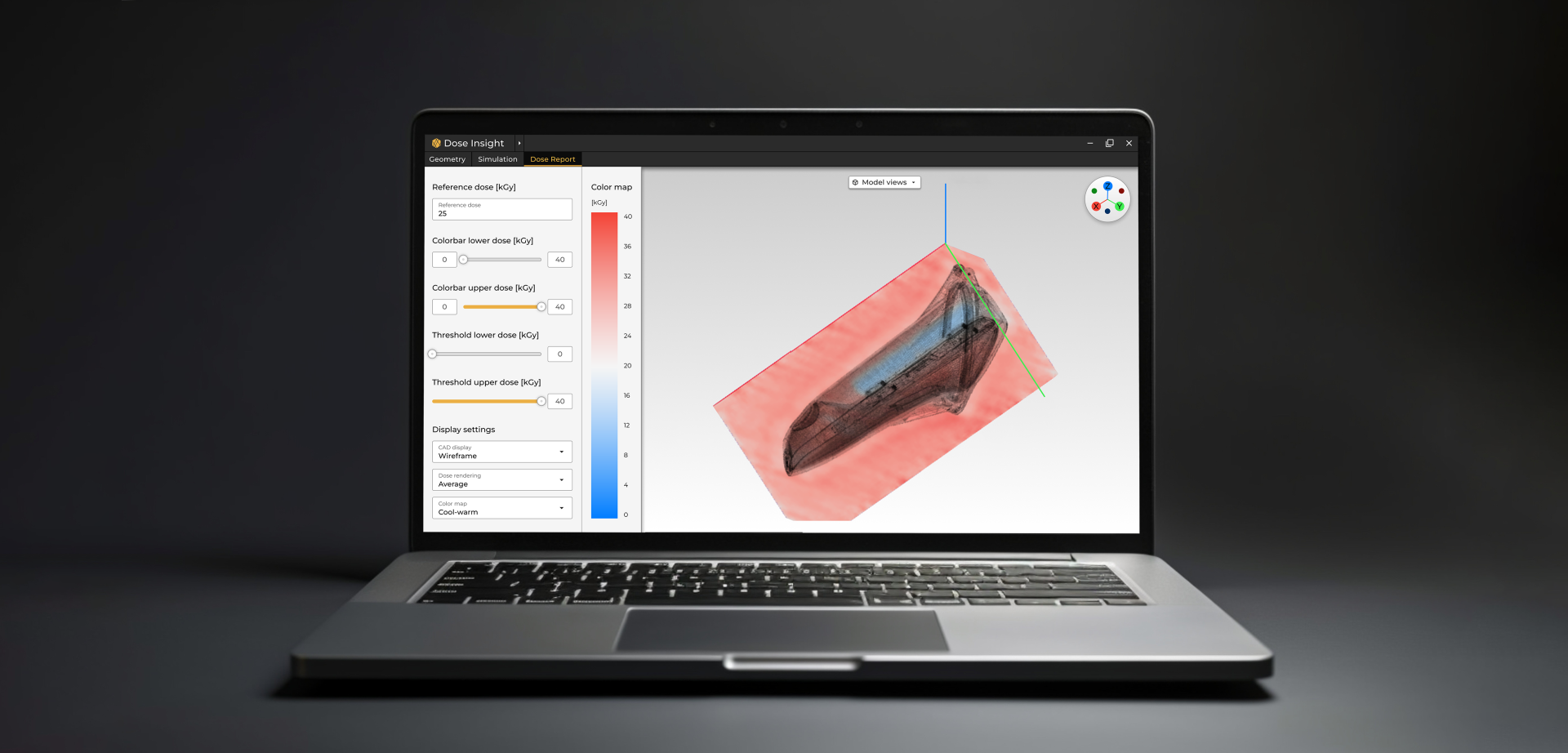
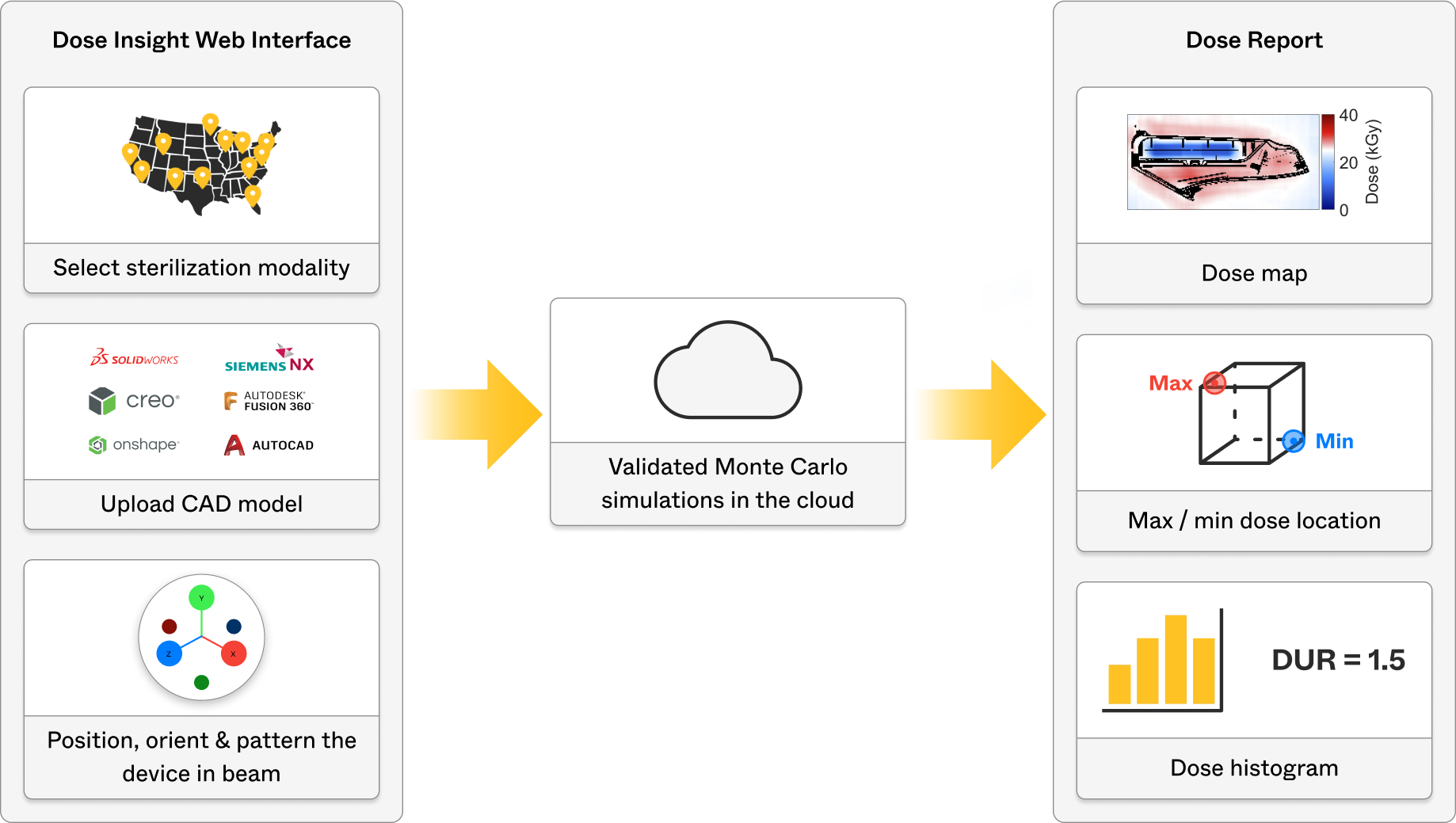
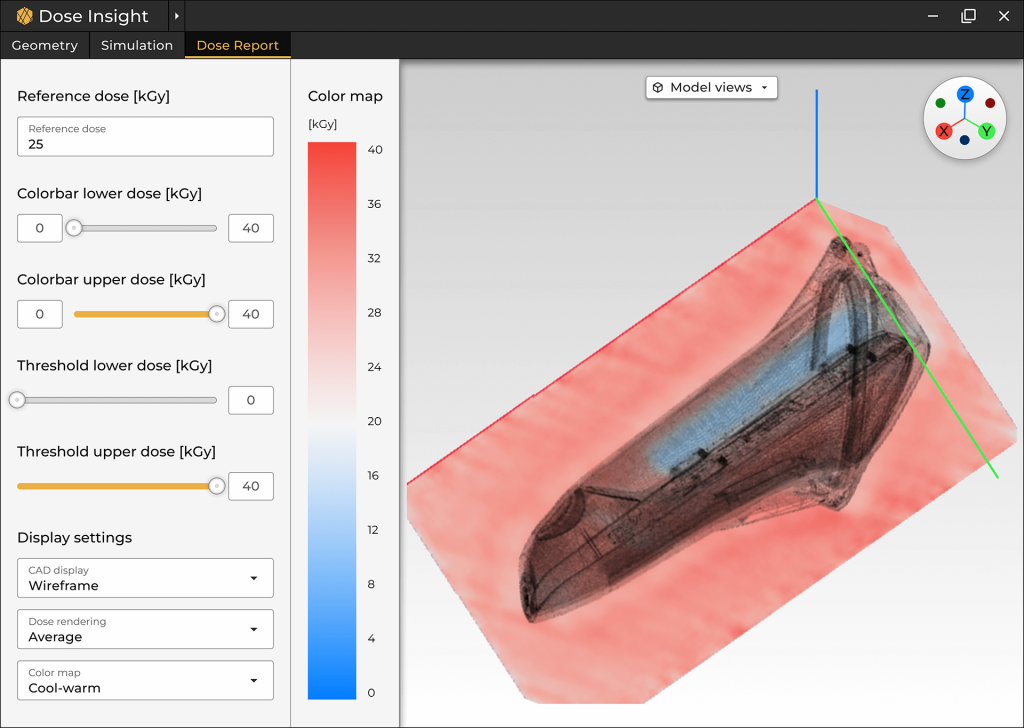
Dose Insight partnered with Triple Ring to develop Design for Sterilization (DFS), a simulation platform designed to support early-stage sterilization planning in medical device development. The system leverages Monte Carlo simulation technology to model radiation dose distribution and guide sterilization strategies before physical prototypes are built.
The platform enables engineers to evaluate sterilization performance directly from CAD models, supporting faster development timelines and reducing reliance on late-stage empirical testing.
Challenge
Medical device sterilization validation is often addressed late in the product development process, after devices have been fully designed and manufactured. When sterilization issues arise at that stage, they can introduce significant costs, delays, and redesign requirements.
The goal was to determine whether advanced computer modeling could enable sterilization strategy development earlier in the design cycle. This required creating accurate Monte Carlo simulation tools that were powerful enough for complex modeling, yet intuitive enough for non-expert users to operate effectively.
Design for Sterilization (DFS)
Overview
Dose Insight partnered with Triple Ring to develop Design for Sterilization (DFS), a simulation platform designed to support early-stage sterilization planning in medical device development. The system leverages Monte Carlo simulation technology to model radiation dose distribution and guide sterilization strategies before physical prototypes are built.
The platform enables engineers to evaluate sterilization performance directly from CAD models, supporting faster development timelines and reducing reliance on late-stage empirical testing.
Challenge
Medical device sterilization validation is often addressed late in the product development process, after devices have been fully designed and manufactured. When sterilization issues arise at that stage, they can introduce significant costs, delays, and redesign requirements.
The goal was to determine whether advanced computer modeling could enable sterilization strategy development earlier in the design cycle. This required creating accurate Monte Carlo simulation tools that were powerful enough for complex modeling, yet intuitive enough for non-expert users to operate effectively.
Client
Dose Insight
Practice Areas
Smart Medical Devices
Core Disciplines
Software Engineering
AI & Advanced Algorithms
Photonics & Imaging
Applied Physics
Solution
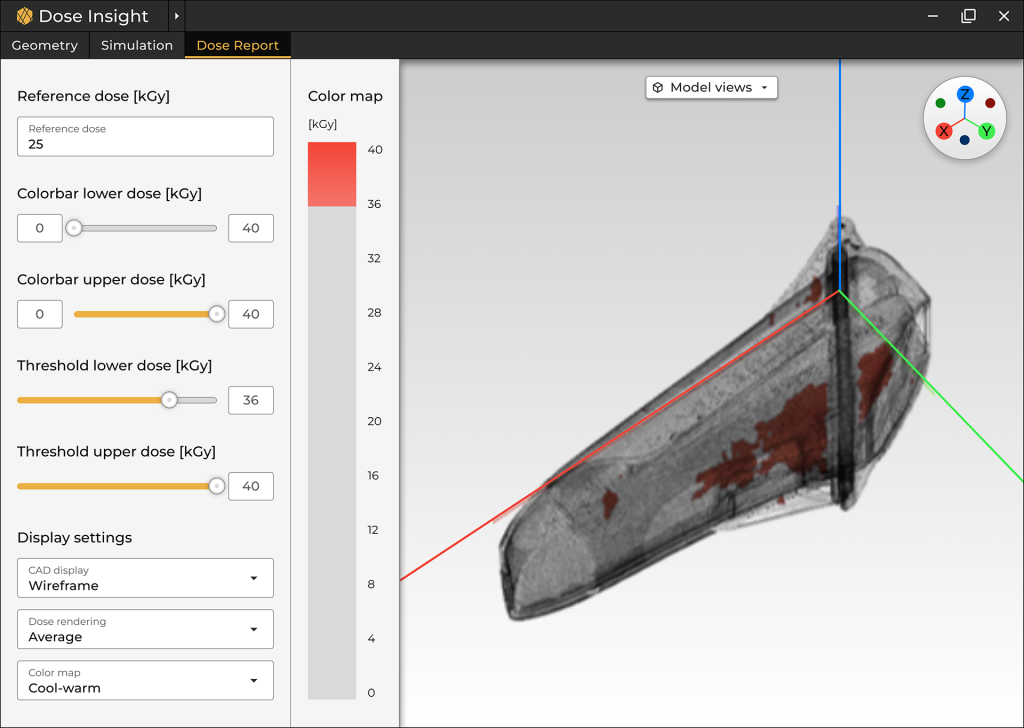
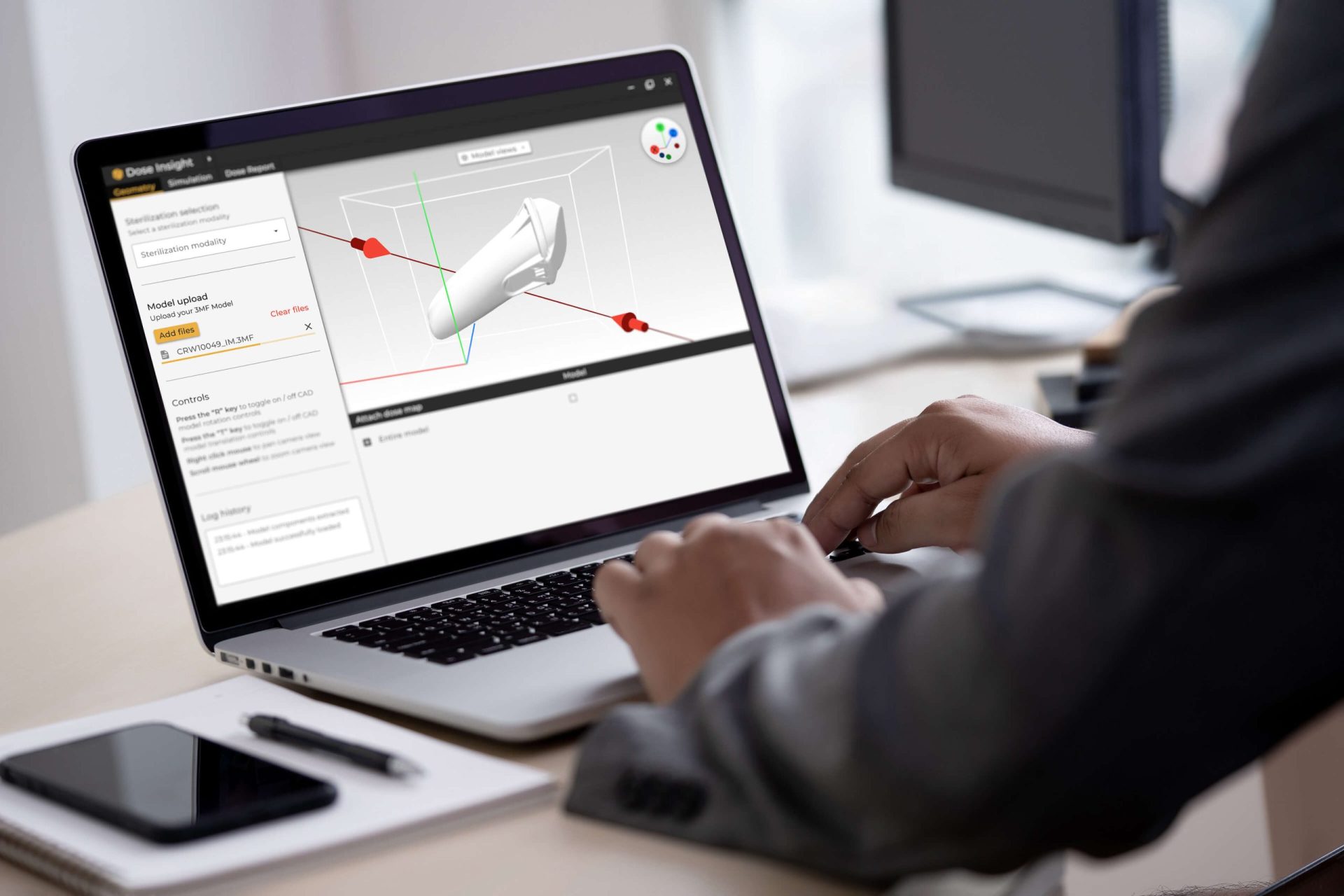
Triple Ring developed a simulation-driven platform that integrates advanced radiation modeling with user-friendly software workflows. The system enables users to simulate radiation sterilization scenarios directly from digital models, allowing teams to refine designs before committing to costly manufacturing steps.
Development focused on:
- Applying Monte Carlo simulation techniques to predict radiation dose distribution
- Designing user-friendly graphical interfaces that enabled early-stage analysis
- Building scalable cloud infrastructure capable of supporting large computational workloads
- Validating platform performance across multiple sterilization technologies
Outcome
The DFS platform significantly shortened medical device development cycles by enabling sterilization strategies to be implemented early in the design process. The system provides precise radiation dose mapping for complex medical devices, allowing teams to evaluate sterilization performance before physical testing.
By enabling iterative design refinement without extensive prototyping, the platform reduced development costs and minimized the need for expensive late-stage testing. The resulting technology established a validated approach to integrating sterilization planning into early product design workflows.
Triple Ring Talent
The Story Behind the Innovation
At Triple Ring, we draw on a deep bench of expertise across diverse disciplines matched to each innovation challenge. For this project, our team combined Monte Carlo simulation, applied radiation physics, software engineering, and cloud infrastructure expertise to develop a platform that enables medical device teams to validate sterilization strategies directly from CAD models — before a single prototype is built.
Daniel and Tobias collaborated with many talented colleagues across Triple Ring and Dose Insight on this project.

Daniel Badali, PhD
Optics & Applied Physics
Dr. Daniel Badali brings deep expertise in advanced algorithms, optics, and radiation physics. His work bridges software and hardware, enabling complex simulation, imaging, and sterilization technologies that help turn sophisticated concepts into reliable medical solutions.

Tobias Funk, PhD
Experimental Physics & Instrumentation
Dr. Tobias Funk develops advanced instrumentation that applies ionizing radiation to scientific and medical challenges. His work spans imaging, simulation, and system design, helping translate complex physical principles into practical technologies used in real-world environments.


Key Innovation
Wearable optics and injectable dyes enabled continuous kidney monitoring without blood draws.
Transdermal GFR Measurement
Client
MediBeacon
Practice Areas
Smart Medical Devices
Core Disciplines
Overview
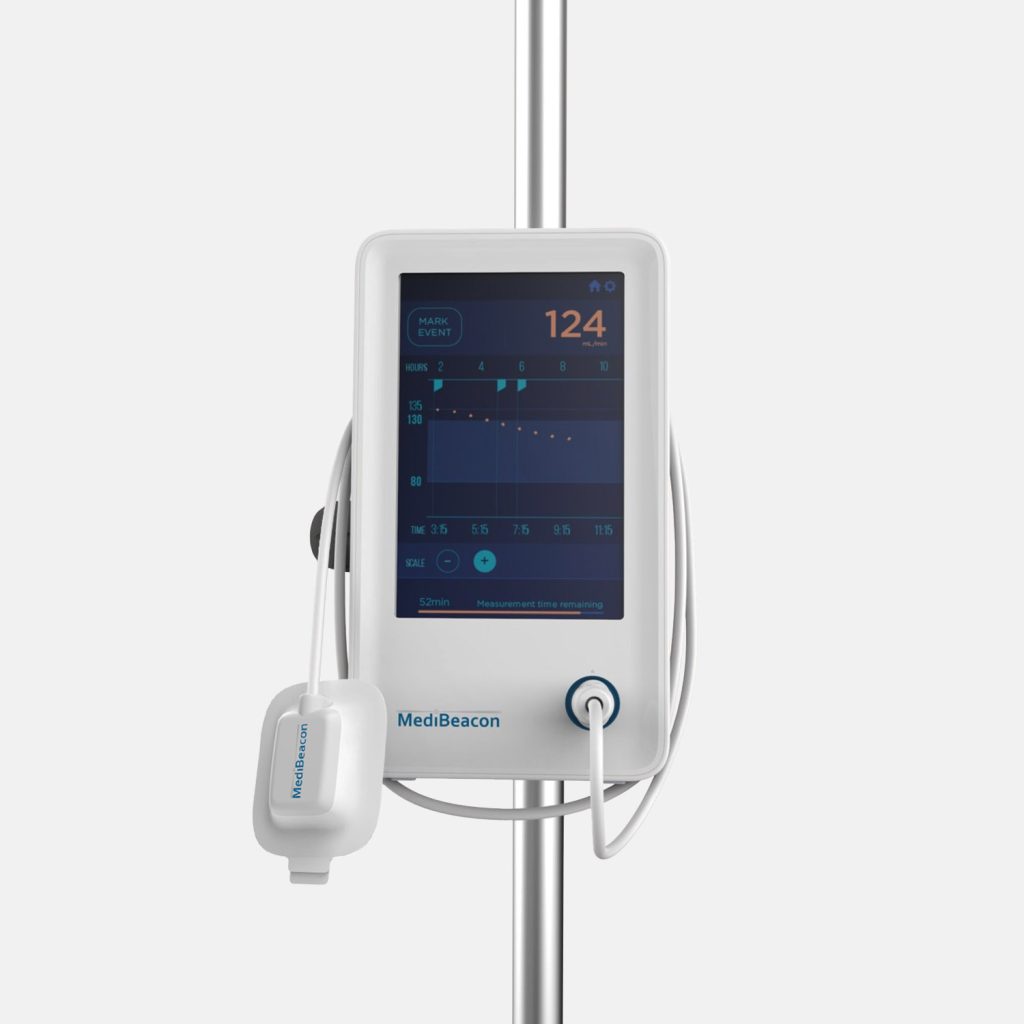
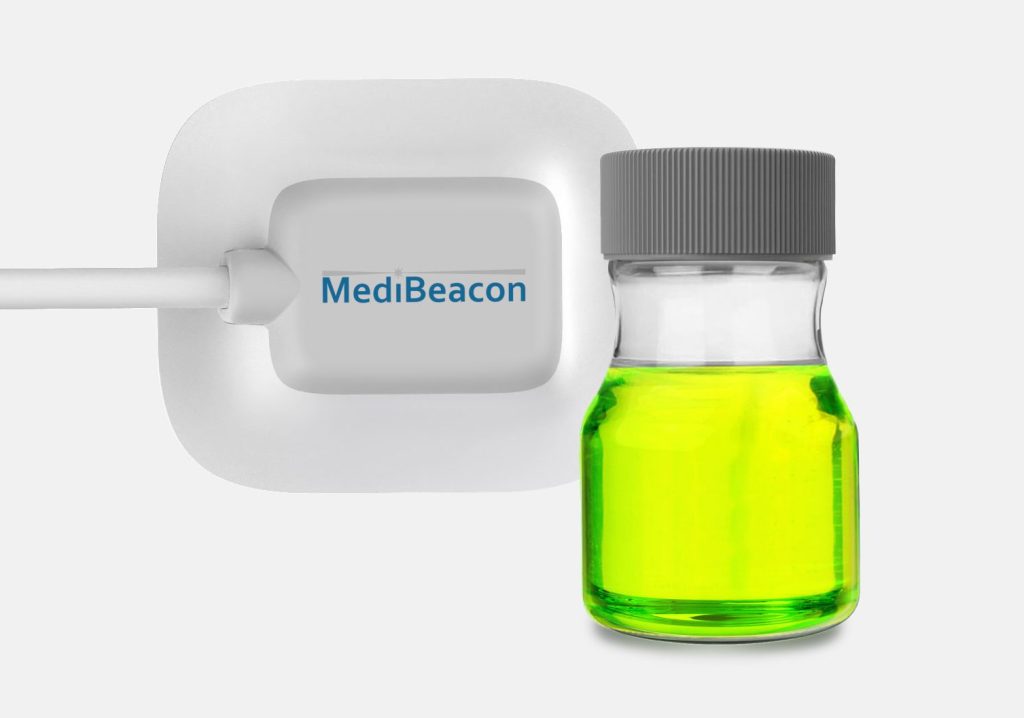
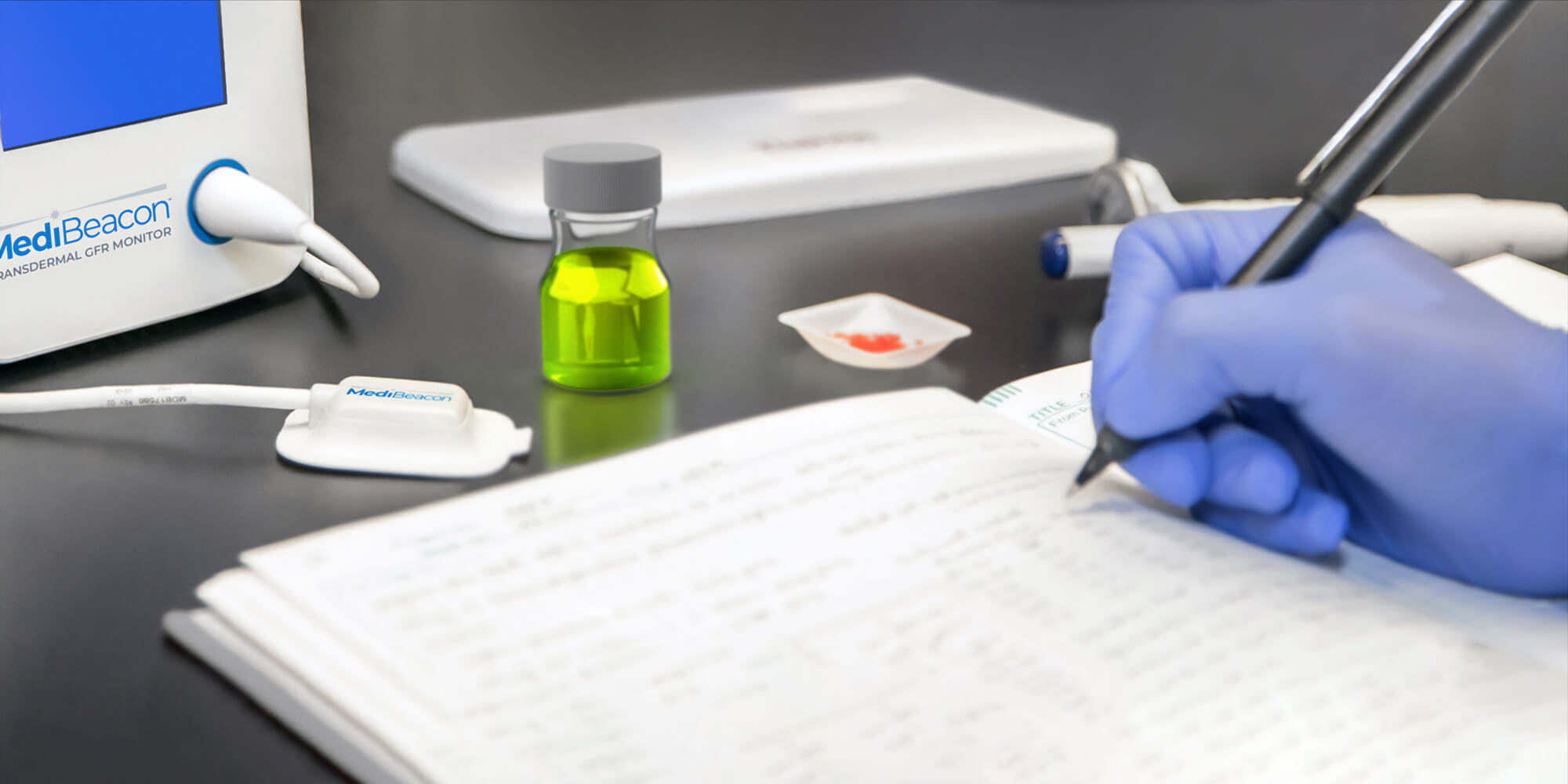
MediBeacon partnered with Triple Ring to develop a photonics-based transdermal detection system designed to measure kidney function using fluorescent tracer technology. The system enables non-invasive monitoring of intravenously injected tracers to generate clinically actionable measurements of glomerular filtration rate (GFR).
The resulting wearable detection platform integrates optical sensing and physiological measurement technologies to support real-time kidney function assessment in clinical environments.
Challenge
MediBeacon required development of a wearable optical detection system capable of monitoring fluorescent tracer signals through human tissue. The system needed to achieve high sensitivity and accuracy while remaining comfortable and practical for clinical use.
In addition to performance requirements, the device needed to meet strict constraints related to cost, usability, and manufacturability. The development effort required careful balancing of optical performance, ergonomic design, and regulatory compliance within a wearable form factor.
Transdermal GFR Measurement
Overview
MediBeacon partnered with Triple Ring to develop a photonics-based transdermal detection system designed to measure kidney function using fluorescent tracer technology. The system enables non-invasive monitoring of intravenously injected tracers to generate clinically actionable measurements of glomerular filtration rate (GFR).
The resulting wearable detection platform integrates optical sensing and physiological measurement technologies to support real-time kidney function assessment in clinical environments.
Challenge
MediBeacon required development of a wearable optical detection system capable of monitoring fluorescent tracer signals through human tissue. The system needed to achieve high sensitivity and accuracy while remaining comfortable and practical for clinical use.
In addition to performance requirements, the device needed to meet strict constraints related to cost, usability, and manufacturability. The development effort required careful balancing of optical performance, ergonomic design, and regulatory compliance within a wearable form factor.
Client
MediBeacon
Practice Areas
Smart Medical Devices
Core Disciplines
AI & Advanced Algorithms
Mechanical Engineering
Systems Engineering
Electrical Engineering
Industrial Design
Quality System Management
Embedded Systems
Solution
Triple Ring collaborated closely with MediBeacon to design and deliver a non-invasive wearable detection system capable of supporting accurate GFR measurement. The development effort leveraged expertise in light-based tissue analysis and system-level modeling to optimize detection performance while supporting user comfort and clinical usability.
The team addressed these challenges by:
- Applying advanced photonics expertise to optimize signal detection through tissue
- Using modeling and simulation tools to refine optical system performance
- Designing wearable hardware that supported patient comfort during extended use
- Aligning development processes with clinical validation and regulatory expectations
Outcome
Fully integrated wearable GFR detection systems were developed under ISO 13485 design controls and delivered to support critical clinical trials. The resulting devices enabled accurate, non-invasive measurement of kidney function through optical detection of fluorescent tracers.
The platform supported the advancement of MediBeacon’s GFR monitoring technology toward clinical validation, enabling real-time physiological measurement while maintaining patient comfort and usability.
Triple Ring Talent
The Story Behind the Innovation
At Triple Ring, we draw on a deep bench of expertise across diverse disciplines matched to each innovation challenge. For this project, our team combined photonics, transdermal optical sensing, wearable device design, and advanced simulation expertise to develop a clinical-grade wearable system capable of measuring kidney function non-invasively through fluorescent tracer detection.
Gus and Ed collaborated with many talented colleagues across Triple Ring and MediBeacon on this project.
Gus Lowell
Systems Architecture & Electrical Engineering
Augustus “Gus” Lowell defines the architecture of complex software and hardware systems across multidisciplinary programs. His work establishes the frameworks that connect data processing, control, and safety-critical functions, helping ensure technologies operate reliably as integrated systems.

Ed Solomon
Electrical Engineering & Advanced Technologies
Ed Solomon connects advanced engineering with business strategy to help bring innovative technologies into practical use. His work supports system architecture, partnership development, and technology adoption, helping organizations move complex ideas toward successful deployment.


Key Innovation
Biometric sensing redesigned for animal physiology set a new veterinary care standard.
Veterinary Vital Sign Monitor
Client
One Health Group
Practice Areas
Smart Medical Devices
Core Disciplines
Overview
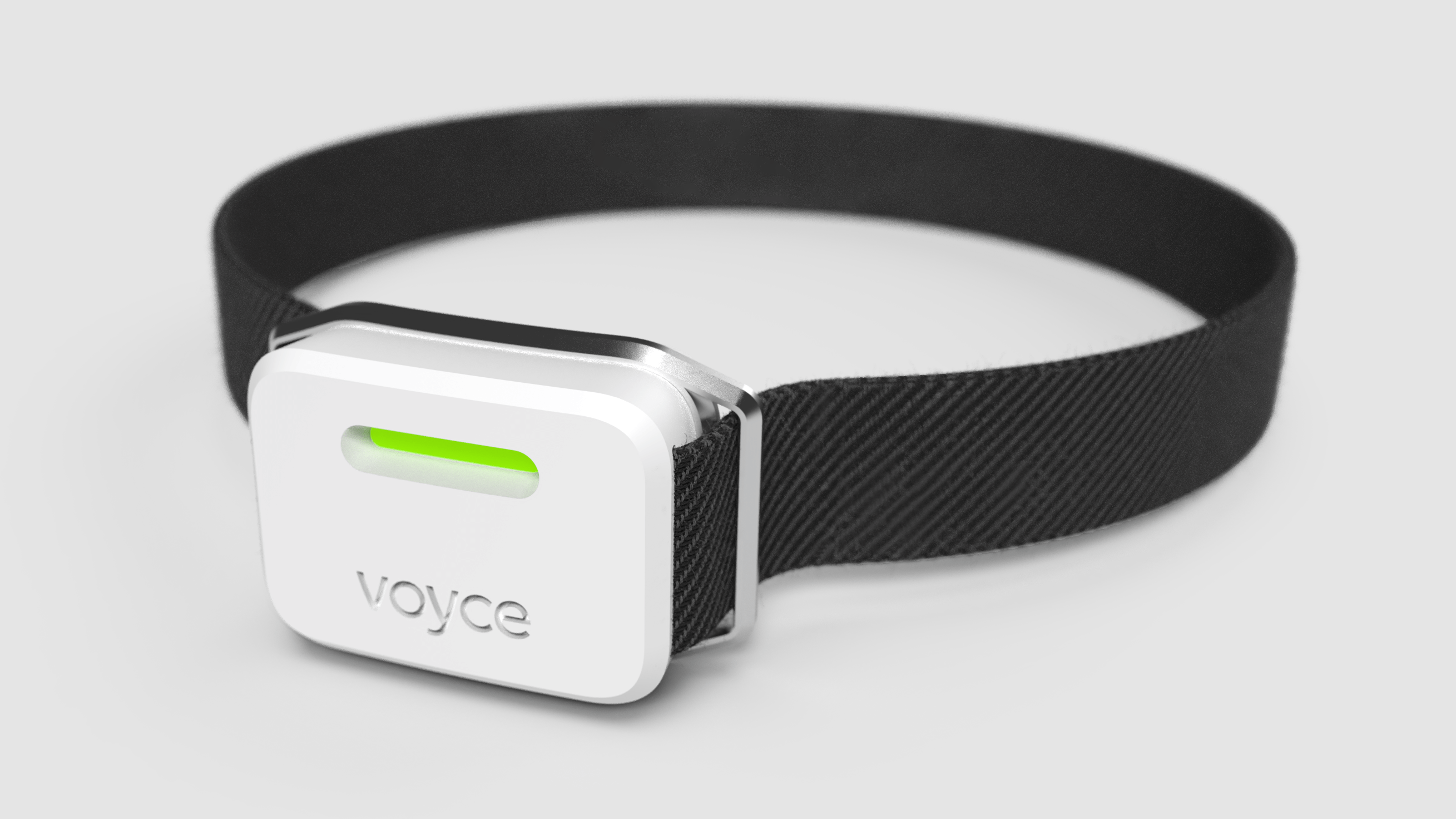
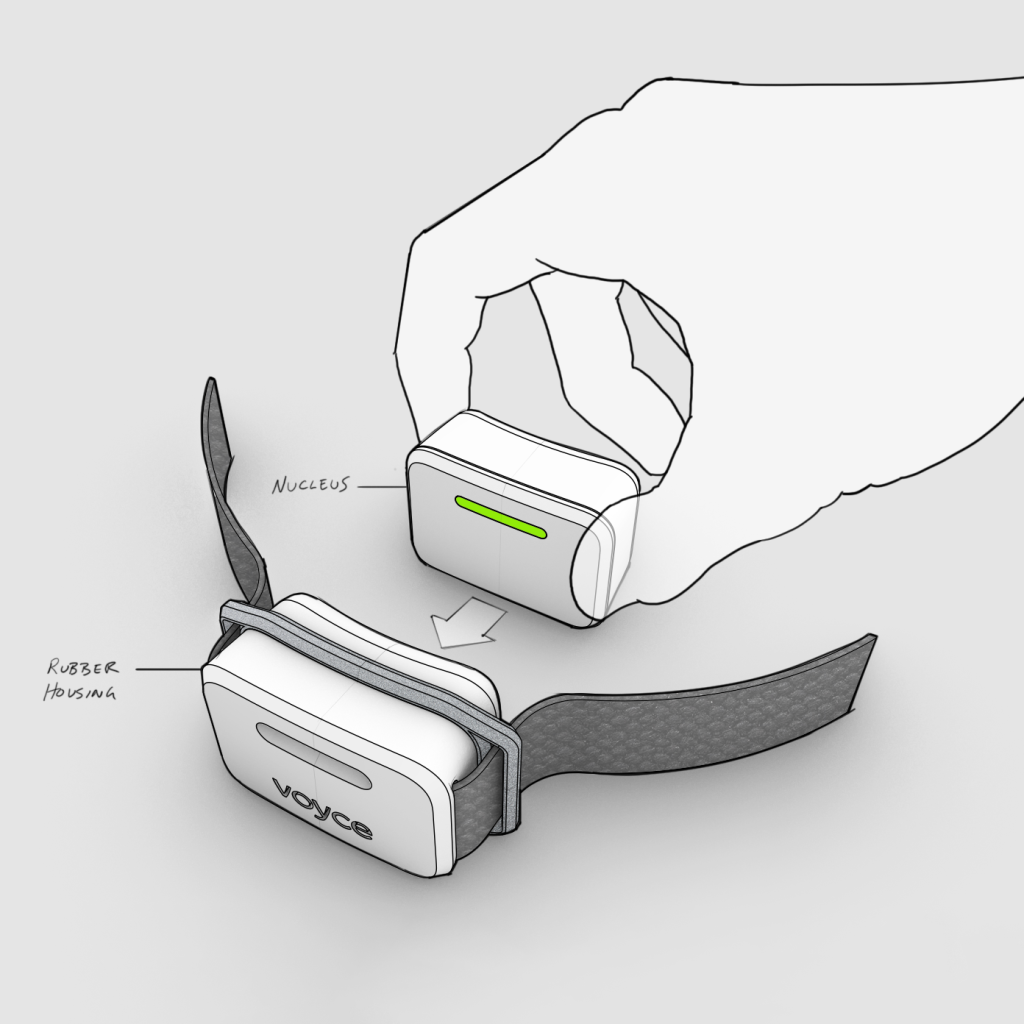
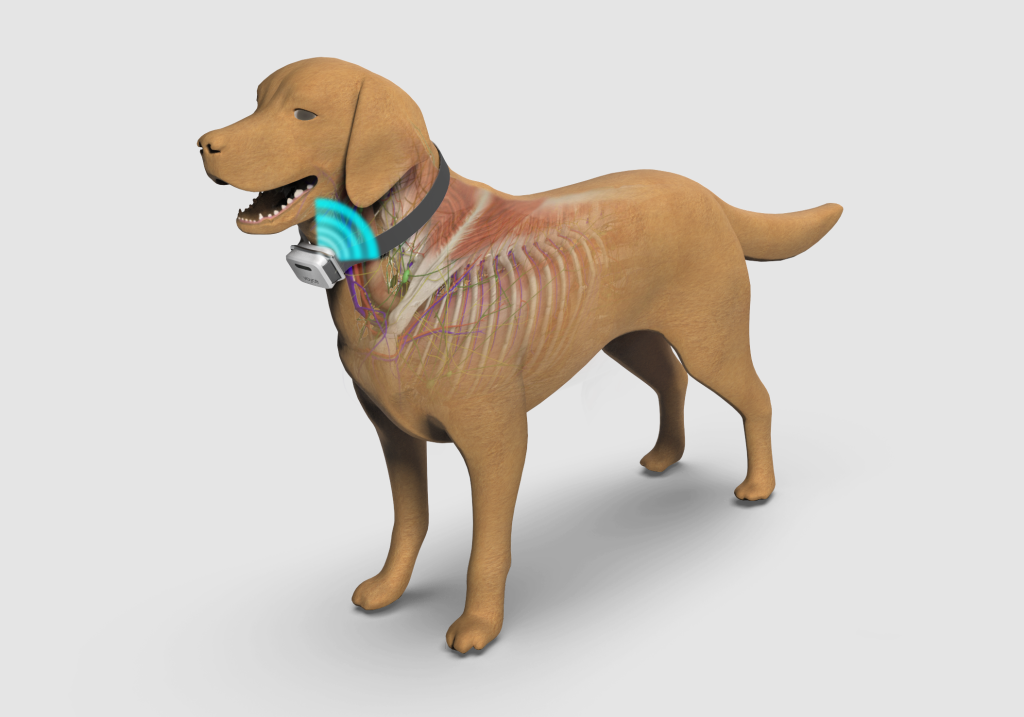
One Health Group partnered with Triple Ring to develop a non-invasive wearable physiological monitoring system designed to capture biometric data from animals in real time. The system was developed to support continuous health monitoring in veterinary settings while improving patient comfort and enabling early detection of health issues.
The resulting wearable platform integrates physiological sensing and wireless communication technologies to enable long-term monitoring and provide actionable health insights for veterinary care providers.
Challenge
One Health Group required development of a wearable monitoring device capable of accurately measuring physiological signals in animals while remaining comfortable and suitable for continuous use. The system needed to support long-term data collection and deliver real-time alerts without interfering with normal animal movement.
As a lean startup organization, One Health Group relied on a fully outsourced R&D model. The project required multidisciplinary engineering expertise to design, prototype, and validate a complex sensing platform while rapidly demonstrating feasibility and reducing development risk.
Veterinary Vital Sign Monitor
Overview
One Health Group partnered with Triple Ring to develop a non-invasive wearable physiological monitoring system designed to capture biometric data from animals in real time. The system was developed to support continuous health monitoring in veterinary settings while improving patient comfort and enabling early detection of health issues.
The resulting wearable platform integrates physiological sensing and wireless communication technologies to enable long-term monitoring and provide actionable health insights for veterinary care providers.
Challenge
One Health Group required development of a wearable monitoring device capable of accurately measuring physiological signals in animals while remaining comfortable and suitable for continuous use. The system needed to support long-term data collection and deliver real-time alerts without interfering with normal animal movement.
As a lean startup organization, One Health Group relied on a fully outsourced R&D model. The project required multidisciplinary engineering expertise to design, prototype, and validate a complex sensing platform while rapidly demonstrating feasibility and reducing development risk.
Client
One Health Group
Practice Areas
Smart Medical Devices
Core Disciplines
Software Engineering
AI & Advanced Algorithms
Mechanical Engineering
Systems Engineering
Transfer to Manufacture
Electrical Engineering
Industrial Design
Embedded Systems
Applied Physics
Solution
Triple Ring led the development of a wearable physiological monitoring platform using a structured feasibility and product development approach. Industrial design, sensing technologies, and system integration were coordinated to ensure reliable performance and comfort across extended wear conditions.
Key contributions included:
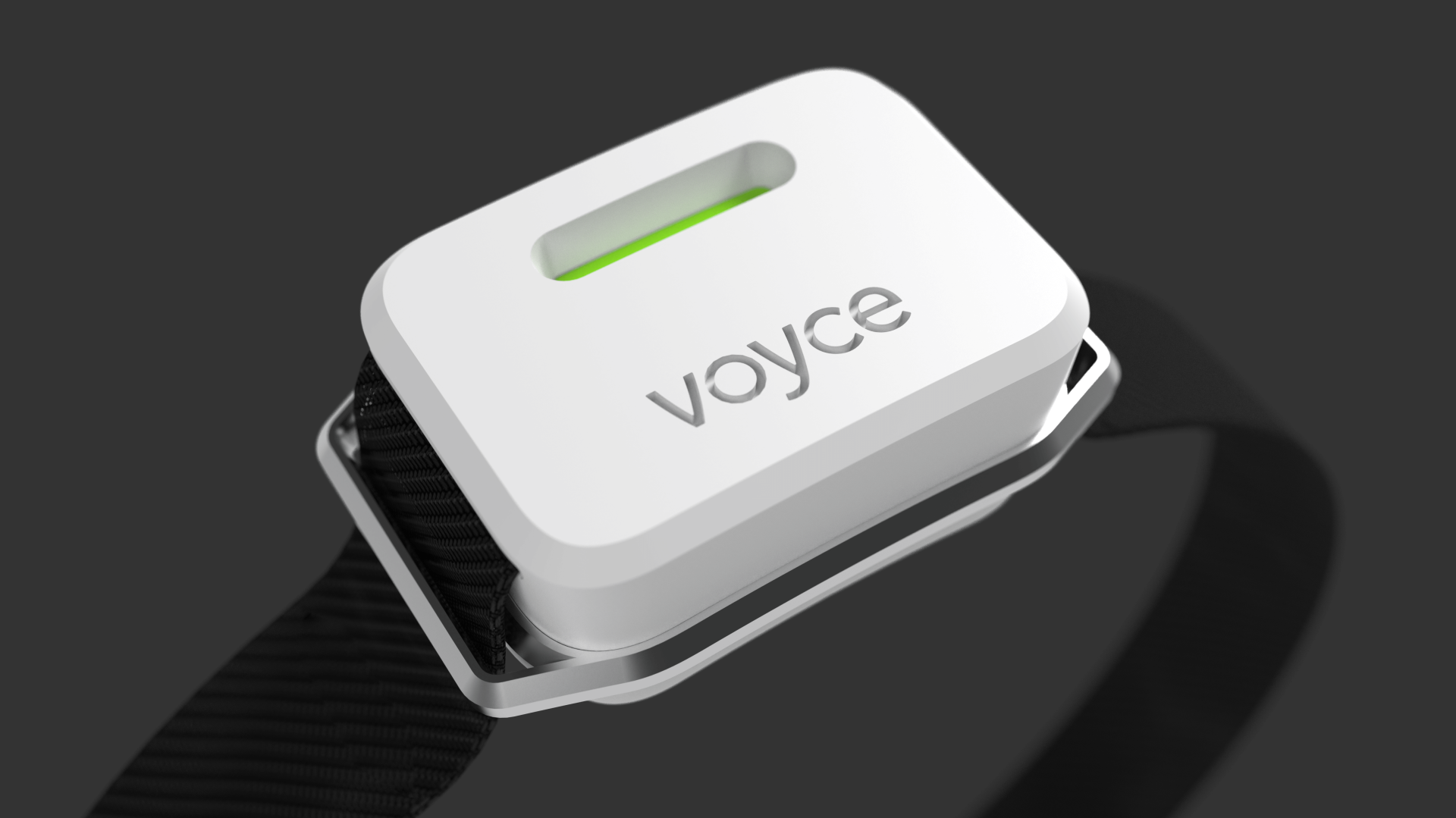
- Designing wearable hardware capable of supporting continuous physiological monitoring
- Conducting rapid feasibility testing to validate sensing and alert functionality
- Refining industrial design to improve comfort, usability, and durability
Outcome
Triple Ring delivered robust functional prototypes capable of generating high-quality physiological data suitable for ongoing product development and validation. The system demonstrated the feasibility of continuous biometric monitoring in veterinary applications.
The successful development effort supported One Health Group’s technology roadmap and strengthened its value proposition, enabling expanded partnerships with strategic investors in the veterinary health industry.
Triple Ring Talent
The Story Behind the Innovation
At Triple Ring, we draw on a deep bench of expertise across diverse disciplines matched to each innovation challenge. For this project, our team combined physiological sensing, wireless systems, industrial design, and startup-focused R&D expertise to develop a wearable continuous monitoring platform capable of capturing real-time biometric data from animals in veterinary settings.
Brian and Steve collaborated with many talented colleagues across Triple Ring and One Health Group on this project.

Brian Wilfley, PhD
Experimental Physics & Instrumentation
Dr. Brian Wilfley leads the development of complex measurement and instrumentation systems grounded in experimental physics. His work combines theoretical insight with hands-on experimentation to advance technologies used in imaging, inspection, and scientific analysis.

Steve Kuhn
Embedded Systems & Software Engineering
Steve Kuhn develops embedded software and real-time control systems that support complex hardware-driven technologies. His work focuses on software architecture, motion control, and system simulation, enabling reliable operation across integrated device platforms.

Key Innovation
Solving for real-world interferents produced a monitor that outperforms lab instruments.
Ocean Microplastics Monitor
Client
Various
Practice Areas
Smart Medical Devices
Core Disciplines
Overview
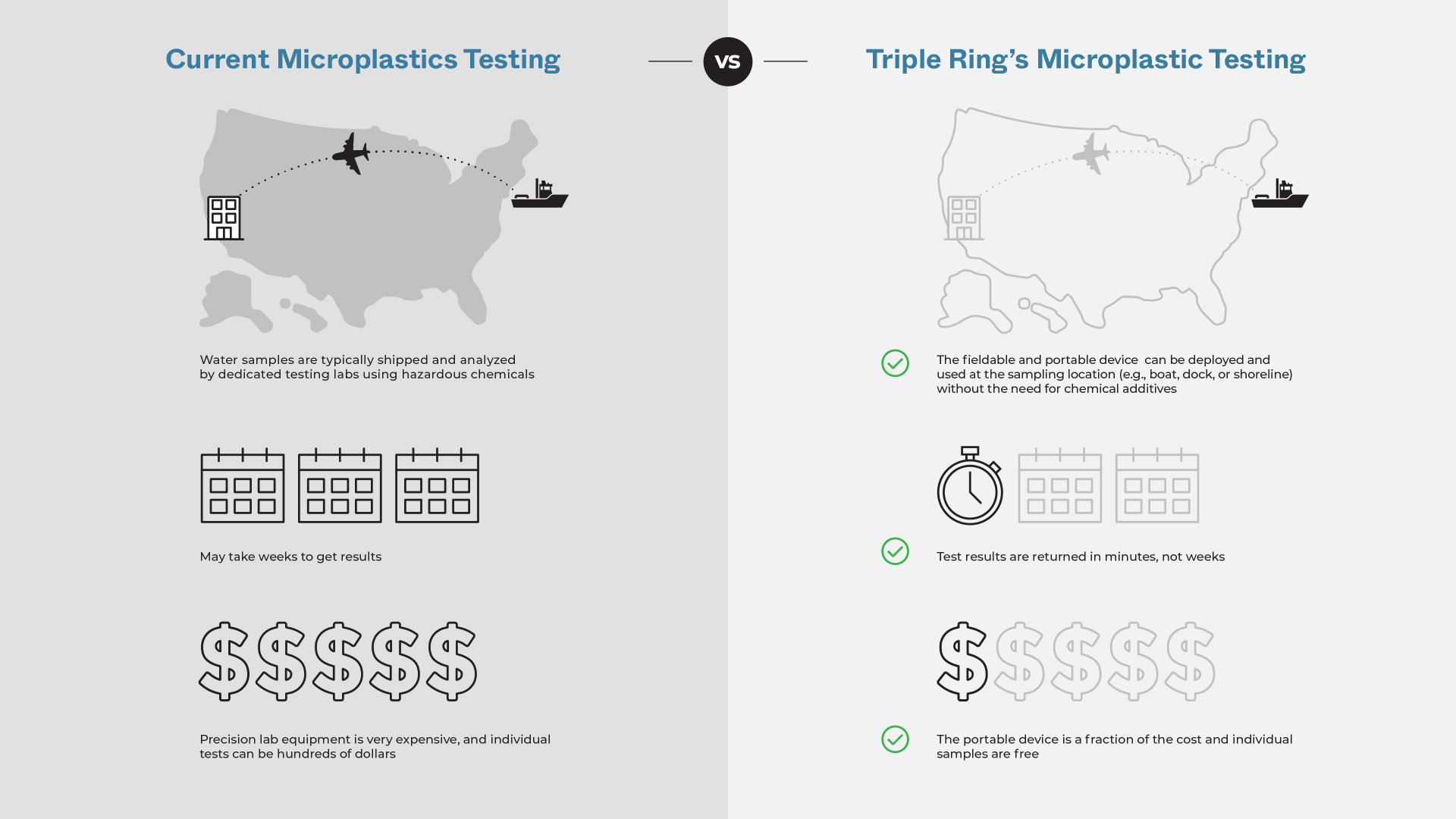
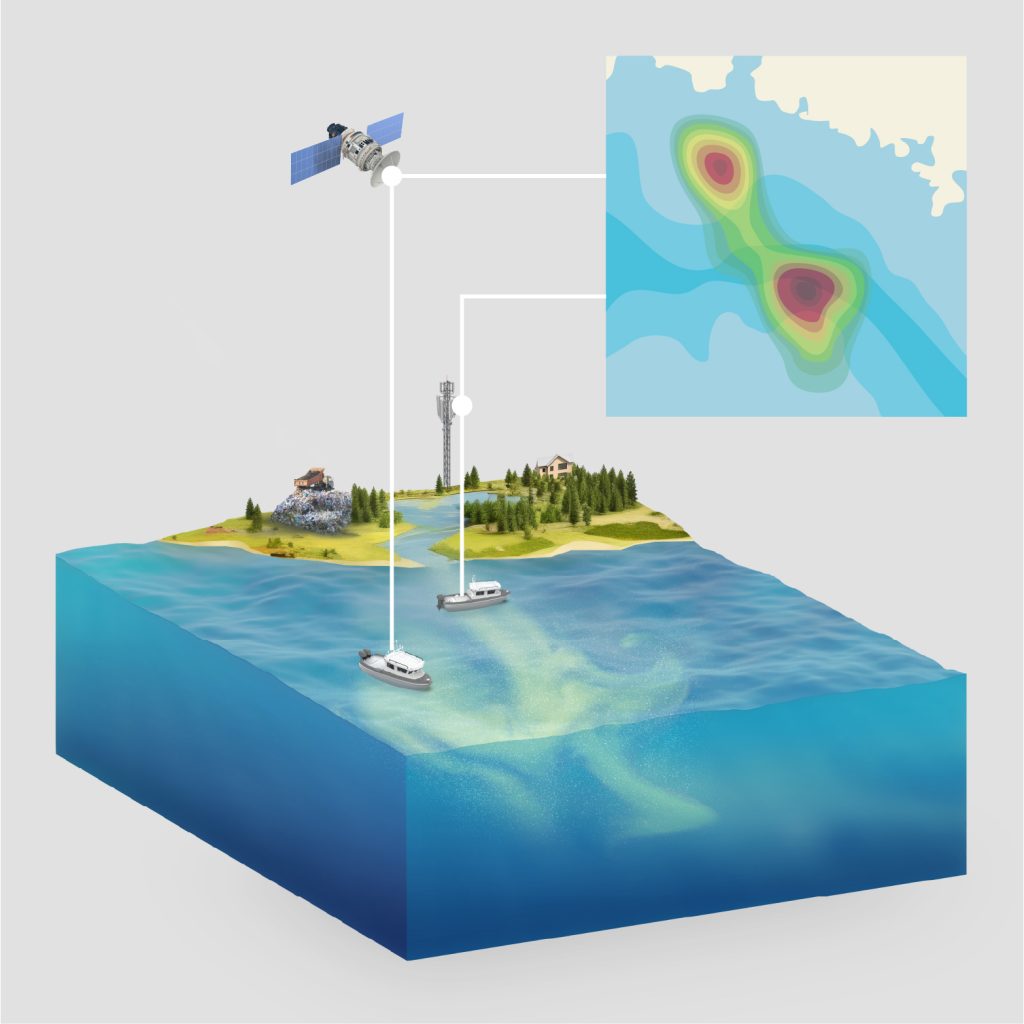
Triple Ring supported the development of a portable microplastics monitoring system designed to measure plastic particle concentrations in aqueous environmental samples. The system was developed to enable field-based quantification of microplastics and support environmental research initiatives.
The resulting platform integrates particle detection and separation technologies into a miniaturized unit capable of replacing larger laboratory-based instrumentation while maintaining measurement accuracy under real-world conditions.
Challenge
Environmental researchers required a field-deployable system capable of accurately detecting and quantifying microplastics in complex environmental samples. Traditional benchtop instruments were not suitable for field use due to size, cost, and sensitivity to environmental conditions.
The system needed to function reliably in the presence of common interferents such as air bubbles, biological materials, sand, and other particulate matter. Achieving consistent performance under these variable conditions required robust system integration and miniaturization.
Ocean Microplastics Monitor
Overview
Triple Ring supported the development of a portable microplastics monitoring system designed to measure plastic particle concentrations in aqueous environmental samples. The system was developed to enable field-based quantification of microplastics and support environmental research initiatives.
The resulting platform integrates particle detection and separation technologies into a miniaturized unit capable of replacing larger laboratory-based instrumentation while maintaining measurement accuracy under real-world conditions.
Challenge
Environmental researchers required a field-deployable system capable of accurately detecting and quantifying microplastics in complex environmental samples. Traditional benchtop instruments were not suitable for field use due to size, cost, and sensitivity to environmental conditions.
The system needed to function reliably in the presence of common interferents such as air bubbles, biological materials, sand, and other particulate matter. Achieving consistent performance under these variable conditions required robust system integration and miniaturization.
Client
Various
Practice Areas
Smart Medical Devices
Core Disciplines
Software Engineering
Mechanical Engineering
Systems Engineering
Photonics & Imaging
Embedded Systems
Solution
Triple Ring collaborated with research partners to integrate sensing technologies into a compact and ruggedized platform capable of supporting field-based environmental monitoring. Engineering efforts focused on miniaturizing complex instrumentation while maintaining detection accuracy across diverse environmental samples.
Technical work included:
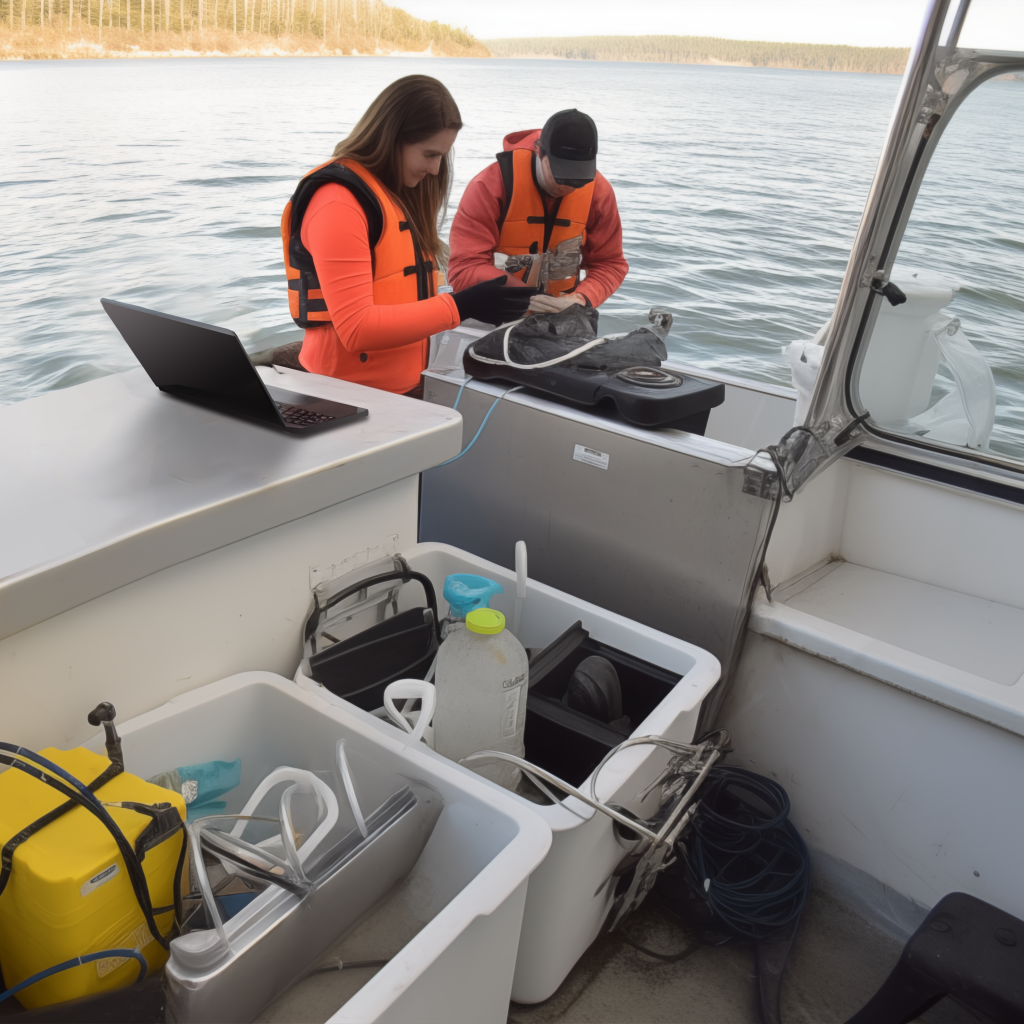
- Designing miniaturized detection systems that replaced benchtop instrumentation
- Developing algorithms to distinguish plastics from environmental interferents
- Integrating sampling and analysis components into a portable architecture
- Validating system performance under field-relevant conditions
Outcome
Triple Ring delivered a portable microplastics monitoring system capable of operating outside traditional laboratory environments. The system successfully demonstrated reliable particle detection and measurement in real-world environmental conditions.
The field-ready platform enabled successful demonstrations to research partners and funding organizations, supporting ongoing efforts to advance environmental monitoring technologies and improve understanding of microplastic pollution.
Triple Ring Talent
The Story Behind the Innovation
At Triple Ring, we draw on a deep bench of expertise across diverse disciplines matched to each innovation challenge. For this project, our team combined miniaturized sensing system design, particle detection and separation technologies, and ruggedized hardware engineering to develop a portable microplastics monitor capable of replacing laboratory instrumentation in real-world field environments.
Erick and Sheila collaborated with many talented colleagues across Triple Ring on this project.

Erick Blankenberg
Electro-Mechanical Systems Engineering
Erick Blankenberg contributes to the development of electro-mechanical systems with a focus on controls and optimization. His work supports software and hardware integration for imaging and instrumentation technologies, helping teams refine system performance through coordinated design and testing.

Sheila Hemami, PhD
Electrical Engineering & Enviromental Sciences
Dr. Sheila Hemami brings interdisciplinary teams together to develop technologies that address complex environmental and healthcare challenges. Her work focuses on early-stage innovation and cross-sector collaboration, helping transform emerging ideas into solutions that are practical, deployable, and sustainable.