
Key Innovation
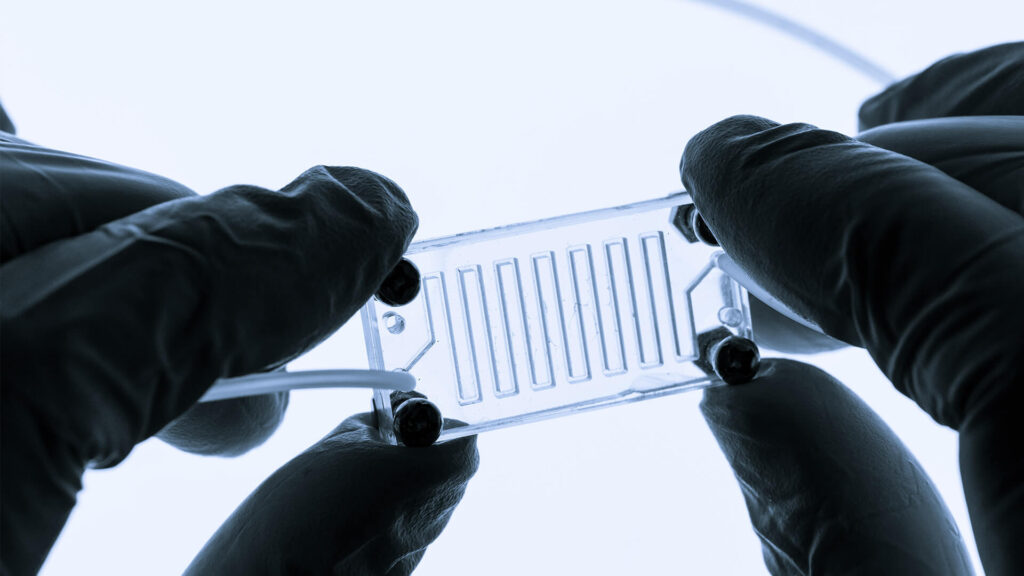
Microfluidic lab-on-a-chip technology brought clinical-grade THC detection out of the lab.
Cannabis Breathalyzer System
Client
Hound Labs
Practice Areas
TechBio & Life Sciences
Core Disciplines
Overview
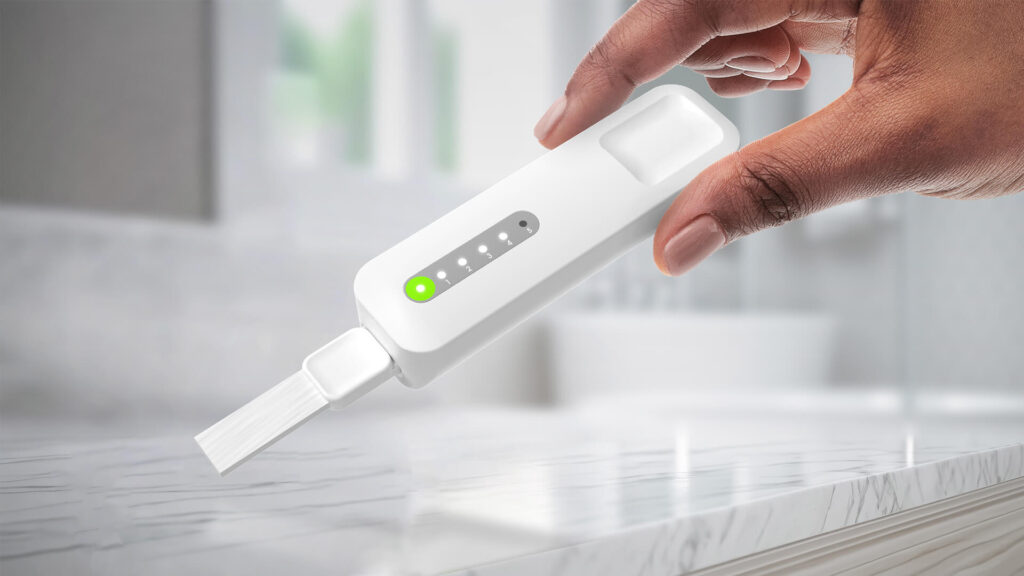
Hound Labs engaged Triple Ring to invent a portable breath analyzer capable of detecting recent marijuana use. The system was developed to support point-of-use testing in law enforcement and workplace environments requiring reliable impairment detection.
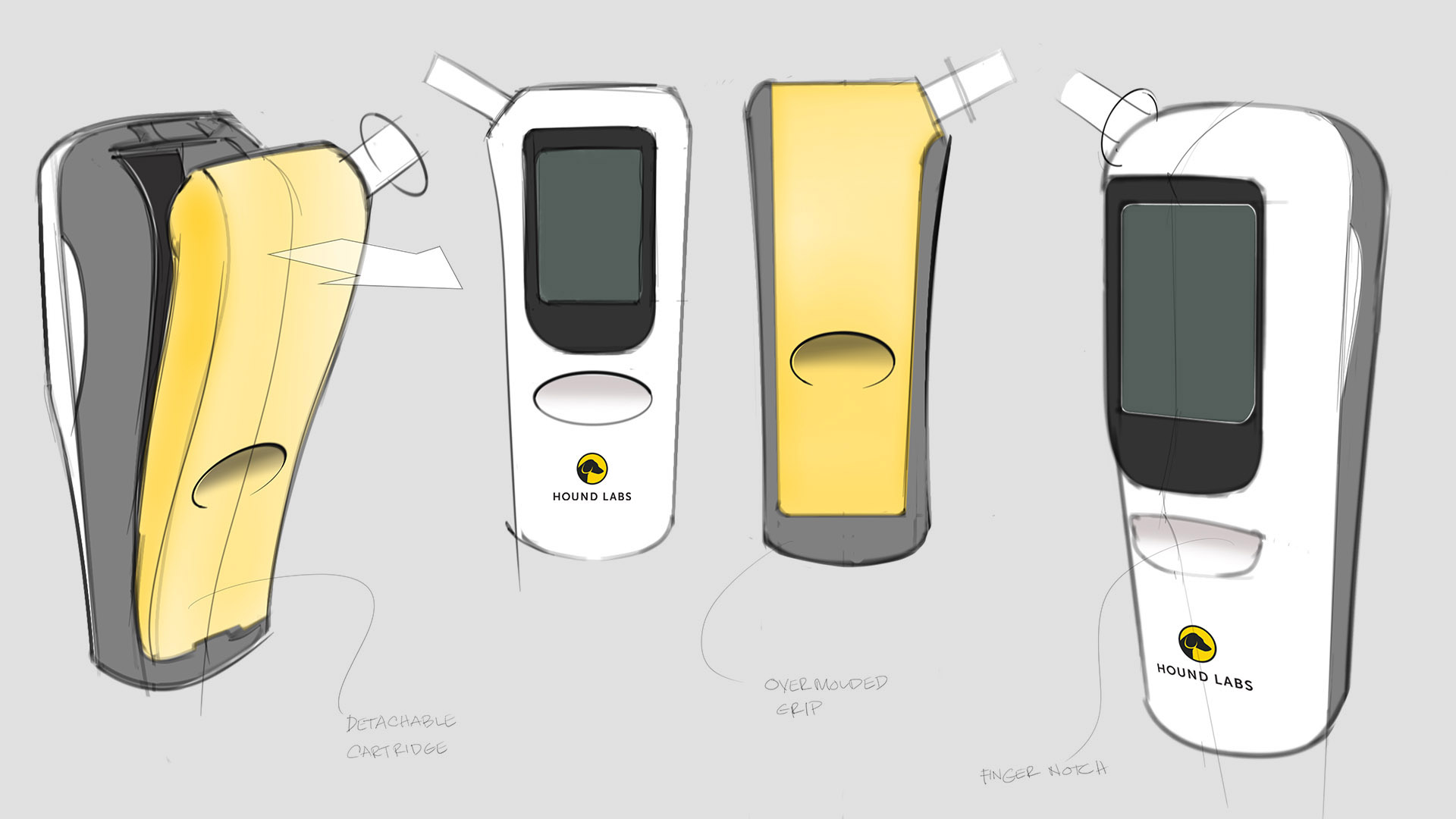
Starting from an early concept sketch, Triple Ring collaborated with Hound Labs to develop a high-sensitivity breathalyzer platform combining chemical detection and portable instrumentation technologies.
Challenge
The system needed to detect Δ-9 THC in exhaled breath with clinical-grade sensitivity while maintaining portability and reliability in field conditions.
In addition to engineering challenges, the project required validation of THC pharmacodynamics in breath, including generation of peer-reviewed scientific evidence supporting detection feasibility.
Cannabis Breathalyzer System
Overview
Hound Labs engaged Triple Ring to invent a portable breath analyzer capable of detecting recent marijuana use. The system was developed to support point-of-use testing in law enforcement and workplace environments requiring reliable impairment detection.
Starting from an early concept sketch, Triple Ring collaborated with Hound Labs to develop a high-sensitivity breathalyzer platform combining chemical detection and portable instrumentation technologies.
Challenge
The system needed to detect Δ-9 THC in exhaled breath with clinical-grade sensitivity while maintaining portability and reliability in field conditions.
In addition to engineering challenges, the project required validation of THC pharmacodynamics in breath, including generation of peer-reviewed scientific evidence supporting detection feasibility.
Client
Hound Labs
Practice Areas
TechBio & Life Sciences
Core Disciplines
Software Engineering
Mechanical Engineering
Systems Engineering
Transfer to Manufacture
Electrical Engineering
Optical Science
Quality System Management
Embedded Systems
Microfluidics
Solution
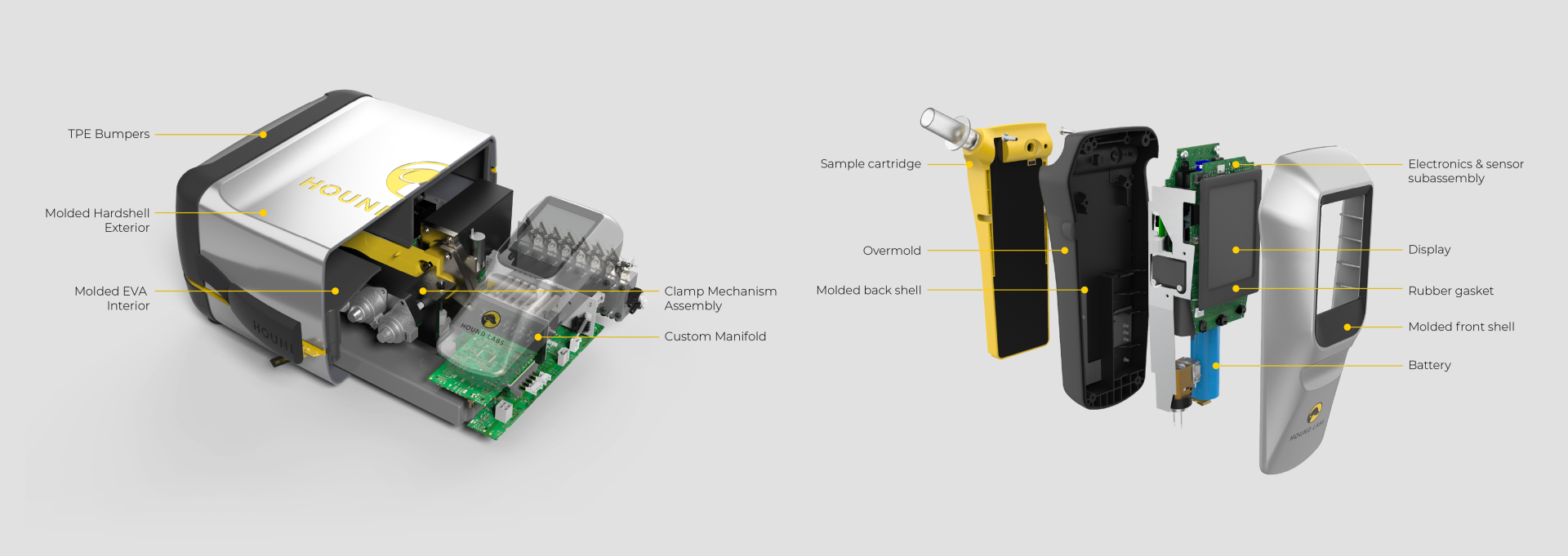
Triple Ring assembled multidisciplinary development teams to design and validate a fully integrated breath analysis platform combining microfluidic sampling and portable device technologies.
Development efforts included:
- Designing a portable breath capture device optimized for reliable sample collection
- Engineering microfluidic lab-on-a-chip cartridges supporting sensitive compound detection
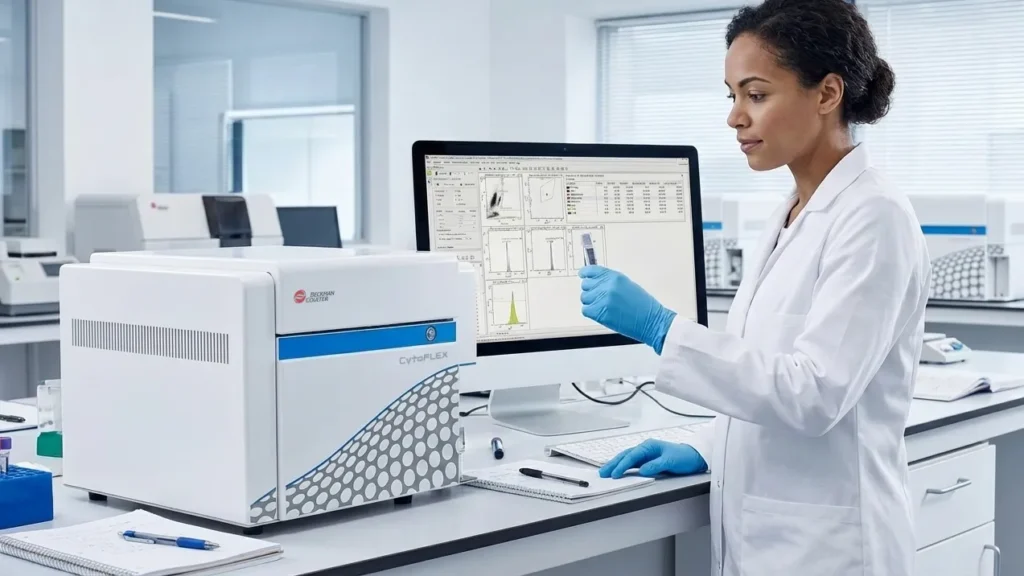
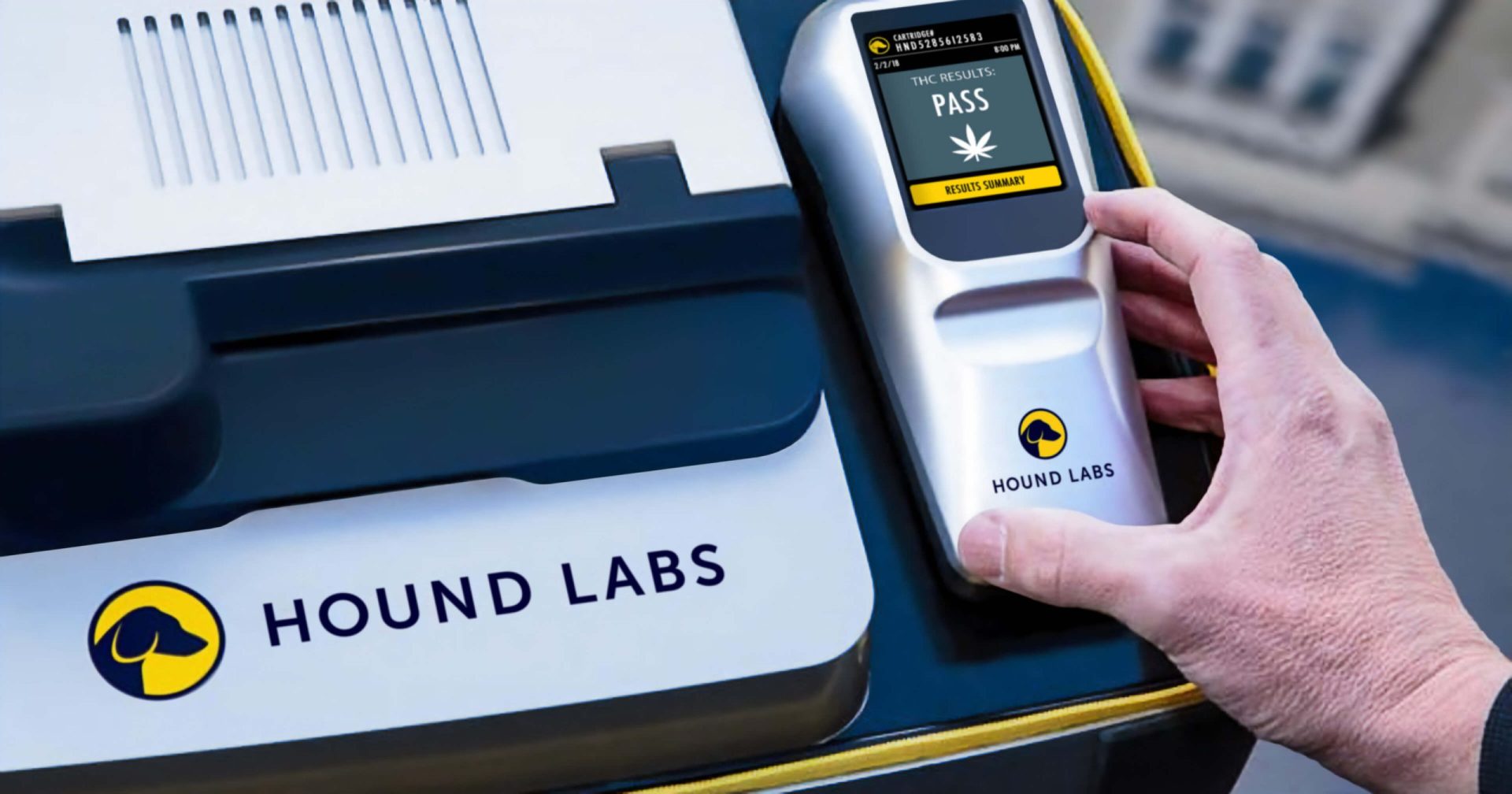
- Integrating control station hardware capable of processing and analyzing captured samples
- Supporting validation activities that produced peer-reviewed pharmacodynamic data
- Developing prototype systems suitable for demonstration, testing, and continued product development
Outcome
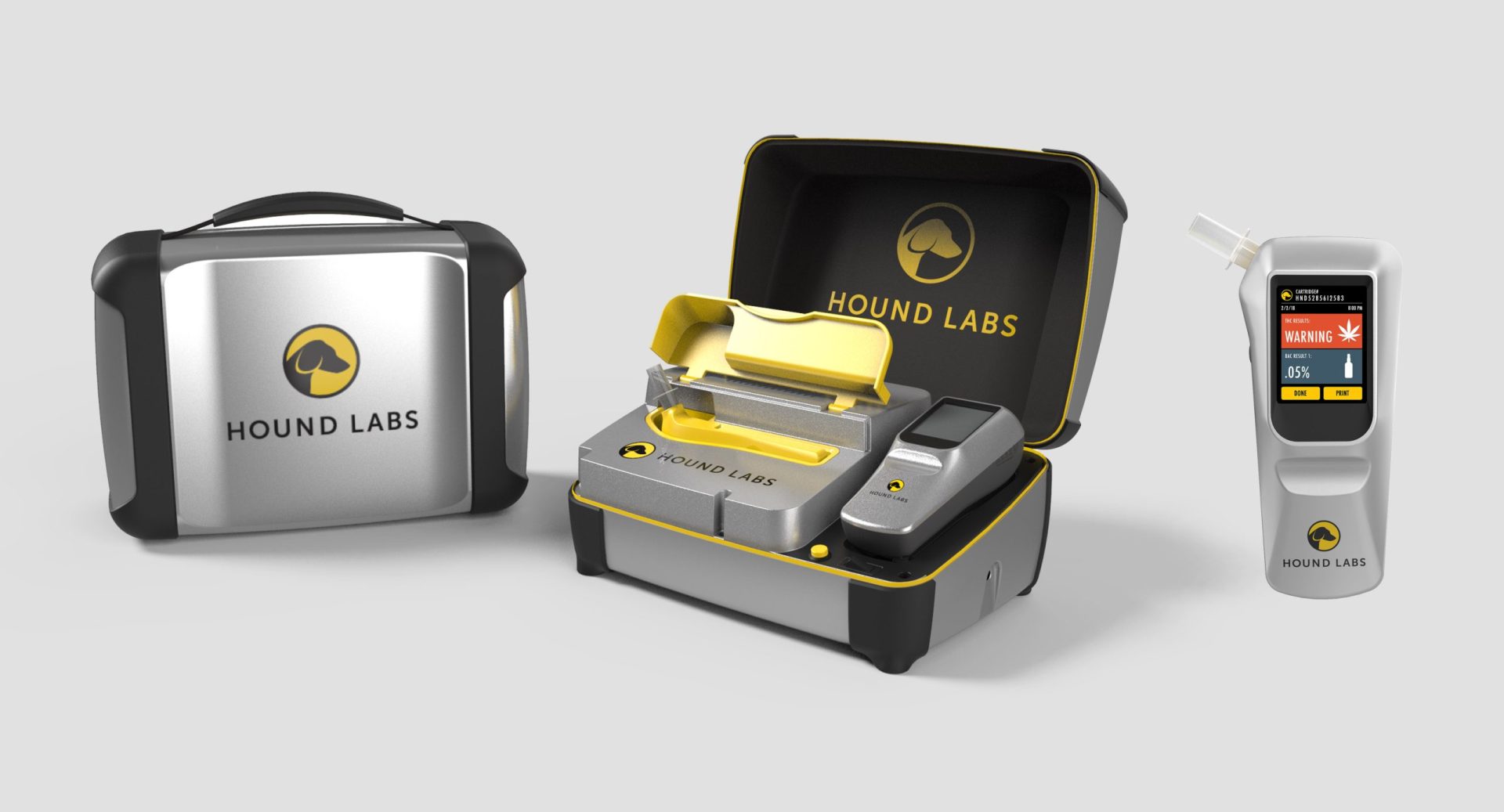
Triple Ring delivered fully functioning prototype systems consisting of a breath capture device, control station, and microfluidic cartridges.
The system produced clinical-grade data at the point of use, supporting detection of recent marijuana use and enabling development of a first-in-class breath-based detection platform.
Triple Ring Talent
The Story Behind the Innovation
At Triple Ring, we draw on a deep bench of expertise across diverse disciplines matched to each innovation challenge. For this project, our team combined microfluidic engineering, biological sensing, portable instrumentation, and clinical validation expertise to develop a first-in-class breath-based THC detection platform capable of delivering clinical-grade results at the point of use.
David and Kevin collaborated with many talented colleagues across Triple Ring and Hound Labs on this project.

David Shack, PhD
Mechanical Engineering & Applied Sciences
Dr. David Shack directs the development of complex scientific measurement and analysis systems across multidisciplinary teams. His work integrates algorithms, software, fluidics, and optical technologies, helping advance tools that support precision research and clinical applications.

Kevin Limtao
Biomedical & Systems Engineering
Kevin Limtao connects system requirements, architecture, and integration across complex medical and diagnostic technologies. His work helps teams align design, risk, and performance throughout the development lifecycle, ensuring systems function reliably from early concepts through deployment.