Key Innovation
Quantitative optics in a lateral flow assay brought multiplexed diagnostics into the home.
At-Home Quantitative Diagnostics
Client
BARDA
Practice Areas
TechBio & Life Sciences
Core Disciplines
Overview
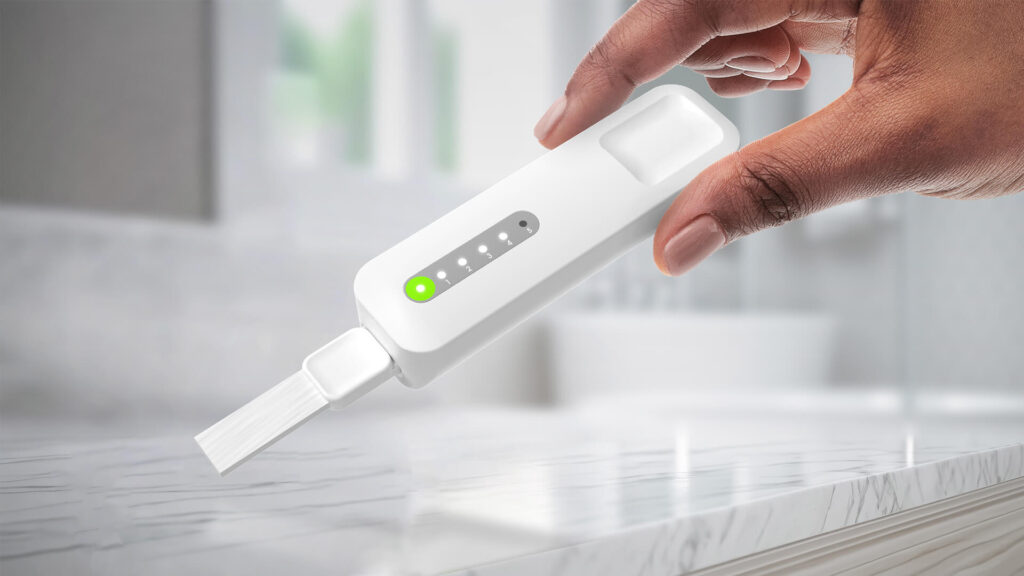
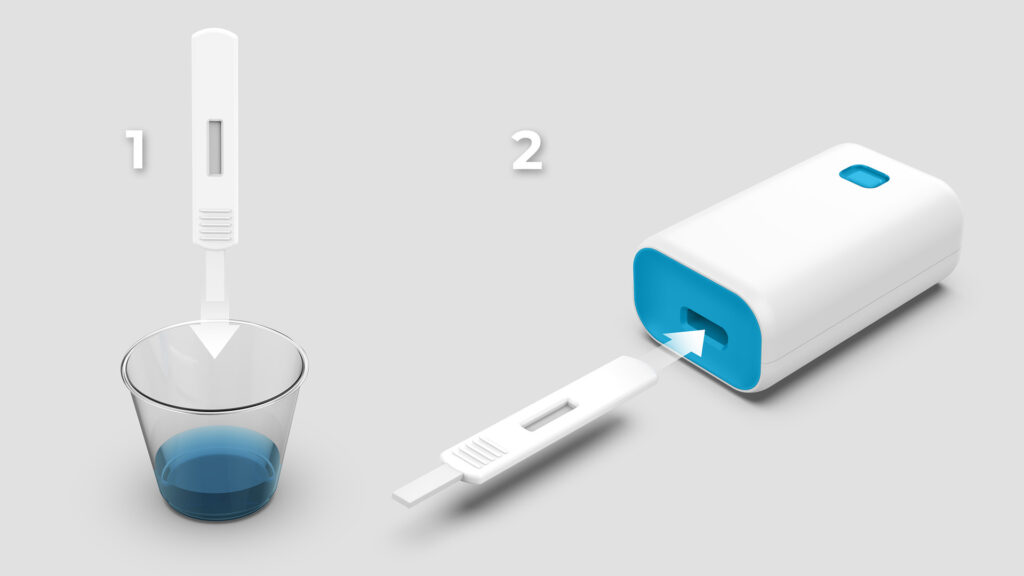
The Biomedical Advanced Research and Development Authority (BARDA) selected Triple Ring to design, build, and test a low-cost quantitative biomarker detection platform intended for at-home and low-resource healthcare settings. The system was developed to support multiplexed biomarker analysis using compact, user-friendly instrumentation.
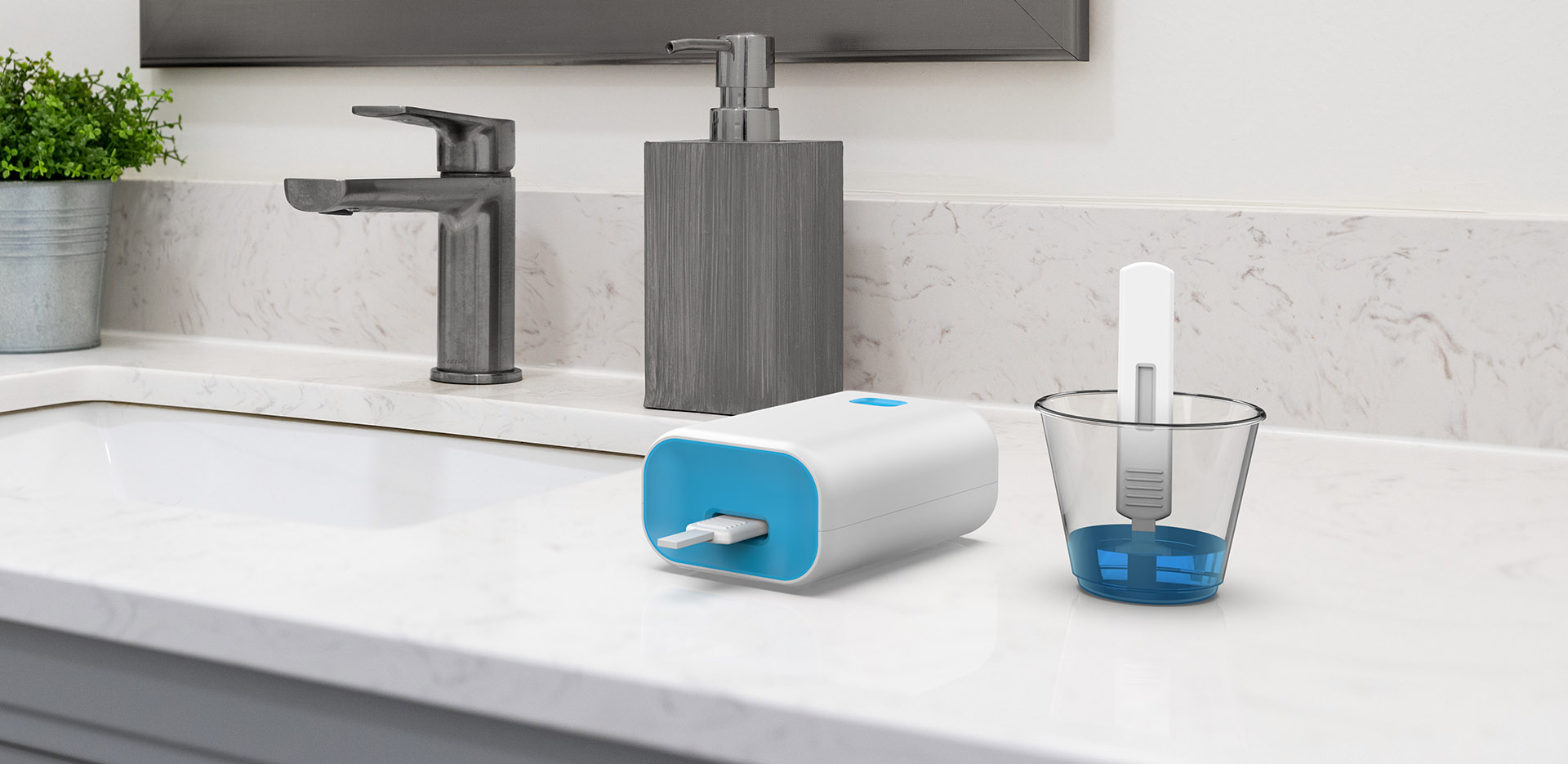
The resulting platform integrates biological sensing, embedded electronics, and optical detection technologies into a portable diagnostic system designed to support lab-at-home, point-of-care, and direct-to-consumer workflows.
Challenge
BARDA identified the need for a low-cost diagnostic platform capable of delivering quantitative biomarker measurements outside traditional laboratory environments. The system needed to support multiplexed testing while remaining accessible for use in resource-limited settings and CLIA-waived environments.
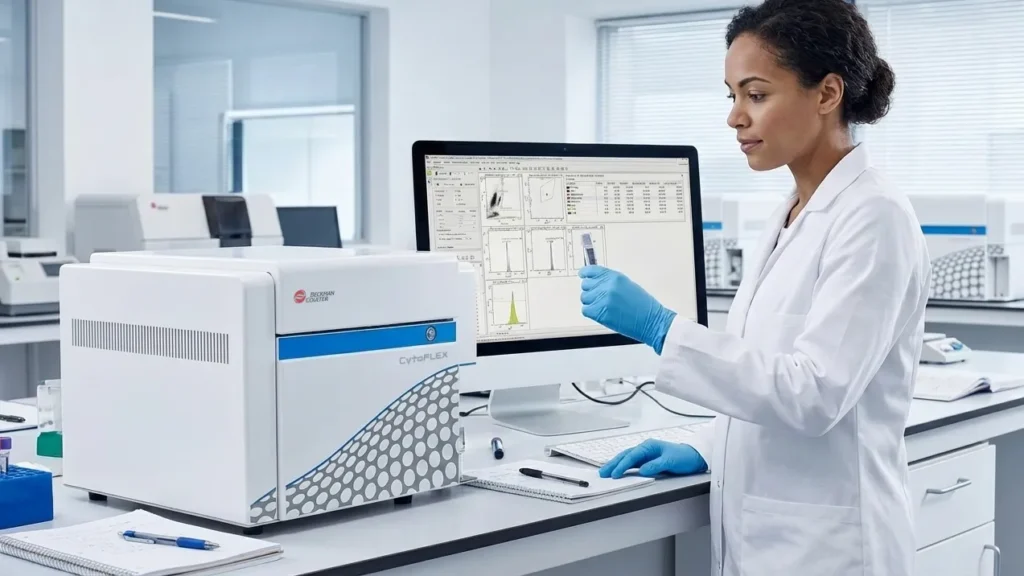
Achieving this capability required integration of complex biological, optical, and electronic subsystems into a compact and manufacturable design. The platform also needed to extend the measurable range of lateral flow immunoassays while maintaining usability and cost targets suitable for broad deployment.
At-Home Quantitative Diagnostics
Overview
The Biomedical Advanced Research and Development Authority (BARDA) selected Triple Ring to design, build, and test a low-cost quantitative biomarker detection platform intended for at-home and low-resource healthcare settings. The system was developed to support multiplexed biomarker analysis using compact, user-friendly instrumentation.
The resulting platform integrates biological sensing, embedded electronics, and optical detection technologies into a portable diagnostic system designed to support lab-at-home, point-of-care, and direct-to-consumer workflows.
Challenge
BARDA identified the need for a low-cost diagnostic platform capable of delivering quantitative biomarker measurements outside traditional laboratory environments. The system needed to support multiplexed testing while remaining accessible for use in resource-limited settings and CLIA-waived environments.
Achieving this capability required integration of complex biological, optical, and electronic subsystems into a compact and manufacturable design. The platform also needed to extend the measurable range of lateral flow immunoassays while maintaining usability and cost targets suitable for broad deployment.
Client
BARDA
Practice Areas
TechBio & Life Sciences
Core Disciplines
Software Engineering
Mechanical Engineering
Systems Engineering
Electrical Engineering
Industrial Design
Optical Science
Embedded Systems
Solution
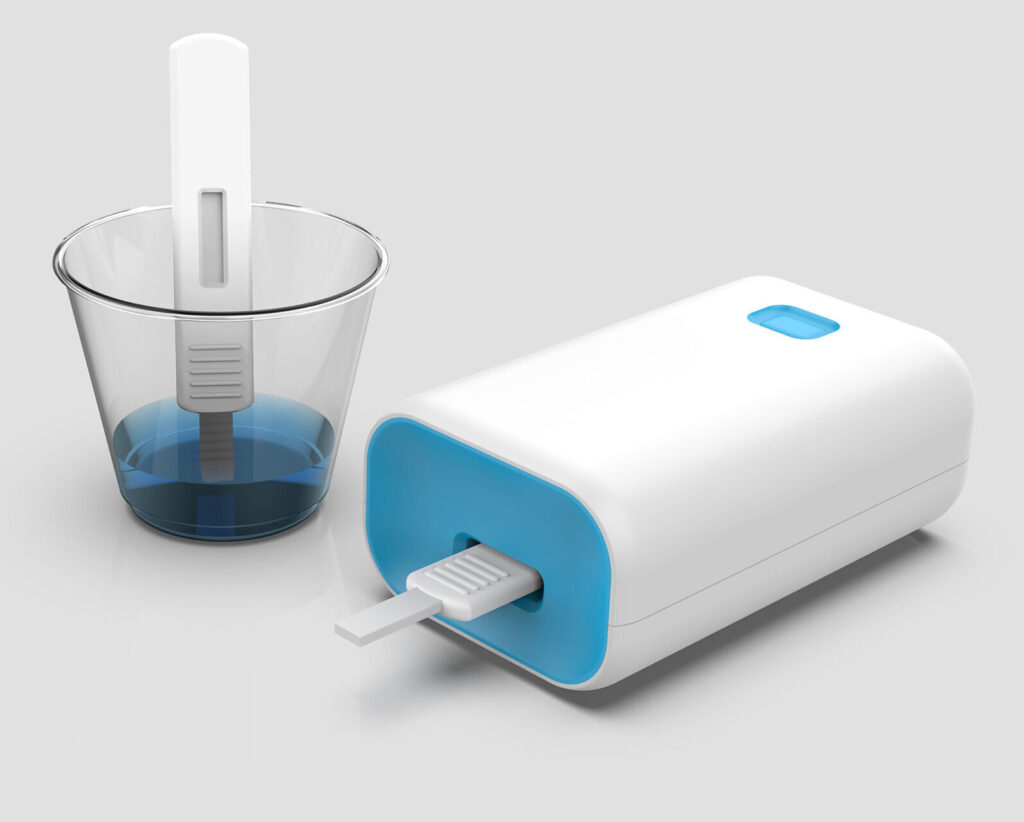
Triple Ring applied multidisciplinary expertise across biological sciences, engineering, and embedded systems to develop a scalable diagnostic platform capable of delivering quantitative results from multiplexed lateral flow assays.
Development efforts focused on:
- Designing multiplexed lateral flow assay (LFA) detection systems capable of quantifying biomarker concentrations
- Integrating biological, electrical, mechanical, optical, and embedded software subsystems into a unified platform
- Developing workflows suitable for CLIA-waived, point-of-care, and at-home diagnostic environments
- Extending the quantitative measurement range beyond that of conventional lateral flow assay readers
- Conducting system-level integration and verification to support development of a handheld diagnostic platform
Outcome
Triple Ring delivered a functional multiplexed diagnostic platform capable of quantifying biomarker concentrations across multiple test channels. The system demonstrated improved quantitative measurement range compared to conventional lateral flow assay readers.
The platform supported deployment across diverse clinical environments, including at-home and point-of-care settings. Ongoing development efforts include system integration and testing of a handheld version designed to further expand accessibility and usability in remote and low-resource healthcare environments.
Triple Ring Talent
The Story Behind the Innovation
At Triple Ring, we draw on a deep bench of expertise across diverse disciplines matched to each innovation challenge. For this project, our team combined biological sciences, optical detection, embedded electronics, and diagnostic platform engineering to develop a low-cost multiplexed biomarker detection system capable of delivering quantitative lab-grade results in at-home and resource-limited healthcare settings.
Rachel and Chris collaborated with many talented colleagues across Triple Ring and BARDA on this project.

Rachel Gerver, PhD
Bioengineering & Applied Science and Systems
Dr. Rachel Gerver advances microfluidic and point-of-care technologies from early development into real-world application. Her work spans technical leadership and systems development, helping teams bring complex innovations to market where they can deliver meaningful impact.

Chris Todd
Mechanical Engineering
Chris Todd focuses on biomedical diagnostics and precision instrumentation, integrating fluidics, optics, and mechanical systems. His work supports the development of regulated medical technologies from early concepts through manufacturing, helping teams deliver reliable diagnostic solutions at scale.