
Key Innovation
A digital twin turned an unpredictable X-ray source into a reliable analytical platform.
Handheld XRF Elemental Analysis
Client
Tribogenics
Practice Areas
Imaging, Robotics & Radiotherapy
Core Disciplines
Overview
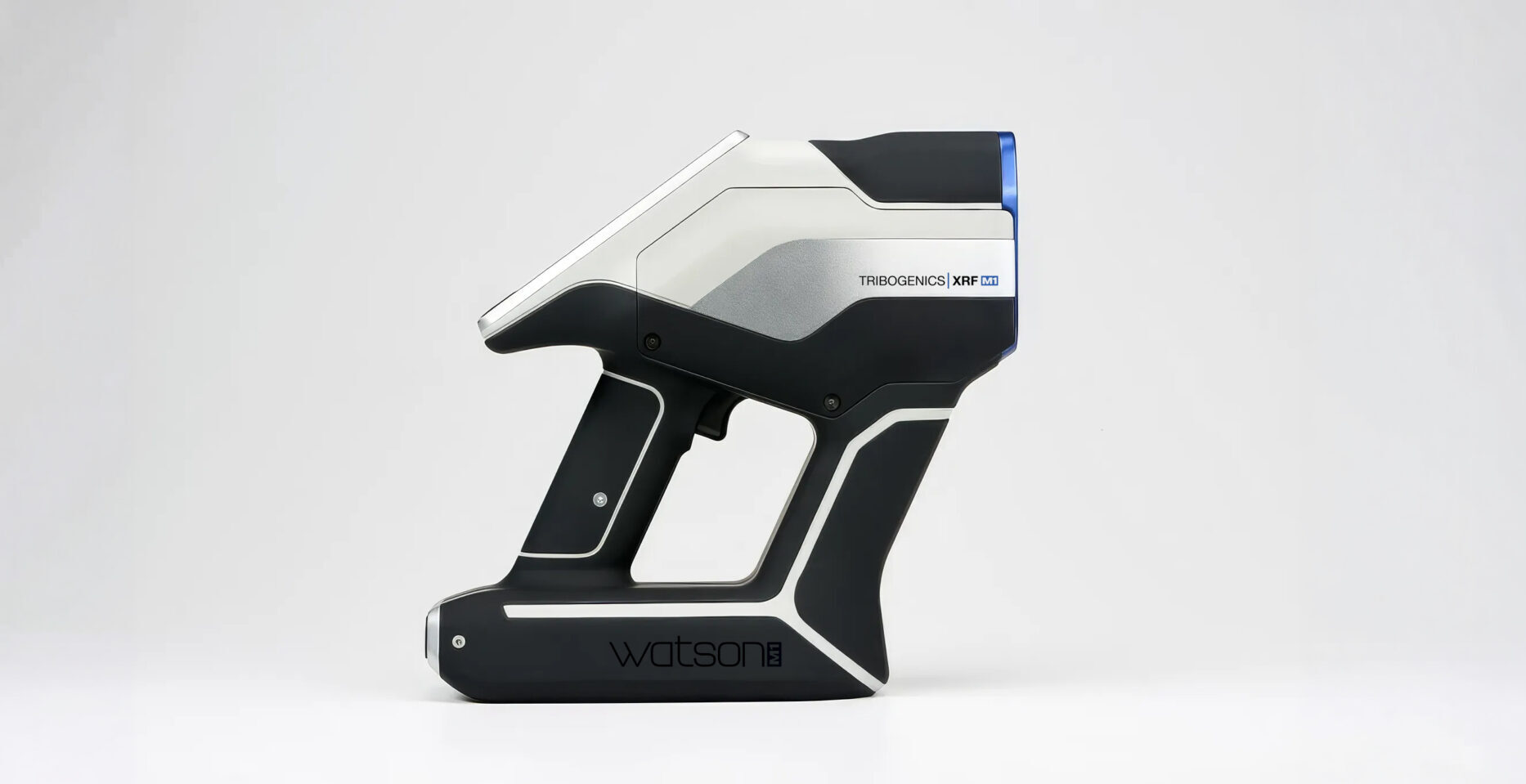
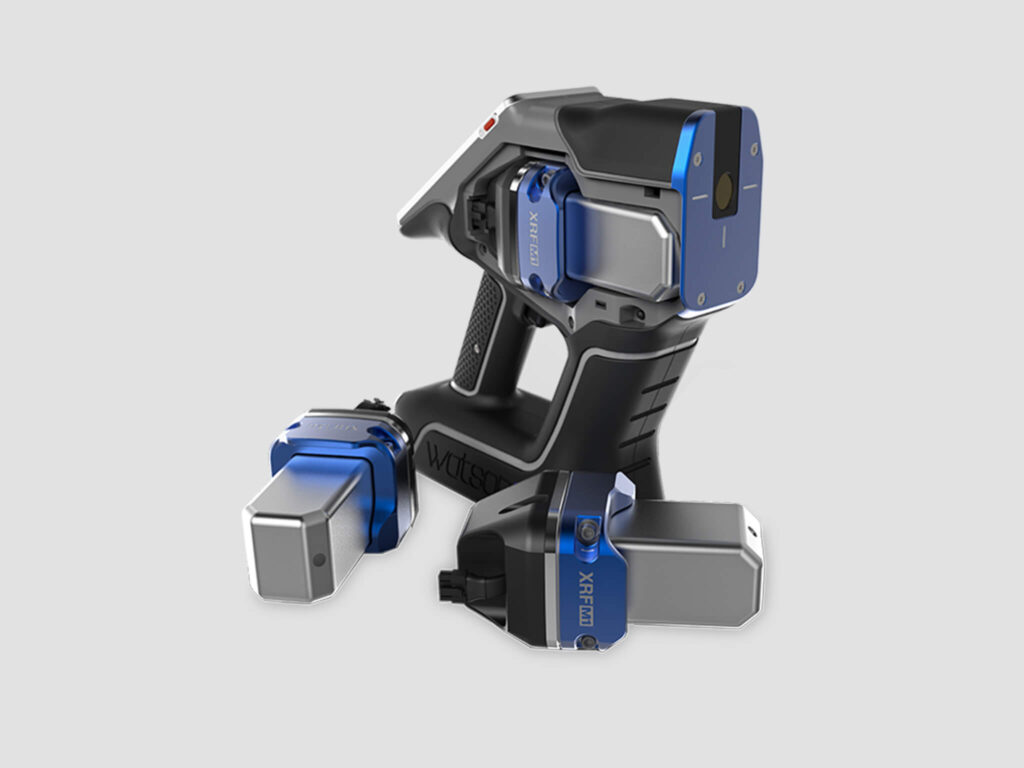
Tribogenics engaged Triple Ring to advance a next-generation handheld X-ray fluorescence (XRF) analyzer built around a novel triboelectric X-ray source developed in collaboration with DARPA and UCLA. Unlike conventional XRF systems that rely on high-voltage power supplies, the Tribogenics architecture offered the potential for a lower-cost, more compact instrument.
The program focused on overcoming analytical challenges associated with the unconventional X-ray source, enabling more accurate and repeatable elemental analysis for portable Positive Material Identification (PMI).
Challenge
While Tribogenics’ novel X-ray source created significant opportunities for compact, low-cost XRF instrumentation, it also introduced a fundamental measurement challenge. The emitted X-ray spectrum varied from shot to shot, throughout the lifetime of the source, and between individual sources, reducing the accuracy and repeatability of elemental concentration measurements.
With first-generation instruments achieving only mid-80% PMI accuracy on a limited alloy set, Tribogenics challenged Triple Ring to develop the physics-based algorithms and analytical framework needed to improve measurement robustness and support development of a more competitive next-generation instrument.
Handheld XRF Elemental Analysis
Overview
Tribogenics engaged Triple Ring to advance a next-generation handheld X-ray fluorescence (XRF) analyzer built around a novel triboelectric X-ray source developed in collaboration with DARPA and UCLA. Unlike conventional XRF systems that rely on high-voltage power supplies, the Tribogenics architecture offered the potential for a lower-cost, more compact instrument.
The program focused on overcoming analytical challenges associated with the unconventional X-ray source, enabling more accurate and repeatable elemental analysis for portable Positive Material Identification (PMI).
Challenge
While Tribogenics’ novel X-ray source created significant opportunities for compact, low-cost XRF instrumentation, it also introduced a fundamental measurement challenge. The emitted X-ray spectrum varied from shot to shot, throughout the lifetime of the source, and between individual sources, reducing the accuracy and repeatability of elemental concentration measurements.
With first-generation instruments achieving only mid-80% PMI accuracy on a limited alloy set, Tribogenics challenged Triple Ring to develop the physics-based algorithms and analytical framework needed to improve measurement robustness and support development of a more competitive next-generation instrument.
Client
Tribogenics
Practice Areas
Imaging, Robotics & Radiotherapy
Core Disciplines
AI & Advanced Algorithms
Systems Engineering
Photonics & Imaging
Applied Physics

Solution
Triple Ring developed a comprehensive modeling and algorithm framework to understand, compensate for, and reduce the effects of spectral variability.
The program centered on:
- Building a high-fidelity Monte Carlo digital twin of the complete XRF measurement system
- Modeling X-ray source behavior, sample interaction physics, detector response, and system geometry
- Developing signal processing and spectral analysis algorithms to improve elemental measurement accuracy
- Designing and validating a real-time spectral compensation approach using a secondary detector
- Using simulation-first methods to isolate error sources, evaluate design tradeoffs, and de-risk future hardware development
Outcome
Triple Ring delivered a validated simulation and algorithm framework that addressed the primary sources of analytical error within the Tribogenics platform.
The resulting digital twin accurately reproduced measured XRF spectra and demonstrated that real-time spectral compensation could reduce elemental concentration variability to near the Poisson noise floor under controlled conditions. These capabilities provided Tribogenics with the analytical foundation needed to advance their next-generation handheld XRF analyzer, helping translate an innovative X-ray source into a more accurate, commercially viable elemental analysis platform.
Triple Ring Talent
The Story Behind the Innovation
At Triple Ring, we draw on a deep bench of expertise across diverse disciplines matched to each innovation challenge. For this project, our team combined X-ray physics, Monte Carlo simulation, signal processing, algorithm development, and analytical instrumentation expertise to transform a novel but variable X-ray source into a foundation for accurate, commercially viable elemental analysis.
Daniel and Tobias collaborated with many talented colleagues across Triple Ring and Tribogenics on this project.

Daniel Badali, PhD
Applied Physics and Algorithms
Dr. Daniel Badali brings deep expertise in advanced algorithms, optics, and radiation physics. His work bridges software and hardware, enabling complex simulation, imaging, and sterilization technologies that help turn sophisticated concepts into reliable medical solutions.

Tobias Funk, PhD
Applied Physics and Instrumentation
Dr. Tobias Funk develops advanced instrumentation that applies ionizing radiation to scientific and medical challenges. His work spans imaging, simulation, and system design, helping translate complex physical principles into practical technologies used in real-world environments.