
Key Innovation
Motion correction built into CT imaging eliminated need for equine general anesthesia.
Next-Generation Equine Imaging
Client
Prisma Imaging
Practice Areas
Imaging, Robotics & Radiotherapy
Core Disciplines
Overview
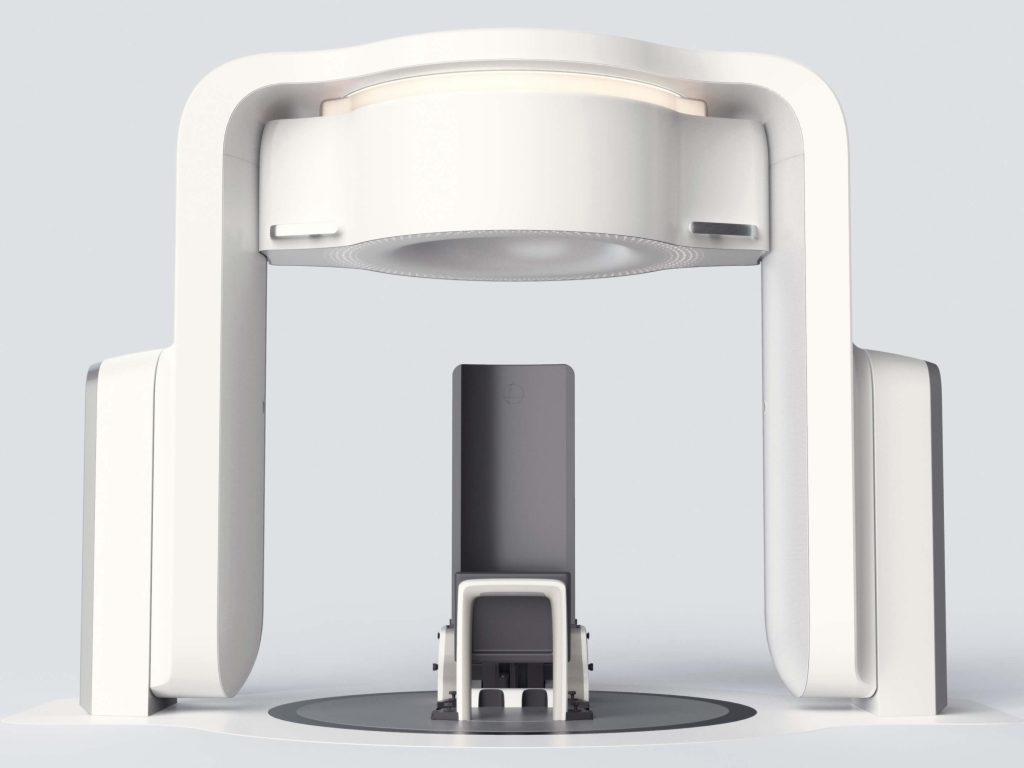
Prisma Imaging collaborated with Triple Ring to design, model, build, and test a functional prototype equine CT scanner for use in veterinary clinic settings. The system was developed to generate high-quality images of live horses while supporting safer workflows compared to traditional imaging methods.
The resulting platform combined robotic motion systems, imaging technology, and motion correction capabilities to enable imaging of large animals without requiring general anesthesia.
Challenge
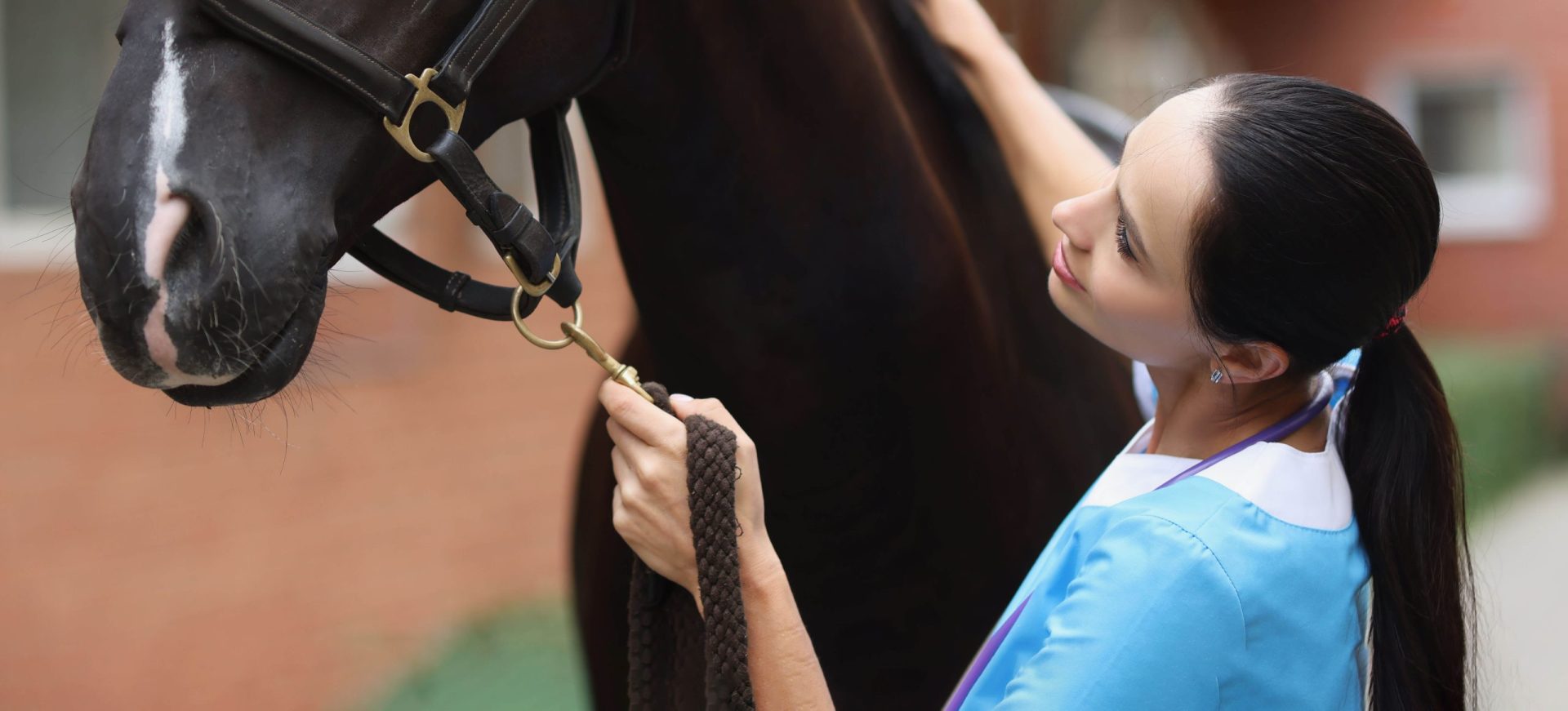
Prisma Imaging sought to develop a CT imaging system capable of safely scanning live equine patients. Traditional imaging workflows often require anesthesia, introducing additional risk and logistical complexity.
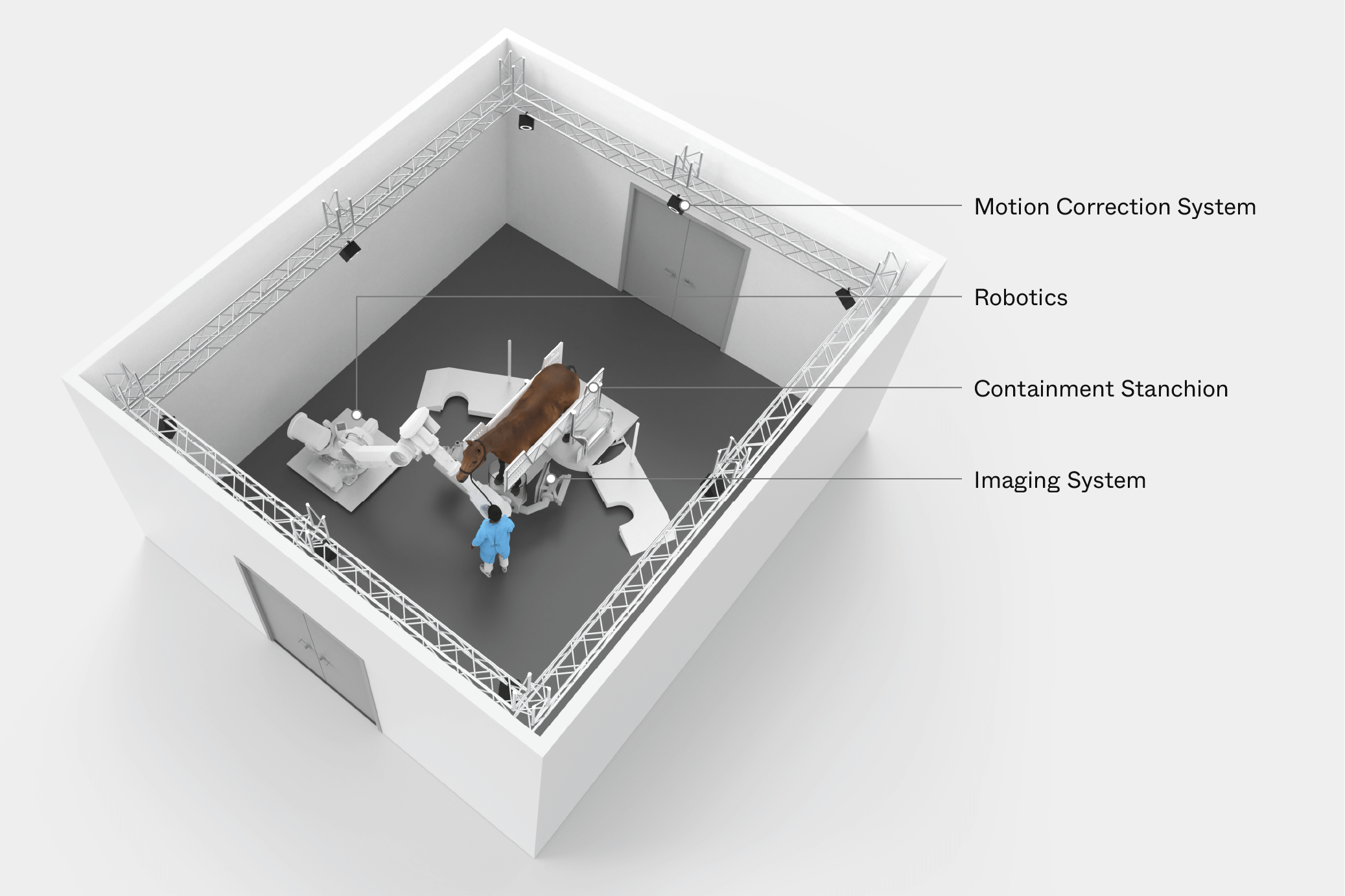
The project required integrating robotic gantry motion, X-ray imaging, radiation safety, motion capture, and CT reconstruction into a unified system architecture capable of handling natural patient movement.
Next-Generation Equine Imaging
Overview
Prisma Imaging collaborated with Triple Ring to design, model, build, and test a functional prototype equine CT scanner for use in veterinary clinic settings. The system was developed to generate high-quality images of live horses while supporting safer workflows compared to traditional imaging methods.
The resulting platform combined robotic motion systems, imaging technology, and motion correction capabilities to enable imaging of large animals without requiring general anesthesia.
Challenge
Prisma Imaging sought to develop a CT imaging system capable of safely scanning live equine patients. Traditional imaging workflows often require anesthesia, introducing additional risk and logistical complexity.
The project required integrating robotic gantry motion, X-ray imaging, radiation safety, motion capture, and CT reconstruction into a unified system architecture capable of handling natural patient movement.
Client
Prisma Imaging
Practice Areas
Imaging, Robotics & Radiotherapy
Core Disciplines
Mechanical Engineering
Industrial Design
Solution
Triple Ring applied cross-disciplinary engineering expertise and systems engineering methodologies to design and integrate a complex imaging platform capable of supporting live-animal imaging.
Key elements of the solution included:
- Designing a robotic gantry capable of supporting controlled positioning of large animal patients
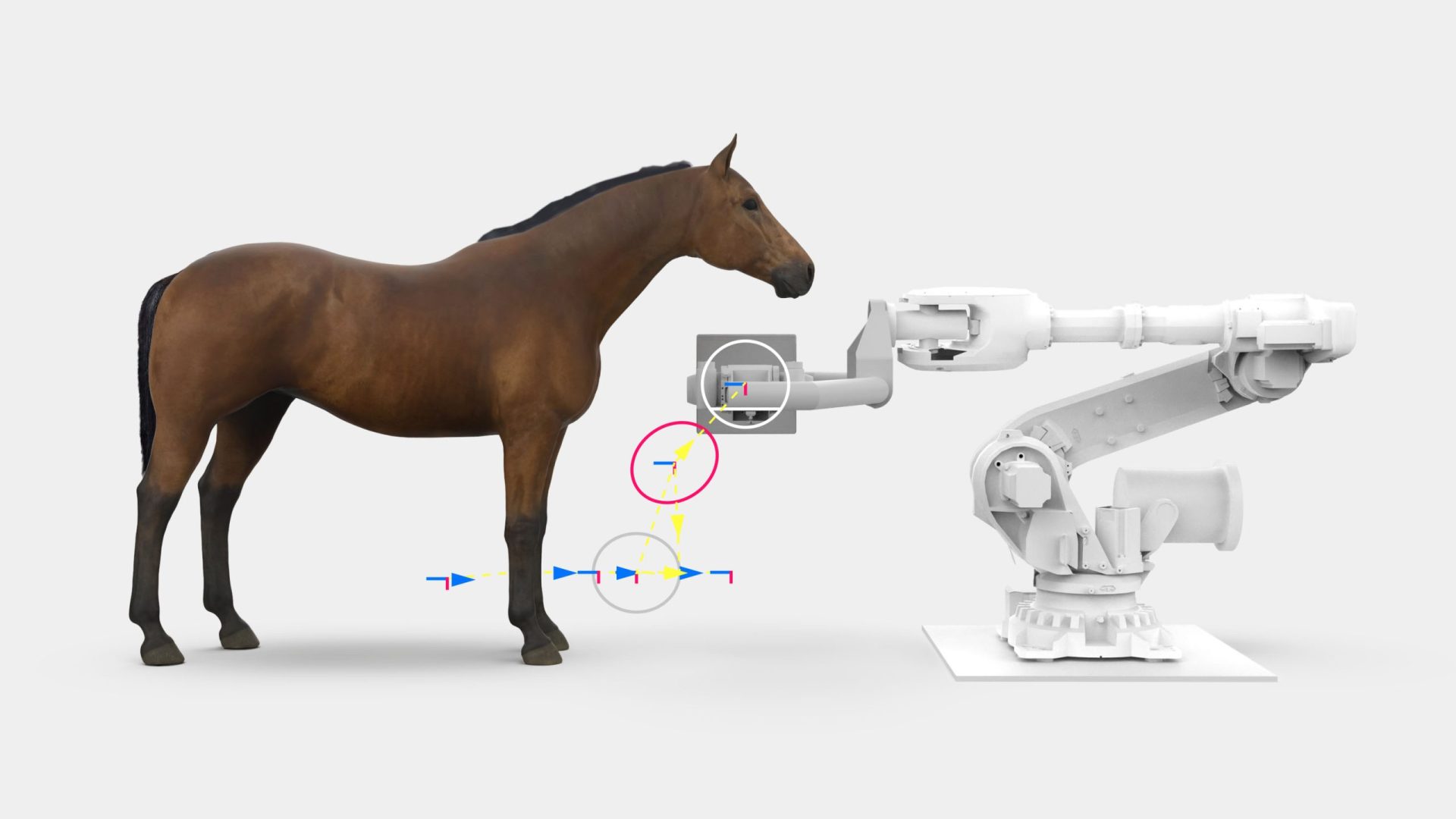
- Developing motion tracking and correction technologies to compensate for natural movement
- Integrating X-ray imaging subsystems capable of producing high-resolution diagnostic images
- Validating system performance through live-animal imaging under controlled conditions
Outcome
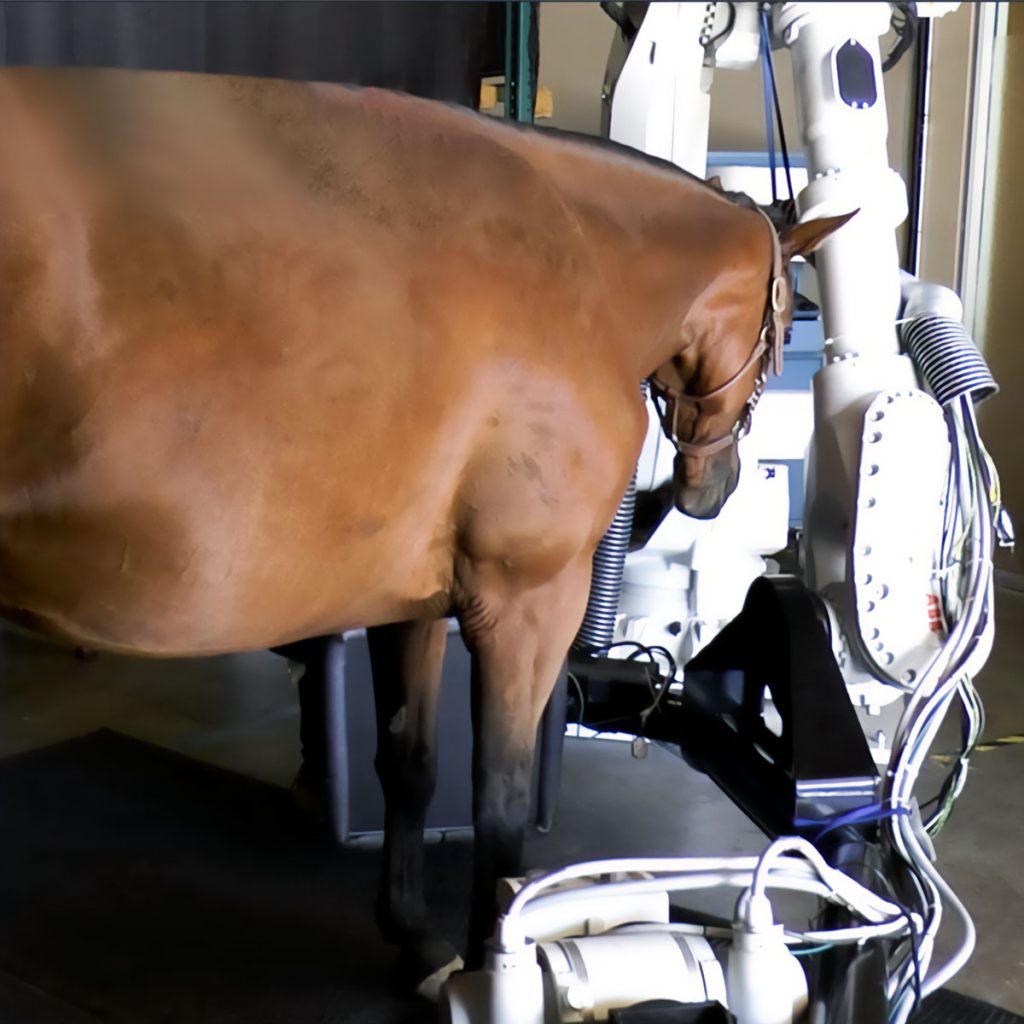
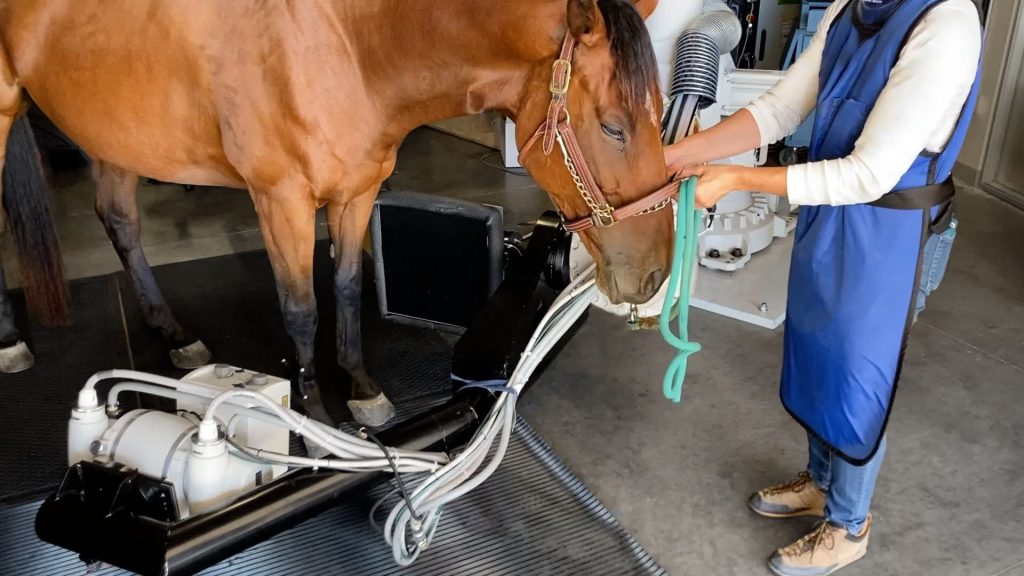
Triple Ring delivered a gantry-mounted CT imaging system capable of imaging horses under conscious sedation rather than general anesthesia.
The integrated motion tracking and correction system maintained imaging quality comparable to standard CT systems, enabling full-body imaging across equine anatomy without anesthesia.
Triple Ring Talent
The Story Behind the Innovation
At Triple Ring, we draw on a deep bench of expertise across diverse disciplines matched to each innovation challenge. For this project, our team combined robotic systems design, CT imaging, motion capture and correction, and systems integration expertise to deliver a functional equine CT scanner capable of imaging conscious, sedated horses without general anesthesia.
Meet our team
Tobias Funk, PhD
Experimental Physics & Instrumentation
Dr. Tobias Funk develops advanced instrumentation that applies ionizing radiation to scientific and medical challenges. His work spans imaging, simulation, and system design, helping translate complex physical principles into practical technologies used in real-world environments.

Quinn La
Electrical Technician
Quinn La oversees the build and validation of complex electrical and electro-mechanical systems across development programs. His work supports board bring-up, testing, and manufacturing processes, ensuring systems are assembled, debugged, and prepared for reliable operation.