
Key Innovation
Tissue compensation algorithms brought real-time StO₂ monitoring into the OR.
Real-Time Tissue Oxygenation Status
Client
ViOptix
Practice Areas
Smart Medical Devices
Core Disciplines
Overview
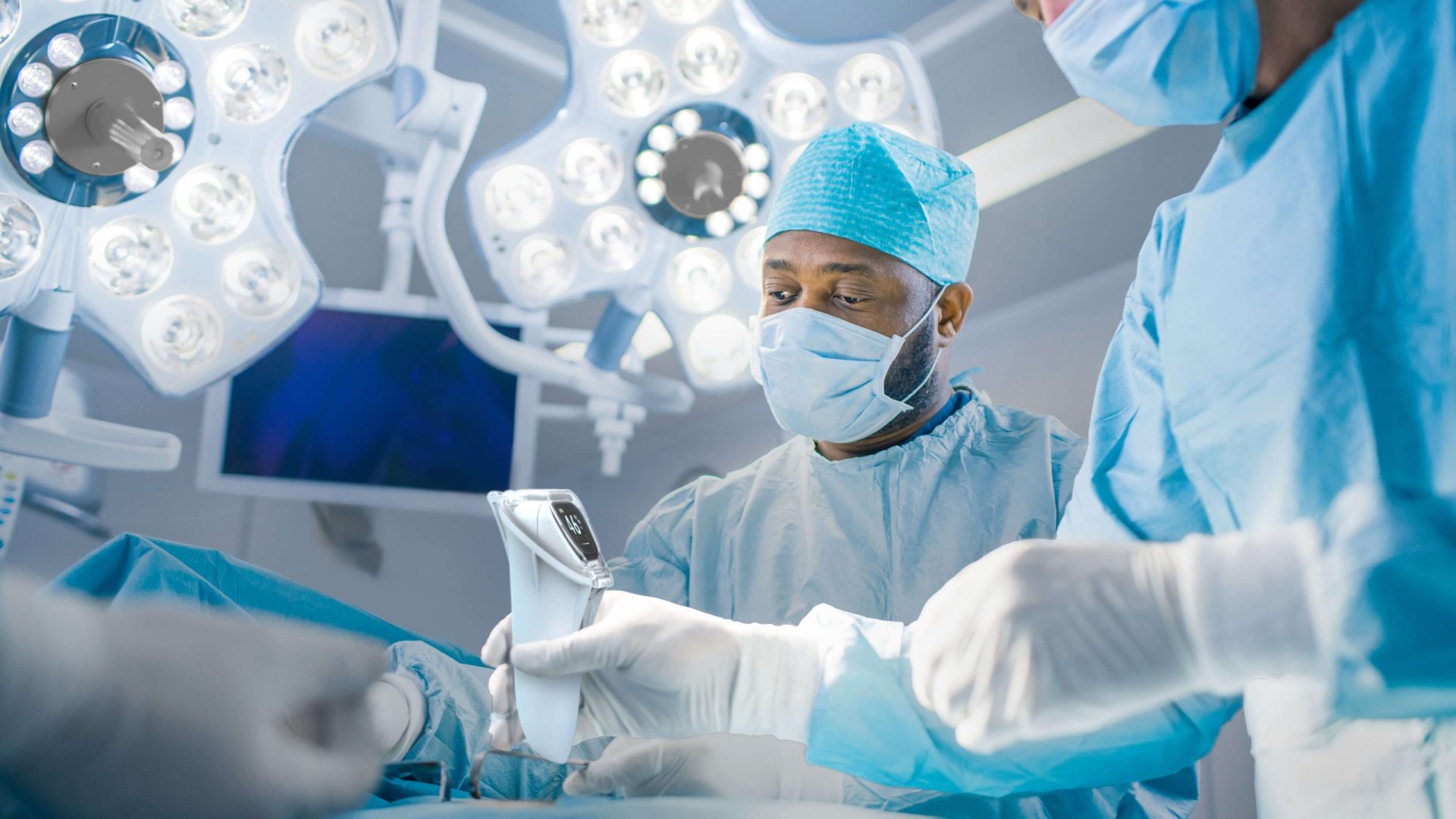
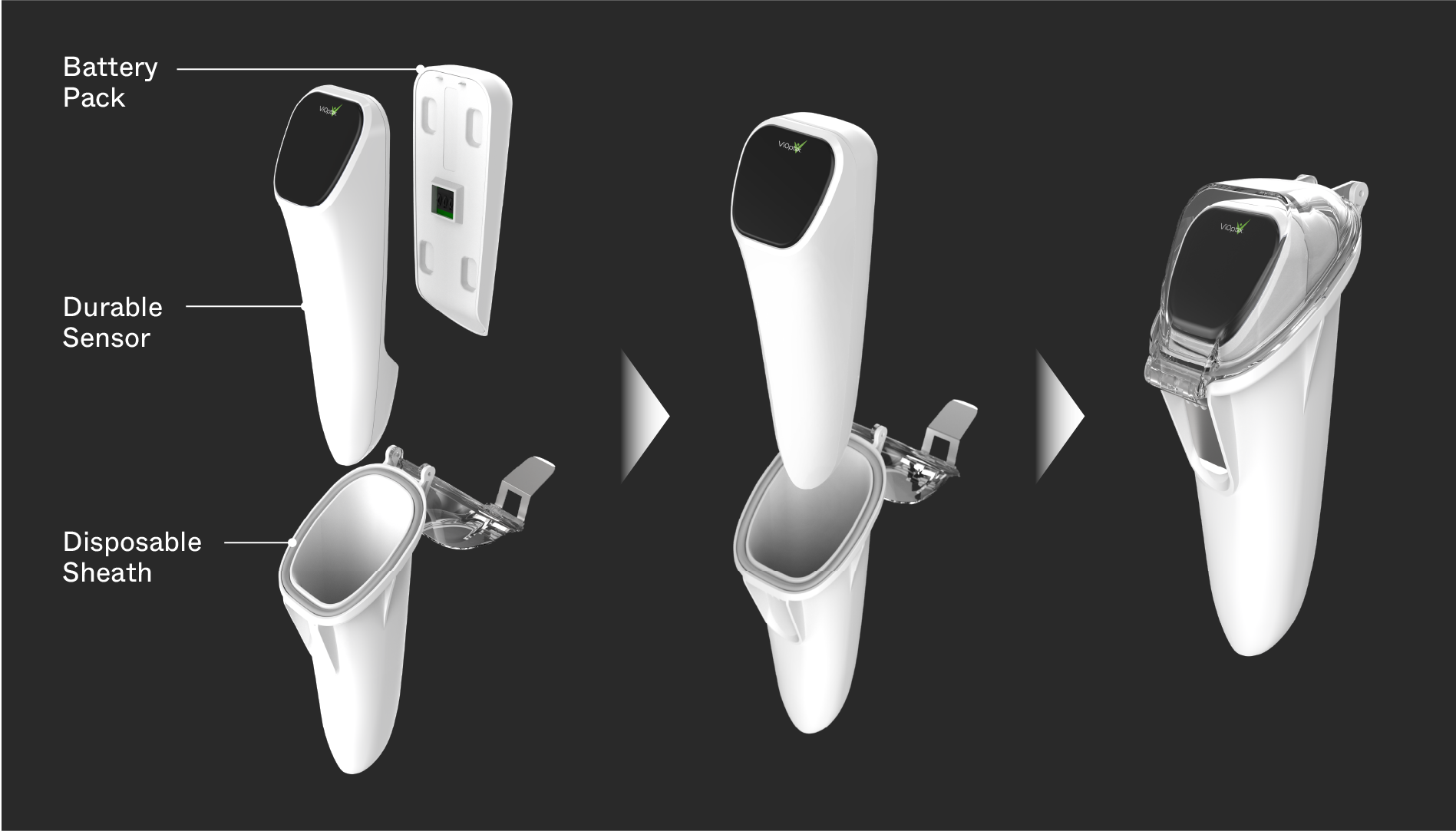
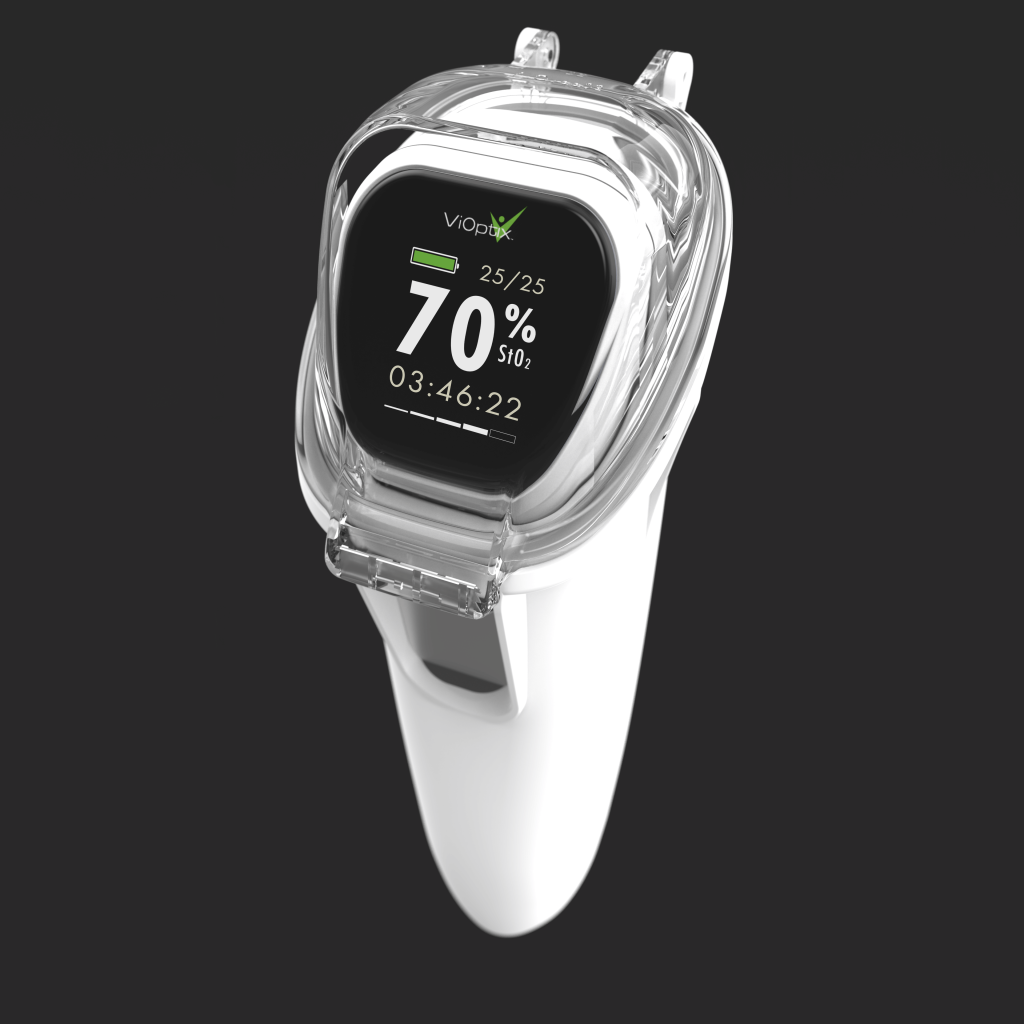
ViOptix collaborated with Triple Ring to design and develop the Intra.Ox™, a non-invasive, handheld tissue oxygenation monitor designed for use inside the surgical theater. The device enables real-time measurement of tissue oxygenation, helping surgeons assess tissue viability and make informed decisions during procedures.
By combining optical sensing technology with advanced algorithms and a portable handheld design, the system supports improved surgical workflows and enhances clinical decision-making during tissue transfer procedures.
Challenge
ViOptix sought to develop a quantitative tissue oxygenation monitor capable of delivering real-time, highly sensitive measurements in a surgical environment. The system needed to be easy to use, reliable, and capable of generating unlimited readings throughout a surgical case.
Key technical challenges included:
- Designing an easy-to-use multi-wavelength tissue oximeter
- Developing smart algorithms to compensate for variable tissue morphologies
- Creating a compact handheld form factor suitable for surgical use
- Supporting reusable packaging and surgical workflows
- Ensuring consistent performance across varying tissue conditions
In addition, the system needed to accurately capture oxygen concentration in resected tissue while minimizing artifacts caused by surrounding tissue components.
Real-Time Tissue Oxygenation Status
Overview
ViOptix collaborated with Triple Ring to design and develop the Intra.Ox™, a non-invasive, handheld tissue oxygenation monitor designed for use inside the surgical theater. The device enables real-time measurement of tissue oxygenation, helping surgeons assess tissue viability and make informed decisions during procedures.
By combining optical sensing technology with advanced algorithms and a portable handheld design, the system supports improved surgical workflows and enhances clinical decision-making during tissue transfer procedures.
Challenge
ViOptix sought to develop a quantitative tissue oxygenation monitor capable of delivering real-time, highly sensitive measurements in a surgical environment. The system needed to be easy to use, reliable, and capable of generating unlimited readings throughout a surgical case.
Key technical challenges included:
- Designing an easy-to-use multi-wavelength tissue oximeter
- Developing smart algorithms to compensate for variable tissue morphologies
- Creating a compact handheld form factor suitable for surgical use
- Supporting reusable packaging and surgical workflows
- Ensuring consistent performance across varying tissue conditions
In addition, the system needed to accurately capture oxygen concentration in resected tissue while minimizing artifacts caused by surrounding tissue components.
Client
ViOptix
Practice Areas
Smart Medical Devices
Core Disciplines
Systems Engineering
Transfer to Manufacture
Electrical Engineering
Optical Science
Photonics & Imaging
Quality System Management
Embedded Systems

Solution
Triple Ring and ViOptix worked side-by-side to invent subsystem- and system-level solutions that enabled reliable real-time tissue oxygenation monitoring. The development effort spanned concept generation through clinical validation, with a strong emphasis on modeling, algorithm design, and usability.
Triple Ring applied deep clinical and technical expertise to accelerate development while supporting the needs of a virtual startup environment. Complex modeling techniques, including Monte Carlo simulations, were used to evaluate optical performance and optimize system behavior early in the design process.
Engineering efforts focused on:
- Designing multi-wavelength optical sensing systems capable of detecting tissue oxygenation levels
- Developing algorithms that compensated for variability in tissue characteristics
- Optimizing handheld system architecture to support surgical usability
- Validating measurement accuracy across simulated clinical environments
Outcome
The ViOptix Intra.Ox technology received FDA clearance after demonstrating its ability to produce accurate, instantaneous estimates of percent saturated oxygen (StO₂) without requiring capital equipment or dye injection.
The device is now used during tissue transfer surgeries to support real-time assessment of tissue viability, enabling earlier intervention and improving both clinical and financial outcomes. The program progressed from concept to clinical validation and FDA 510(k) clearance in approximately 18 months, demonstrating the efficiency of the collaborative development approach.
Triple Ring Talent
The Story Behind the Innovation
At Triple Ring, we draw on a deep bench of expertise across diverse disciplines matched to each innovation challenge. For this project, our team combined advanced optical modeling, Monte Carlo simulation, algorithm development, and user-centered device design to bring a first-of-its-kind handheld tissue oxygenation monitor from concept to FDA clearance in just 18 months.
Jeremy and Nick collaborated with many talented colleagues across Triple Ring and ViOptix on this project.

Nick Hawson
Medical Device Strategy & Program Leadership
With 25 years spanning engineering, program leadership, and innovation consulting, Nick has helped bring groundbreaking medical technologies to market for companies ranging from early-stage startups to global blue-chip firms.

Jeremy Ford, PhD
Biomedical Optics & Physiological Sensing
Dr. Jeremy Ford brings a decade of biomedical optics expertise — from tissue-illumination systems and physiological sensing to optical-thermal simulation and neural inhibition — backed by a Vanderbilt PhD and extensive peer-reviewed research.